Table of Contents
Introduction
Isoprenaline (isoproterenol) is a non-selective β-adrenergic agonist that stimulates both β1 and β2 receptors. It is used in conditions such as bradycardia, heart block, and occasionally in asthma. Due to its potent cardiac and bronchodilatory effects, it plays an important role in emergency and specific clinical settings.
Mechanism of Action (Step-wise)
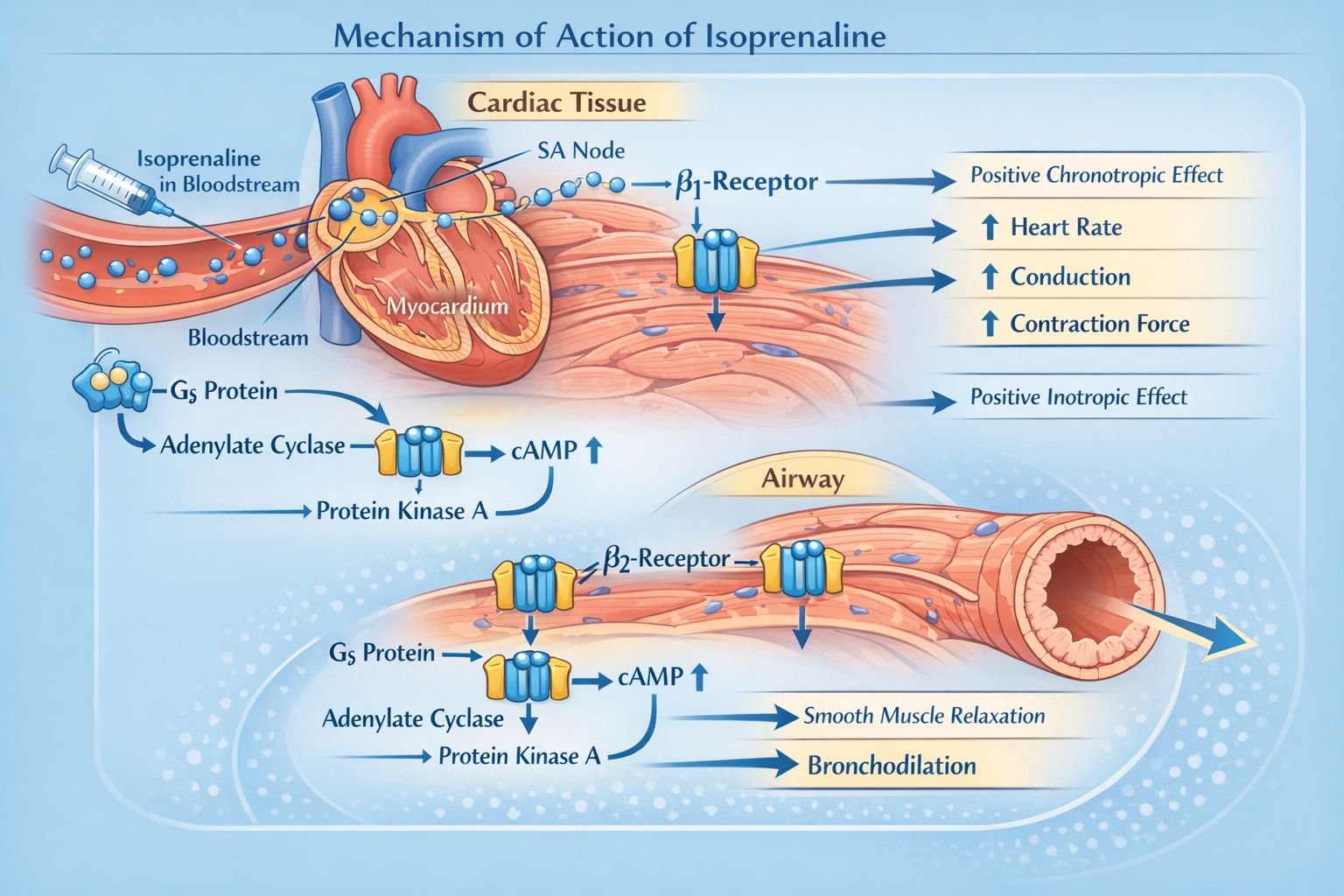
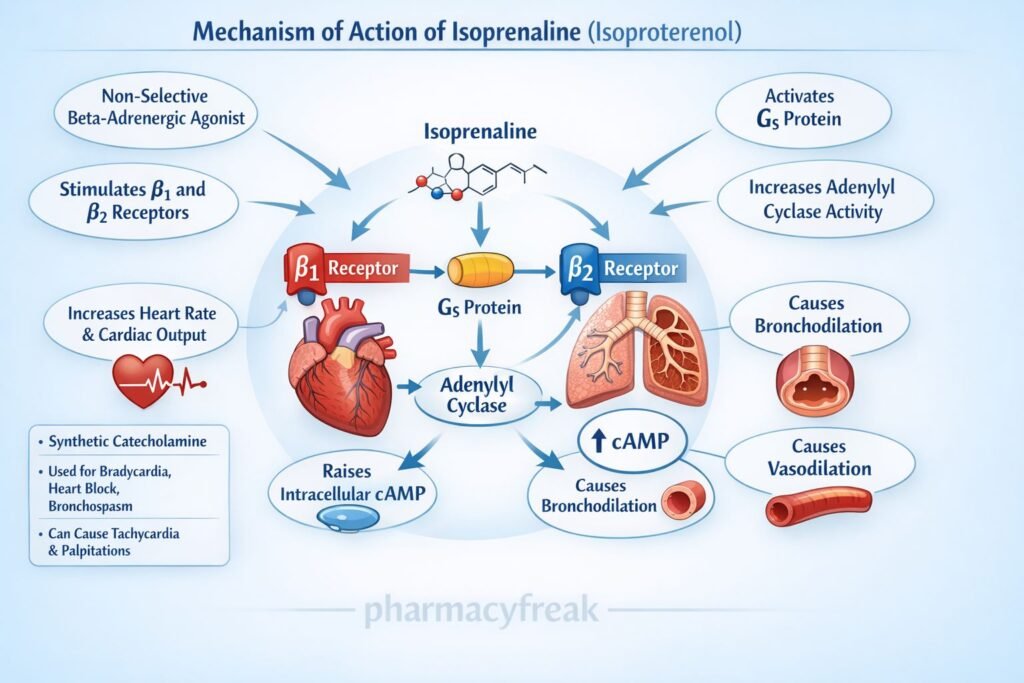
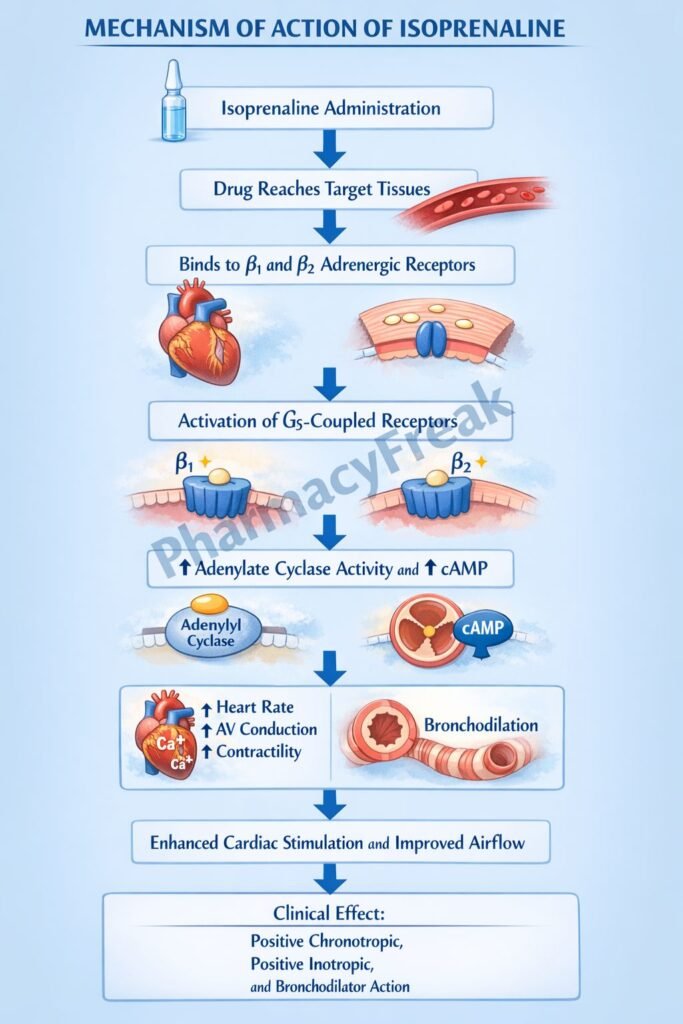
- Non-selective β-Adrenergic Receptor Activation
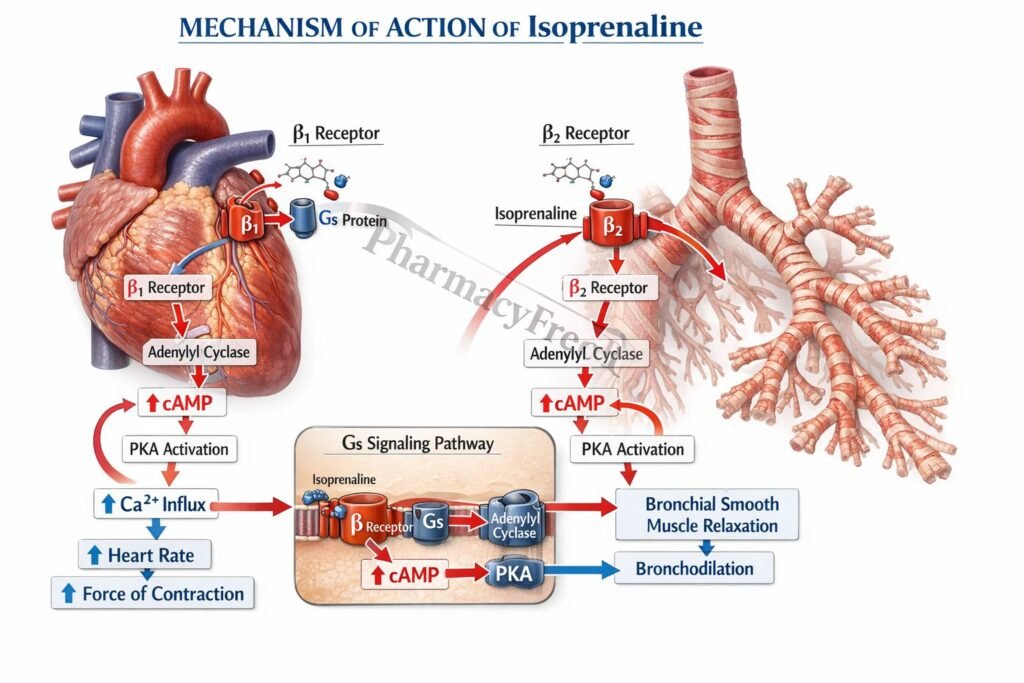
Isoprenaline stimulates both β1 receptors (primarily in the heart) and β2 receptors (in bronchial smooth muscle and vasculature). - Activation of Adenylyl Cyclase
Binding to β receptors activates Gs protein, which stimulates adenylyl cyclase. - Increase in cAMP Levels
Adenylyl cyclase converts ATP to cyclic AMP (cAMP), increasing intracellular cAMP levels. - Protein Kinase A (PKA) Activation
Elevated cAMP activates PKA, which phosphorylates various target proteins. - Cardiac Effects (β1-mediated)
- Increased heart rate (positive chronotropic effect)
- Increased force of contraction (positive inotropic effect)
- Increased conduction velocity (positive dromotropic effect)
- Bronchodilation (β2-mediated)
Relaxation of bronchial smooth muscle leading to airway dilation. - Vasodilation (β2-mediated)
Causes vasodilation in skeletal muscle vasculature, reducing peripheral resistance.
Pharmacokinetics
- Route: Intravenous, subcutaneous, inhalation
- Onset: Rapid
- Duration: Short
- Metabolism: By catechol-O-methyltransferase (COMT)
- Half-life: Short
- Excretion: Renal
Clinical Uses
- Symptomatic bradycardia
- Heart block
- Cardiac arrest (historically used)
- Bronchial asthma (less commonly used now)
Adverse Effects
- Tachycardia
- Palpitations
- Arrhythmias
- Tremors
- Headache
- Hypotension (due to vasodilation)
Comparative Analysis
| Feature | Isoprenaline | Adrenaline | Salbutamol |
|---|---|---|---|
| Receptor action | β1 + β2 agonist | α + β agonist | β2 selective |
| Cardiac effect | Strong | Strong | Mild |
| Bronchodilation | Yes | Yes | Strong |
| Vasoconstriction | No | Yes (α1) | No |
| Use | Bradycardia | Anaphylaxis | Asthma |
Isoprenaline differs from adrenaline by lacking α-adrenergic activity, leading to vasodilation instead of vasoconstriction. Compared to salbutamol, it is less selective and produces more cardiac side effects.
MCQs
- Isoprenaline acts on which receptors?
a) α1 only
b) β1 only
c) β1 and β2
d) α and β
Answer: c) β1 and β2 - Second messenger involved:
a) cGMP
b) cAMP
c) IP3
d) DAG
Answer: b) cAMP - β1 stimulation leads to:
a) Bronchodilation
b) Vasodilation
c) Increased heart rate
d) Sedation
Answer: c) Increased heart rate - β2 stimulation causes:
a) Cardiac contraction
b) Bronchodilation
c) Vasoconstriction
d) Platelet aggregation
Answer: b) Bronchodilation - Isoprenaline metabolism occurs via:
a) MAO only
b) COMT
c) CYP450
d) UGT
Answer: b) COMT - Main adverse effect:
a) Bradycardia
b) Tachycardia
c) Hypoglycemia
d) Constipation
Answer: b) Tachycardia - Compared to adrenaline, isoprenaline:
a) Has α activity
b) Causes vasoconstriction
c) Lacks α activity
d) Is less potent
Answer: c) Lacks α activity - Used in treatment of:
a) Hypertension
b) Bradycardia
c) Diabetes
d) Epilepsy
Answer: b) Bradycardia - Mechanism involves activation of:
a) Gi protein
b) Gs protein
c) Gq protein
d) Tyrosine kinase
Answer: b) Gs protein - Effect on peripheral resistance:
a) Increase
b) Decrease
c) No change
d) Variable
Answer: b) Decrease
FAQs
- What is the mechanism of action of isoprenaline?
It stimulates β1 and β2 receptors, increasing cAMP and producing cardiac stimulation and bronchodilation. - Why does isoprenaline cause tachycardia?
Due to β1 receptor stimulation in the heart. - Does isoprenaline cause vasoconstriction?
No, it causes vasodilation due to β2 activation. - What is the role of cAMP in its action?
cAMP mediates intracellular signaling leading to physiological effects. - Is isoprenaline selective?
No, it is a non-selective β-agonist. - Why is it less used in asthma today?
Because selective β2 agonists like salbutamol have fewer cardiac side effects.