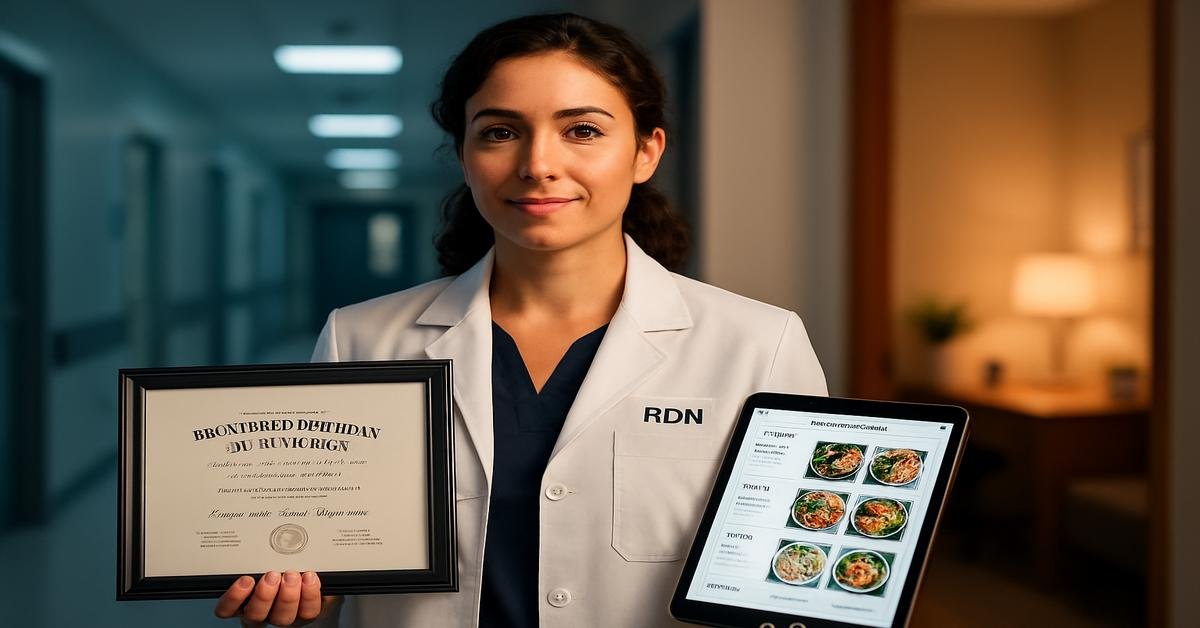
Dietitians are entering a more demanding and more visible phase of the profession. In 2026, employers, patients, insurers, and regulators all expect stronger proof of training, clinical judgment, and ethical practice. That is one reason the Registered Dietitian Nutritionist, or RDN, credential matters so much. It is not just a title. It signals that a practitioner has completed approved education, supervised practice, a national exam, and ongoing professional development. For people who want to work in hospitals or build a private practice, that signal is becoming essential. The work is more complex than giving meal advice. It often involves medical nutrition therapy, care planning, charting, interdisciplinary teamwork, risk management, and patient outcomes. In that environment, certification helps define who is qualified to do the job safely and credibly.
Why the RDN credential carries more weight in 2026
Healthcare has become stricter about qualifications. Hospitals are under pressure to reduce readmissions, improve quality scores, document outcomes, and control costs. Private practice dietitians face different pressure, but it is just as real. They need to earn trust fast, meet legal and insurance requirements, and stand out in a crowded wellness market. The RDN credential helps with both settings because it gives a recognized standard.
That standard matters for a simple reason: nutrition advice can affect medical care. A patient with kidney disease, tube feeding, diabetes, cancer, severe malnutrition, an eating disorder, or food allergies does not need general tips from social media. They need evidence-based care, careful assessment, and follow-up. Employers and clients want confidence that the person giving that care has been trained to do it properly.
In 2026, that confidence is even more important because nutrition is now tied to more parts of healthcare. Dietitians may be involved in:
Chronic disease management, such as diabetes, hypertension, heart disease, and gastrointestinal conditions
Acute care, including malnutrition screening, enteral and parenteral nutrition, and post-surgical recovery
Preventive care, where nutrition counseling can lower long-term health costs
Behavior change support, especially when patients need realistic plans they can actually follow
Interdisciplinary treatment, where dietitians work with physicians, nurses, pharmacists, therapists, and social workers
As the role expands, the profession needs a clear boundary between qualified clinical nutrition experts and people offering broad lifestyle advice. The RDN credential creates that boundary.
What RDN certification actually proves
Many people outside the profession assume a dietitian and a nutritionist are the same. In everyday conversation, people use the terms loosely. In professional settings, the difference matters. The RDN credential proves a defined level of training and accountability.
It shows that the practitioner has completed three key steps:
Approved education, including coursework in nutrition science, biochemistry, physiology, food service, counseling, and clinical care
Supervised practice, where the future dietitian applies knowledge in real settings under oversight
National examination and continuing education, which show baseline competence and ongoing learning
This matters because nutrition work is not only about knowledge. It is also about judgment. For example, two patients may both have diabetes, but one has kidney disease, limited income, low health literacy, and medication side effects. The other is an athlete with a different risk profile. A trained dietitian is expected to assess the whole picture, not just hand out a standard food list.
That is what employers are paying for. That is also what patients are trusting.
Why hospitals increasingly require the RDN
In hospitals, the case for RDN certification is direct. Clinical nutrition decisions can affect recovery time, complications, length of stay, and patient safety. A hospital cannot treat nutrition support as an informal service.
Hospital dietitians often handle work such as:
Assessing malnutrition risk and documenting findings in the medical record
Creating nutrition care plans for patients with complex diagnoses
Managing tube feeding and parenteral nutrition recommendations
Coordinating with physicians and nurses on treatment goals
Providing discharge education that patients can actually understand and use at home
Each of these tasks requires more than basic nutrition knowledge. It requires familiarity with clinical guidelines, lab values, medication interactions, disease progression, and documentation standards. Hospitals need staff who can work within regulated systems and defend their decisions if reviewed.
The RDN matters here because it reduces uncertainty. When a hospital hires an RDN, it knows the person meets a profession-wide standard. That helps with credentialing, compliance, and quality assurance.
There is also a practical workplace reason. Hospitals rely on interdisciplinary teams. Physicians and nurses are more likely to trust and refer to dietitians when the qualifications are clear and nationally recognized. The credential supports smoother teamwork. It makes it easier for dietitians to be included in rounds, care planning, and policy discussions, rather than being treated as optional support staff.
How the RDN strengthens a private practice career
Some people assume private practice is more flexible, so certification matters less there. In reality, the opposite is often true. In private practice, you do not have a hospital name behind you. Your credential is part of your credibility.
When a client searches for nutrition help, they often see many options. Some providers are highly trained clinicians. Others are coaches or influencers with limited formal education. The average client may not understand the difference at first. The RDN helps make that difference visible.
For private practice, the credential matters in several ways:
Client trust. People are more likely to share medical details and follow advice when they believe the provider is properly qualified.
Physician referrals. Doctors are more comfortable referring patients with medical conditions to an RDN than to someone with a vague nutrition title.
Insurance participation. Reimbursement often depends on recognized credentials and proper scope of practice.
Risk management. If you work with higher-risk clients, a recognized professional standard helps support safe practice and documentation.
Market positioning. The credential separates evidence-based care from general wellness content.
Consider a simple example. A private practice provider wants to specialize in PCOS, prediabetes, and weight management. Many clients in that group also have thyroid conditions, disordered eating patterns, fertility concerns, or are taking medications that affect appetite and blood sugar. This is not a casual advice setting. It requires careful screening, tailored care, and knowing when to refer out. The RDN credential gives clients and referral partners a reason to take that practice seriously.
Insurance, licensure, and legal scope make certification more important
One of the biggest reasons the RDN is essential in 2026 is that nutrition care is increasingly tied to payment and regulation. A practitioner may be excellent at communication and behavior change, but if they do not have the right credential, they may still be blocked from key opportunities.
That shows up in three major areas.
First, insurance reimbursement. If a dietitian wants to bill insurance, the recognized credential often plays a central role. Insurers want to know who is providing care, whether that person meets accepted standards, and whether the service falls within a covered scope.
Second, state licensure and title protection. Rules differ by state, but many jurisdictions regulate who can provide medical nutrition therapy or use certain professional titles. The RDN often supports licensure eligibility or strengthens legal standing.
Third, liability and documentation. In both hospitals and private practice, if care decisions are questioned, the practitioner’s training, credentials, notes, and adherence to standards may all be reviewed. Certification does not remove risk, but it shows the practitioner has met recognized professional requirements.
This is one of the least glamorous parts of career planning, but it is one of the most important. A nutrition career is not built on knowledge alone. It is built on a structure that allows you to practice, get paid, and protect both patients and yourself.
Why patients and employers now expect evidence-based nutrition care
Public interest in nutrition is high, but public trust is uneven. People have seen too many conflicting claims, extreme diets, and confident advice with weak evidence behind it. That makes formal credentials more valuable, not less.
Patients want someone who can tell the difference between a trend and a treatment. Employers want someone who can explain recommendations clearly and defend them with evidence. The RDN supports that expectation because the training includes science, assessment, counseling, and ethics.
This is especially important in areas where misinformation spreads fast, such as:
Weight loss medications and nutrition support
Gut health and elimination diets
Food sensitivity claims
Sports supplements
Oncology nutrition
Pediatric feeding concerns
In these areas, giving oversimplified advice can do real harm. A patient may restrict foods unnecessarily, miss signs of a serious condition, interact poorly with medication, or spend money on ineffective approaches. Certified dietitians are trained to ask better questions, interpret evidence carefully, and avoid making recommendations beyond what the facts support.
The RDN does more than open doors. It shapes professional identity.
There is also a deeper reason the credential matters. It helps define what kind of professional a dietitian becomes.
RDN preparation pushes practitioners to think beyond food lists and macros. It teaches them to assess clinical status, understand social factors, communicate with empathy, document clearly, and revise plans based on response. That foundation shapes how a dietitian works for years afterward.
In hospital settings, that identity shows up in teamwork and clinical judgment. In private practice, it shows up in boundaries, ethics, and treatment quality. For example, an RDN is more likely to recognize when a client needs a higher level of care for an eating disorder, when nutrition symptoms may point to an undiagnosed medical issue, or when a supplement protocol is not appropriate for a patient’s condition.
That kind of judgment is not always visible in marketing. But it is often the difference between safe care and risky care.
Specialization is growing, but the RDN remains the base
By 2026, many dietitians are building careers around specialties. That can include renal nutrition, oncology, pediatrics, sports nutrition, gastrointestinal disorders, eating disorders, diabetes care, fertility, or integrative practice. Specialization is useful because it helps dietitians develop deeper expertise and serve specific populations well.
But specialization works best when it sits on top of a strong core credential. The RDN is that core. It gives the broad clinical and professional foundation needed before narrowing into a niche.
Without that foundation, specialization can become shallow. A person may know the language of a niche without understanding the full medical or behavioral context. For example, someone may focus on digestive health but miss red flags that require medical referral. Or they may work in sports nutrition without understanding how low energy availability, menstrual dysfunction, and bone health interact.
The RDN does not make someone an expert in every specialty. It gives them a reliable base from which real expertise can grow.
What this means for dietitians planning their careers now
For students and early-career professionals, the message is clear. If your goal is to work in a hospital or build a strong private practice, the RDN should not be treated as optional. It is part of the career infrastructure.
That does not mean certification alone guarantees success. Employers still look for communication skills, clinical reasoning, adaptability, and professionalism. Clients still care whether you listen well and help them make realistic changes. But the RDN gives you the platform to compete for better roles and build long-term trust.
It also creates flexibility. A dietitian with the RDN can move more easily between settings over time. Someone may start in clinical care, then shift into outpatient counseling, private practice, program development, or a specialty area. A solid credential makes those transitions easier because it is recognized across many parts of the field.
That flexibility matters in a changing profession. Career paths are less linear than they used to be. A credential that travels well is a real advantage.
Final takeaway
In 2026, the dietitian profession is moving toward higher standards, clearer accountability, and more visible clinical value. That is why RDN certification is essential for both hospital and private practice roles. In hospitals, it supports patient safety, team trust, and compliance. In private practice, it supports credibility, referrals, reimbursement, and safe scope of care. Most importantly, it shows that the practitioner has met a recognized standard in a field where nutrition decisions can directly affect health outcomes.
For anyone serious about a long-term dietitian career, the RDN is not just a credential to collect. It is the professional foundation that makes the rest of the career possible.

