
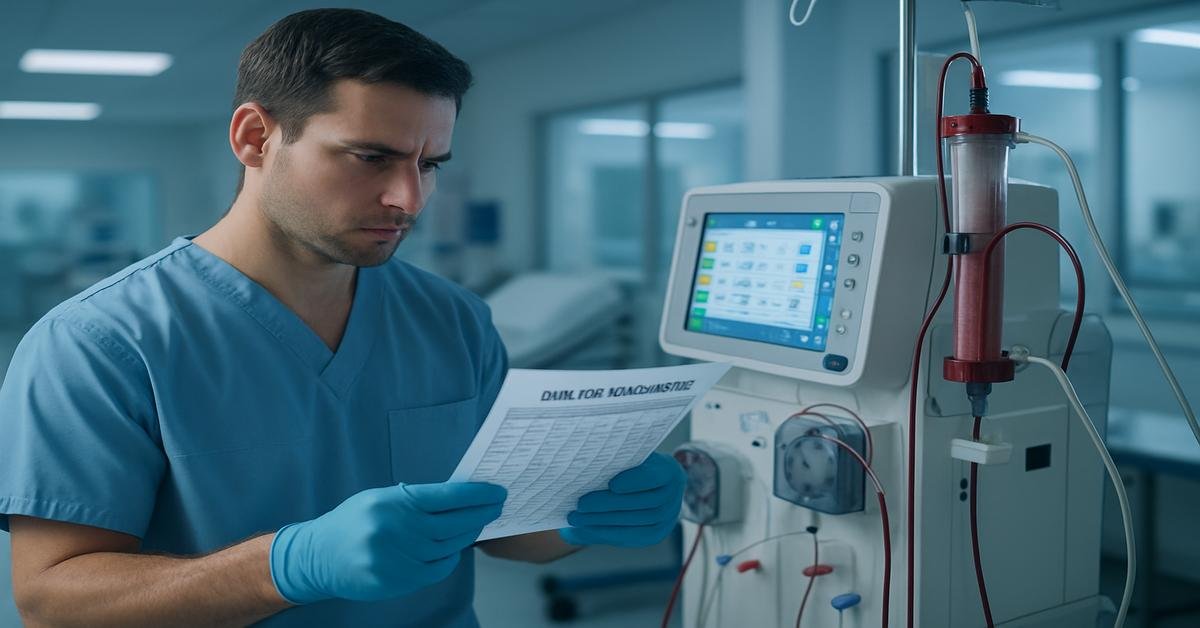
The CCHT exam tests more than memorization. It asks whether you can think like a safe dialysis technician under pressure. That matters because in hemodialysis, small mistakes can become serious fast. A wrong fluid removal goal, a missed infection control step, or a delay in reporting symptoms can harm a patient within minutes. That is why two areas carry so much weight in your preparation: dialysis calculations and patient safety. If you can handle the math calmly and recognize safety risks early, you are building the exact skills the exam is designed to measure. The best strategy is not to cram facts. It is to learn how the numbers connect to patient care, and how safety rules prevent real-world problems.
Understand what the exam is really measuring
Many candidates study the CCHT exam as if it were a vocabulary test. They memorize terms, machine parts, and procedures. That helps, but it is not enough. The exam also measures judgment. It wants to know if you understand why a step matters and what to do when something is not normal.
For example, a question may not simply ask for the definition of ultrafiltration. It may describe a patient who arrives above dry weight with low blood pressure history and ask what adjustment or observation matters most. To answer well, you need both the concept and the safety reasoning behind it.
Keep this frame in mind while studying:
- Calculations show whether you can prepare and monitor treatment accurately.
- Patient safety shows whether you can prevent harm, identify warning signs, and respond correctly.
- Procedures show whether you know the proper order of tasks and infection control steps.
When you study any topic, ask yourself: What could go wrong here, and how would I catch it? That simple question turns passive studying into exam-level thinking.
Master the core dialysis calculations by understanding the purpose behind them
Dialysis math feels stressful mainly when learners treat it like random formulas. It becomes easier when you connect each calculation to a patient outcome.
The most common calculations usually involve fluid removal, weight changes, treatment times, and solution or medication basics. You do not need advanced math. You need accuracy, unit awareness, and a consistent process.
Start with the calculation most tied to patient safety: fluid removal.
Why it matters: Removing too little fluid may leave the patient overloaded. Removing too much or too quickly can cause hypotension, cramping, nausea, dizziness, or worse.
A common pattern is:
- Determine pre-treatment weight
- Compare it with prescribed target or dry weight
- Add any fluid the patient will receive during treatment, if relevant
- Calculate how much fluid should be removed
Example:
A patient arrives at 72.5 kg. Dry weight is 70.0 kg. If 0.2 kg equivalent fluid will be given during treatment, total fluid removal goal is not just 2.5 kg. It becomes 2.7 kg. The reason is simple: you must account for fluid going into the patient as well as fluid coming off.
This is where candidates often miss points. They rush and subtract only the weight difference. The exam may include a small extra number like saline given, rinse-back considerations, or intake during treatment to see whether you notice the full picture.
Also practice time-based thinking.
If a treatment is shortened, the same fluid removal amount may need to happen faster. That can increase risk. Even if the exam focuses on the number, always think clinically: a faster ultrafiltration rate may not be tolerated well. This helps with both calculation and safety questions.
Use a repeatable math method so you do not lose easy points
Most errors on exam math are not from lack of knowledge. They come from stress, skipped steps, or unit confusion. A simple routine can prevent that.
Use this sequence every time:
- Read the full question slowly. Do not calculate after the first number you see.
- Identify what the question is asking for. Fluid to remove? Rate? Final volume? Time?
- List the given numbers with units. Kg, mL, hours, minutes. Units matter.
- Convert units if needed. Do not mix hours and minutes without converting.
- Do the calculation.
- Check whether the answer makes clinical sense. If the result looks extreme, review your setup.
That last step is powerful. Suppose you calculate a fluid removal amount that is much larger than the patient’s actual weight gain. That should trigger a pause. The exam rewards careful thinking, not speed alone.
Build comfort with common conversions:
- 1 kilogram of body weight is roughly 1 liter of fluid
- 1 liter = 1000 mL
- 30 minutes = 0.5 hour
- 15 minutes = 0.25 hour
These sound basic, but under test stress, basic mistakes happen. Practice until conversions feel automatic.
Focus on the calculation types most likely to appear
You do not need to study every possible number problem equally. Prioritize the ones most connected to routine dialysis care.
1. Pre- and post-treatment weight differences
This helps determine fluid gain and whether the target post-treatment weight was achieved. The why is clear: weight changes reflect fluid balance, and fluid balance is central to dialysis safety.
2. Ultrafiltration goal
This is one of the most practical calculations. Expect to account for weight above dry weight and possible fluid administration during treatment.
3. Treatment time adjustments
If treatment time changes, think about what happens to the rate of fluid removal. Questions may test whether shortened treatment creates tolerance problems.
4. Intake and output awareness
Even when not presented as pure math, the exam may test whether you notice a mismatch between fluid gain, symptoms, and prescribed removal.
5. Basic solution or medication quantity reasoning
You may see straightforward arithmetic related to preparation or administration. The key is to follow the order carefully and verify the amount matches the order.
Do not just solve practice problems. After each one, explain out loud why the number matters to the patient. That step strengthens memory and clinical judgment at the same time.
Learn patient safety as a chain of cause and effect
Safety questions are easier when you stop seeing them as isolated rules. In dialysis, safety works like a chain. One missed step creates a new risk, and that risk can lead to patient harm.
Take infection control. If hand hygiene is poor, or gloves are used incorrectly, or surfaces are not disinfected properly, bloodstream infection risk rises. If access care is sloppy, the patient may face hospitalization or loss of access. The exam expects you to understand that these are not technicalities. They protect the patient from serious complications.
Think in these cause-and-effect patterns:
- Poor hand hygiene leads to contamination risk
- Improper access care leads to infection or access damage
- Failure to verify orders and identity leads to wrong treatment or wrong patient error
- Ignoring machine alarms leads to delayed recognition of dangerous conditions
- Poor documentation or reporting leads to missed follow-up and repeated errors
When studying safety topics, ask what harm each rule is trying to prevent. That makes details easier to remember and apply.
Know the highest-yield patient safety areas
Some safety topics deserve extra attention because they appear often and reflect real daily risk.
Infection prevention
This includes hand hygiene, glove use, cleaning and disinfection, aseptic technique, and proper vascular access care. Study the exact sequence of clean versus contaminated tasks. Questions may test whether you know when gloves must be changed, when supplies are considered contaminated, or when equipment should be disinfected.
Vascular access protection
Know the differences among fistulas, grafts, and catheters. Understand what findings are normal and what findings must be reported. For example, absence of bruit or thrill in an access is not a minor detail. It may signal a serious access problem that needs immediate attention.
Recognizing treatment complications
Be able to spot signs of hypotension, disequilibrium, air embolism, clotting, infection, and bleeding. More important, know the first safe action. The exam often asks for the best initial response, not just the diagnosis.
Machine and water safety basics
You do not need to become an engineer, but you do need to know what checks protect patients from dialysate errors, contamination, and equipment malfunction. Safety checks before, during, and after treatment exist because machine-related errors can affect multiple patients if missed.
Patient identification and order verification
These seem simple, so candidates sometimes under-study them. But wrong-patient and wrong-treatment errors are preventable only when staff verify consistently every time.
Practice how to answer scenario questions, not just fact questions
The CCHT exam often uses scenarios because dialysis care is not a list of isolated facts. It is a flow of decisions. To prepare, shift from flashcard-only study to situation-based practice.
Use this approach for any scenario:
- Identify the immediate risk. What could harm the patient first?
- Look for unstable signs. Bleeding, shortness of breath, chest pain, severe hypotension, loss of consciousness, and signs of access problems all deserve quick attention.
- Choose the safest first action. On many questions, the best answer is the one that protects the patient before anything else.
- Report and document correctly. Safe care includes communication, not just intervention.
Example:
If a patient becomes dizzy and pale during treatment, a weak study habit is to memorize “dizziness = hypotension.” A stronger exam habit is to think: this patient may be unstable; the first priority is safety and assessment, then appropriate intervention and notification according to facility protocol. That kind of reasoning helps on many different questions.
Avoid the most common mistakes candidates make
Knowing what goes wrong for other test-takers can save you time.
- They memorize formulas without understanding the patient impact. This makes it hard to answer word problems or scenario questions.
- They rush the math. Most missed math questions come from skipped steps, not hard arithmetic.
- They ignore units. Mixing kilograms, liters, milliliters, hours, and minutes creates wrong answers fast.
- They study safety as a list of rules. If you do not understand why a rule exists, you are more likely to miss application questions.
- They overlook “first” or “best” in the question. On safety items, the order of actions matters.
- They do not practice under time pressure. Even simple questions become harder when the clock is running.
A useful fix is to keep an error log. Every time you miss a practice question, write down:
- What the question was really testing
- Why your answer was wrong
- What clue you missed
- How you will avoid that mistake next time
This turns mistakes into patterns you can correct.
Create a study plan that matches how the exam works
A strong CCHT study plan is not just long hours. It is targeted repetition. Split your study into three tracks.
Track 1: Core knowledge
- Dialysis principles
- Machine basics
- Access types
- Infection control
- Patient monitoring
Track 2: Calculations
- Daily short practice sets
- Unit conversions
- Fluid removal problems
- Time and rate problems
Track 3: Safety scenarios
- Complication recognition
- Best first action questions
- Reporting and documentation choices
- Order verification and infection control scenarios
A practical weekly routine might look like this:
- 4 days a week: 20 to 30 minutes of content review
- Daily: 10 to 15 minutes of calculation practice
- 3 days a week: 15 to 20 minutes of scenario questions
- Once a week: one timed mixed review session
This works better than one long cram session because math and safety reasoning improve through repeated exposure, not last-minute review.
Use test-day strategy to protect the knowledge you already have
Some candidates know the material but lose points because of panic or poor pacing. A few test-day habits can help.
- Read every question carefully. Especially notice words like first, best, most important, and immediate.
- Do not overcomplicate simple questions. If the correct safety step is clear, trust the basics.
- Write out math steps mentally or on allowed scratch paper. Do not try to hold multiple numbers in your head.
- Use elimination. On safety questions, remove answers that delay care, ignore symptoms, or break standard precautions.
- Watch the clock, but do not rush. One preventable math error can cost as much as a harder question.
If you feel stuck, return to fundamentals: protect the patient, verify the order, assess carefully, and think about what could cause harm first. That mindset often leads you to the best answer.
The goal is not just passing the exam
The best CCHT exam strategy prepares you for the job, not just the test. Dialysis calculations matter because they guide fluid removal and treatment accuracy. Patient safety matters because the patients you serve are medically fragile and depend on careful, consistent care. When you study these topics deeply, the exam becomes more manageable because the questions start to reflect logic instead of trivia.
So focus on understanding, not just recall. Practice the math until it feels routine. Study safety as cause and effect. Work through scenarios and ask what action protects the patient first. If you do that consistently, you are not only increasing your chance of passing the national certification. You are training yourself to think like a competent dialysis technician from day one.

