Table of Contents
Introduction
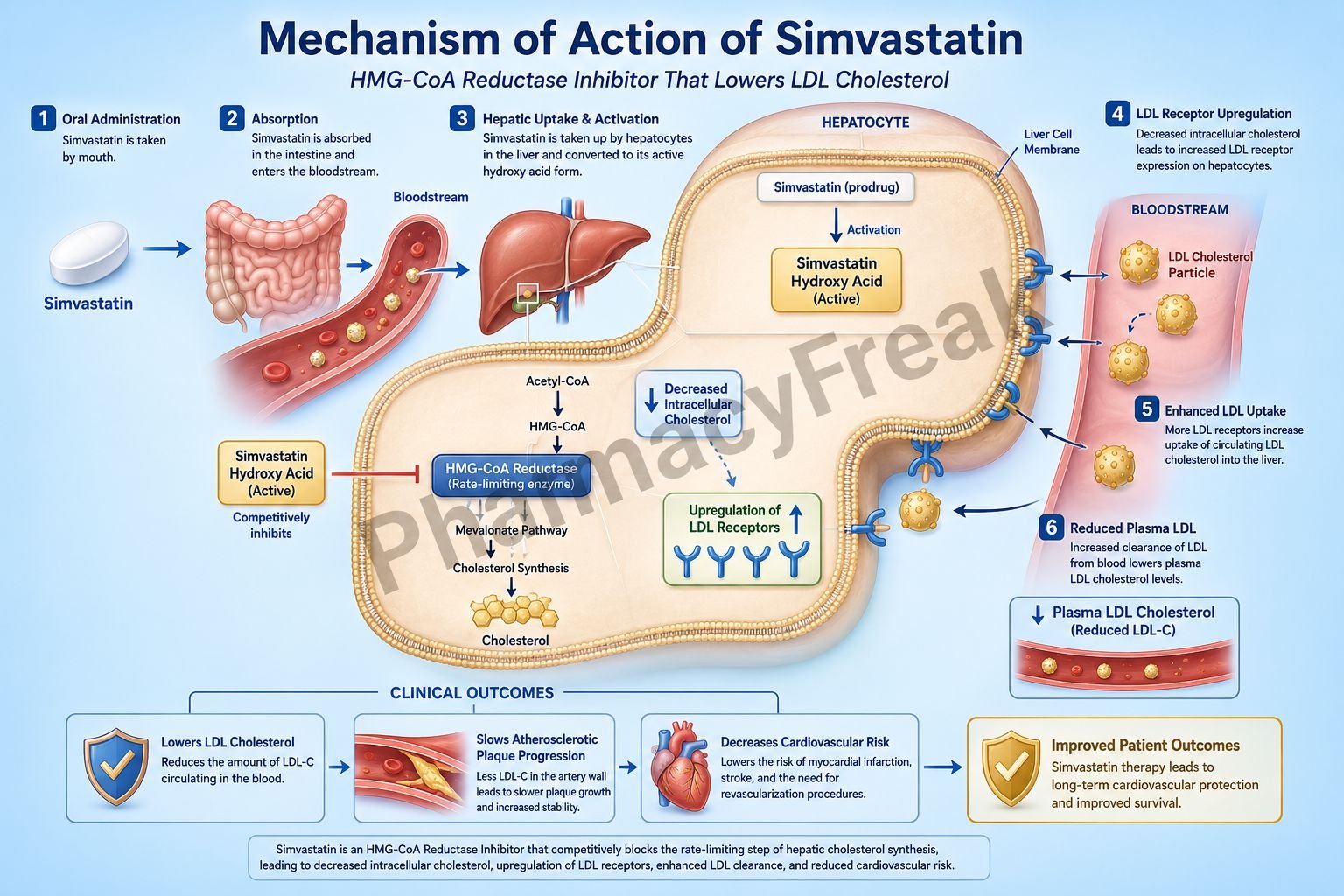
Simvastatin is a statin medication used to lower cholesterol levels and reduce the risk of cardiovascular disease. It acts by inhibiting hepatic cholesterol synthesis, leading to increased removal of low-density lipoprotein (LDL) cholesterol from the bloodstream. Simvastatin is widely used in hypercholesterolemia, atherosclerosis prevention, and cardiovascular risk reduction.
Mechanism of Action (Step-wise)
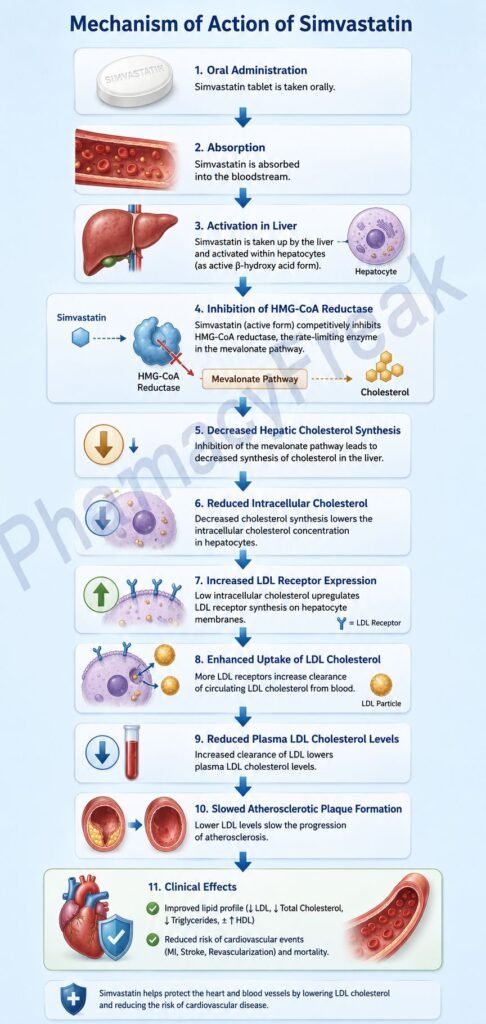
- Simvastatin is administered as an inactive lactone prodrug.
- In the liver, it is converted into its active β-hydroxy acid form.
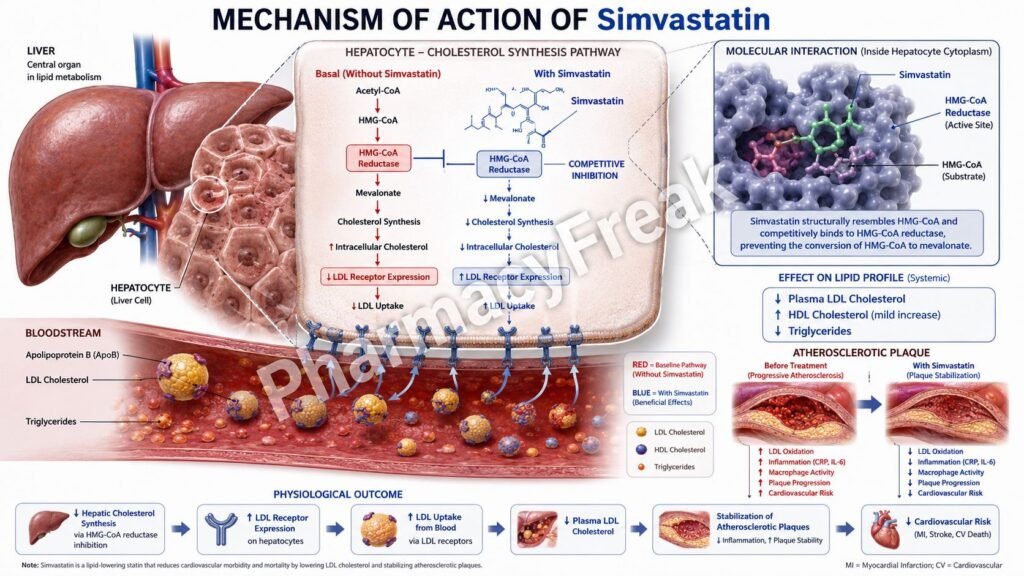
- The active metabolite competitively inhibits HMG-CoA reductase.
- HMG-CoA reductase normally converts HMG-CoA into mevalonate.
- This is the rate-limiting step in hepatic cholesterol synthesis.
- Inhibition of cholesterol synthesis decreases intracellular hepatic cholesterol levels.
- Reduced intracellular cholesterol stimulates upregulation of LDL receptors on hepatocytes.
- Increased LDL receptor expression enhances uptake of circulating LDL cholesterol from blood.
- Plasma LDL cholesterol levels decrease significantly.
- Simvastatin also moderately lowers triglycerides and slightly increases HDL cholesterol.
- Statins additionally improve endothelial function and reduce vascular inflammation.
- The overall effect is reduction in atherosclerotic plaque formation and cardiovascular risk.
A key exam point is that simvastatin inhibits HMG-CoA reductase, reducing hepatic cholesterol synthesis and increasing LDL receptor-mediated clearance.
Pharmacokinetics
Simvastatin is administered orally and undergoes extensive first-pass hepatic metabolism. It is metabolized mainly through CYP3A4. The drug is primarily excreted through bile and feces. Because cholesterol synthesis is highest at night, simvastatin is often given in the evening.
Clinical Uses
Simvastatin is used in hypercholesterolemia, mixed dyslipidemia, prevention of myocardial infarction, stroke prevention, and reduction of cardiovascular mortality in high-risk patients.
Adverse Effects
Common adverse effects include myalgia, headache, abdominal discomfort, and nausea. Serious adverse effects include hepatotoxicity and rhabdomyolysis, especially at higher doses or when combined with CYP3A4 inhibitors.
Comparative Analysis
| Feature | Simvastatin | Rosuvastatin | Ezetimibe |
|---|---|---|---|
| Drug class | Statin | Statin | Cholesterol absorption inhibitor |
| Main mechanism | HMG-CoA reductase inhibition | HMG-CoA reductase inhibition | NPC1L1 inhibition |
| Prodrug status | Yes | No | No |
| Main metabolism | CYP3A4 | Minimal CYP metabolism | Glucuronidation |
| LDL reduction potency | High | Very high | Moderate |
| Main site of action | Liver | Liver | Intestine |
Simvastatin differs from ezetimibe because it inhibits hepatic cholesterol synthesis rather than intestinal cholesterol absorption. Compared with rosuvastatin, simvastatin has greater CYP3A4 involvement and slightly lower LDL-lowering potency.
MCQs
- Simvastatin belongs to which drug class?
a) Fibrates
b) Statins
c) Bile acid sequestrants
d) PCSK9 inhibitors
Answer: b) Statins
- Simvastatin inhibits which enzyme?
a) Lipoprotein lipase
b) HMG-CoA reductase
c) Cyclooxygenase
d) Acetylcholinesterase
Answer: b) HMG-CoA reductase
- HMG-CoA reductase converts HMG-CoA into:
a) Mevalonate
b) Triglycerides
c) Acetylcholine
d) HDL cholesterol
Answer: a) Mevalonate
- Simvastatin mainly lowers which lipid fraction?
a) HDL
b) LDL
c) Chylomicrons
d) Phospholipids
Answer: b) LDL
- Reduced hepatic cholesterol increases expression of:
a) Histamine receptors
b) LDL receptors
c) Dopamine receptors
d) Sodium channels
Answer: b) LDL receptors
- Simvastatin is administered as a:
a) Direct active drug only
b) Prodrug
c) Injectable peptide
d) Monoclonal antibody
Answer: b) Prodrug
- Simvastatin is mainly metabolized by:
a) CYP2D6
b) CYP3A4
c) MAO
d) Xanthine oxidase
Answer: b) CYP3A4
- A common adverse effect is:
a) Myalgia
b) Hypercalcemia
c) Cataracts
d) Severe hypotension
Answer: a) Myalgia
- A serious adverse effect associated with statins is:
a) Rhabdomyolysis
b) Hypernatremia
c) Glaucoma
d) Polycythemia
Answer: a) Rhabdomyolysis
- Simvastatin helps reduce risk of:
a) Asthma
b) Cardiovascular disease
c) Hyperthyroidism
d) Epilepsy
Answer: b) Cardiovascular disease
- Compared with ezetimibe, simvastatin mainly acts by:
a) Blocking intestinal cholesterol absorption
b) Inhibiting hepatic cholesterol synthesis
c) Increasing bile acid excretion only
d) Stimulating insulin release
Answer: b) Inhibiting hepatic cholesterol synthesis
- Simvastatin is often taken in the evening because:
a) It causes daytime sedation
b) Hepatic cholesterol synthesis is greater at night
c) Absorption occurs only at night
d) It prevents nocturnal hypoglycemia
Answer: b) Hepatic cholesterol synthesis is greater at night
FAQs
What is the mechanism of action of simvastatin?
Simvastatin inhibits HMG-CoA reductase, reducing cholesterol synthesis and increasing LDL clearance.
Why does simvastatin lower LDL cholesterol?
Because reduced hepatic cholesterol increases LDL receptor expression on hepatocytes.
What are common side effects of simvastatin?
Myalgia, headache, abdominal discomfort, and nausea.
What is a serious adverse effect of simvastatin?
Rhabdomyolysis.
Why is simvastatin usually taken at night?
Because hepatic cholesterol synthesis is highest during nighttime.
How does simvastatin differ from ezetimibe?
Simvastatin inhibits cholesterol synthesis in the liver, while ezetimibe blocks cholesterol absorption in the intestine.
References
Goodman & Gilman’s The Pharmacological Basis of Therapeutics – Antihyperlipidemic Drugs
https://accessmedicine.mhmedical.com/book.aspx?bookid=3191
Katzung: Basic and Clinical Pharmacology – Drugs for Hyperlipidemia
https://accessmedicine.mhmedical.com/content.aspx?bookid=3382
Tripathi: Essentials of Medical Pharmacology – Hypolipidemic Drugs
https://www.jaypeedigital.com
Harrison’s Principles of Internal Medicine – Lipid Disorders and Cardiovascular Disease
https://accessmedicine.mhmedical.com