Table of Contents
Introduction
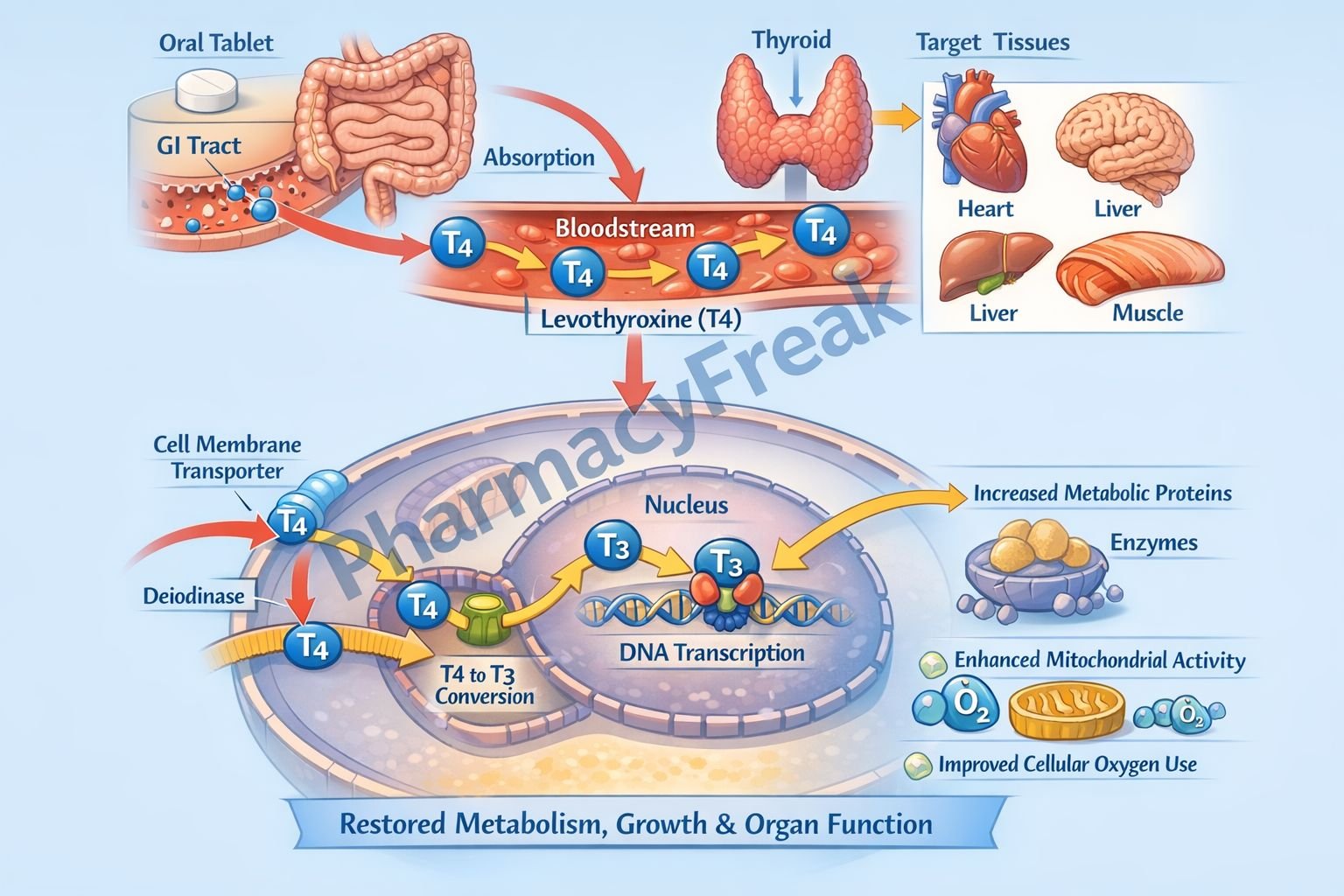
Levothyroxine is a synthetic form of thyroxine (T4), a thyroid hormone used in the treatment of hypothyroidism and related thyroid disorders. It serves as a hormone replacement therapy, restoring normal metabolic activity in patients with deficient thyroid function. Levothyroxine is converted in peripheral tissues to the more active form, triiodothyronine (T3).
Mechanism of Action (Step-wise)
- Conversion to Active Form (T3)
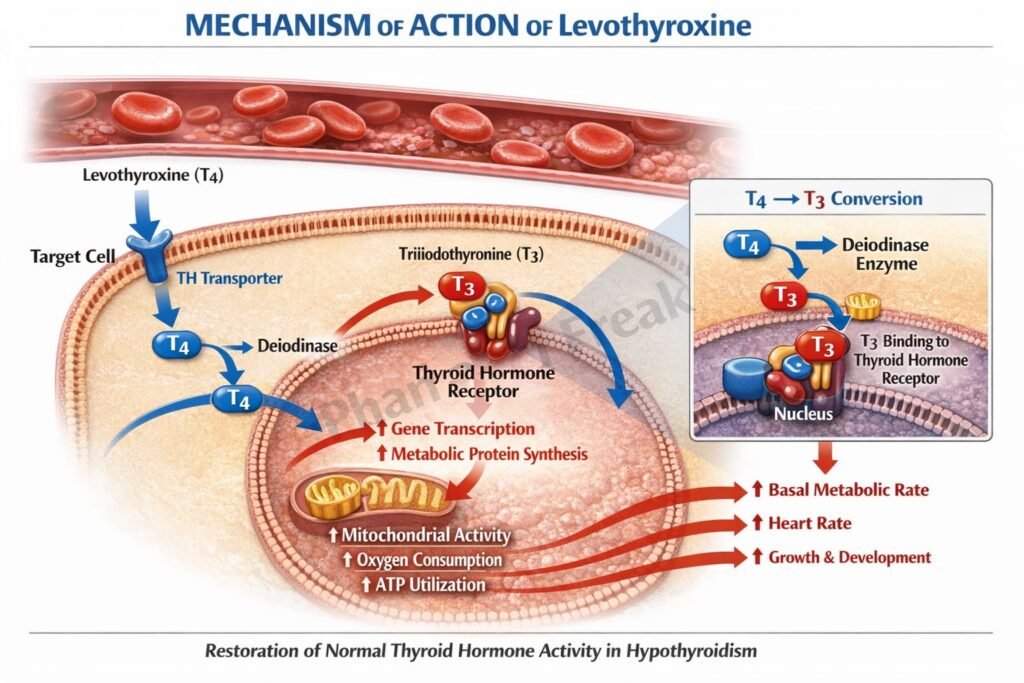
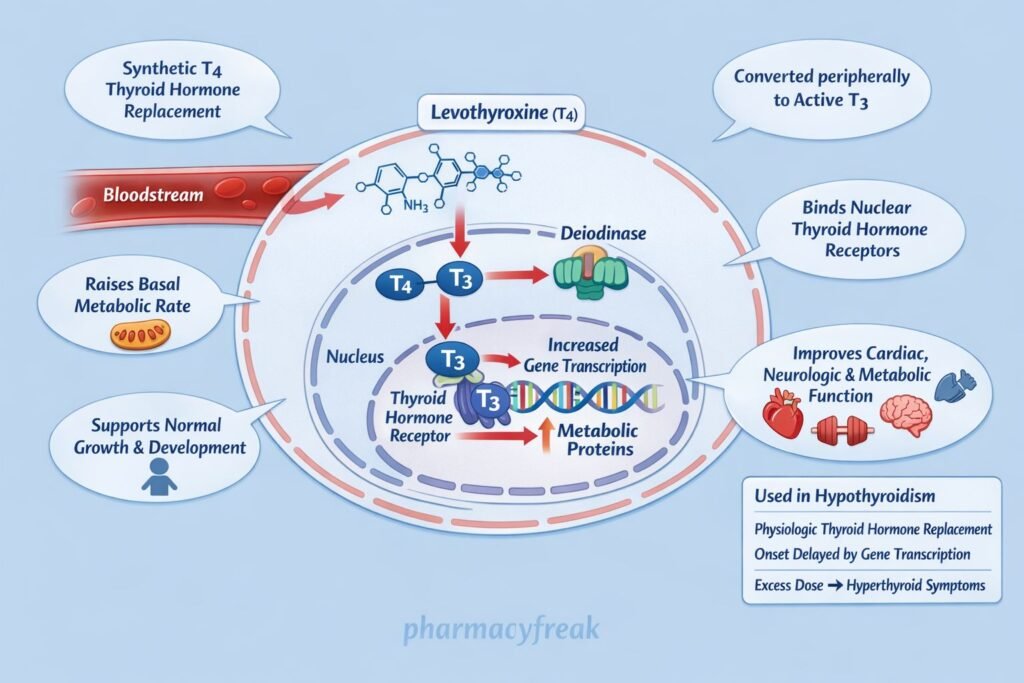
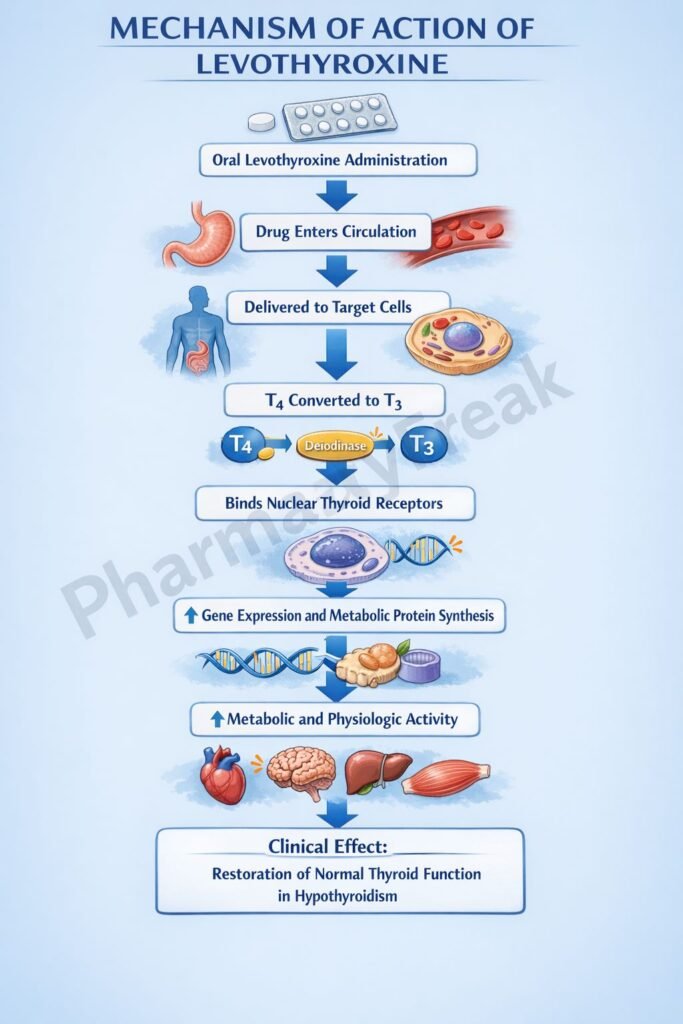
Levothyroxine (T4) is converted in peripheral tissues by deiodinase enzymes into triiodothyronine (T3), the biologically active hormone. - Cellular Uptake
T3 enters target cells via specific transporters. - Binding to Nuclear Thyroid Hormone Receptors (TRs)
T3 binds to nuclear thyroid hormone receptors (TRα and TRβ). - Regulation of Gene Transcription
The T3-receptor complex binds to thyroid response elements (TREs) on DNA, modulating gene transcription. - Increased Protein Synthesis
This leads to increased synthesis of proteins involved in metabolism, growth, and development. - Increased Basal Metabolic Rate (BMR)
Enhanced mitochondrial activity increases oxygen consumption and heat production. - Systemic Effects
- Increased heart rate and cardiac output
- Increased glucose metabolism and lipid breakdown
- Enhanced growth and CNS development
Pharmacokinetics
- Administration: Oral
- Absorption: ~70–80% (reduced with food)
- Protein Binding: High (to thyroxine-binding globulin)
- Half-life: ~7 days
- Metabolism: Hepatic and peripheral conversion to T3
- Excretion: Renal and biliary
Clinical Uses
- Hypothyroidism
- Myxedema coma (IV form)
- Thyroid hormone replacement therapy
- Suppression therapy in thyroid cancer
Adverse Effects
- Symptoms of hyperthyroidism (tachycardia, weight loss, anxiety)
- Arrhythmias
- Osteoporosis (long-term overuse)
- Heat intolerance
- Insomnia
Comparative Analysis
| Feature | Levothyroxine (T4) | Liothyronine (T3) | Desiccated Thyroid |
|---|---|---|---|
| Hormone type | T4 (prodrug) | T3 (active) | Mixed T3 + T4 |
| Onset | Slow | Rapid | Variable |
| Duration | Long | Short | Variable |
| Stability | High | Lower | Variable |
| Preferred use | Hypothyroidism | Emergency use | Rarely used |
Levothyroxine is preferred for long-term therapy due to its stable levels, long half-life, and physiological conversion to T3, whereas liothyronine is used when rapid action is required.
MCQs
- Levothyroxine is a synthetic form of:
a) T3
b) T4
c) TSH
d) TRH
Answer: b) T4 - Active form of thyroid hormone:
a) T4
b) T3
c) TSH
d) Thyroglobulin
Answer: b) T3 - Levothyroxine acts via:
a) Cell membrane receptors
b) Nuclear receptors
c) Ion channels
d) Enzymes
Answer: b) Nuclear receptors - Major effect of thyroid hormones:
a) Decrease metabolism
b) Increase metabolism
c) Decrease heart rate
d) Sedation
Answer: b) Increase metabolism - Half-life of levothyroxine:
a) 1 day
b) 3 days
c) 7 days
d) 12 hours
Answer: c) 7 days - Levothyroxine increases:
a) Oxygen consumption
b) Platelet count
c) Sodium levels
d) Insulin resistance
Answer: a) Oxygen consumption - Preferred drug for hypothyroidism:
a) Liothyronine
b) Levothyroxine
c) Propylthiouracil
d) Methimazole
Answer: b) Levothyroxine - Overdose causes:
a) Hypothyroidism
b) Hyperthyroidism
c) Bradycardia
d) Weight gain
Answer: b) Hyperthyroidism - Levothyroxine binds to:
a) Cytoplasmic receptors
b) Nuclear receptors
c) Membrane proteins
d) Ribosomes
Answer: b) Nuclear receptors - Conversion of T4 to T3 occurs in:
a) Thyroid only
b) Peripheral tissues
c) Kidney only
d) Brain only
Answer: b) Peripheral tissues
FAQs
- What is the mechanism of action of levothyroxine?
It is converted to T3, which binds nuclear receptors and regulates gene transcription. - Why is levothyroxine preferred over T3?
Due to its longer half-life and stable plasma levels. - Does levothyroxine act immediately?
No, it has a delayed onset due to conversion to T3. - Why should levothyroxine be taken on an empty stomach?
Food reduces its absorption. - What happens in overdose?
Symptoms of hyperthyroidism occur. - Does levothyroxine affect metabolism?
Yes, it increases basal metabolic rate.