Table of Contents
Introduction
Leflunomide is an immunomodulatory and disease-modifying antirheumatic drug (DMARD) used primarily in the treatment of rheumatoid arthritis and psoriatic arthritis. It suppresses immune cell proliferation and reduces inflammation, thereby slowing disease progression and joint damage.
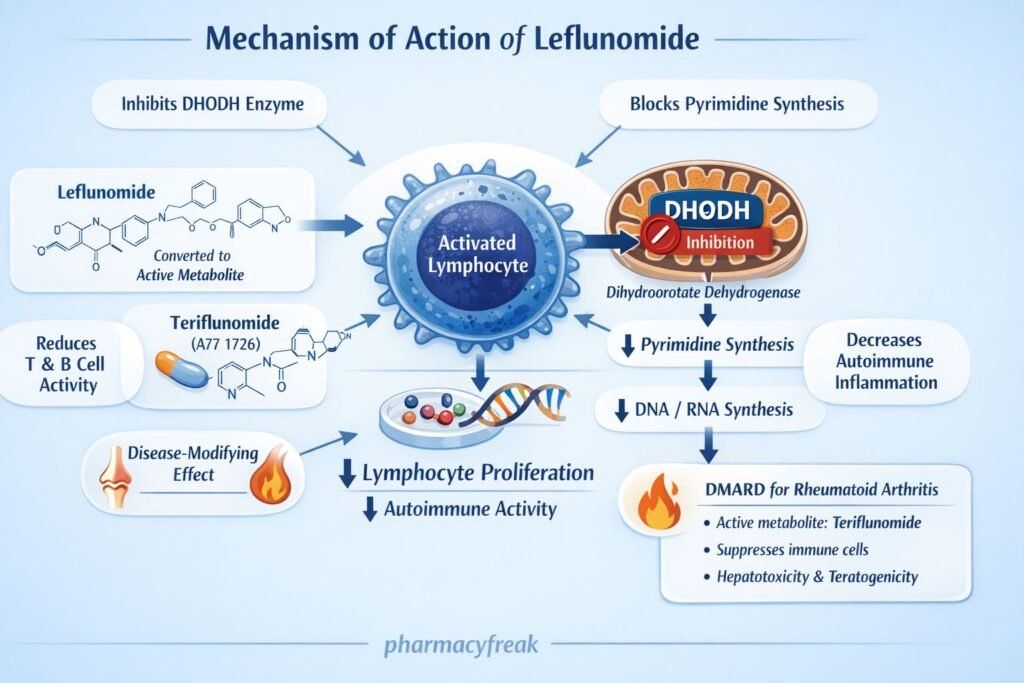
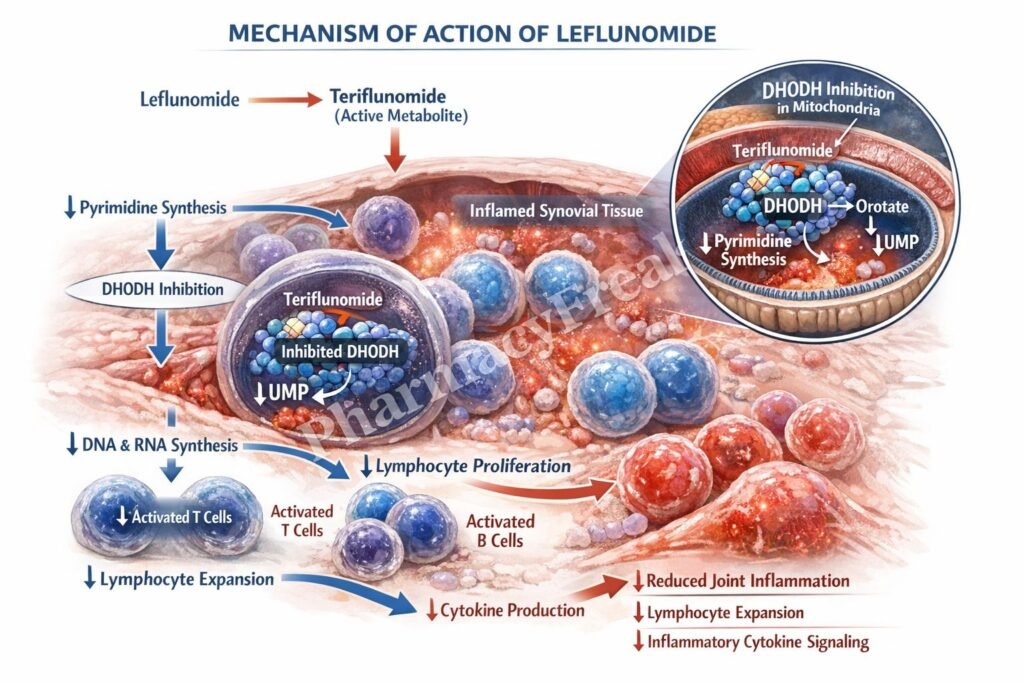
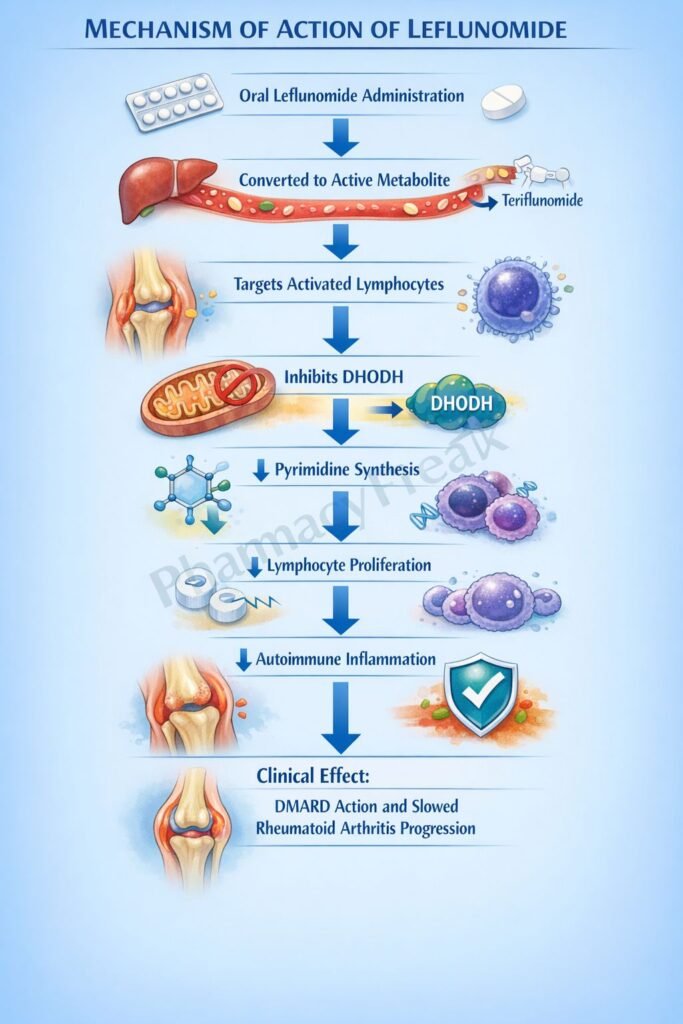
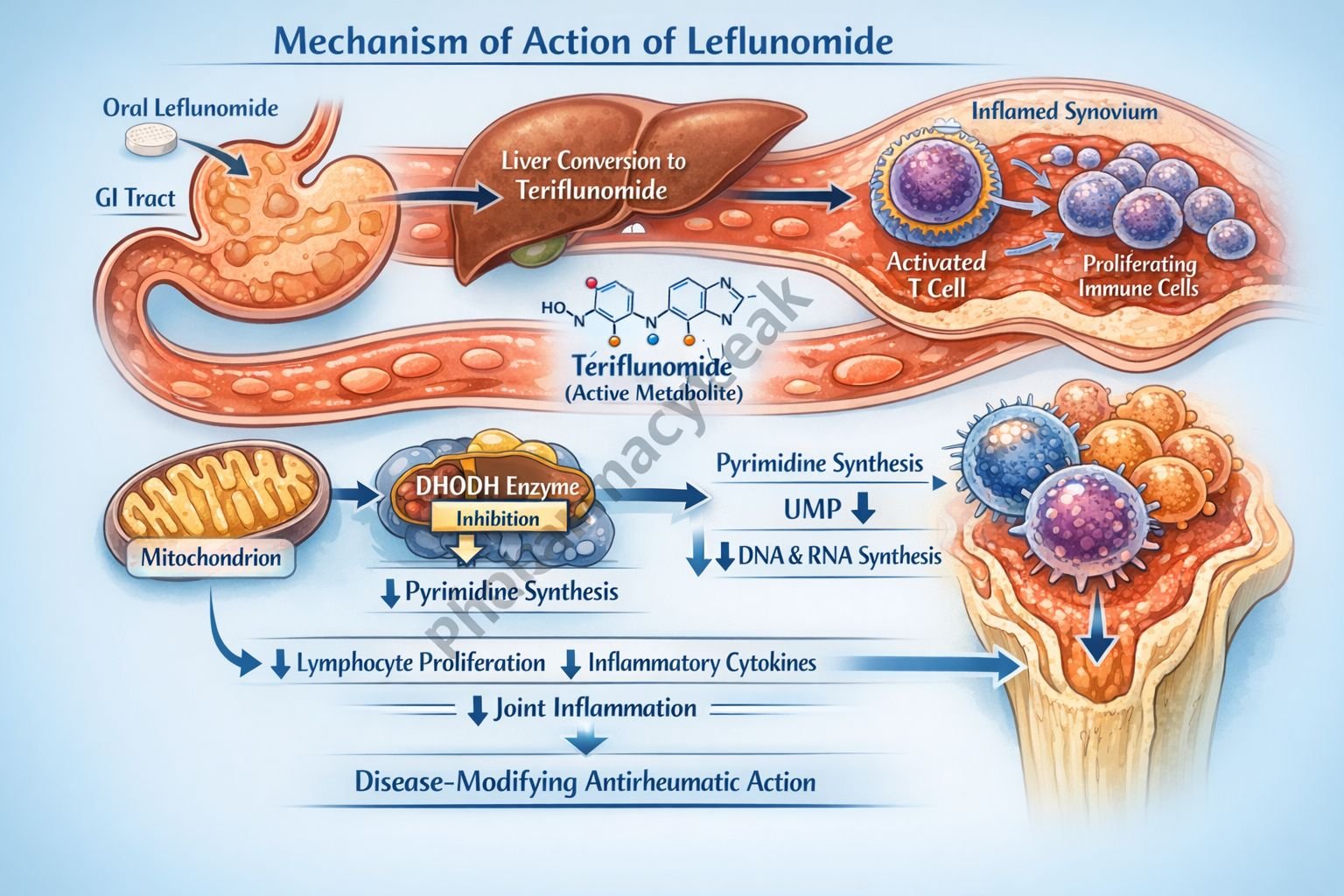
Mechanism of Action (Step-wise)
- Prodrug Conversion
Leflunomide is converted in the body to its active metabolite, teriflunomide (A77 1726). - Inhibition of Dihydroorotate Dehydrogenase (DHODH)
Teriflunomide inhibits DHODH, a key mitochondrial enzyme involved in de novo pyrimidine synthesis. - Reduction in Pyrimidine Nucleotide Production
Inhibition of DHODH decreases the synthesis of uridine monophosphate (UMP), leading to reduced DNA and RNA synthesis. - Inhibition of Lymphocyte Proliferation
Activated T and B lymphocytes rely heavily on de novo pyrimidine synthesis; their proliferation is selectively inhibited. - Suppression of Autoimmune Response
Reduced lymphocyte activity decreases the autoimmune response seen in rheumatoid arthritis. - Anti-inflammatory Effects
Leflunomide reduces production of pro-inflammatory cytokines and mediators.
Pharmacokinetics
- Administration: Oral
- Absorption: Well absorbed
- Conversion: Rapid conversion to active metabolite
- Protein Binding: High
- Half-life: Long (~2 weeks)
- Excretion: Biliary and renal
Clinical Uses
- Rheumatoid arthritis
- Psoriatic arthritis
- Autoimmune disorders (off-label)
Adverse Effects
- Hepatotoxicity
- Diarrhea
- Hypertension
- Teratogenicity
- Bone marrow suppression
- Alopecia
Comparative Analysis
| Feature | Leflunomide | Methotrexate | Sulfasalazine |
|---|---|---|---|
| Class | DMARD | DMARD | DMARD |
| Mechanism | DHODH inhibition | Folate antagonist | Anti-inflammatory |
| Effect on lymphocytes | Inhibits proliferation | Inhibits DNA synthesis | Moderate effect |
| Hepatotoxicity | Yes | Yes | Mild |
| Use | RA, psoriatic arthritis | RA, cancer | RA, IBD |
Leflunomide selectively inhibits lymphocyte proliferation by targeting pyrimidine synthesis, whereas methotrexate acts as a folate antagonist. It is often used as an alternative or adjunct in rheumatoid arthritis management.
MCQs
- Leflunomide inhibits which enzyme?
a) DNA polymerase
b) DHODH
c) Topoisomerase
d) Cyclooxygenase
Answer: b) DHODH - Active metabolite of leflunomide:
a) Methotrexate
b) Teriflunomide
c) Azathioprine
d) Cyclophosphamide
Answer: b) Teriflunomide - Mechanism involves inhibition of:
a) Purine synthesis
b) Pyrimidine synthesis
c) Protein synthesis
d) Lipid synthesis
Answer: b) Pyrimidine synthesis - Main effect on immune cells:
a) Activation
b) Proliferation inhibition
c) Differentiation
d) Apoptosis only
Answer: b) Proliferation inhibition - Leflunomide is used in:
a) Diabetes
b) Hypertension
c) Rheumatoid arthritis
d) Asthma
Answer: c) Rheumatoid arthritis - Major toxicity:
a) Nephrotoxicity
b) Hepatotoxicity
c) Ototoxicity
d) Cardiotoxicity
Answer: b) Hepatotoxicity - Half-life of active metabolite:
a) Short
b) Moderate
c) Long
d) Very short
Answer: c) Long - Teratogenic effect requires:
a) Dose reduction
b) Immediate discontinuation
c) Monitoring only
d) No action
Answer: b) Immediate discontinuation - Leflunomide affects:
a) RBCs only
b) T and B lymphocytes
c) Platelets only
d) Neurons only
Answer: b) T and B lymphocytes - It belongs to:
a) NSAIDs
b) DMARDs
c) Antibiotics
d) Antivirals
Answer: b) DMARDs
FAQs
- What is the mechanism of action of leflunomide?
It inhibits DHODH, reducing pyrimidine synthesis and lymphocyte proliferation. - Why is leflunomide effective in rheumatoid arthritis?
It suppresses immune-mediated inflammation by inhibiting lymphocyte activity. - What is teriflunomide?
The active metabolite responsible for pharmacological effects. - Why is leflunomide teratogenic?
It interferes with DNA synthesis and cell proliferation. - Does leflunomide affect purine synthesis?
No, it mainly affects pyrimidine synthesis. - What is a major concern during therapy?
Hepatotoxicity and monitoring liver function.