Table of Contents
Introduction
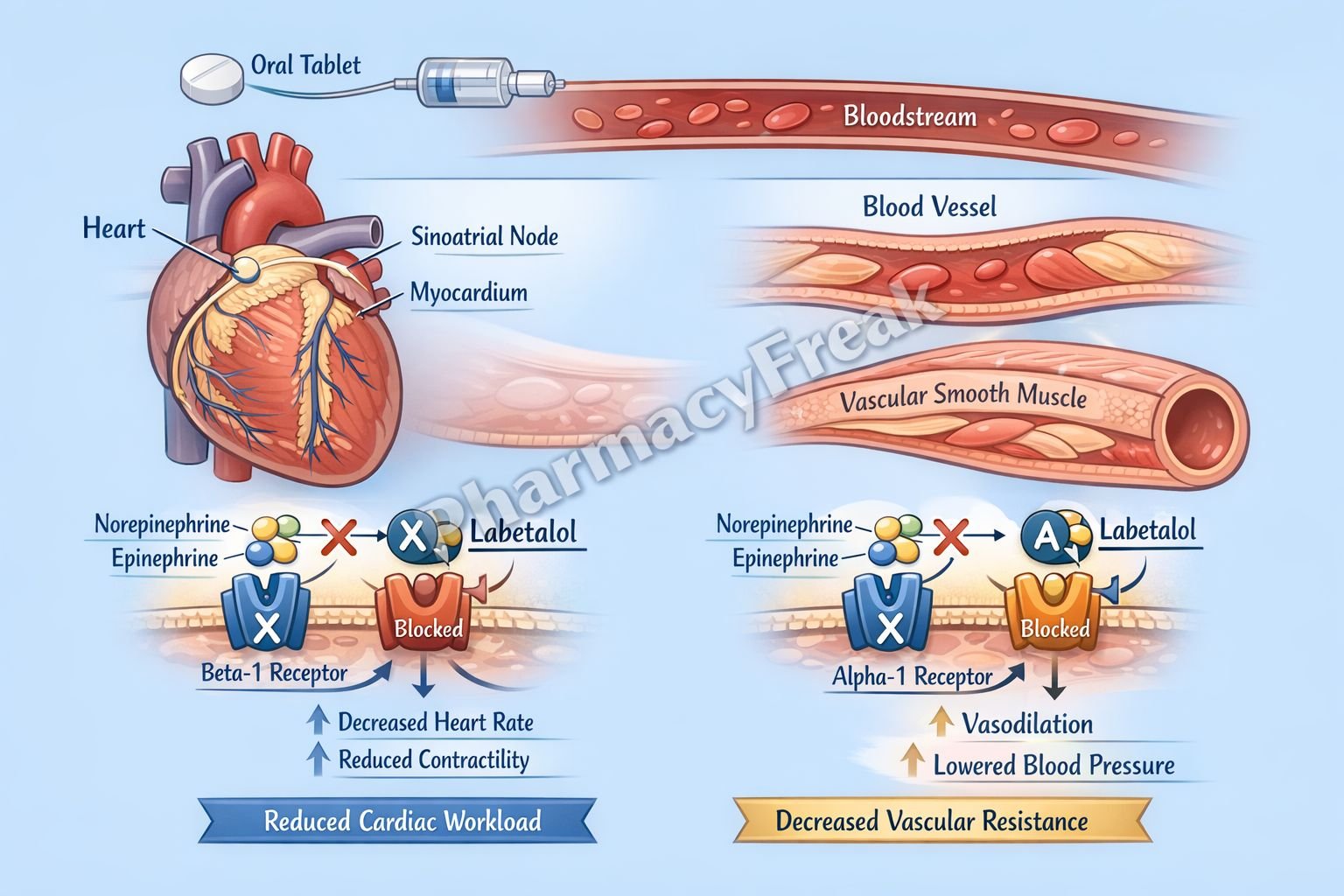
Labetalol is a mixed adrenergic receptor antagonist with both α1- and β-adrenergic blocking properties. It is widely used in the management of hypertension, including hypertensive emergencies and pregnancy-induced hypertension. Its unique dual action allows it to reduce blood pressure without significant reflex tachycardia.
Mechanism of Action (Step-wise)
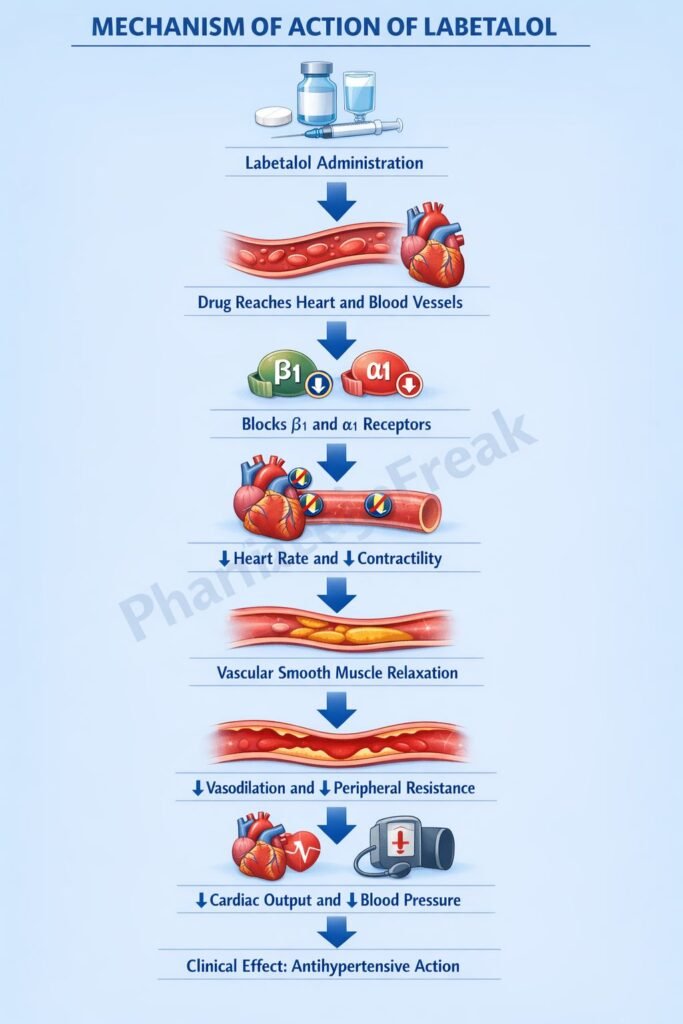
- β-Adrenergic Receptor Blockade (β1 and β2)
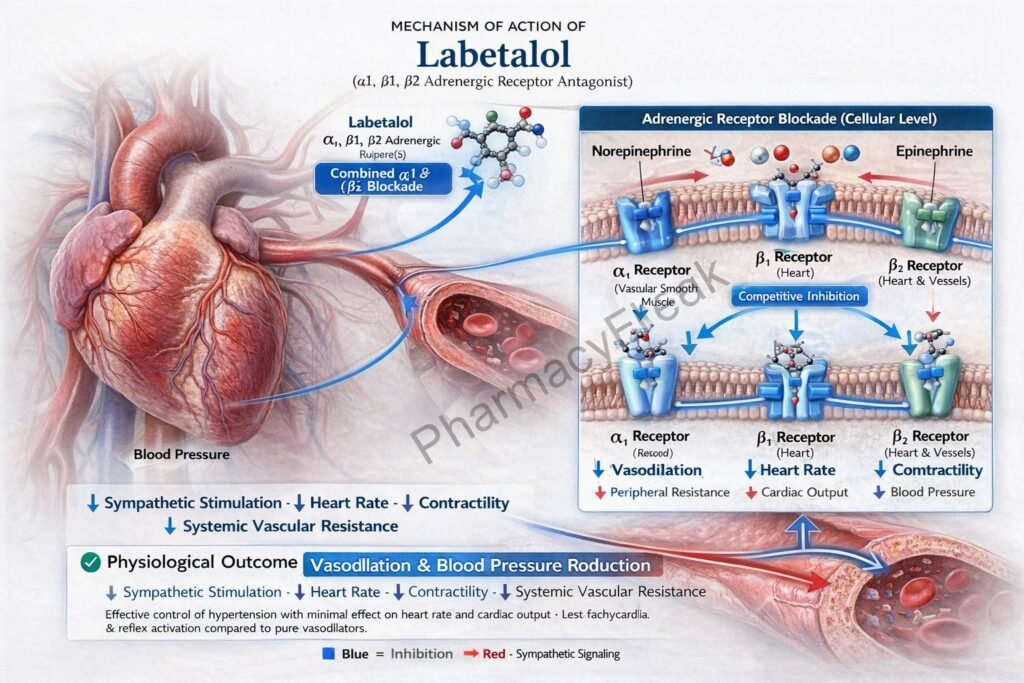
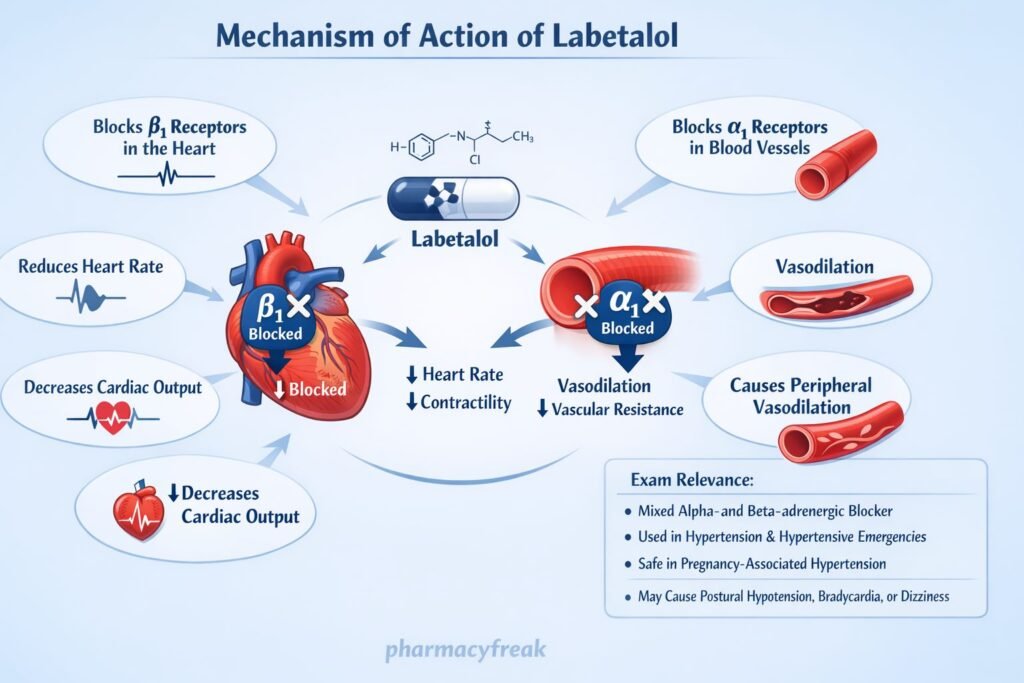
Labetalol blocks β1 receptors in the heart, reducing heart rate and myocardial contractility. It also blocks β2 receptors in peripheral vasculature. - α1-Adrenergic Receptor Blockade
It simultaneously blocks α1 receptors in vascular smooth muscle. - Vasodilation
α1 blockade leads to relaxation of vascular smooth muscle, causing vasodilation and decreased peripheral vascular resistance. - Reduction in Cardiac Output
β1 blockade decreases heart rate (negative chronotropic effect) and contractility (negative inotropic effect), reducing cardiac output. - Prevention of Reflex Tachycardia
Unlike pure α-blockers, the β-blocking action prevents reflex tachycardia that would otherwise occur due to vasodilation. - Net Effect: Blood Pressure Reduction
The combined reduction in peripheral resistance and cardiac output results in effective lowering of blood pressure.
Pharmacokinetics
- Administration: Oral and intravenous
- Absorption: Good oral absorption with first-pass metabolism
- Bioavailability: ~25%
- Protein Binding: Moderate
- Metabolism: Hepatic
- Half-life: ~5–8 hours
- Excretion: Renal and biliary
Clinical Uses
- Hypertension (chronic management)
- Hypertensive emergencies (IV use)
- Pregnancy-induced hypertension (preferred drug)
- Preeclampsia
Adverse Effects
- Hypotension
- Dizziness
- Fatigue
- Bradycardia
- Bronchospasm (due to β2 blockade)
- Orthostatic hypotension
Comparative Analysis
| Feature | Labetalol | Propranolol | Prazosin |
|---|---|---|---|
| Receptor action | α1 + β blocker | Non-selective β blocker | α1 blocker |
| Effect on HR | Decreases | Decreases | Minimal |
| Effect on BP | Strong decrease | Moderate decrease | Strong decrease |
| Reflex tachycardia | Absent | Absent | Present |
| Use in pregnancy | Yes | Limited | Yes |
Labetalol combines both α and β blockade, making it more effective in reducing blood pressure compared to pure β-blockers. Unlike prazosin, it does not cause significant reflex tachycardia due to its β-blocking action.
MCQs
- Labetalol blocks which receptors?
a) β1 only
b) α1 only
c) α1 and β receptors
d) Dopamine receptors
Answer: c) α1 and β receptors - Main antihypertensive mechanism:
a) Increased cardiac output
b) Vasodilation
c) Increased heart rate
d) Sodium retention
Answer: b) Vasodilation - β1 blockade leads to:
a) Increased HR
b) Decreased HR
c) Vasoconstriction
d) Bronchodilation
Answer: b) Decreased HR - α1 blockade causes:
a) Vasoconstriction
b) Vasodilation
c) Increased BP
d) Tachycardia
Answer: b) Vasodilation - Labetalol prevents:
a) Bradycardia
b) Reflex tachycardia
c) Vasodilation
d) Diuresis
Answer: b) Reflex tachycardia - Preferred in:
a) Asthma
b) Pregnancy-induced hypertension
c) Diabetes
d) Epilepsy
Answer: b) Pregnancy-induced hypertension - Route used in emergencies:
a) Oral
b) IV
c) IM
d) Inhalation
Answer: b) IV - Major side effect:
a) Hyperglycemia
b) Hypotension
c) Constipation
d) Rash
Answer: b) Hypotension - Labetalol reduces:
a) Peripheral resistance
b) Blood glucose
c) Platelets
d) Calcium
Answer: a) Peripheral resistance - Compared to propranolol, labetalol:
a) Has no α action
b) Has α-blocking action
c) Is less effective
d) Causes more tachycardia
Answer: b) Has α-blocking action
FAQs
- What is the mechanism of action of labetalol?
It blocks α1 and β receptors, causing vasodilation and reduced cardiac output. - Why does labetalol not cause reflex tachycardia?
Because β-blockade counteracts the reflex increase in heart rate. - Is labetalol safe in pregnancy?
Yes, it is commonly used for pregnancy-induced hypertension. - What is the advantage over pure β-blockers?
It also causes vasodilation via α1 blockade. - Can labetalol cause bronchospasm?
Yes, due to β2 receptor blockade. - Does labetalol affect heart rate?
Yes, it reduces heart rate.