Table of Contents
Introduction
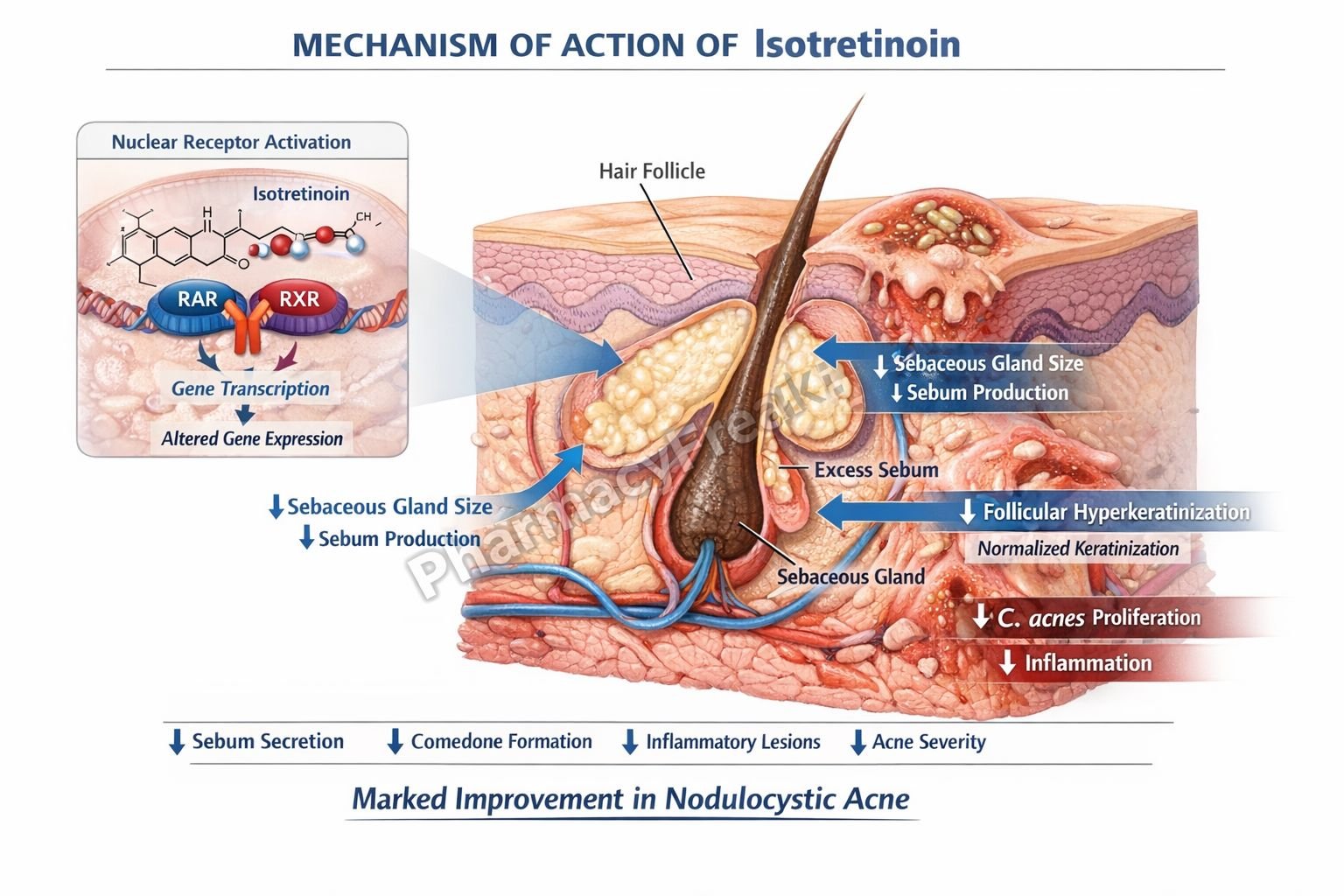
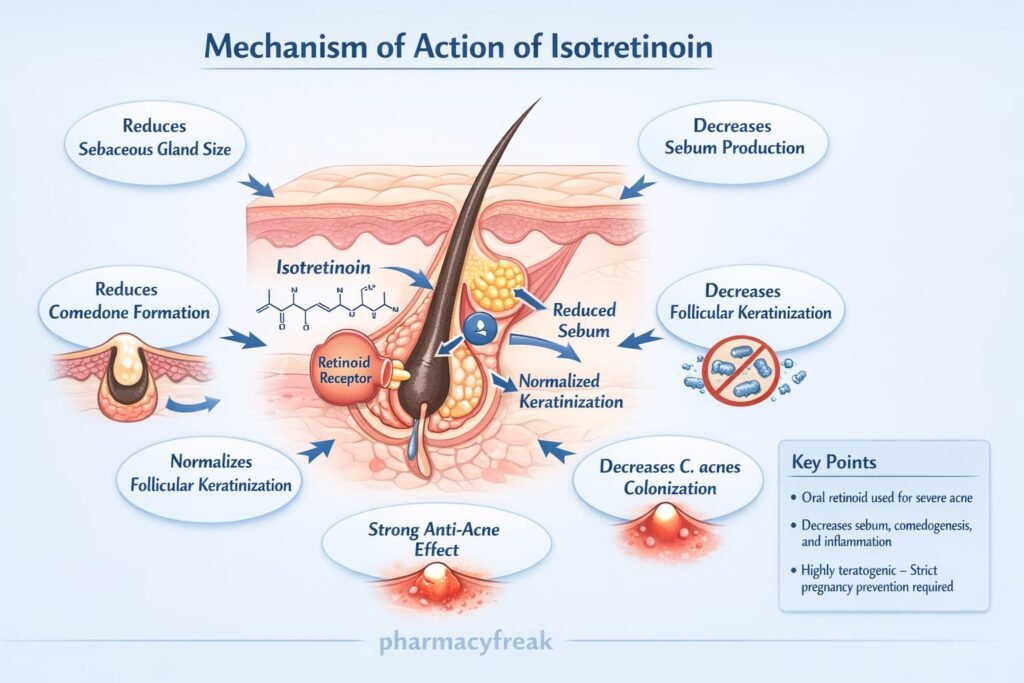
Isotretinoin is an oral retinoid (13-cis-retinoic acid) primarily used in the treatment of severe nodulocystic acne and acne resistant to conventional therapy. It is one of the most effective anti-acne agents because it targets multiple pathogenic factors involved in acne development, including sebum production, follicular keratinization, bacterial proliferation, and inflammation.
Isotretinoin pharmacology
Mechanism of Action (Step-wise)
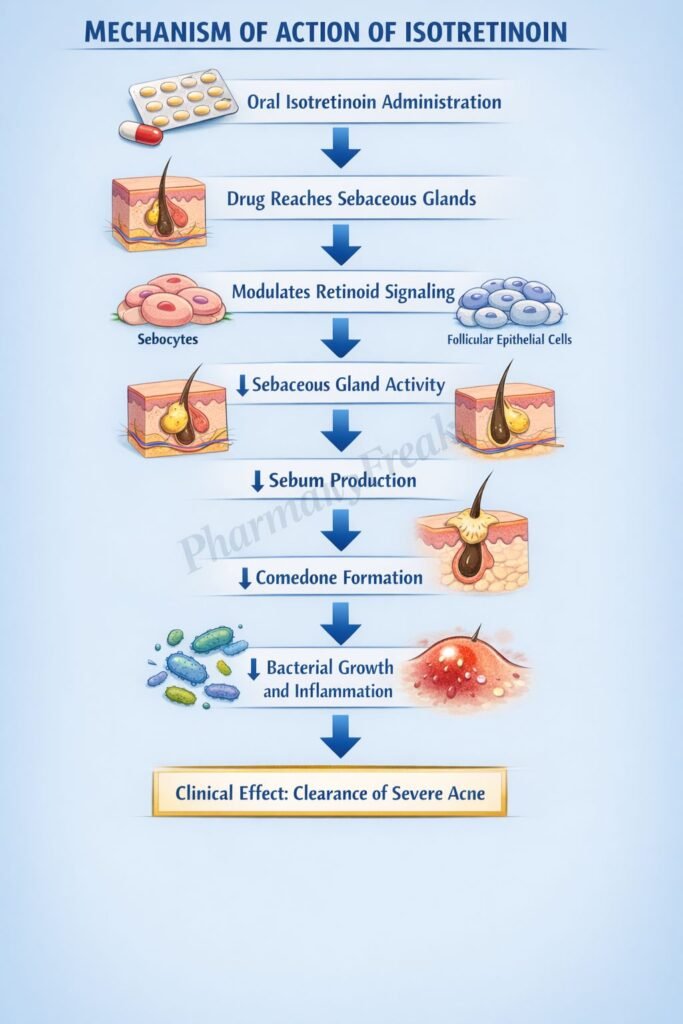
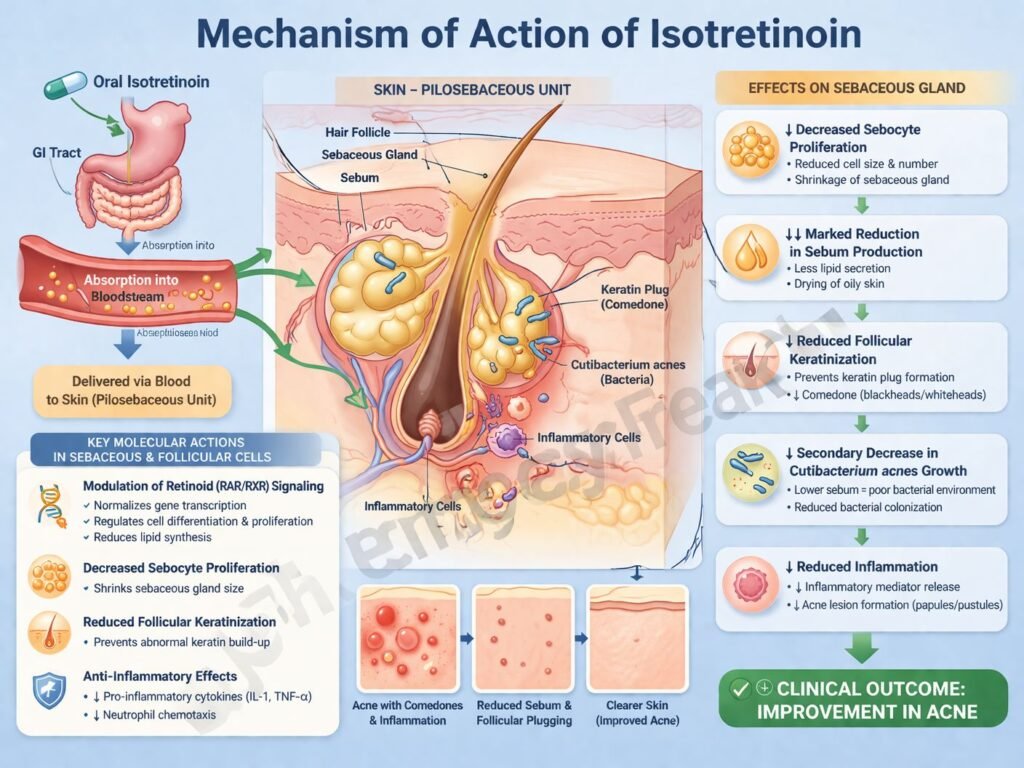
- Conversion to Active Retinoids
Isotretinoin is converted intracellularly to active metabolites such as all-trans-retinoic acid (tretinoin). - Activation of Nuclear Retinoid Receptors
These metabolites bind to nuclear receptors: retinoic acid receptors (RAR) and retinoid X receptors (RXR). - Regulation of Gene Transcription
Activation of RAR/RXR alters gene expression involved in cell differentiation, proliferation, and apoptosis. - Reduction in Sebaceous Gland Size and Activity
Isotretinoin causes atrophy of sebaceous glands, significantly reducing sebum production. - Normalization of Follicular Keratinization
It decreases hyperkeratinization of follicular epithelial cells, preventing comedone formation. - Reduction of Cutibacterium acnes Growth
Reduced sebum levels create an unfavorable environment for bacterial growth. - Anti-inflammatory Effects
It decreases inflammatory mediators and reduces acne-associated inflammation.
Pharmacokinetics
- Administration: Oral
- Absorption: Enhanced with fatty meals
- Protein Binding: High
- Metabolism: Hepatic (to active metabolites)
- Half-life: ~10–20 hours (longer for metabolites)
- Excretion: Fecal and renal
Clinical Uses
- Severe nodulocystic acne
- Acne resistant to antibiotics and topical therapy
- Rosacea (off-label)
- Disorders of keratinization
Adverse Effects
- Teratogenicity (highly contraindicated in pregnancy)
- Dry skin, lips (cheilitis), and mucous membranes
- Elevated liver enzymes
- Hyperlipidemia (↑ triglycerides)
- Photosensitivity
- Mood changes (rare)
Comparative Analysis
| Feature | Isotretinoin | Tretinoin | Adapalene |
|---|---|---|---|
| Route | Oral | Topical | Topical |
| Mechanism | Systemic retinoid (RAR/RXR activation) | RAR activation | Selective RAR agonist |
| Sebum reduction | Marked | Minimal | Minimal |
| Anti-acne efficacy | Very high | Moderate | Moderate |
| Teratogenicity | High | Low (topical) | Low |
| Use | Severe acne | Mild–moderate acne | Mild–moderate acne |
Isotretinoin is unique among retinoids because it significantly reduces sebaceous gland activity, addressing the root cause of acne. Topical retinoids mainly act on keratinization and have less effect on sebum production.
MCQs
- Isotretinoin is chemically classified as:
a) Steroid
b) Retinoid
c) Antibiotic
d) Antifungal
Answer: b) Retinoid - Primary mechanism involves activation of:
a) G-protein receptors
b) Nuclear receptors
c) Ion channels
d) Enzymes
Answer: b) Nuclear receptors - Key receptors involved:
a) β receptors
b) RAR and RXR
c) Dopamine receptors
d) NMDA receptors
Answer: b) RAR and RXR - Major effect on sebaceous glands:
a) Stimulation
b) No effect
c) Atrophy
d) Hyperplasia
Answer: c) Atrophy - Major contraindication:
a) Hypertension
b) Pregnancy
c) Diabetes
d) Asthma
Answer: b) Pregnancy - Acne improvement is mainly due to:
a) Antibiotic action
b) Increased sebum
c) Reduced sebum production
d) Vasodilation
Answer: c) Reduced sebum production - Absorption is enhanced with:
a) Water
b) Empty stomach
c) Fatty meals
d) Protein intake
Answer: c) Fatty meals - Major lab abnormality:
a) Low glucose
b) High triglycerides
c) Low sodium
d) Low calcium
Answer: b) High triglycerides - Isotretinoin reduces:
a) Keratinization
b) Insulin
c) Hemoglobin
d) Platelets
Answer: a) Keratinization - Bacterial growth is reduced due to:
a) Direct killing
b) Reduced sebum
c) Increased immunity
d) Enzyme inhibition
Answer: b) Reduced sebum
FAQs
- What is the mechanism of action of isotretinoin?
It activates nuclear retinoid receptors, reducing sebum production and normalizing keratinization. - Why is isotretinoin so effective in acne?
It targets all major pathogenic factors, especially sebum production. - Why is isotretinoin teratogenic?
It alters gene expression during fetal development. - How does it reduce bacterial growth?
By decreasing sebum, which is essential for bacterial proliferation. - Why should isotretinoin be taken with food?
Fat enhances its absorption. - Is isotretinoin used for mild acne?
No, it is reserved for severe or resistant cases.