Table of Contents
Introduction
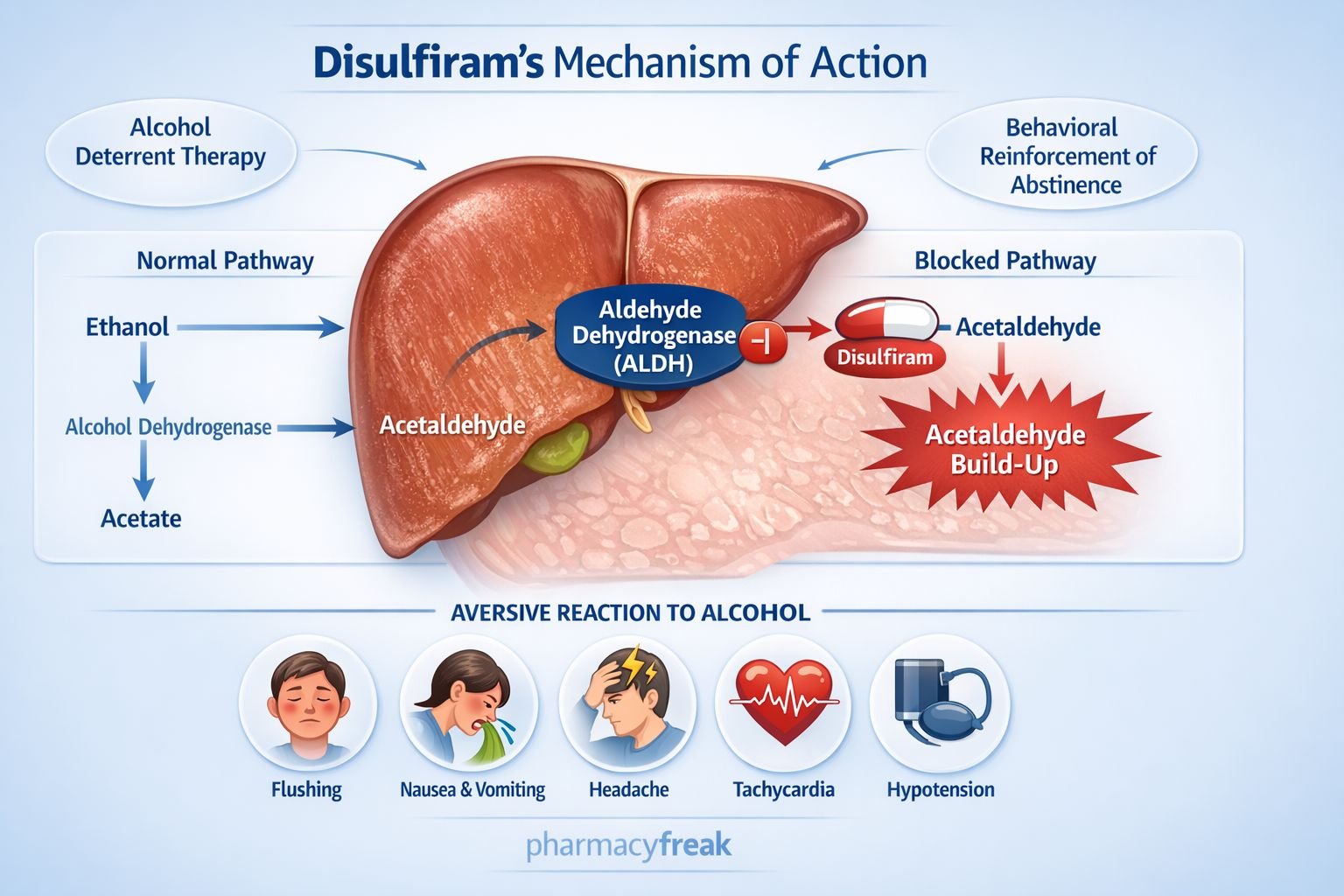
Disulfiram is an alcohol deterrent drug used in the management of chronic alcohol dependence. Unlike agents that reduce craving, disulfiram works by producing an aversive reaction when alcohol is consumed, thereby reinforcing abstinence through negative conditioning. It is a high-yield pharmacology drug in psychiatry, internal medicine, and community medicine examinations because of its enzyme inhibition–based mechanism and characteristic disulfiram–ethanol reaction.
Mechanism of Action (Step-wise)
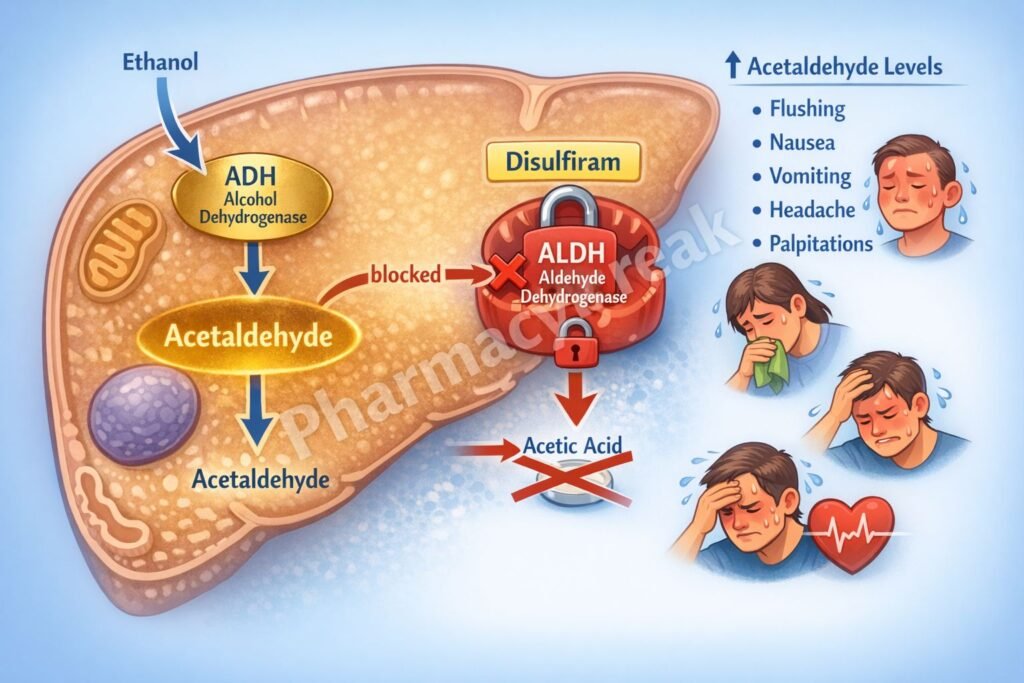
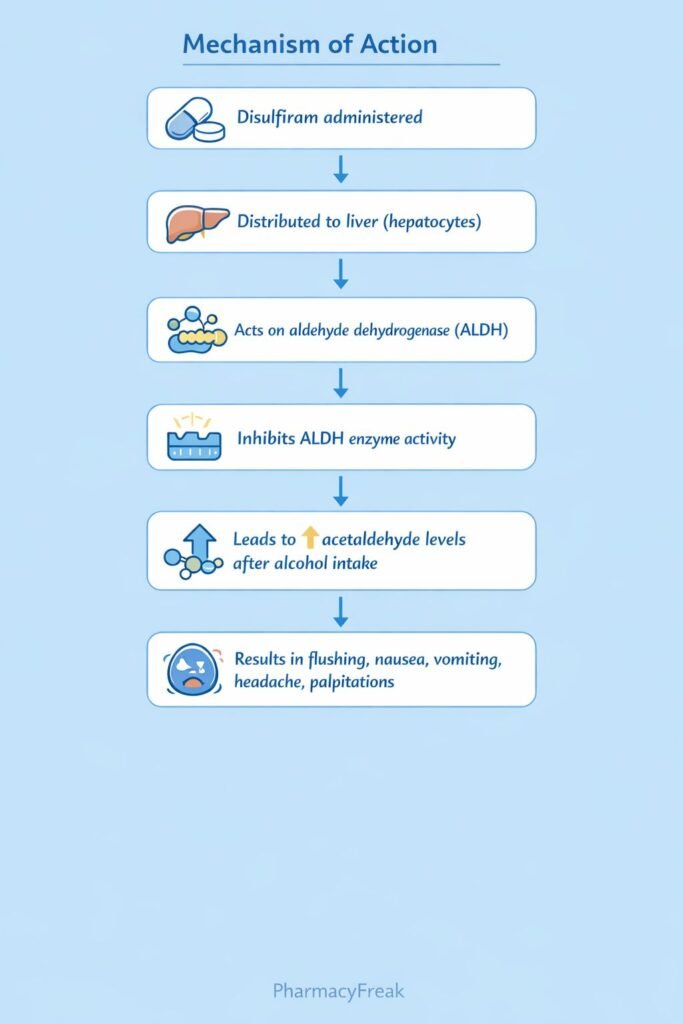
Disulfiram interferes with ethanol metabolism, leading to accumulation of toxic metabolites.
Step-wise mechanism:
- Normal Ethanol Metabolism
- Ethanol is converted to acetaldehyde by alcohol dehydrogenase
- Acetaldehyde is then metabolized to acetate by aldehyde dehydrogenase (ALDH)
- Inhibition of Aldehyde Dehydrogenase
Disulfiram irreversibly inhibits hepatic aldehyde dehydrogenase. - Accumulation of Acetaldehyde
When alcohol is consumed, acetaldehyde levels rise rapidly in the blood. - Disulfiram–Ethanol Reaction
Elevated acetaldehyde produces unpleasant symptoms:- Flushing
- Throbbing headache
- Nausea and vomiting
- Sweating
- Palpitations
- Hypotension
- Negative Reinforcement of Abstinence
The fear of these severe reactions discourages further alcohol intake. - Additional Enzyme Inhibition
Disulfiram also inhibits:- Dopamine β-hydroxylase → ↑ dopamine, ↓ norepinephrine (minor contribution to effects)
- No Effect Without Alcohol
Disulfiram has minimal pharmacological effects in the absence of ethanol.
Pharmacokinetics
- Absorption: Well absorbed orally
- Distribution: Widely distributed; accumulates in fat
- Metabolism: Hepatic metabolism
- Elimination: Renal and biliary excretion
- Half-life: Long and variable
- Duration of action: ALDH inhibition may persist for 7–14 days after stopping drug
This prolonged effect explains reactions even after alcohol intake days later.
Clinical Uses
Disulfiram is used exclusively in alcohol dependence management:
- Chronic alcohol dependence (aversion therapy)
- Motivated patients under supervision
- Relapse prevention in structured de-addiction programs
It is not effective for acute alcohol withdrawal or craving reduction.
Adverse Effects
Adverse effects may occur with or without alcohol:
- Without alcohol:
- Drowsiness
- Metallic or garlic-like taste
- Headache
- Fatigue
- With alcohol (Disulfiram–ethanol reaction):
- Severe flushing
- Vomiting
- Hypotension
- Tachycardia
- Chest pain
- Collapse (severe cases)
- Serious adverse effects:
- Hepatotoxicity
- Peripheral neuropathy
- Psychosis (rare)
Liver function monitoring is mandatory.
Comparative Analysis (must include a table + explanation)
Comparison of Drugs Used in Alcohol Dependence
| Feature | Disulfiram | Naltrexone | Acamprosate |
|---|---|---|---|
| Primary action | Alcohol aversion | ↓ Alcohol reward | ↓ Craving |
| Mechanism | ALDH inhibition | Opioid receptor blockade | Glutamate modulation |
| Effect with alcohol | Severe reaction | Reduced pleasure | No reaction |
| Use in withdrawal | No | No | No |
| Patient motivation required | High | Moderate | Moderate |
Explanation:
Disulfiram works through behavioral conditioning rather than neurochemical craving control. Naltrexone and acamprosate are preferred when patient compliance or supervision is limited.
MCQs (10–15)
- Disulfiram inhibits which enzyme?
a) Alcohol dehydrogenase
b) Aldehyde dehydrogenase
c) Acetyl-CoA synthetase
d) Cytochrome P450
Answer: b) Aldehyde dehydrogenase
- Accumulation of which metabolite causes disulfiram reaction?
a) Ethanol
b) Acetate
c) Acetaldehyde
d) Methanol
Answer: c) Acetaldehyde
- Disulfiram is used primarily for:
a) Alcohol withdrawal
b) Delirium tremens
c) Alcohol dependence
d) Opioid addiction
Answer: c) Alcohol dependence
- Which symptom is characteristic of disulfiram–ethanol reaction?
a) Hypoglycemia
b) Flushing
c) Constipation
d) Bradycardia
Answer: b) Flushing
- Disulfiram should be avoided in patients with:
a) Alcohol dependence
b) Liver disease
c) Tobacco use
d) Hypertension
Answer: b) Liver disease
- The action of disulfiram persists after stopping the drug because it:
a) Is slowly absorbed
b) Has active metabolites
c) Irreversibly inhibits ALDH
d) Accumulates in kidneys
Answer: c) Irreversibly inhibits ALDH
- Disulfiram produces aversion to alcohol by:
a) Blocking dopamine receptors
b) Causing toxic acetaldehyde buildup
c) Inhibiting GABA receptors
d) Inducing sedation
Answer: b) Causing toxic acetaldehyde buildup
- Disulfiram should be started only after abstinence of at least:
a) 2 hours
b) 6 hours
c) 12 hours
d) 24 hours
Answer: d) 24 hours
- Disulfiram also inhibits which enzyme involved in catecholamine synthesis?
a) MAO
b) COMT
c) Dopamine β-hydroxylase
d) Tyrosine hydroxylase
Answer: c) Dopamine β-hydroxylase
- Which drug does NOT cause aversion therapy?
a) Disulfiram
b) Naltrexone
c) Acamprosate
d) None
Answer: b) Naltrexone
FAQs (minimum 5)
- What is the primary mechanism of disulfiram?
Inhibition of aldehyde dehydrogenase leading to acetaldehyde accumulation. - Why does disulfiram cause flushing and vomiting?
Due to high acetaldehyde levels after alcohol consumption. - Does disulfiram reduce alcohol craving?
No, it works by aversion, not craving reduction. - How long does disulfiram’s effect last?
Up to 1–2 weeks after discontinuation. - Can disulfiram be used without supervision?
No, supervised use is strongly recommended. - Is disulfiram useful in acute alcohol withdrawal?
No, it has no role in withdrawal management.
References
- Goodman & Gilman’s The Pharmacological Basis of Therapeutics
https://accessmedicine.mhmedical.com - Katzung BG. Basic and Clinical Pharmacology
https://accessmedicine.mhmedical.com - Tripathi KD. Essentials of Medical Pharmacology
https://www.jaypeebrothers.com - Harrison’s Principles of Internal Medicine
https://accessmedicine.mhmedical.com