
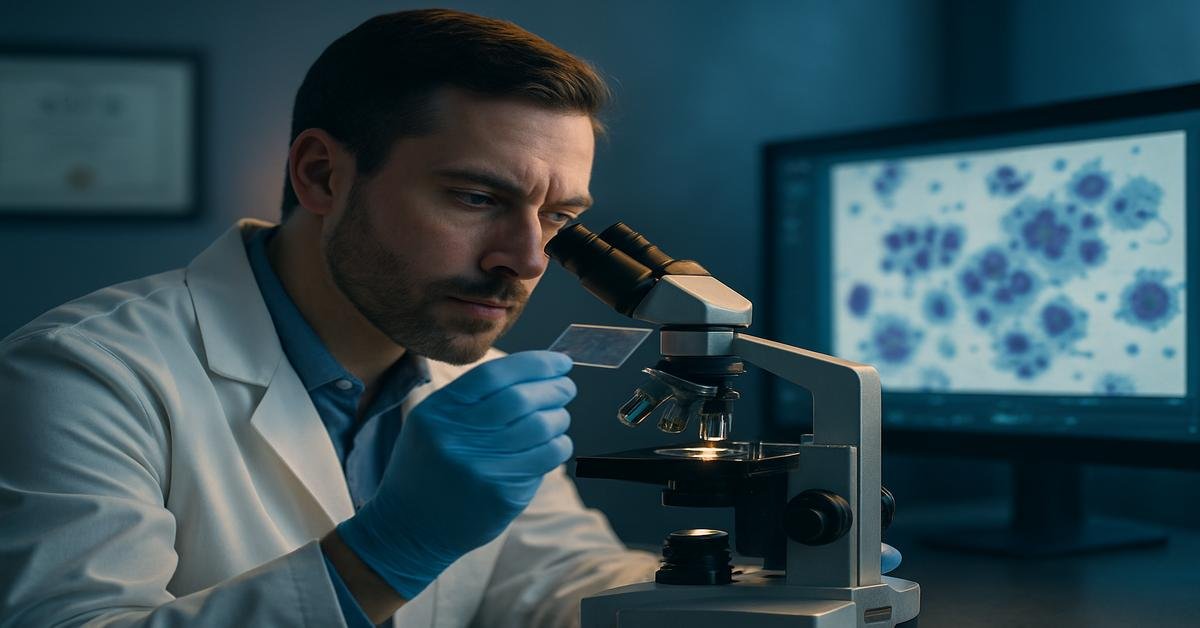
Cytotechnologists do work that most patients never see, but their impact is direct and serious. They examine cells under a microscope and look for early signs of disease, especially cancer. In many cases, they are the first professionals to spot abnormal changes that lead to a diagnosis. That matters because cancer is often easier to treat when it is found early. If you are considering the CT (ASCP) path, it helps to understand both sides of the profession: why the work is so important and what it takes to become certified. This field combines lab science, pattern recognition, clinical judgment, and real responsibility. It is not the biggest healthcare profession, but it fills a critical need.
What a cytotechnologist actually does
A cytotechnologist studies individual cells and small clusters of cells to detect changes linked to cancer, precancer, infections, and other conditions. These cells can come from many body sites. Common examples include cervical samples, body fluids, fine needle aspiration specimens, and samples from the respiratory or urinary tract.
The best-known example is the Pap test. A cytotechnologist reviews cervical cells and looks for changes that may suggest precancer or cancer. That screening process has helped reduce deaths from cervical cancer because it catches cellular changes before a tumor grows or spreads. This is one of the clearest examples of how laboratory work can change outcomes before a patient even feels sick.
But the role goes beyond Pap tests. Cytotechnologists may also:
-
Screen slides for abnormal cells
-
Identify infectious organisms or inflammatory changes
-
Help evaluate needle biopsy samples during procedures
-
Prepare and stain specimens for review
-
Work with pathologists to support final diagnoses
-
Use imaging systems and digital tools to improve screening accuracy
This is detail-heavy work. A small change in the shape of a nucleus, the ratio of nucleus to cytoplasm, or the arrangement of cells can mean the difference between a benign process and a serious malignancy. That is why cytotechnology demands strong concentration and disciplined attention to detail. It is not just about “seeing” cells. It is about understanding what normal looks like, recognizing what is off, and knowing when a finding needs urgent review.
Why cytotechnologists are essential in the fight against cancer
The short answer is early detection. Cancer does not usually become easier to treat as time passes. When abnormal cells are caught early, treatment is often less invasive, less expensive, and more effective. Cytotechnologists help create that window of opportunity.
Their role matters for several reasons.
They help detect disease before symptoms appear. Many patients with early-stage cervical abnormalities or certain other cellular changes feel completely normal. Screening finds problems before pain, bleeding, weight loss, or other warning signs begin. That shift from reactive care to preventive care is one of the biggest strengths of cytology.
They support fast clinical decisions. In some settings, especially fine needle aspiration procedures, a cytotechnologist may assess whether a sample is adequate while the patient is still present. That helps the clinician know whether more material is needed right away. It saves time, avoids repeat procedures, and improves the chance of getting a useful diagnosis.
They reduce the risk of missed abnormalities. Good cytology practice uses trained review, quality control, and often automated screening support. Cytotechnologists are part of that system. Their work adds a layer of expert review that helps catch subtle changes that could otherwise be overlooked.
They are part of the pathology team. Cancer diagnosis is rarely a one-person process. Cytotechnologists, histotechnologists, pathologists, laboratory managers, and clinicians all contribute pieces of the picture. Cytotechnologists bring cellular-level expertise that supports accurate interpretation.
They help healthcare systems manage screening at scale. Large health systems process high volumes of screening samples. Without trained professionals to review and triage these specimens, preventive screening programs would not function well. In that sense, cytotechnologists do not just help one patient at a time. They support population-level cancer prevention.
This work can be emotionally meaningful. A cytotechnologist may never meet the patient, but a careful review can lead to treatment that prevents invasive cancer. That is a real outcome, even if it happens behind the scenes.
How the CT (ASCP) credential fits into the profession
CT (ASCP) stands for Cytotechnologist certified by the American Society for Clinical Pathology Board of Certification. In practical terms, this credential shows that you met education requirements and passed a national certification exam in cytotechnology.
Why does that matter? Because employers want proof that a candidate has the scientific background and technical judgment needed for the role. Certification helps standardize expectations across laboratories. It tells employers, regulators, and patients that the person reviewing specimens has met a recognized professional benchmark.
In many lab careers, certification is either required, strongly preferred, or tied to hiring competitiveness. Cytotechnology is no exception. A CT (ASCP) credential can improve job prospects and can also support career mobility if you move between employers or states.
Career outlook for cytotechnologists
The cytotechnology field is specialized, and that shapes the job market. It is not a huge profession with endless openings in every city, but there is ongoing need for qualified professionals, especially those with strong technical skills and flexibility.
Several factors influence the outlook.
Cancer screening is still necessary. Even as testing methods evolve, cell-based evaluation remains important. Cervical cancer screening has changed over time, with more use of HPV testing and co-testing strategies, but cytology still plays a central role in many care settings. Cytotechnologists also contribute outside gynecologic cytology, including non-gynecologic specimens and fine needle aspiration support.
Retirements create openings. Like many laboratory fields, cytotechnology has experienced workforce aging. When experienced professionals retire, employers need trained replacements. In a niche field, that can make qualified candidates valuable.
The role is becoming broader. Many cytotechnologists today work in settings that expect more than slide screening alone. Some assist with molecular testing workflows, specimen adequacy assessments, quality systems, teaching, or lab coordination. This can make the profession more resilient because the skill set is not limited to one narrow task.
Geography matters. Job availability often depends on region. Large medical centers, cancer centers, academic hospitals, and reference laboratories tend to offer the most opportunities. Smaller markets may have fewer openings, so willingness to relocate can help.
Technology is changing the work, not eliminating it. Automation, image analysis, and digital pathology tools have changed how specimens are screened. Some people assume this means fewer professionals will be needed. The reality is more nuanced. Technology helps manage volume and improve consistency, but abnormal findings still need expert human interpretation and clinical judgment. In many labs, the job is shifting rather than disappearing.
For someone entering the field, the key point is this: cytotechnology remains important, but it rewards adaptability. Employers increasingly value professionals who are comfortable with instrumentation, informatics, quality procedures, and collaboration across pathology services.
Who tends to do well in this career
This profession fits a certain type of worker. You do not need to be loud, sales-oriented, or drawn to constant patient interaction. But you do need to be careful, steady, and mentally engaged.
People often do well in cytotechnology if they have these traits:
-
Strong visual attention to detail
-
Patience with repetitive but important work
-
Interest in disease processes and cancer biology
-
Comfort working in a laboratory environment
-
Ability to focus for long periods without losing accuracy
-
Respect for procedures, quality standards, and documentation
It also helps to be comfortable with uncertainty. Not every specimen is clear-cut. Some findings are subtle. Part of professional maturity in this field is knowing when something deserves further review instead of forcing a quick answer.
How to become a cytotechnologist and get CT (ASCP) certified
The exact route can vary depending on your education background, but the general process is straightforward: complete the required education, finish an accredited cytotechnology program or another qualifying pathway, and pass the certification exam.
Here is the path in practical terms.
1. Earn the necessary college education. Most candidates begin with a bachelor’s degree or complete the equivalent required college coursework in biology and related sciences. Cytotechnology is built on anatomy, physiology, microbiology, chemistry, and cell biology. Without that foundation, the microscope work will feel disconnected and much harder to interpret.
2. Complete a cytotechnology program. This is the professional training phase where you learn specimen preparation, microscopic interpretation, disease patterns, quality control, and lab workflow. Training is usually intensive because students must learn to distinguish subtle differences between normal, reactive, precancerous, and malignant cells. Clinical experience is a major part of this step. Looking at real cases matters because textbook images only show ideal examples.
3. Meet ASCP Board of Certification eligibility requirements. Before applying for the CT exam, candidates must qualify through an approved route. These routes can change over time, so the most important practical advice is to confirm current eligibility directly with the certifying body before you commit to a program. That protects you from spending time and money on training that does not match current certification standards.
4. Apply for the CT (ASCP) exam. Once eligible, you submit your application and supporting documents. This usually includes transcripts and proof of program completion or other required training. Accuracy matters here. Delays often happen because of missing or incorrect paperwork.
5. Prepare seriously for the exam. The CT exam is not something most people pass by guessing or relying only on classroom memory. A strong plan usually includes reviewing gynecologic and non-gynecologic cytology, laboratory operations, quality assurance concepts, and diagnostic criteria. Many candidates do best when they combine textbook review with case-based image study, because real exam questions often test recognition and judgment, not just memorization.
6. Pass the exam and maintain certification. Certification is not the end of learning. Laboratory medicine changes over time. Ongoing competency matters because testing methods, terminology, screening technologies, and practice standards evolve. Maintaining certification helps ensure that professionals stay current.
What to expect during training and early practice
Students are often surprised by how steep the learning curve is. At first, many cells look similar. Then, over time, patterns start to separate. You begin to notice nuclear enlargement, chromatin changes, irregular membranes, keratinization, background tumor diathesis, and other clues that once felt invisible.
That growth takes repetition. New professionals should expect:
-
Long hours at the microscope during training
-
Frequent feedback and correction
-
A need to build speed without sacrificing accuracy
-
Exposure to both common findings and rare cases
-
Careful tracking of quality and screening performance
The early years are often about building confidence. A good new cytotechnologist learns not just how to identify abnormalities, but how to work within a quality-driven laboratory system. That includes proper documentation, escalation of concerning findings, and understanding the pathologist’s role in final interpretation.
Challenges in the field that future cytotechnologists should understand
This is rewarding work, but it has real challenges.
The work requires sustained concentration. Looking at slides for long periods can be mentally tiring. Accuracy must stay high even when the workload is repetitive. That takes discipline.
The field is specialized. A specialized credential can be a strength, but it can also mean a narrower job market than broader laboratory roles. If you want maximum flexibility in location, you should think about that early.
Standards are high for a reason. A missed abnormality can affect a patient’s diagnosis and treatment. That responsibility can feel heavy, especially early in your career.
The profession is evolving. Testing algorithms, automation, and molecular methods continue to change the lab environment. Professionals who resist change may feel stuck. Those who keep learning tend to stay valuable.
None of these issues are reasons to avoid the field. They are reasons to enter it with clear expectations.
Why this career still matters
Some healthcare jobs are highly visible. Cytotechnology usually is not. Patients often remember the doctor who delivered the diagnosis, not the laboratory professional who first recognized the abnormal cells. But invisibility is not the same as low importance.
Cytotechnologists matter because cancer detection often begins at the cellular level. Before a mass is visible on imaging, before symptoms become obvious, before a patient realizes anything is wrong, abnormal cells may already be present in a specimen. Finding those cells can change the entire course of care.
That is what makes the CT (ASCP) path worth serious consideration. It offers a way to contribute to cancer prevention and diagnosis through skilled laboratory practice. The work is technical, quiet, and exacting. It is also meaningful. If you enjoy science, can focus deeply, and want a healthcare role where precision truly matters, cytotechnology remains a strong and relevant career choice.
For the right person, becoming a certified cytotechnologist is more than earning a credential. It is entering a profession built on one core idea: small cellular changes can carry life-changing information, and someone needs the skill to recognize them.

