
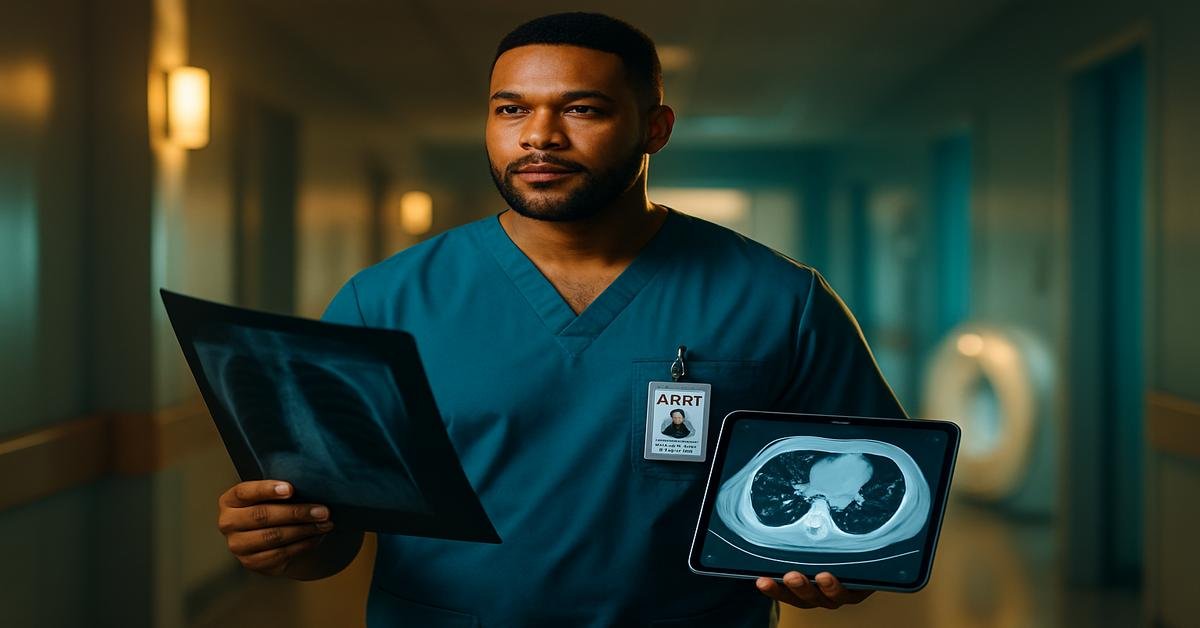
If you already work in X-ray, moving into computed tomography (CT) is one of the most practical ways to expand your career. It builds on skills you already use every day: patient positioning, anatomy, radiation safety, image quality, and working under pressure. CT adds a new layer of technical knowledge, but it is not a completely different world. For many radiologic technologists, cross-training into CT is the fastest path to more job options, higher pay, stronger scheduling flexibility, and better long-term career security. The key is understanding what ARRT expects, how clinical experience is documented, and what changes when you move from general radiography into sectional imaging.
Why CT is a smart next step for X-ray technologists
CT is in demand because it sits at the center of modern diagnosis. Emergency departments rely on it for trauma, stroke, chest pain, and abdominal pain. Outpatient centers use it for cancer staging, follow-up scans, lung screening, sinus imaging, orthopedic planning, and many other studies. Inpatient units need it around the clock. That broad use creates more openings across hospitals, imaging centers, urgent care settings, and mobile services.
For an X-ray technologist, this matters for one simple reason: more modalities usually mean more employability. A department may pass over a strong radiographer if it needs someone who can cover both plain film and CT. A technologist with both skill sets can often fill staffing gaps, help on evenings or weekends, and move between areas when volume changes. That flexibility makes you more useful to employers.
CT also tends to pay more than general radiography alone. The reason is not just the technology. The work carries greater responsibility. You must understand cross-sectional anatomy, contrast use, patient screening, protocol selection, dose optimization, and post-processing. In many settings, you are also handling higher-acuity patients. Employers generally pay for that added complexity.
Another advantage is career durability. General radiography remains essential, but CT continues to grow as imaging demand increases. If you can do both, you are less tied to one staffing pattern or one department’s volume swings.
What ARRT (CT) certification means
ARRT certification in CT shows that you have met education, ethics, and examination standards in the modality. For employers, it is a clear benchmark. It tells them you are not just “helping in CT” or doing limited cross-training. It means you have completed structured requirements and passed a national exam.
That distinction matters because CT is not learned fully by watching a few cases and repeating routines. Good CT practice requires understanding why a scan is ordered, how protocols differ, when contrast changes the exam, and what risks need to be managed. ARRT certification signals that your training covers more than button pushing.
In practical terms, ARRT (CT) can help with:
- Hiring: Many job postings list CT registry as required or strongly preferred.
- Compensation: Certified technologists often qualify for higher modality pay.
- Internal promotion: Cross-trained staff may get first access to full-time CT openings.
- Travel and contract roles: Multi-modality credentials make you easier to place.
- Long-term growth: CT can open doors to lead tech roles, advanced imaging, education, or management.
The basic cross-training path from X-ray to CT
Most technologists start CT after becoming registered in radiography. That foundation is important. You already know patient care, radiation protection, medical terminology, exam workflow, and how to function in a clinical imaging environment. Cross-training adds CT-specific didactic content and documented clinical experience.
While policies can change, the typical path looks like this:
- Hold your primary ARRT credential in radiography.
- Complete structured education in CT content.
- Gain hands-on clinical experience in required CT procedures.
- Document those procedures correctly.
- Apply for postprimary certification and pass the ARRT CT exam.
This process is often called the postprimary pathway. It exists because ARRT recognizes that licensed radiographers already bring a strong base of imaging knowledge. You do not start over from scratch. Instead, you prove competency in the CT-specific areas that go beyond radiography.
What changes when you move from radiography into CT
The biggest change is how you think about anatomy and image acquisition. In X-ray, you produce projection images. In CT, you are working with slices, reconstructions, planes, windows, and protocols. That requires a more detailed understanding of anatomy in cross-section.
For example, in chest X-ray you may recognize a pleural effusion or widened mediastinum on a frontal image. In CT, you need to understand how the lungs, vessels, pleura, lymph nodes, and soft tissues appear slice by slice, and how contrast timing affects what you can see. That is a deeper technical and anatomical task.
You also take on more responsibility for preparation and screening. In CT, technologists often verify renal function status, allergy history, contrast safety issues, and IV access needs. You may work closely with nurses, radiologists, and emergency staff when a patient’s condition is unstable. You need to move fast, but not carelessly.
Dose management becomes more nuanced too. Radiography teaches radiation protection well, but CT adds concepts like pitch, rotation time, detector configuration, scan range selection, automatic exposure control, and iterative reconstruction. The goal is not just to get images. The goal is to get the right images at the lowest reasonable dose for that patient and indication.
The education piece: what you actually need to learn
Strong CT training covers more than machine operation. If your department says, “Just shadow for a few weeks and you’ll pick it up,” that is not enough if your goal is competence and ARRT certification.
You should expect to learn these core areas:
- CT physics: how data is acquired, reconstructed, and displayed.
- Cross-sectional anatomy: head, neck, chest, abdomen, pelvis, spine, and extremities.
- Protocol selection: choosing the right exam setup for the indication.
- Contrast administration concepts: timing, phases, risk factors, and patient screening.
- Radiation dose management: balancing image quality with patient safety.
- Patient care in CT: trauma, stroke, infection control, mobility issues, claustrophobia, and emergency response.
- Image evaluation: recognizing motion, streak artifact, truncation, poor timing, and positioning errors.
- Post-processing: multiplanar reformats, 3D basics, and exam completion workflow.
The reason this matters is simple: a CT exam can look technically complete while still being clinically poor. A scan with the wrong contrast phase, the wrong coverage, or motion through a critical region may need to be repeated or may fail to answer the clinical question. Good CT technologists prevent those errors before they happen.
Clinical experience: where most people underestimate the process
The clinical side of CT cross-training is where the profession becomes real. Reading modules and passing quizzes helps, but confidence comes from scanning actual patients with different body types, conditions, and levels of urgency.
You need experience with routine and urgent cases. A calm outpatient sinus scan is not the same as a trauma patient who arrives on oxygen with lines, pain, and limited movement. You need to learn how to adapt positioning, communicate quickly, check the order, confirm laterality and indication, and still produce diagnostic images.
Clinical documentation is also important. ARRT requires proof of completed procedures and demonstrated skills. That means your cases should be tracked carefully and verified by the appropriate supervising professional. If you are serious about registry, do not assume your department will automatically document everything correctly for you.
A good habit is to keep your own organized record as you go. Include dates, exam types, whether contrast was used, what role you performed, and who supervised or verified the case. Even if your facility uses a formal tracking system, your own backup record can prevent major delays later.
How to get cross-training if your department is short-staffed
This is a common problem. Many departments want more CT technologists, but they are so busy that no one feels they have time to train new ones. The result is a cycle: no time to train, so staffing never improves.
If that is your situation, be practical. Do not ask vaguely to “learn CT someday.” Ask for a specific plan.
A better approach looks like this:
- State your goal clearly: tell your manager you want to complete ARRT CT cross-training.
- Ask what the department needs: evenings, weekends, outpatient help, call coverage, or contrast room support.
- Offer a phased training plan: observation first, then routine non-contrast exams, then contrast studies, then urgent workflows.
- Request a primary mentor: one experienced CT technologist who signs off on progress.
- Set a timeline: for example, two shifts per week in CT for three months.
This works better because managers respond to solutions, not just interest. If you show that your training plan can eventually solve staffing problems, you are easier to support.
Skills that make an X-ray technologist successful in CT
Not every strong radiographer adjusts to CT at the same pace. The technologists who do well usually share a few traits.
- They think critically. They do not follow protocols blindly when the patient presentation suggests a problem.
- They communicate well. CT moves fast, and poor handoff creates mistakes.
- They stay calm. Emergency imaging often involves unstable or anxious patients.
- They care about detail. A small positioning or timing mistake can ruin a study.
- They keep learning. CT equipment, protocols, and dose strategies keep changing.
One of the biggest strengths X-ray technologists bring is patient handling. You already know how to move people safely, gain cooperation, and work through pain, fear, or confusion. That matters in CT more than some people realize. A technically excellent scanner does not help much if the patient cannot follow directions or tolerate the exam and the technologist does not know how to adapt.
Common mistakes during CT cross-training
Some errors slow progress or make a technologist less confident than they need to be.
- Treating CT like “advanced X-ray.” It is related, but it requires a different mindset and deeper protocol knowledge.
- Focusing only on the exam. Good CT starts before scanning, with order review, screening, preparation, and planning.
- Ignoring anatomy review. Cross-sectional anatomy is one of the hardest adjustments for many learners.
- Memorizing without understanding. If you only memorize button sequences, you struggle when the patient or scanner workflow changes.
- Poor documentation. Missing records can delay your registry path even if your clinical experience is solid.
Another common mistake is rushing into contrast studies without fully understanding safety. Contrast-enhanced CT is routine, but routine does not mean simple. Screening, IV quality, timing, patient history, and reaction awareness all matter. A careful technologist protects the patient and the department.
How CT can double your job opportunities
The phrase “double your job opportunities” is not just marketing language when used carefully. In many labor markets, a radiographer can apply to X-ray jobs. A radiographer with CT skills can apply to X-ray jobs, CT jobs, hybrid jobs, float pool roles, weekend coverage positions, trauma center openings, outpatient advanced imaging jobs, and many travel assignments that prefer multi-modality flexibility.
That does not mean every employer will count your qualifications the same way. It means your usable range gets much wider.
Here is a simple example:
- A small hospital may need one person who can cover general radiography overnight and assist with urgent CT.
- An outpatient center may want someone who can rotate between X-ray and CT as schedules change.
- A larger hospital may hire into CT directly but value your X-ray background for internal flexibility.
In each case, dual capability makes you easier to schedule and easier to justify financially. That is why many employers actively prefer cross-trained staff.
What to expect after you earn ARRT (CT)
Certification is a milestone, not the end of learning. Your first year in CT is where speed, judgment, and independence start to come together. You will get better at identifying when a patient needs extra coaching, when a protocol likely needs clarification, and when images should be reviewed before the patient leaves.
You may also find that CT changes your broader career direction. Some technologists stay in mixed X-ray/CT roles because they like variety. Others move into full-time CT because they enjoy the pace and complexity. Some continue into MRI, interventional radiology, leadership, vendor applications, or education later on. CT often becomes a strong middle step in a longer imaging career.
Final thought
If you are already an X-ray technologist, CT is one of the most logical and rewarding ways to grow. It uses your existing imaging foundation, adds a highly marketable skill set, and makes you more useful in almost every care setting. The move is not automatic. You need structured learning, real clinical experience, careful documentation, and a clear understanding of ARRT expectations. But for technologists willing to do that work, CT can expand both your competence and your options in a very real way.
The short version: if you want more flexibility, more openings, and a stronger long-term position in medical imaging, cross-training from X-ray into CT is often one of the best next steps you can take.

