Table of Contents
Introduction
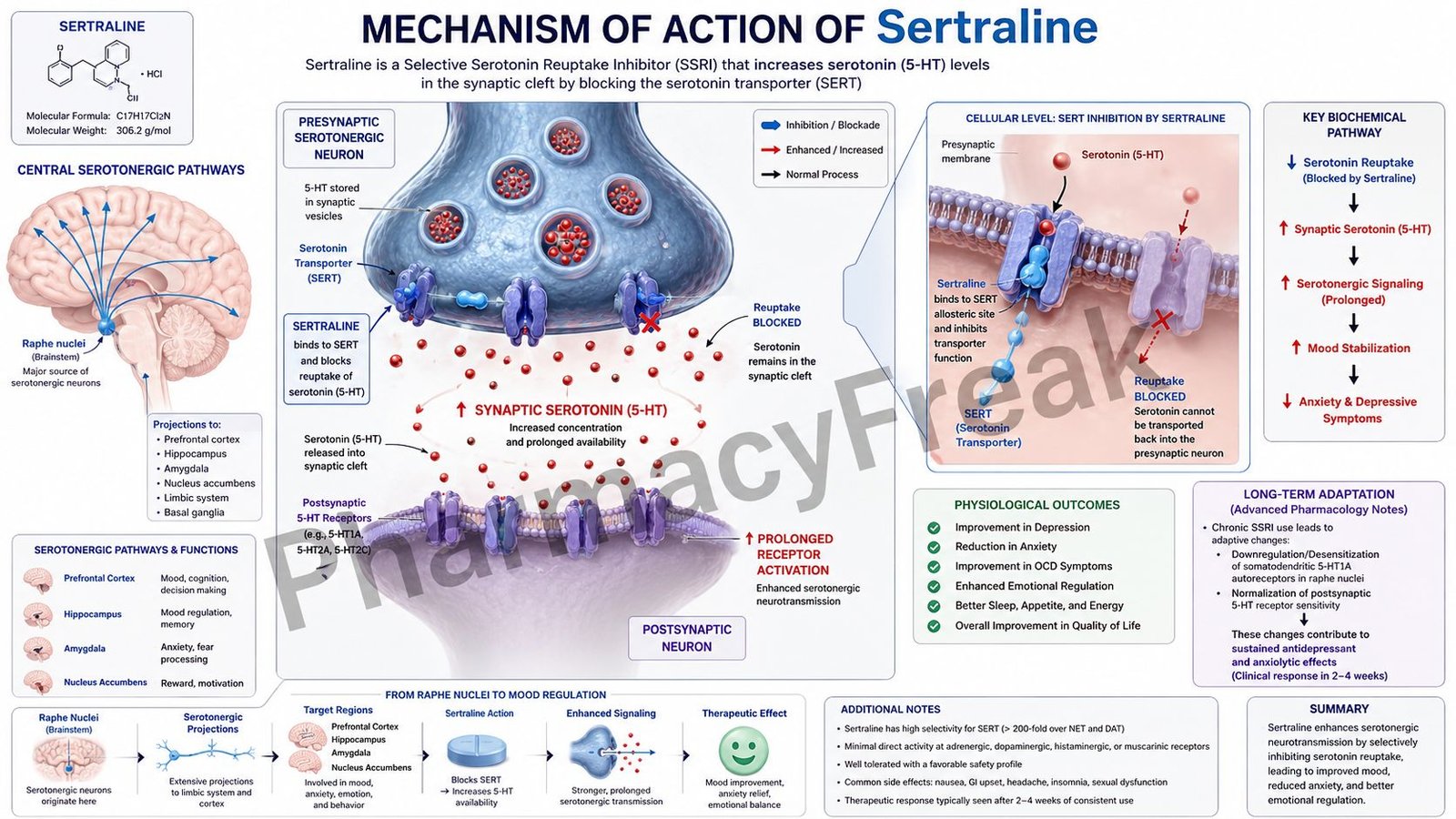
Sertraline is a selective serotonin reuptake inhibitor (SSRI) commonly used in depression, anxiety disorders, obsessive-compulsive disorder (OCD), panic disorder, post-traumatic stress disorder (PTSD), and related psychiatric conditions. It enhances serotonergic neurotransmission in the brain by selectively inhibiting serotonin reuptake at presynaptic neurons.
Mechanism of Action (Step-wise)
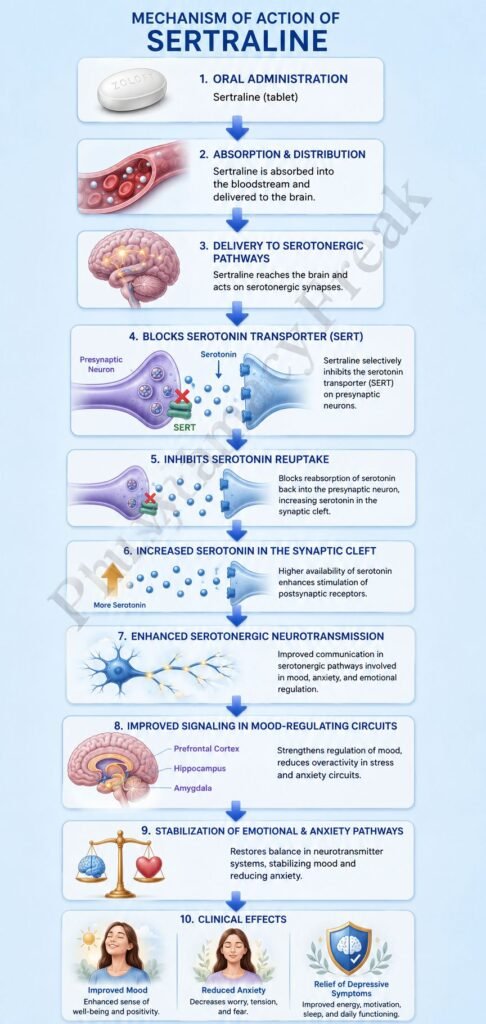
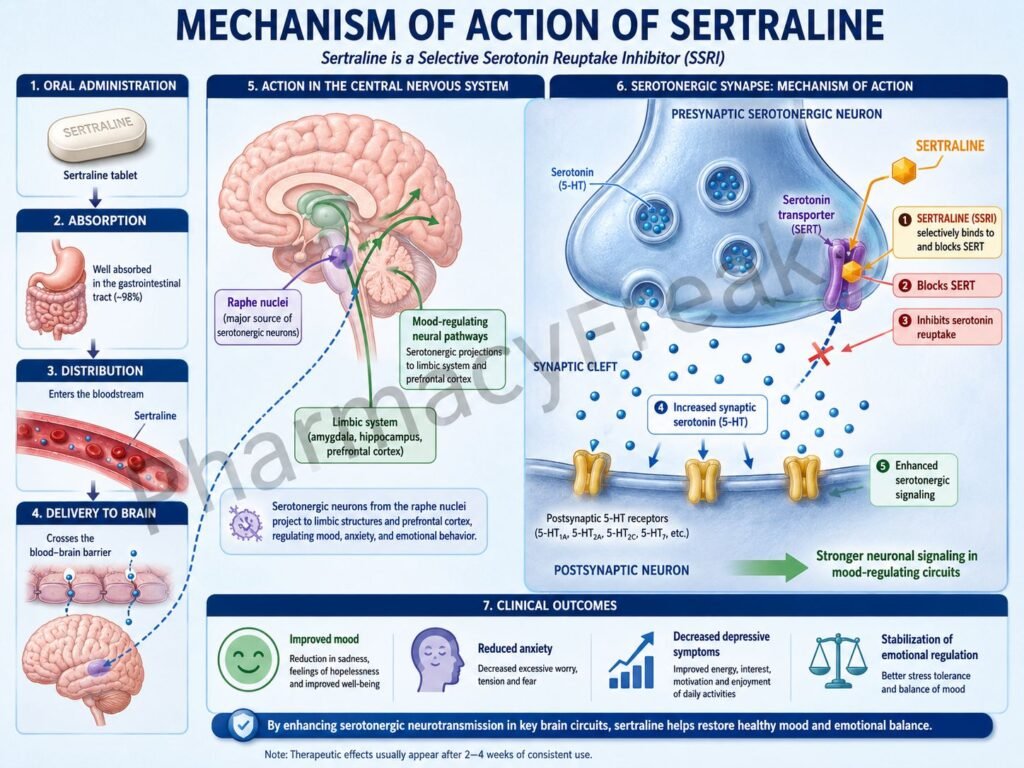
- Sertraline acts primarily on serotonergic neurons in the central nervous system.
- It selectively inhibits the serotonin transporter (SERT) located on presynaptic nerve terminals.
- Normally, SERT reuptakes serotonin (5-HT) from the synaptic cleft back into the presynaptic neuron.
- Inhibition of SERT decreases serotonin reuptake.
- Serotonin concentration increases in the synaptic cleft.
- Increased serotonin availability enhances stimulation of postsynaptic serotonin receptors.
- Chronic serotonergic enhancement leads to adaptive receptor changes and improved neuronal signaling.
- Mood, anxiety regulation, emotional processing, and obsessive behaviors improve over time.
- Sertraline has minimal direct effect on dopamine, histamine, or muscarinic receptors compared with many older antidepressants.
- The overall effect is antidepressant and anxiolytic activity through enhanced serotonergic neurotransmission.
A key exam point is that sertraline selectively inhibits serotonin reuptake by blocking the serotonin transporter (SERT).
Pharmacokinetics
Sertraline is administered orally and is well absorbed. It undergoes extensive hepatic metabolism mainly through CYP450 enzymes. The drug has a relatively long half-life, allowing once-daily dosing. Elimination occurs mainly through feces and urine as metabolites.
Clinical Uses
Sertraline is used in major depressive disorder, generalized anxiety disorder, panic disorder, OCD, PTSD, social anxiety disorder, and premenstrual dysphoric disorder.
Adverse Effects
Common adverse effects include nausea, insomnia, sexual dysfunction, headache, diarrhea, and agitation. Serotonin syndrome may occur when combined with other serotonergic drugs. Abrupt discontinuation may cause withdrawal symptoms such as dizziness and irritability.
Comparative Analysis
| Feature | Sertraline | Fluoxetine | Amitriptyline |
|---|---|---|---|
| Drug class | SSRI | SSRI | Tricyclic antidepressant |
| Main mechanism | SERT inhibition | SERT inhibition | Serotonin + norepinephrine reuptake inhibition |
| Anticholinergic effects | Minimal | Minimal | Strong |
| Sedation | Mild | Mild | High |
| Overdose safety | Safer | Safer | More dangerous |
| Sexual dysfunction | Common | Common | Moderate |
Sertraline differs from tricyclic antidepressants because it selectively inhibits serotonin reuptake with fewer anticholinergic and cardiovascular side effects. Compared with fluoxetine, sertraline has a somewhat lower activating effect in some patients.
MCQs
- Sertraline belongs to which drug class?
a) Tricyclic antidepressants
b) SSRIs
c) MAO inhibitors
d) Benzodiazepines
Answer: b) SSRIs
- Sertraline primarily inhibits which transporter?
a) Dopamine transporter
b) Serotonin transporter
c) GABA transporter
d) Histamine transporter
Answer: b) Serotonin transporter
- Blocking SERT increases levels of:
a) Dopamine
b) Serotonin
c) Acetylcholine
d) Histamine
Answer: b) Serotonin
- Sertraline is commonly used in:
a) Depression
b) Hyperthyroidism
c) Peptic ulcer disease
d) Asthma
Answer: a) Depression
- Sertraline mainly enhances which neurotransmission?
a) Cholinergic
b) Serotonergic
c) GABAergic
d) Histaminergic
Answer: b) Serotonergic
- A common adverse effect is:
a) Sexual dysfunction
b) Hypercalcemia
c) Severe bradycardia
d) Cataracts
Answer: a) Sexual dysfunction
- Sertraline may cause which serious condition when combined with serotonergic drugs?
a) Neuroleptic malignant syndrome
b) Serotonin syndrome
c) Torsades de pointes only
d) Hypoglycemia
Answer: b) Serotonin syndrome
- Abrupt discontinuation may lead to:
a) Withdrawal symptoms
b) Hypernatremia
c) Cataracts
d) Severe hypertension
Answer: a) Withdrawal symptoms
- Compared with tricyclic antidepressants, sertraline has:
a) More anticholinergic effects
b) Fewer cardiovascular side effects
c) Strong sodium channel blockade
d) Greater sedation
Answer: b) Fewer cardiovascular side effects
- Sertraline is mainly metabolized in the:
a) Kidneys
b) Liver
c) Skin
d) Lungs
Answer: b) Liver
- Sertraline is also used in:
a) OCD
b) Tuberculosis
c) Hyperparathyroidism
d) Epilepsy only
Answer: a) OCD
- The therapeutic effect of sertraline mainly depends on increased:
a) Synaptic serotonin levels
b) Histamine degradation
c) Dopamine depletion
d) Acetylcholine breakdown
Answer: a) Synaptic serotonin levels
FAQs
What is the mechanism of action of sertraline?
Sertraline selectively inhibits serotonin reuptake by blocking the serotonin transporter.
Why is sertraline called an SSRI?
Because it selectively inhibits serotonin reuptake with minimal effect on other neurotransmitters.
What disorders are commonly treated with sertraline?
Depression, anxiety disorders, OCD, PTSD, and panic disorder.
What are common side effects of sertraline?
Nausea, insomnia, headache, diarrhea, and sexual dysfunction.
What is serotonin syndrome?
A potentially dangerous condition caused by excessive serotonergic activity.
How does sertraline differ from tricyclic antidepressants?
It has fewer anticholinergic and cardiovascular side effects.
References
Goodman & Gilman’s The Pharmacological Basis of Therapeutics – Antidepressant Agents
https://accessmedicine.mhmedical.com/book.aspx?bookid=3191
Katzung: Basic and Clinical Pharmacology – Antidepressant Drugs
https://accessmedicine.mhmedical.com/content.aspx?bookid=3382
Tripathi: Essentials of Medical Pharmacology – Antidepressant Drugs
https://www.jaypeedigital.com
Harrison’s Principles of Internal Medicine – Depressive and Anxiety Disorders
https://accessmedicine.mhmedical.com