Table of Contents
Introduction
Doxazosin is a selective α₁-adrenergic receptor blocker used primarily in the management of hypertension and benign prostatic hyperplasia (BPH). By targeting α₁ receptors in vascular smooth muscle and the lower urinary tract, doxazosin produces both vasodilatory and urodynamic benefits. It is a high-yield drug in pharmacology, cardiology, and urology examinations due to its receptor selectivity, long duration of action, and characteristic first-dose phenomenon.
Mechanism of Action (Step-wise)
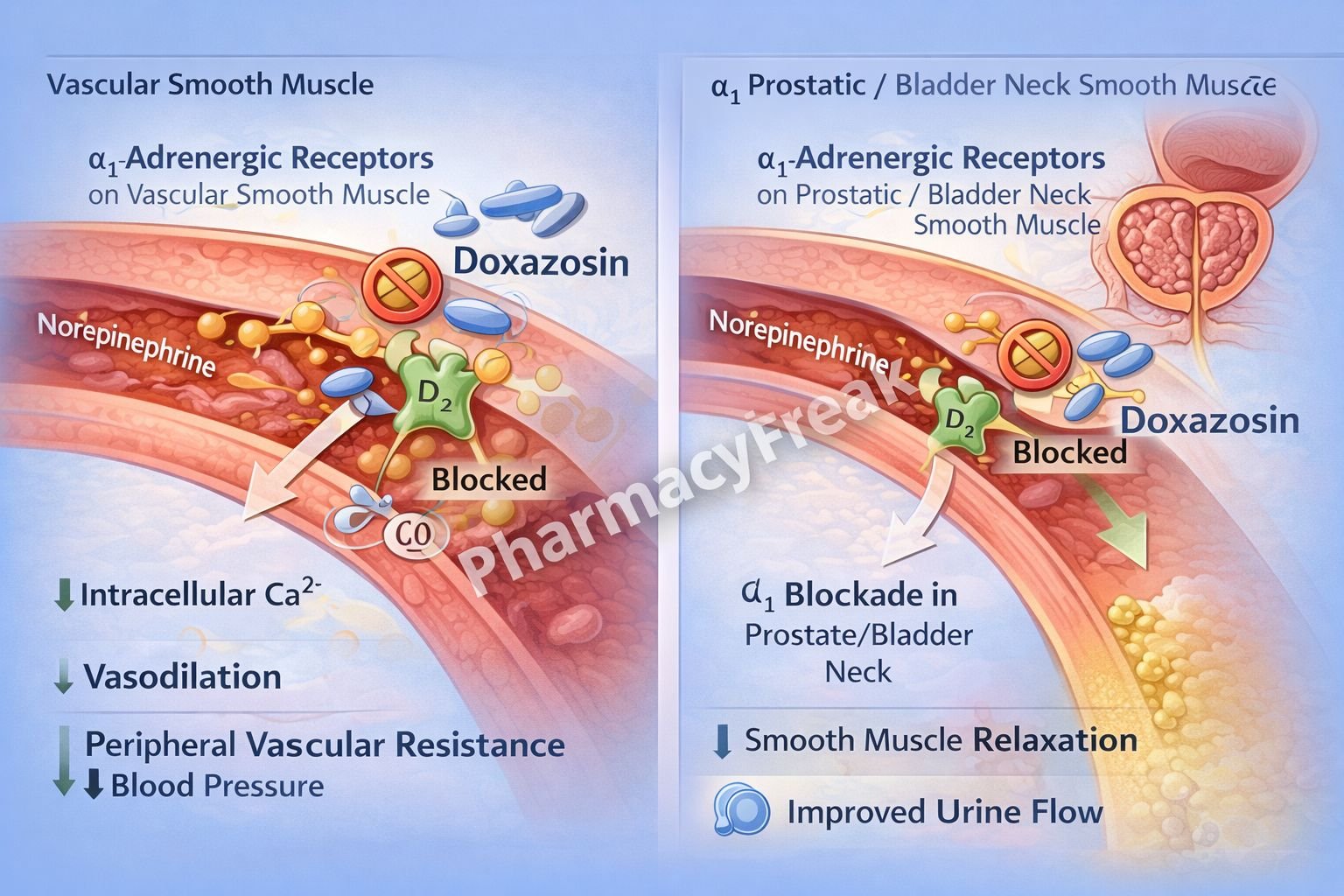
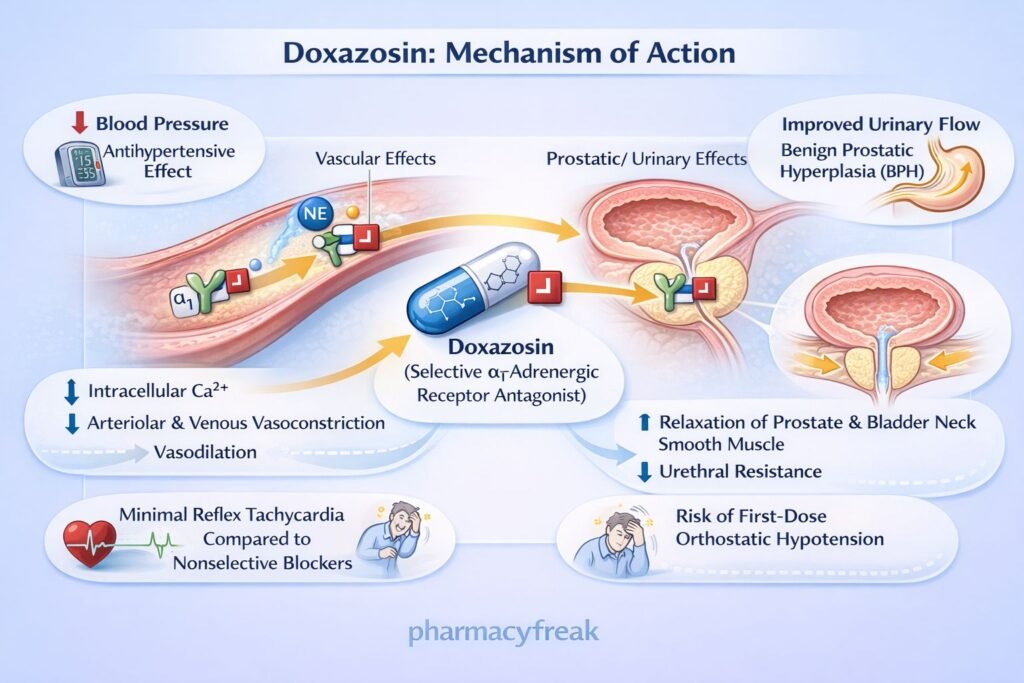
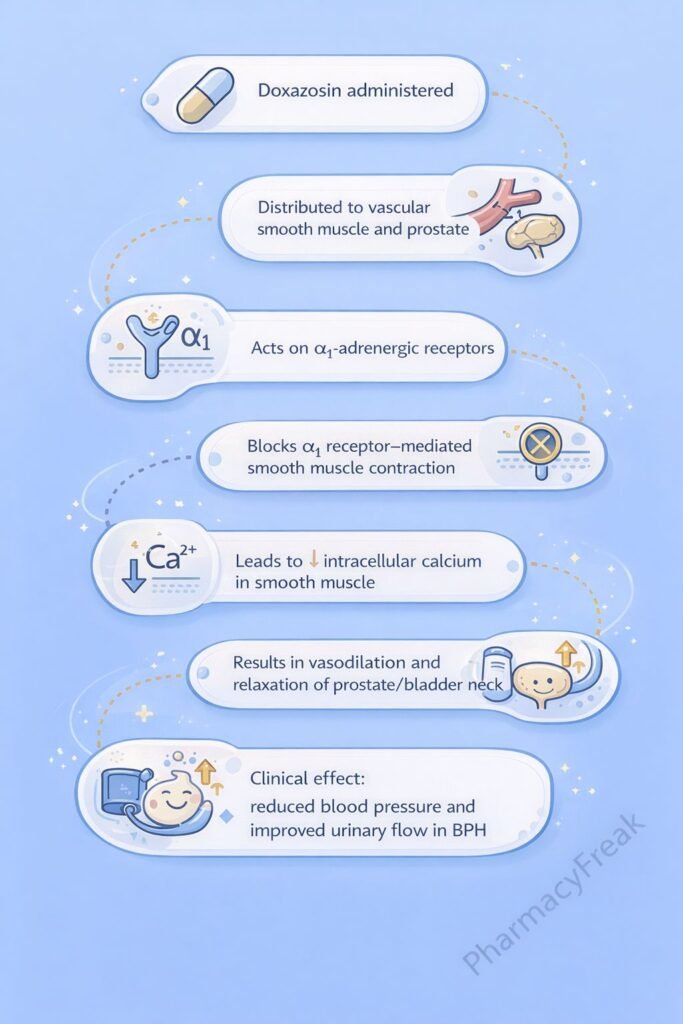
Doxazosin exerts its effects by selectively blocking α₁-adrenergic receptors.
Step-wise mechanism:
- α₁-Adrenergic Receptors
α₁ receptors are located on:- Vascular smooth muscle
- Prostate and bladder neck
- Urethral smooth muscle
- Selective α₁ Receptor Antagonism
Doxazosin competitively blocks postsynaptic α₁-adrenergic receptors. - Inhibition of Sympathetic Vasoconstriction
Blockade of α₁ receptors prevents norepinephrine-mediated vasoconstriction. - Vascular Smooth Muscle Relaxation
Reduced intracellular calcium in vascular smooth muscle leads to vasodilation. - Reduction in Peripheral Vascular Resistance
Systemic arterial vasodilation lowers blood pressure. - Relaxation of Prostatic and Bladder Neck Smooth Muscle
α₁ blockade reduces urethral resistance. - Improved Urine Flow
Decreased outlet obstruction improves symptoms of benign prostatic hyperplasia. - Overall Physiological Effects
- Decreased blood pressure
- Improved urinary flow
- No significant reflex tachycardia (due to α₁ selectivity)
Pharmacokinetics
- Absorption: Well absorbed orally
- Bioavailability: High
- Distribution: Extensive tissue distribution; high protein binding
- Metabolism: Hepatic metabolism (CYP450 enzymes)
- Elimination: Biliary and fecal excretion
- Half-life: Long (16–22 hours)
- Dosing: Once daily
Clinical Uses
Doxazosin is used in cardiovascular and urologic disorders:
- Hypertension
- Benign prostatic hyperplasia (BPH)
- Patients with coexisting hypertension and BPH
- Adjunct therapy in resistant hypertension
It is not recommended as first-line monotherapy for hypertension.
Adverse Effects
Adverse effects are related to vasodilation and autonomic blockade:
- Cardiovascular:
- Postural (orthostatic) hypotension
- First-dose syncope
- Dizziness
- Central:
- Fatigue
- Headache
- Others:
- Nasal congestion
- Peripheral edema
First-dose phenomenon:
Marked hypotension and syncope may occur after the initial dose or dose escalation.
Comparative Analysis (must include a table + explanation)
Comparison of α₁-Adrenergic Blockers
| Feature | Doxazosin | Prazosin | Tamsulosin |
|---|---|---|---|
| α₁ selectivity | Yes | Yes | α₁A selective |
| Duration of action | Long | Short | Long |
| Use in hypertension | Yes | Yes | No |
| Use in BPH | Yes | Yes | Yes |
| First-dose hypotension | Moderate | High | Low |
Explanation:
Doxazosin has a longer half-life than prazosin, allowing once-daily dosing and fewer blood pressure fluctuations. Tamsulosin is more uroselective and preferred when minimizing hypotensive effects.
MCQs (10–15)
- Doxazosin blocks which receptor?
a) β₁
b) β₂
c) α₁
d) α₂
Answer: c) α₁
- Doxazosin lowers blood pressure by:
a) Reducing cardiac output
b) Blocking renin release
c) Decreasing peripheral vascular resistance
d) Inhibiting sodium reabsorption
Answer: c) Decreasing peripheral vascular resistance
- Doxazosin improves urinary flow in BPH by relaxing:
a) Detrusor muscle
b) Bladder epithelium
c) Prostatic smooth muscle
d) Renal pelvis
Answer: c) Prostatic smooth muscle
- A characteristic adverse effect of doxazosin is:
a) Bradycardia
b) First-dose hypotension
c) Hyperkalemia
d) Reflex tachycardia
Answer: b) First-dose hypotension
- Doxazosin is administered:
a) Twice daily
b) Three times daily
c) Once daily
d) Weekly
Answer: c) Once daily
- Doxazosin differs from tamsulosin because it:
a) Is α₁A selective
b) Is used for hypertension
c) Has no effect on BPH
d) Has a short half-life
Answer: b) Is used for hypertension
- Doxazosin causes minimal reflex tachycardia because it:
a) Blocks β₁ receptors
b) Is centrally acting
c) Is α₁ selective
d) Increases vagal tone
Answer: c) Is α₁ selective
- Which condition benefits from both actions of doxazosin?
a) Asthma
b) Diabetes mellitus
c) BPH with hypertension
d) Heart failure
Answer: c) BPH with hypertension
- Doxazosin is metabolized mainly in the:
a) Kidney
b) Heart
c) Liver
d) Lung
Answer: c) Liver
- The most serious risk after the first dose of doxazosin is:
a) Arrhythmia
b) Syncope
c) Hypoglycemia
d) Bronchospasm
Answer: b) Syncope
FAQs (minimum 5)
- What is the primary mechanism of doxazosin?
Selective blockade of α₁-adrenergic receptors causing vasodilation and smooth muscle relaxation. - Why does doxazosin help in BPH?
It relaxes prostatic and bladder neck smooth muscle, improving urine flow. - What is the first-dose phenomenon?
Severe postural hypotension and syncope after the first dose. - Is doxazosin cardioselective?
No, it is vasoselective via α₁ blockade. - Can doxazosin be used alone for hypertension?
It is usually not first-line but may be used as add-on therapy. - Does doxazosin cause sexual dysfunction?
It has a lower risk compared with other antihypertensives.
References
- Goodman & Gilman’s The Pharmacological Basis of Therapeutics
https://accessmedicine.mhmedical.com - Katzung BG. Basic and Clinical Pharmacology
https://accessmedicine.mhmedical.com - Tripathi KD. Essentials of Medical Pharmacology
https://www.jaypeebrothers.com - Harrison’s Principles of Internal Medicine
https://accessmedicine.mhmedical.com