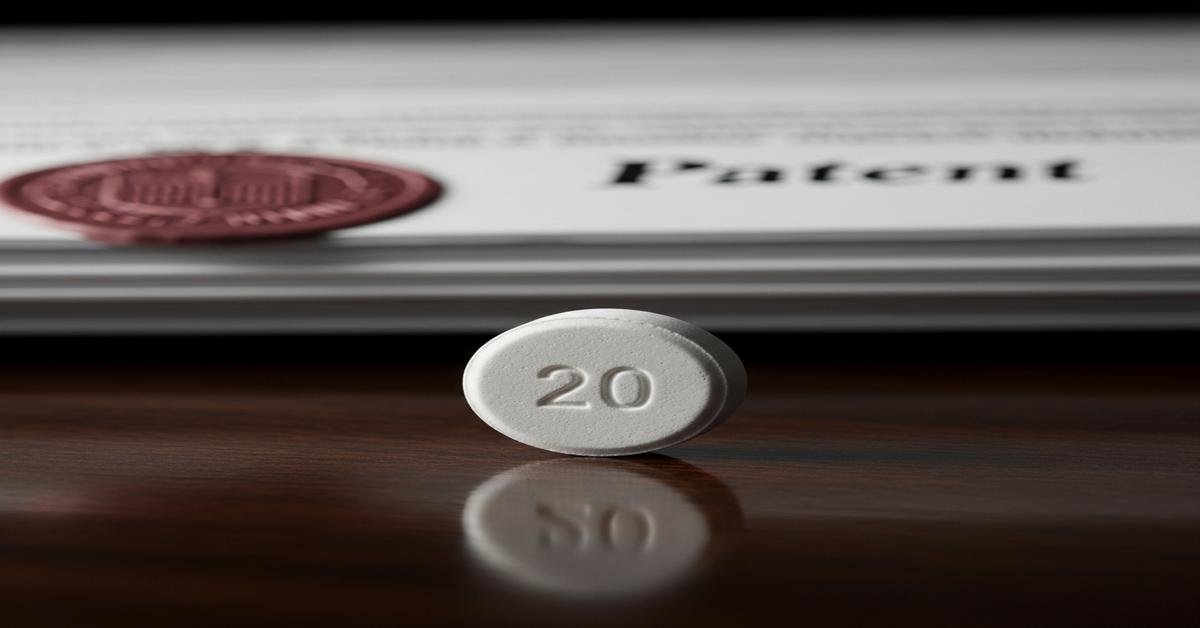
Why do new medicines cost so much, then become far cheaper about 20 years later? The short answer is patents and competition. The long answer explains how the system rewards risky research, how long a patent actually protects a drug, and why prices often collapse once others can legally make the same medicine. Here’s the whole process, simplified and made practical.
What a drug patent really is
A patent is a government-granted right to exclude others from making, using, or selling an invention for a limited time. It is not permission to sell a drug; it’s a shield against copycats.
In medicines, the core patent often claims the new chemical entity (the active molecule) or a specific way to make or use it. The standard term is 20 years from the filing date. That clock starts early, usually when the drug is still in the lab.
Why this exists: Drug R&D is expensive and risky. Most candidates fail in trials. Without a period of exclusivity, a company that invests billions and a decade of work could be undercut the day the drug is shown to work. The patent period is the policy tradeoff: temporary exclusivity in exchange for public disclosure now and open competition later.
The timeline: why “20 years” isn’t 20 years of sales
From idea to pharmacy, a typical small-molecule drug takes about 10–15 years. Here is the usual arc:
- Discovery (1–3 years): Find a molecule that affects the disease target.
- Preclinical (1–2 years): Lab and animal testing for safety signals. The main patent is often filed here.
- Clinical trials (6–8+ years):
- Phase 1: Safety in healthy volunteers.
- Phase 2: Early efficacy and dosing in patients.
- Phase 3: Large trials to confirm benefit-risk.
- Regulatory review (0.5–2 years): Agencies evaluate all data.
When approval arrives, the core patent may have only 7–12 years left. That period is called the effective patent life—the time the company can actually sell the drug with patent protection. It varies by drug and how long development and review take.
Why this matters: The “20-year” headline is misleading. Much of it is spent testing, not selling. Patent law does offer limited relief. In many places, you can get a patent term adjustment for patent office delays and a regulatory extension for time lost during approval (with caps, often up to 5 extra years, and no more than a set number of years of post-approval protection, such as 14). This preserves some incentive without turning protection into a monopoly forever.
Patents vs. regulatory exclusivity: two different locks
Even if a patent is weak or expires, regulators may still block competitors from relying on the originator’s clinical data. This is regulatory exclusivity, a separate system from patents.
- New Chemical Entity (NCE) exclusivity: Often 5 years. No generic can file relying on the originator’s data during this period.
- 3-year exclusivity: For new clinical investigations (e.g., a new formulation or new use) that required studies.
- Orphan drug exclusivity: Often 7 years for rare diseases.
- Pediatric exclusivity: 6-month add-on for agreed pediatric studies.
- Antibiotic incentives: Certain qualified antimicrobials can get extra time.
Why it matters: A competitor might be free of patents but still barred from piggybacking on the originator’s data for a period. The reverse is true as well: patents can block entry even after regulatory exclusivity ends. Both locks must be considered.
How generics get approved
When patents and exclusivities no longer block entry, a generic company files an abbreviated application. They do not repeat the entire clinical program. Instead, they prove bioequivalence: the generic delivers the same active ingredient to the bloodstream at the same rate and extent as the brand, within tight statistical limits.
Why this keeps quality and slashes cost:
- Bioequivalence ensures the same therapeutic effect for most patients.
- Skipping large trials cuts development costs to a small fraction of the original.
- Multiple manufacturers can enter, which triggers price competition.
Pharmacies often substitute an approved generic for the brand unless “dispense as written” is indicated. Insurers also steer use to the lower-cost option.
Why prices fall so much after 20 years (or sooner/later)
Once exclusivity ends and at least a few generics enter, prices drop fast. Typical patterns for small-molecule pills:
- 1–2 generic entrants: modest discounts as they test the market.
- 3–5 entrants: sharper cuts as they compete for pharmacy and wholesaler contracts.
- 6+ entrants: prices commonly fall 80–90% below the brand’s peak.
Why the drop is so steep:
- Manufacturing costs for many pills are low relative to R&D and marketing.
- Generics do not recoup the originator’s sunk research costs.
- Supply chain buyers (PBMs, wholesalers, tenders) leverage volume discounts.
There are exceptions. Niche drugs with few buyers, complex manufacturing, or supply shortages may stay pricey. But for common small-molecule tablets, broad competition usually drives big savings within a year or two.
The 20-year myth, “evergreening,” and legal challenges
People often think companies simply “extend the patent” at 20 years. That’s not how it works. The original compound patent expires on schedule. What companies can do is file new patents on improvements—for example:
- Formulations: Extended-release tablets, abuse-deterrent coatings.
- Methods of use: New patient groups or dosing regimens.
- Polymorphs or salts: Specific crystalline forms with better properties.
- Devices: Inhalers, auto-injectors that deliver the same drug differently.
Why this is controversial: Some improvements are clinically meaningful and deserve protection. Others are minor tweaks that create a dense “patent thicket” that deters entry. Courts decide whether these patents are valid and infringed. Generic firms can challenge them early by filing certifications that the patents are invalid or not infringed. If they succeed, generics can launch sooner. The first successful challenger may get a short period of market exclusivity (often 180 days), which rewards the risk of litigation.
Settlements can also affect timing. Deals that delay entry have faced legal scrutiny because they keep prices higher for longer.
Biologics are different
Large-molecule drugs (biologics like monoclonal antibodies) have a different competitive path. Instead of generics, competitors launch biosimilars. These are highly similar but not identical to the reference product, due to the complexity of living systems used in manufacturing.
Key differences and why they matter:
- Data exclusivity: Biologics often have 12 years of data exclusivity, separate from patents.
- Approval: Biosimilars show no clinically meaningful differences in safety and effectiveness. Some get an “interchangeable” designation for pharmacy substitution.
- Pricing: Manufacturing is expensive and fewer competitors enter, so price drops are usually smaller at first (often 20–40%), though deeper cuts can develop with multiple entrants and time.
What actually happens at expiry: a practical timeline
- 2–3 years before expiry: Generic firms finish development, file, and litigate any patents. Payers prepare formularies.
- At expiry or earlier (if patents fall): Regulators approve generics. The first one or two enter. Some brands launch an “authorized generic” under their own license to capture price-sensitive demand.
- 0–12 months after: More entrants arrive. Pharmacies substitute. Insurers push generics to preferred tiers. Prices fall steeply for pills and simpler injectables.
- Beyond 1 year: Prices stabilize near manufacturing and distribution costs plus a small margin. The brand may keep a small share through loyalty programs or specific clinical niches.
Common questions, answered
- Will a generic work the same? Yes, it must be bioequivalent. Minor differences in inactive ingredients rarely matter. If you notice a change after a switch, tell your clinician; a different manufacturer may still meet standards but feel different for a few patients.
- Why did a drug stay expensive after 20 years? Maybe no one filed a generic (small market), patents on formulation or device still block copying, or there are manufacturing or supply barriers. For biologics, biosimilar competition rolls out more slowly.
- Can companies “extend” the 20-year patent? Not on the original claims. They can get limited adjustments for delays and new patents on genuine improvements. Those new patents don’t extend the old ones; they protect different, narrower inventions that can still block certain copies.
- Why are some generics temporarily expensive? If only one or two sellers launch, they may price just below the brand. Prices usually fall as more competitors join.
The big picture: why this system makes drugs cheaper over time
Patents and exclusivities create a window for innovators to recoup high R&D costs and fund future science. Because the patent clock starts early, that window is shorter than 20 years in practice. When it closes—and when data exclusivity ends—others can rely on the proven science to manufacture the same drug. The heavy research costs are already sunk, so competitors can price near the cost of production. Head-to-head competition then pulls prices down, often by 80–90% for small-molecule pills.
That’s why a brand-name medicine can be costly in its first decade on the market and affordable later. It’s also why you sometimes see fierce legal fights close to expiry: the line between fair reward and prolonged monopoly is policed in court. Understanding the two locks (patents and data exclusivity), the real development timeline, and the approval path for generics or biosimilars makes the 20-year story clear—and explains the savings you see at the pharmacy once competition arrives.

