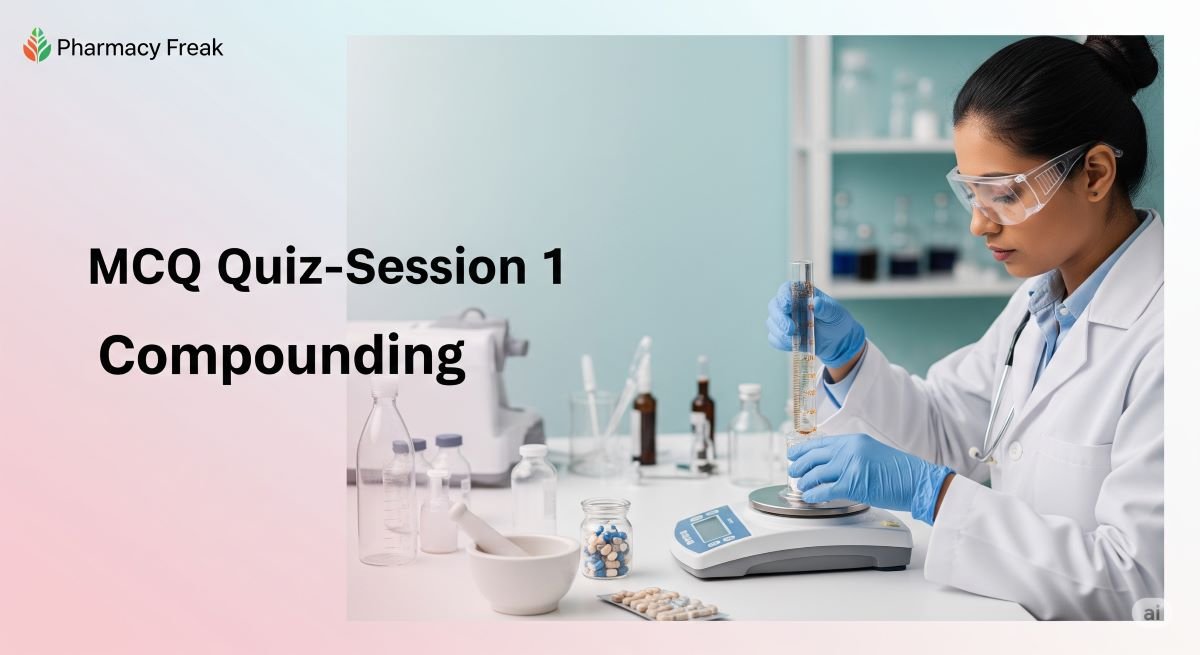
Welcome to the foundational session of compounding, where theory meets practice. This first session focuses on the essential skills required to prepare non-sterile semisolid dosage forms, including creams, ointments, gels, and pastes. For PharmD students, mastering the proper techniques for creating these common dermatological preparations is a critical step. This quiz will test your understanding of the principles, procedures, and quality standards involved in compounding semisolids.
1. A key characteristic of a topical paste, as would be prepared in a compounding lab session, is what?
- A completely liquid formulation
- A high percentage of solids, making it stiff and protective
- A clear, transparent appearance
- A very low viscosity
Answer: A high percentage of solids, making it stiff and protective
2. Before beginning any compounding activity, what is the first critical step a pharmacist must take?
- Begin mixing the ingredients immediately
- Put on sterile gloves for a non-sterile compound
- Prepare the prescription label
- Review the Master Formulation Record and prepare a Compounding Record
Answer: Review the Master Formulation Record and prepare a Compounding Record
3. The compounding technique of “levigation” is used primarily to do what?
- Reduce the particle size of a powder by triturating it with a small amount of liquid
- Dissolve a solid completely into a solvent
- Ensure a powder is evenly distributed in a capsule
- Measure the volume of a liquid accurately
Answer: Reduce the particle size of a powder by triturating it with a small amount of liquid
4. A compounded topical preparation that is a semisolid emulsion and is generally opaque is likely a(n):
- Topical solution
- Paste
- Gel
- Cream
Answer: Cream
5. Which of the following is an example of a semisolid dosage form?
- An oral tablet
- A hard-shell capsule
- A topical gel
- An intravenous solution
Answer: A topical gel
6. Geometric dilution is a technique essential for:
- Ensuring a small quantity of a potent drug is uniformly mixed into a large amount of diluent
- Melting waxes and other stiffening agents
- Determining the beyond-use date of a cream
- Filtering particles out of a topical solution
Answer: Ensuring a small quantity of a potent drug is uniformly mixed into a large amount of diluent
7. A preparation described as a “semisolid system consisting of dispersions of small or large molecules in an aqueous liquid rendered jellylike” is a:
- Paste
- Gel
- Cream
- Topical Solution
Answer: Gel
8. What is the primary purpose of an ointment slab and spatula in compounding semisolids?
- To heat the ingredients to a high temperature
- To provide a smooth, non-absorbent surface for mixing and levigation
- To measure the final weight of the preparation
- To store the finished product for dispensing
Answer: To provide a smooth, non-absorbent surface for mixing and levigation
9. When preparing for a compounding session, what must be done with all equipment, such as a mortar and pestle?
- It should be thoroughly cleaned and dried before use
- It can be used if it appears visibly clean from the previous session
- It should be rinsed with tap water only
- It should be sterilized in an autoclave for non-sterile compounding
Answer: It should be thoroughly cleaned and dried before use
10. A compounded topical solution is a liquid preparation. What is a primary advantage of this dosage form?
- It is highly occlusive and protective
- It is easy to apply over large or hairy areas of the body
- It has a very thick consistency
- It remains on the skin for a very long time
Answer: It is easy to apply over large or hairy areas of the body
11. A “gritty” or “lumpy” texture in a final cream or ointment product is a sign of what?
- Excellent compounding technique
- Improper or incomplete mixing and levigation
- The use of a high-quality base
- The product has been correctly formulated
Answer: Improper or incomplete mixing and levigation
12. The first step in the technique of geometric dilution involves:
- Mixing the ingredient present in the largest quantity with the ingredient in the smallest quantity
- Combining all ingredients at once
- Mixing the ingredient present in the smallest quantity with an approximately equal amount of the diluent
- Adding the active ingredient last
Answer: Mixing the ingredient present in the smallest quantity with an approximately equal amount of the diluent
13. Which of the following is a key component of “preparing for compounding”?
- Performing all necessary calculations and having them double-checked
- Estimating the amount of ingredients needed
- Using the first available container for dispensing
- Writing the label after the product has been given to the patient
Answer: Performing all necessary calculations and having them double-checked
14. A topical preparation that is translucent, non-greasy, and dries to a thin film is most likely a:
- Hydrocarbon-based ointment
- Paste
- Gel
- W/O emulsion cream
Answer: Gel
15. A levigating agent should be __________ in the base into which the solid will be incorporated.
- insoluble or immiscible
- physically and chemically compatible
- highly volatile
- brightly colored
Answer: physically and chemically compatible
16. The laboratory session for compounding semisolids includes preparing creams. A cream is a type of:
- Suspension
- Solution
- Emulsion
- Powder
Answer: Emulsion
17. Mineral oil would be an appropriate levigating agent for incorporating a powder into which type of base?
- A hydrocarbon base like petrolatum
- A water-soluble base like PEG ointment
- An aqueous gel
- An oral syrup
Answer: A hydrocarbon base like petrolatum
18. What is the purpose of “spatulation” on an ointment slab?
- To measure the ingredients
- To mix and reduce the particle size of ingredients for a smooth preparation
- To transfer the final product into a jar
- To heat the ointment base
Answer: To mix and reduce the particle size of ingredients for a smooth preparation
19. Before dispensing any compounded preparation, the pharmacist must perform a final check. This includes verifying the:
- Compounding Record against the Master Formulation Record
- Appearance and quality of the final product
- Accuracy of the label and calculations
- All of the above
Answer: All of the above
**20. A key instructional component of a compounding lab is hands-on preparation of dosage forms like pastes and creams. This practical experience helps develop: **
- A pharmacist’s patient counseling skills
- A pharmacist’s skills in medication therapy management
- A pharmacist’s manipulative skills and attention to detail
- A pharmacist’s knowledge of sterile compounding
Answer: A pharmacist’s manipulative skills and attention to detail
21. A topical gel is formed using a polymer that swells in the presence of a liquid. This polymer is called a(n):
- Emulsifying agent
- Levigating agent
- Gelling agent
- Preservative
Answer: Gelling agent
22. Which dosage form is the most occlusive, generally inhibiting the loss of water from the skin?
- Topical solution
- Gel
- Cream
- Ointment
Answer: Ointment
23. The “Compounding Record” for a topical solution must document which of the following?
- The specific lot numbers of the ingredients used
- The temperature of the room during compounding
- The name of the pharmacist who performed the final check
- All of the above
Answer: All of the above
**24. In the lab session on semisolids, one of the goals is to produce a pharmaceutically elegant cream. This means the final product should be: **
- Gritty and separated
- Smooth, uniform, and free of contamination
- The wrong color
- In a poorly labeled container
Answer: Smooth, uniform, and free of contamination
25. A key difference between a topical solution and a topical cream is the:
- Viscosity and vehicle type
- Need for sterility
- Route of administration
- Presence of an active ingredient
Answer: Viscosity and vehicle type
26. Why is it important to wear gloves during a non-sterile compounding session?
- To keep the compounder’s hands warm
- To prevent contamination of the product and protect the compounder from drug exposure
- To make it easier to handle glassware
- It is not important for non-sterile compounding
Answer: To prevent contamination of the product and protect the compounder from drug exposure
27. An O/W (oil-in-water) cream is a semisolid dosage form where:
- Water droplets are dispersed in a continuous oil phase
- Oil droplets are dispersed in a continuous aqueous phase
- The preparation contains no water
- The preparation contains no oil
Answer: Oil droplets are dispersed in a continuous aqueous phase
28. What is an appropriate container for dispensing a compounded topical cream?
- An amber prescription vial meant for tablets
- An ointment jar or a tube
- A paper envelope
- A plastic ziplock bag
Answer: An ointment jar or a tube
29. The “fusion method” for preparing an ointment involves which of the following steps?
- Gently heating the components to melt and mix them
- Mixing all components at room temperature on an ointment slab
- Using a mortar and pestle to grind powders
- Dissolving the ingredients in a volatile solvent
Answer: Gently heating the components to melt and mix them
30. Which of the following is a critical part of preparing for a compounding lab session?
- Arriving with no knowledge of the day’s procedures
- Completing as much of the written compound record as possible before entering the lab
- Bringing food and drink into the compounding area
- Wearing open-toed shoes for comfort
Answer: Completing as much of the written compound record as possible before entering the lab
31. The primary purpose of an emulsifier in a cream is to:
- Provide a therapeutic effect
- Preserve the cream against microbial growth
- Stabilize the oil and water phases and prevent them from separating
- Thicken the cream into a paste
Answer: Stabilize the oil and water phases and prevent them from separating
32. A topical solution is a dosage form where the drug is completely ________ in the solvent.
- suspended
- emulsified
- dissolved
- precipitated
Answer: dissolved
33. An incomplete compounding record is considered a significant deviation from standards because it:
- Saves time for the pharmacist
- Prevents traceability and verification of the preparation process
- Is preferred by state boards of pharmacy
- Makes the final label look cleaner
Answer: Prevents traceability and verification of the preparation process
34. Which of these semisolids would be most appropriate for a weeping, oozing skin lesion?
- A hydrocarbon-based ointment
- A stiff, protective paste
- A greasy W/O cream
- A topical solution
Answer: A stiff, protective paste
35. A quality assurance deduction for a “preparation on lid, grooves, or outside of container” relates to the concept of:
- Pharmaceutical elegance and accuracy of the dispensed quantity
- The chemical stability of the drug
- The beyond-use date
- The therapeutic effect of the drug
Answer: Pharmaceutical elegance and accuracy of the dispensed quantity
36. A carbomer gel is an example of a(n):
- Hydrocarbon base
- Absorption base
- Aqueous gel system
- Anhydrous paste
Answer: Aqueous gel system
37. The reading assignment “Compounding Semisolids” is designed to prepare students for what?
- A lecture on sterile compounding
- A lab session focused on preparing dosage forms like creams and ointments
- An exam on pharmacy law
- A discussion about drug delivery systems for oral use
Answer: A lab session focused on preparing dosage forms like creams and ointments
38. The main difference between a paste and an ointment is the amount of ________ in the formulation.
- water
- oil
- powder (solids)
- preservative
Answer: powder (solids)
39. Leaving the workspace and equipment dirty after a compounding session can result in:
- A bonus on your lab grade
- Cross-contamination of future preparations
- Praise from the lab instructor
- No significant consequences
Answer: Cross-contamination of future preparations
40. A W/O (water-in-oil) cream would feel ________ on the skin compared to an O/W (oil-in-water) cream.
- less greasy
- more greasy and occlusive
- lighter and faster drying
- completely non-oily
Answer: more greasy and occlusive
41. The video lecture on “Preparing for Compounding, Session 1 Compounds” likely covers which topic?
- Advanced sterile techniques for chemotherapy
- The specific procedures for making pastes, creams, and gels
- The history of compounding
- The regulatory framework for outsourcing facilities
Answer: The specific procedures for making pastes, creams, and gels
42. A crucial counseling point for any topical compound is:
- How to properly apply the preparation
- The importance of not sharing the medication
- The correct storage conditions and beyond-use date
- All of the above
Answer: All of the above
43. A spatula is used in compounding semisolids for:
- Transferring ingredients
- Mixing on an ointment slab
- Loading the final product into a jar or tube
- All of the above
Answer: All of the above
44. Which of the following is a critical safety practice when preparing for any compounding activity?
- Verifying the identity and purity of all ingredients
- Using ingredients from unlabeled containers
- Estimating weights instead of measuring them
- Rushing through the calculation steps
Answer: Verifying the identity and purity of all ingredients
45. The lab session focuses on non-sterile dosage forms. Which of the following is an example of a non-sterile semisolid?
- An intravenous bag of saline
- An ophthalmic drop
- A topical cream for a rash
- A solution for injection
Answer: A topical cream for a rash
46. If a powder is soluble in the ointment base, what technique is not necessary?
- Geometric dilution
- Weighing the powder
- Levigation
- Stirring or mixing
Answer: Levigation
47. A primary reason to compound a topical solution instead of an ointment is for:
- A patient who needs an occlusive barrier
- Application to a very dry, scaly lesion
- Application to the scalp where an ointment would be too greasy
- A drug that is only stable in an oily vehicle
Answer: Application to the scalp where an ointment would be too greasy
48. The term “semisolid” implies that the dosage form:
- Is a liquid with low viscosity
- Is a dry powder
- Has properties of both a solid and a liquid, allowing it to hold its shape but be easily spreadable
- Is intended for injection
Answer: Has properties of both a solid and a liquid, allowing it to hold its shape but be easily spreadable
49. An important part of preparing for the compounding of semisolids is understanding the properties of:
- Different ointment bases (hydrocarbon, absorption, etc.)
- Sterile airflow patterns
- The mechanism of action of antibiotics
- The laws governing controlled substances
Answer: Different ointment bases (hydrocarbon, absorption, etc.)
50. The successful completion of a compounding lab session on semisolids demonstrates competence in:
- Financial management of a pharmacy
- Both the manipulative techniques and the documentation required by compounding standards
- Prescribing medications for dermatological conditions
- Administering intravenous medications
Answer: Both the manipulative techniques and the documentation required by compounding standards

