
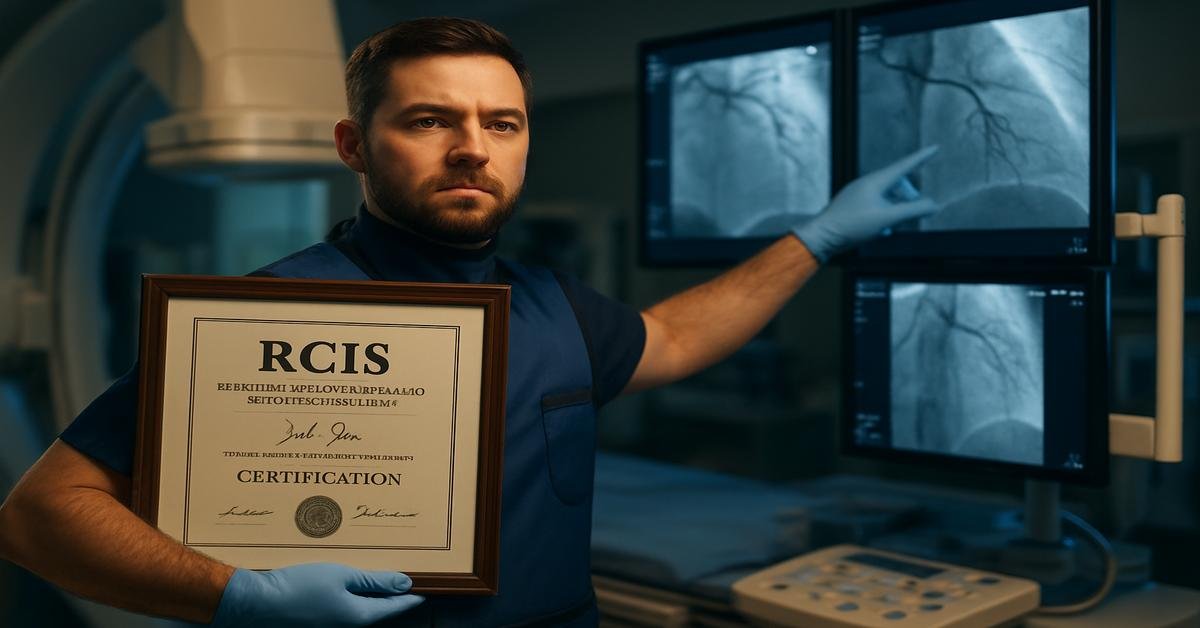
A cath lab career can be rewarding, fast-moving, and demanding. The work sits close to the center of modern heart care. Teams in invasive cardiology units diagnose blocked arteries, open vessels during heart attacks, place stents, support unstable patients, and monitor complex hemodynamics. In that setting, skill matters, but so does proof of skill. That is where RCIS certification comes in. For many professionals in the cath lab, earning the Registered Cardiovascular Invasive Specialist credential is more than a line on a resume. It signals that you understand invasive cardiology at a recognized standard, can work safely in high-risk cases, and can contribute with less hand-holding. In practical terms, that often makes you more valuable to employers, physicians, coworkers, and patients.
What RCIS certification means in a cath lab career
RCIS stands for Registered Cardiovascular Invasive Specialist. It is a professional credential for people who work in invasive cardiovascular procedures. That includes many cath lab technologists, cardiovascular technologists, radiologic technologists working in invasive cardiology, and some nurses or cross-trained staff depending on their role and local requirements.
The value of the credential starts with what it represents. An invasive cardiology unit is not a place where vague experience is enough. Staff need to understand anatomy, coronary disease, sterile technique, radiation safety, pressure monitoring, contrast use, procedural flow, emergency response, equipment setup, and patient monitoring. They also need to recognize trouble early. A sudden pressure change, dampened waveform, arrhythmia, access-site problem, or patient complaint can point to a complication that needs action now, not later.
RCIS certification tells employers that you have been tested on that body of knowledge. It does not guarantee excellence by itself. No exam can do that. But it gives a standardized measure of competence in a field where mistakes are expensive and sometimes irreversible.
Why invasive cardiology units place real value on standardized credentials
Cath labs depend on coordinated performance. Cases move quickly. Physicians rely on staff who can anticipate needs, prepare equipment, maintain the sterile field, monitor patient status, and speak up when something looks wrong. Training in one hospital may be excellent, while training in another may be uneven. A credential helps reduce that variation.
That matters for several reasons:
- Patient safety: Invasive cardiology involves sedation, radiation, vascular access, anticoagulation, and the risk of acute complications. Standardized knowledge lowers the chance that key steps are missed.
- Efficiency: A well-prepared RCIS professional often needs less basic instruction and can integrate into procedures faster.
- Team trust: Physicians and charge staff gain confidence when they know a coworker has met a recognized professional standard.
- Staff flexibility: Certified staff are often easier to assign across procedure types because their knowledge base is broader and more consistent.
- Department credibility: Units with certified staff can show leadership that they take quality, education, and professionalism seriously.
In short, certification helps a cath lab reduce uncertainty. In a high-acuity environment, less uncertainty has real value.
How RCIS increases your value to employers
Employers do not pay more or promote people simply because they studied hard. They do it when a person helps the unit run better, safer, or with less risk. RCIS certification can support all three.
It shows commitment to the specialty. Invasive cardiology is not a side interest. It requires focused knowledge and ongoing learning. When you earn RCIS certification, you show that you are serious enough to invest time and effort into the field. Managers notice that because they want staff who are likely to stay engaged and grow.
It reduces training burden. A new hire with no specialty credential may need more oversight before taking on a full procedural role. A certified candidate is not automatically independent, but often starts from a stronger baseline. That can shorten onboarding in areas like waveform recognition, catheter and guidewire basics, contrast awareness, and procedure sequencing.
It supports hiring decisions. When two candidates have similar years of experience, the certified one may stand out. The reason is simple: experience is hard to compare from one hospital to another. Certification gives the hiring manager one common benchmark.
It can justify higher compensation. Not every employer offers a pay differential for RCIS, but many view it favorably during salary discussions. Why? Because a certified employee may be able to take on more responsibility, require less remediation, and strengthen quality indicators for the lab.
It helps in competitive job markets. In some regions, cath lab roles attract strong applicants. In that setting, employers look for ways to narrow the field. RCIS can make your application easier to move to the top of the stack.
How RCIS increases your value during daily case work
The best proof of professional value is not the credential itself. It is how the credentialed person performs in the room. RCIS preparation covers the kind of knowledge that affects daily work in visible ways.
You become more useful during case setup. A stronger grasp of procedure goals helps you prepare the right equipment, anticipate physician preference, and spot missing items before the patient is on the table. For example, knowing the difference in support needs for a straightforward diagnostic coronary angiogram versus a difficult PCI can change how you prepare wires, balloons, guide catheters, and backup devices.
You read the room better. Experienced cath lab staff do not just follow instructions. They understand what the case is doing. If a patient becomes hypotensive after contrast injection, if the pressure waveform changes, or if a rhythm deteriorates, a valuable team member notices and responds early. RCIS-level knowledge strengthens that awareness.
You communicate more clearly. Invasive cardiology teams do not have time for vague language. Precise communication matters. Instead of saying, “Something looks off,” a knowledgeable staff member can say, “The arterial waveform is dampened,” or “The patient is developing ventricular ectopy after wire manipulation.” That changes the speed and accuracy of team response.
You work with fewer preventable errors. The credential emphasizes safety concepts that affect every shift: sterile technique, radiation exposure, contrast dose awareness, anticoagulation issues, and proper monitoring. Fewer avoidable mistakes make you easier to trust with more complex assignments.
You can support both routine and high-acuity cases. Cath labs need staff who can function not only during scheduled diagnostic studies, but also during STEMI calls, unstable patients, and device-assisted cases. A wider knowledge base increases your usefulness when the unit is stretched.
RCIS and credibility with physicians and peers
Respect in the cath lab is practical. People trust the coworker who is prepared, steady, and clinically sharp. RCIS certification does not create that trust by itself, but it often helps open the door.
Physicians usually value team members who understand the logic of a procedure. If a doctor asks for a specific catheter, changes strategy because of anatomy, or reacts to a pressure change, a certified professional is more likely to understand why. That makes collaboration smoother. You become less of a task-taker and more of a clinically aware partner in the case.
Peers also tend to rely more on coworkers who have proven they know the specialty. In many labs, experienced staff end up teaching newer staff, orienting travelers, helping with competency checks, or troubleshooting difficult moments during procedures. RCIS certification can strengthen your credibility in those informal leadership roles.
This matters for career growth because influence often starts before a job title changes. The person others trust becomes the person others ask for help. Over time, that can lead to preceptor roles, charge responsibilities, specialty case assignments, and leadership opportunities.
How certification supports patient care, not just career advancement
It is easy to talk about career value in terms of money and hiring, but the deeper reason certification matters is patient care. Invasive cardiology patients are often anxious, unstable, in pain, sedated, or unable to advocate for themselves during a procedure. The team has to be both technically skilled and clinically alert.
RCIS preparation reinforces the knowledge needed to protect patients in ways that are not always obvious from the outside:
- Recognizing complications early: Things like perforation, dissection, arrhythmia, embolic events, access bleeding, and contrast reactions need quick recognition.
- Reducing radiation risk: Long procedures increase exposure for both patients and staff. Knowing how positioning, shielding, and technique affect dose matters.
- Understanding hemodynamics: Pressure changes can reveal important shifts in patient condition before a crisis becomes obvious.
- Monitoring sedation and stability: A patient can deteriorate quietly. Small changes in breathing, blood pressure, rhythm, or responsiveness matter.
- Maintaining procedural accuracy: Good setup, correct labeling, and organized workflow reduce confusion and error during high-pressure moments.
Better patient care increases your value because departments remember who helps keep cases safe and controlled.
RCIS can broaden your career options inside invasive cardiology
One reason the credential is valuable is that it supports mobility. A cath lab career does not always stay in one exact role. Over time, many professionals want to expand into more advanced procedures, teaching, or leadership.
RCIS can help with moves such as:
- From general cath lab work into more complex interventional cases
- Into structural heart or peripheral vascular support roles
- Into preceptor or educator responsibilities
- Into lead tech or charge-style assignments
- Into travel roles where employers want fast validation of skill
- Into management-track positions where credentials strengthen professional standing
The common thread is credibility. When you want more responsibility, decision-makers want evidence that you can handle it. RCIS is one form of that evidence.
What RCIS does not do, and why that matters
It is important to be realistic. RCIS is valuable, but it is not magic. It does not replace hands-on skill. It does not automatically make someone excellent under pressure. It does not guarantee a raise, promotion, or ideal job.
Why say that so plainly? Because professionals get the most benefit from certification when they pair it with strong performance. The best outcomes come when the credential sits on top of real habits: careful observation, teamwork, calm communication, respect for sterile practice, and a willingness to keep learning.
An employer may be impressed by RCIS at the interview stage. But after hiring, what counts is whether you can function safely in live procedures, adapt to different operators, document accurately, and help the team during difficult cases. Certification opens doors. Consistent performance keeps them open.
How to get the most career value from RCIS once you earn it
Some professionals earn a certification and then treat it like a finished task. That leaves value on the table. To turn RCIS into real career growth, use it actively.
- Update your resume clearly: Put the credential where hiring managers can see it quickly.
- Use it in internal advancement discussions: If you want a lead role, preceptor assignment, or pay review, mention how the certification supports that request.
- Take on visible responsibilities: Volunteer to help orient new staff, support quality work, or assist with case preparation in complex procedures.
- Keep your knowledge current: A credential has more weight when your practice reflects current standards and techniques.
- Speak in terms of patient care and workflow: Managers respond well when you connect your certification to safer cases, smoother operations, and stronger team performance.
For example, saying “I earned RCIS, so I deserve more” is weak. Saying “I earned RCIS, I can now support a wider range of cases with less supervision, and I’m helping train new staff” is much stronger. It ties the credential to business and clinical value.
When RCIS can make the biggest difference in your career
The credential can help at almost any stage, but it tends to matter most in a few common situations.
Early in your invasive cardiology career: If you are still proving yourself, certification can help show that your knowledge is developing in a serious way.
When changing employers: New managers do not know your reputation. A recognized credential helps bridge that gap.
When moving into a higher-acuity lab: Large centers and busy interventional programs often want stronger evidence of specialty competence.
When competing for advancement: If several staff members want the same next-step role, credentials can help separate candidates.
When returning to the field or rebuilding momentum: Certification can strengthen your professional profile if you need to re-establish credibility.
The bottom line on RCIS value in a cath lab career
In invasive cardiology units, value comes from trust, skill, and reliability under pressure. RCIS certification supports all three. It gives employers a recognized standard. It helps coworkers and physicians see you as a serious professional. It can improve your hiring prospects, strengthen salary conversations, support promotion, and broaden your career path inside the cath lab.
More importantly, it reflects knowledge that matters at the bedside and at the table. In a field where seconds matter and complications can escalate fast, a stronger clinical foundation is not just a personal advantage. It is part of better patient care.
That is why RCIS increases your value. Not because it is simply another credential, but because in a cath lab, proven invasive cardiology knowledge has practical worth every single day.

