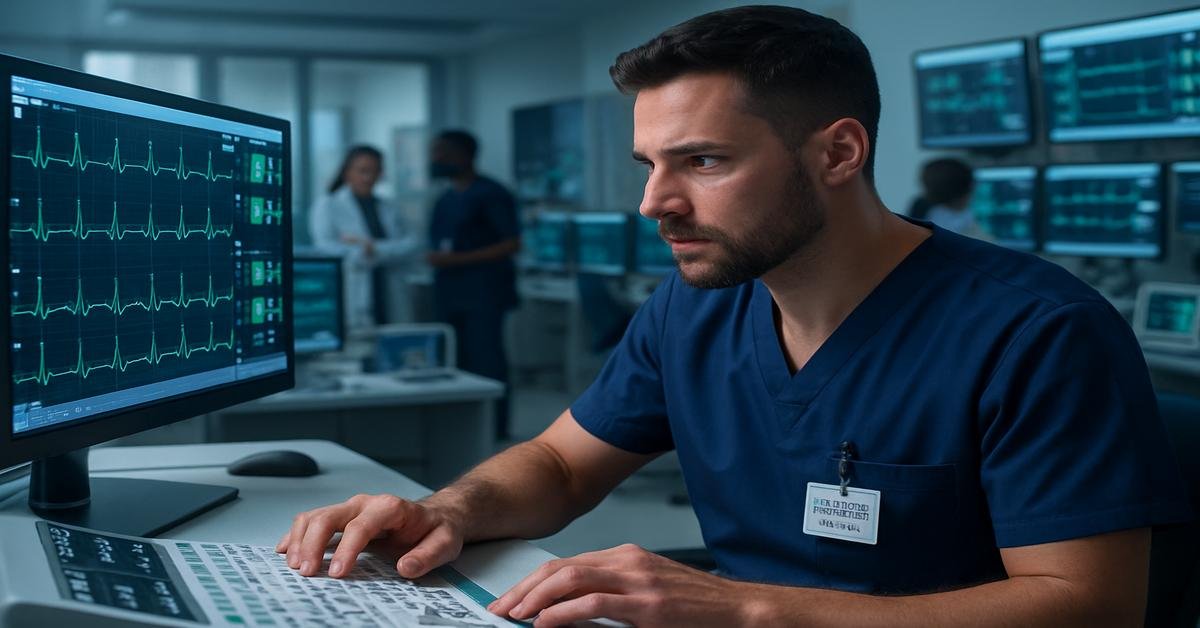
Heart care is changing fast. Hospitals now rely on continuous monitoring, faster triage, remote telemetry, and better rhythm analysis to catch problems before they turn into emergencies. In that shift, the Certified Cardiographic Technician, or CCT, is becoming more important every year. This role sits at the center of cardiac monitoring. It combines technical skill, patient care, and clinical awareness in a way that modern healthcare urgently needs. For people looking at a stable healthcare career with room to grow, CCT is no longer a niche option. It is becoming one of the most practical entry points into the future of cardiac diagnostics and telemetry.
What a Certified Cardiographic Technician actually does
A Certified Cardiographic Technician works with the tools and data used to evaluate heart rhythm and electrical activity. That includes electrocardiograms, stress testing support, Holter monitoring, ambulatory monitoring, and telemetry-related tasks, depending on the employer and setting.
On paper, that may sound like a narrow technical job. In practice, it is much broader. A good CCT does not just place leads and print strips. They help produce data that physicians, nurses, and cardiology teams use to make treatment decisions. If a tracing is poor, the interpretation can be wrong. If a rhythm change is missed, the delay can put a patient at risk. That is why the role matters.
Daily work often includes:
- Preparing patients for ECG testing and explaining the process in simple terms.
- Applying leads correctly to reduce artifact and improve tracing quality.
- Recognizing common rhythm patterns and identifying findings that need urgent attention.
- Managing telemetry workflows in hospitals or monitoring centers.
- Assisting with ambulatory cardiac monitoring, such as Holter or event monitors.
- Documenting results accurately so the care team has reliable information.
The key point is this: CCTs support decisions that can affect diagnosis, medication changes, emergency response, and long-term treatment plans. That gives the role both responsibility and staying power.
Why cardiac monitoring is becoming more central in healthcare
To understand why CCT careers are growing, it helps to look at what is happening in healthcare. Heart disease remains one of the most common reasons people need ongoing monitoring, hospital care, or follow-up testing. At the same time, many rhythm problems are intermittent. They do not always appear during a short office visit. That means healthcare systems need better ways to watch the heart over time, across settings, and often from a distance.
That demand has expanded the use of:
- Inpatient telemetry for real-time monitoring of admitted patients.
- Ambulatory monitors for people who need tracking over days or weeks.
- Post-procedure monitoring after cardiac interventions or medication changes.
- Remote monitoring programs that allow data review outside the hospital.
- Early detection workflows that aim to catch arrhythmias before they lead to stroke, syncope, or sudden deterioration.
Each of these trends creates more need for people who can collect, review, and support interpretation of cardiographic data. Technology helps, but it does not remove the need for trained humans. Machines can flag events. They also over-flag, miss context, and struggle with artifact. Someone still needs to recognize whether a tracing reflects a true arrhythmia, poor lead placement, patient movement, or a technical error.
That “human plus technology” model is exactly where CCTs fit.
Why employers value certified professionals
Certification matters because it gives employers a clearer signal about baseline competence. In cardiac monitoring, mistakes are not minor. A poor strip quality or missed rhythm change can lead to unnecessary alarm or delayed action. When a technician is certified, employers have more confidence that the person understands core concepts such as cardiac anatomy, electrophysiology basics, rhythm recognition, monitoring equipment, and patient safety.
Certification also matters because healthcare teams work under pressure. A telemetry unit, emergency department, stress lab, or outpatient cardiology office needs staff who can step into routine workflows with less hand-holding. A certified technician is often seen as more job-ready for that reason.
From a career standpoint, certification can help in three ways:
- It improves credibility when applying for jobs in competitive healthcare settings.
- It can support better pay because employers often value documented competency.
- It creates a stronger foundation for advancement into specialized cardiac roles later.
The reason this matters long term is simple. As monitoring systems become more advanced, employers do not just want someone who can follow a checklist. They want someone who understands why the data matters.
Telemetry is expanding, and that is a major career driver
Telemetry used to be seen mainly as a hospital-based monitoring function. Now it is much broader. Health systems have expanded monitored beds, centralized rhythm observation, and remote review models. Patients who once may not have been watched continuously are now monitored because clinicians know early rhythm changes can reveal deterioration before symptoms become obvious.
This change increases demand for technicians who can support telemetry operations with accuracy and consistency.
In real terms, that means a CCT may be involved in work such as:
- Monitoring multiple patient rhythms and identifying significant changes.
- Escalating abnormal findings quickly to nursing staff or providers.
- Reducing false alarms by recognizing artifact and technical issues.
- Maintaining lead integrity and helping improve signal quality.
- Supporting workflow in centralized monitoring centers that watch patients across large hospital systems.
This matters because hospitals are under constant pressure to improve response times, reduce preventable events, and use staff efficiently. A skilled telemetry technician helps with all three. They can catch meaningful changes earlier, cut down on confusion caused by poor-quality recordings, and support nurses who are already handling many other demands at the bedside.
That is one reason the role is likely to stay relevant even as software improves. Better technology usually raises expectations. It does not remove accountability.
The role is becoming more technical, not less
Some people assume that automation will shrink technician roles. In cardiac care, the opposite is often true. As monitoring tools become more capable, the need for trained users grows. More data creates more responsibility. Someone has to manage quality, understand device function, recognize limitations, and know when a machine output does not match the clinical picture.
For example, an automated ECG interpretation may suggest an abnormal rhythm, but artifact from muscle movement or loose leads can distort the tracing. A well-trained CCT knows how to spot that problem before the result affects care. In telemetry, false alarms are common. Too many false alarms can create alert fatigue, which makes real events easier to miss. A technician who understands signal quality and rhythm basics adds value by filtering noise from true concern.
This is why the CCT role is not simply about operating equipment. It is about using judgment within a defined scope. That skill becomes more valuable as healthcare systems adopt more devices, more sensors, and more remote monitoring tools.
Where CCTs can work and how that supports career growth
One of the strongest reasons to consider a CCT career is flexibility. The skills are useful in more than one setting, which opens different paths over time. Not every healthcare job offers that kind of mobility.
Common work settings include:
- Hospitals, especially telemetry units, cardiac floors, emergency departments, and diagnostic labs.
- Outpatient cardiology clinics that perform ECGs, stress tests, and monitor follow-up.
- Diagnostic testing centers focused on heart rhythm assessment.
- Remote monitoring or centralized telemetry centers that review patient data off-site.
- Specialty practices managing arrhythmia patients, device follow-up, or ongoing rhythm surveillance.
This range matters because career growth is not always about climbing a single ladder. Sometimes it is about moving sideways into a better fit. A technician may start in basic ECG work, then move into inpatient telemetry, then ambulatory monitoring, then advanced rhythm-focused roles. Another may choose a remote monitoring position for more predictable scheduling. Others may use CCT experience as a bridge into nursing, cardiovascular technology, medical device support, or other allied health careers.
That kind of flexibility makes the field resilient.
The human side of the job gives it long-term value
It is easy to describe CCT work as technical, but the patient side is just as important. People getting cardiac testing are often anxious. Some are in pain. Some are short of breath. Some are hearing, for the first time, that their symptoms may be heart-related. A technician who can explain the test clearly, stay calm, and work carefully does more than complete a task. They help the patient cooperate, reduce stress-related movement, and improve the quality of the result.
This human element is one reason the role remains valuable. Cardiac monitoring is not just data collection. It happens in real clinical situations, with real fear and uncertainty. Patients need someone who can be both competent and steady.
That also affects team trust. Nurses and physicians rely more on technicians who are careful with patients, clear in communication, and dependable under pressure. Technical skill gets you in the door. Professional judgment and patient interaction often drive advancement.
What career growth can look like for a CCT
CCT career growth is often practical rather than flashy. That is a strength. Instead of vague promises, the path usually involves building deeper skills, taking on more responsibility, and moving into settings where rhythm knowledge matters more.
Growth can include:
- Becoming a go-to technician for difficult ECGs, complex telemetry review, or high-volume workflow.
- Cross-training in stress testing or ambulatory monitoring to widen your value.
- Moving into lead or trainer roles where you support onboarding and quality improvement.
- Specializing in rhythm-focused environments such as arrhythmia services or centralized monitoring hubs.
- Using experience as a foundation for advanced education in cardiovascular or other allied health fields.
What supports this growth is not just time on the job. It is pattern recognition, consistency, and reliability. A technician who repeatedly produces clean studies, notices meaningful changes, and communicates well becomes hard to replace.
That is the kind of career capital that travels well across employers.
What makes someone succeed in this field
People often focus only on certification, but long-term success in this field depends on a mix of traits and habits. The strongest CCTs tend to share a few things.
- Attention to detail. Lead placement, strip quality, timing, and documentation all matter.
- Comfort with repetition. You may perform similar tasks many times, but each patient and tracing still requires focus.
- Calm under pressure. If a serious rhythm appears, panic is not useful. Clear escalation is.
- Curiosity. The best technicians keep learning rhythm patterns, equipment functions, and clinical context.
- Good communication. You need to explain tests to patients and report concerns to staff in a clear, direct way.
These qualities matter because the work sits between machine output and clinical action. You need enough technical understanding to trust what is real and enough practical sense to know when to ask for help.
Why CCTs are well positioned for the future of cardiac care
The future of cardiac care is likely to involve more monitoring, not less. Patients are living longer with chronic cardiovascular conditions. Health systems are paying closer attention to early warning signs. Remote and ambulatory monitoring are becoming more common. Data is flowing from more places, across more hours, for more patients.
That does not reduce the need for cardiographic technicians. It increases the need for people who can make that monitoring useful.
CCTs are well positioned because they sit at the meeting point of three major healthcare needs:
- Reliable diagnostic data that clinicians can trust.
- Continuous rhythm surveillance in hospitals and monitoring centers.
- Human oversight to support technology, reduce error, and protect patient safety.
That combination gives the role a strong future. It is not based on trend language or short-term demand spikes. It is based on the basic reality that heart monitoring is becoming more common, more complex, and more important to timely care.
Final thought
CCT career growth makes sense because the role solves a real problem in modern healthcare. Clinicians need accurate heart rhythm data. Patients need monitoring across more settings. Hospitals need trained staff who can support fast, safe decisions. Certified Cardiographic Technicians help meet all of those needs.
For someone considering a healthcare career, this path offers something valuable: practical entry into a high-need area, room to build specialized skills, and work that directly supports patient outcomes. It is a technical role, but it is also a human one. That balance is exactly why CCTs are becoming such an important part of the future of cardiac monitoring and telemetry.

