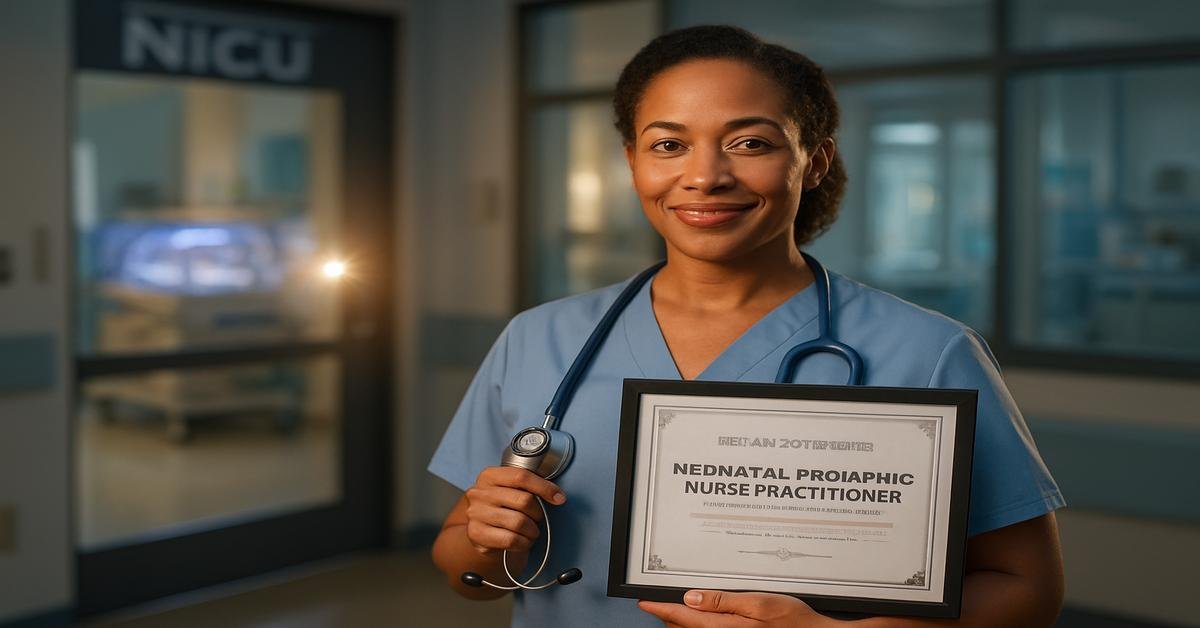
If you want to work in a top children’s hospital, general nursing experience is often not enough. These hospitals care for the sickest infants, children, and teens. They need nurses who can handle complex cases, read subtle changes fast, and support families through high-stress moments. That is where Neonatal and Pediatric Specialty, or NPS, certification becomes important. It shows that you have advanced knowledge in caring for newborns and children, not just basic bedside skills. For nurses who want stronger job prospects, more responsibility, and a clearer path into elite pediatric settings, NPS certification can be a major advantage.
What NPS certification means in practice
NPS certification is a way to prove specialized clinical knowledge in neonatal and pediatric care. It tells employers that you understand the needs of patients whose bodies, symptoms, and treatment responses are very different from those of adults.
A premature newborn in the NICU does not present illness the same way as a school-age child. Medication doses are different. Vital sign ranges are different. Feeding issues, developmental concerns, respiratory distress, infection risk, and family communication all require a more specialized approach. A nurse who is certified in this area has shown formal commitment to learning those differences in depth.
That matters because top children’s hospitals do not just want compassionate nurses. They want nurses who can work safely in high-acuity units where mistakes can have serious consequences. Specialty certification gives hiring managers one more reason to trust that you can step into these settings with stronger preparation.
Why top children’s hospitals value specialty-certified nurses
Top hospitals are usually dealing with three realities at once. First, they see medically complex patients. Second, they compete hard for reputation, safety scores, and family trust. Third, they want staff who can support advanced care models, not just routine tasks. Specialty certification fits all three.
It signals deeper clinical readiness. A certified nurse has studied beyond standard RN education. That helps hospitals build teams that can recognize pediatric emergencies sooner and respond with more confidence.
It supports patient safety. In neonatal and pediatric settings, tiny changes matter. A slight shift in skin color, feeding tolerance, oxygen need, or responsiveness can be the first sign of a serious problem. Specialty training improves assessment and clinical judgment.
It helps with accreditation and quality goals. Many hospitals track the number of certified nurses on staff. Certification can support quality initiatives and show commitment to professional standards.
It reassures families. Parents notice expertise. When a nurse can explain a child’s condition clearly, answer questions calmly, and anticipate problems, families feel safer. Certification does not guarantee bedside manner, but it often reflects serious professional investment.
It strengthens team performance. Pediatric and neonatal care is highly collaborative. Physicians, respiratory therapists, lactation consultants, pharmacists, social workers, and nurses must work closely. A certified nurse often communicates more effectively in that environment because the clinical language and expectations are familiar.
Why pediatric and neonatal care require more than standard nursing skills
Some nurses assume they can move from adult care into pediatric care without much change. In reality, the shift is bigger than it looks.
Children are not just smaller adults. Their anatomy, physiology, emotional needs, and disease patterns are different. Newborns are even more distinct. For example:
- Assessment is different. Infants cannot describe symptoms. Nurses must read behavior, tone, cry patterns, feeding habits, and small physical cues.
- Medication safety is more complex. Weight-based dosing leaves less room for error.
- Family-centered care is essential. You are often treating the child while also guiding frightened parents.
- Development matters. A toddler, a teenager, and a premature infant all need different communication and care approaches.
- Deterioration can be fast. Pediatric patients may compensate for a while, then decline quickly.
NPS certification helps close the gap between general nursing preparation and the demands of these settings. It pushes you to understand not only what to do, but why pediatric and neonatal care must be handled differently.
How NPS certification can improve your job prospects
In competitive hiring markets, certification can help your application stand out. Top children’s hospitals often receive large numbers of applications for a limited number of openings, especially in NICUs, PICUs, pediatric emergency departments, and specialty inpatient units.
When managers compare candidates with similar years of experience, specialty certification can tip the balance. It suggests discipline, initiative, and a serious interest in this patient population. It also reduces some of the uncertainty in hiring. A candidate who already invested in pediatric or neonatal specialization often looks like someone more likely to stay engaged and grow within the role.
This is especially helpful if you are:
- Trying to move from adult care into pediatrics
- Applying to a well-known children’s hospital with strict hiring standards
- Seeking a role in a high-acuity unit
- Competing against applicants who already have children’s hospital experience
Certification alone will not replace strong clinical experience. But it can make your resume more credible, your interview stronger, and your career direction clearer.
What hiring managers often see when they see NPS certification
Employers do not just see a credential. They often attach practical meaning to it.
- You take pediatric or neonatal care seriously. You did not choose this path casually.
- You are willing to invest in your own growth. That often predicts better long-term performance.
- You value standards and evidence-based practice. Certification usually involves structured review of current care principles.
- You may need less foundational training. You still need unit orientation, but your baseline knowledge may be stronger.
- You are thinking beyond entry-level tasks. That matters in hospitals that want future charge nurses, educators, and clinical leaders.
In many hospitals, certification also supports internal advancement. If two nurses are being considered for a preceptor role, committee position, or promotion, the certified nurse may have an edge because the credential shows validated specialty knowledge.
The role of certification in high-acuity units
Not every pediatric role has the same intensity. A general pediatric floor is demanding, but a Level IV NICU or pediatric intensive care unit is another level. These units care for patients with unstable airways, congenital anomalies, severe infections, post-surgical complications, neurological crises, or extreme prematurity.
In these environments, technical skill and clinical judgment must work together. Nurses need to:
- Recognize early signs of sepsis or respiratory decline
- Manage lines, tubes, and specialized equipment
- Monitor nutrition and fluid balance precisely
- Understand developmental and family stress factors
- Respond well in emergencies
NPS certification helps because it builds a stronger clinical framework. Instead of just following instructions, certified nurses are often better prepared to understand why a treatment plan matters, what complications to watch for, and when to escalate concerns. In top hospitals, that level of thinking is expected.
How certification affects confidence at the bedside
One of the biggest career benefits of specialty certification is confidence. Not fake confidence. Real confidence based on deeper understanding.
That matters in pediatric and neonatal care because families ask detailed questions, and their anxiety is often high. A parent may ask why their newborn’s breathing looks different, why feeding volumes are changing, or why a child’s fever is suddenly more concerning. If your knowledge is shallow, those moments feel stressful. If your knowledge is stronger, you can respond clearly and calmly.
Confidence also helps when speaking with providers and teammates. A nurse who understands pediatric pathophysiology more deeply is more likely to trust their assessment, raise concerns earlier, and communicate more precisely. That improves patient care.
Many nurses find that certification changes how they think. They start noticing patterns sooner. They ask better questions. They connect symptoms to risk faster. That is valuable in any unit, but especially in a children’s hospital where small changes can matter a great deal.
NPS certification and long-term career growth
If your goal is not just to get hired, but to build a strong career in pediatric or neonatal nursing, certification has long-term value.
It can support movement into roles such as:
- Charge nurse
- Preceptor
- Clinical educator
- Transport nurse
- NICU or PICU specialist roles
- Quality improvement or patient safety work
- Graduate education pathways such as neonatal or pediatric advanced practice
Hospitals often look for signs that a nurse is growing beyond the basics. Certification is one of those signs. It shows a pattern of professional development, which matters when leadership is deciding who gets advanced opportunities.
It also helps you build a professional identity. Instead of being seen as a nurse who can work with children, you become a nurse with recognized pediatric or neonatal expertise. That difference can shape your career over time.
What certification does not do
It is important to be realistic. NPS certification is valuable, but it is not magic.
It does not replace:
- Hands-on clinical experience
- Good judgment under pressure
- Strong communication with families
- Teamwork
- Compassion and patience
A certified nurse who cannot prioritize, listen, or adapt will still struggle. Children’s hospitals want both technical skill and human skill. They want nurses who can interpret clinical changes and also sit with a worried parent without sounding rushed or cold.
That is why the best approach is to see certification as part of a larger career strategy. It works best when combined with solid bedside experience, continuing education, and genuine interest in pediatric populations.
How to decide if NPS certification is right for you
Certification makes the most sense if you are serious about working with infants and children, especially in settings where acuity is high and competition is strong.
It may be a smart next step if:
- You already work in pediatrics or neonatal care and want to advance
- You want to move into a top children’s hospital
- You are preparing for a specialized unit such as NICU, PICU, or pediatric emergency care
- You want more credibility in interviews and internal promotions
- You enjoy deepening your clinical knowledge, not just collecting credentials
Before pursuing certification, think about your timeline and goals. Are you trying to strengthen your resume for upcoming applications? Are you aiming for a future leadership role? Are you looking to fill a knowledge gap after transitioning from adult care? The more clearly you answer those questions, the more useful the certification becomes.
How to make certification matter on your resume and in interviews
Having the credential is one thing. Presenting it well is another.
On your resume, list it clearly near your license and credentials. In your experience section, connect it to actual clinical work. For example, do not just say you are certified. Show how you used that knowledge in pediatric assessment, family teaching, medication safety, or high-acuity care.
In interviews, explain why you pursued the certification. A strong answer might sound like this:
I wanted to build stronger clinical depth in neonatal and pediatric care because I knew I wanted to work in a high-acuity children’s hospital setting. The certification helped me sharpen my understanding of age-specific assessment, safety risks, and family-centered care.
That kind of answer tells employers you are intentional, not just collecting letters after your name.
The bottom line
NPS certification matters because top children’s hospitals need more than general nursing ability. They need nurses who understand the unique clinical, developmental, and emotional needs of newborns and children. Specialty certification helps prove that you are prepared for that responsibility.
It can strengthen your resume, improve your bedside confidence, support safer care, and open doors to competitive pediatric and neonatal roles. It is not a substitute for real experience or strong people skills. But for nurses who want to build a serious career in children’s health, it is often one of the clearest steps forward.
In a field where small details can change outcomes, specialized knowledge is not extra. It is part of what makes excellent care possible. That is why NPS certification is not just helpful for reaching top children’s hospitals. In many cases, it is one of the keys that helps you get there.

