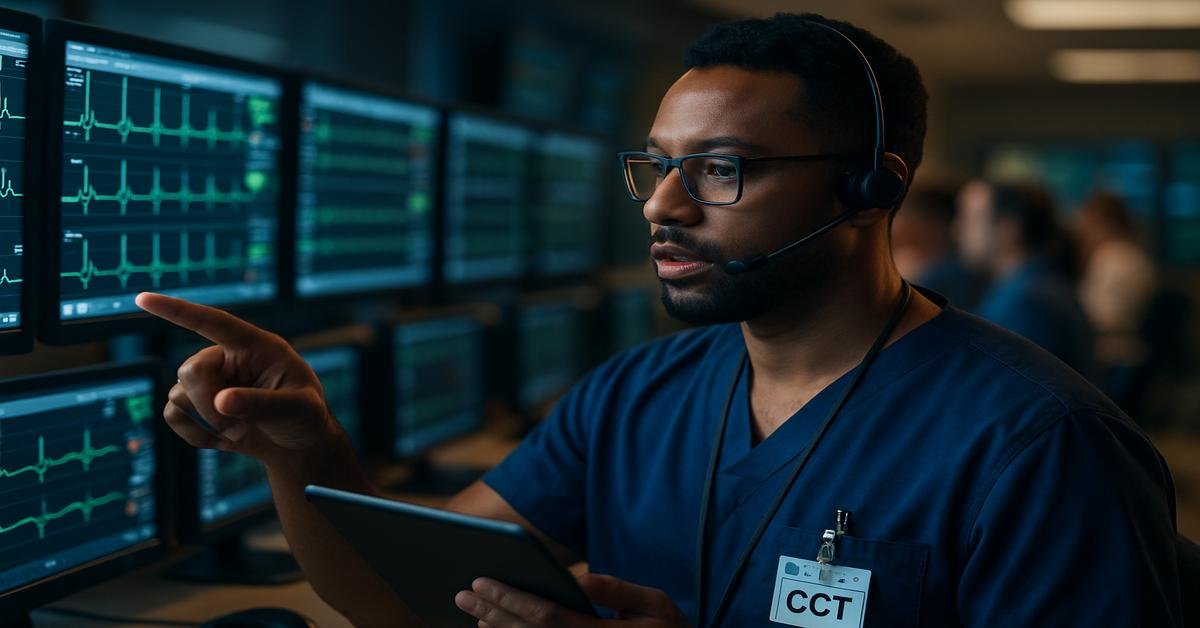
An EKG career can be a solid entry point into heart monitoring jobs, especially for people who want direct patient impact without spending years in school. One of the clearest paths into this field is CCT certification. CCT stands for Certified Cardiographic Technician. It shows employers that you understand electrocardiography, rhythm analysis, stress testing, Holter monitoring, and the basics of cardiac care. That matters because cardiac monitoring is not just about placing leads and pressing buttons. It is about catching changes that can signal a dangerous rhythm, a blocked artery, or a patient who needs urgent attention. If you are looking at roles in cardiac monitoring or telemetry, CCT can help connect training to real job opportunities.
What CCT certification actually covers
CCT certification is broader than a basic EKG credential. A standard EKG technician role often focuses on recording 12-lead EKGs correctly and understanding enough rhythm basics to work safely. CCT goes further. It usually covers several parts of noninvasive cardiac testing, which is why it can open more doors.
Most CCT preparation includes:
- 12-lead EKG acquisition and lead placement accuracy
- Basic and intermediate rhythm interpretation
- Cardiac anatomy and physiology
- Holter and ambulatory monitoring
- Stress test procedures
- Patient prep, safety, and documentation
- Recognition of urgent findings that need escalation
This wider skill set matters in hiring. A hospital manager may need someone who can do more than collect an EKG tracing. They may need a technician who can rotate between outpatient testing, inpatient monitoring support, and rhythm review tasks. A CCT-certified worker often fits that need better than someone with a narrower credential.
Why CCT helps in cardiac monitoring and telemetry
Cardiac monitoring and telemetry jobs depend on pattern recognition, accuracy, and speed. Patients on monitors may be recovering from surgery, having chest pain, dealing with heart failure, or taking medications that affect rhythm. A missed change can delay care. A false alarm can also create problems. It can lead to wasted time, alarm fatigue, and unnecessary interventions.
CCT training supports this work because it teaches you how electrical activity relates to real patient conditions. For example, it is one thing to memorize what atrial fibrillation looks like. It is another to understand why an irregular rhythm matters in a patient with dizziness, a prior stroke, or low blood pressure. Employers value people who can connect the tracing to the clinical situation, even if the final diagnosis comes from a nurse or physician.
Telemetry units in particular need staff who can watch trends, spot abnormalities, and communicate clearly. If a monitor tech sees a run of ventricular tachycardia, the next step is not panic. It is accurate confirmation, immediate reporting, and clean documentation. CCT preparation helps build that discipline.
Common jobs after earning CCT certification
CCT certification does not lock you into one title. Job names vary by hospital, clinic, and region. Two employers may describe similar work with different terms. That is why it helps to focus on duties, not just titles.
Common roles include:
- EKG Technician – Performs 12-lead EKGs, prepares patients, checks lead placement, and handles tracing quality.
- Cardiographic Technician – A broader role that may include stress tests, Holter hookups, event monitors, and rhythm support.
- Telemetry Technician – Watches cardiac monitors, interprets rhythms, identifies changes, and alerts clinical staff.
- Monitor Technician – Similar to telemetry tech, often in ICU step-down units, emergency departments, or central monitoring stations.
- Holter Monitor Technician – Applies ambulatory monitors, instructs patients, verifies signal quality, and helps process recordings.
- Stress Test Technician – Assists with exercise or pharmacologic stress testing under supervision.
- Cardiac Diagnostic Technician – A mixed role in outpatient cardiology or hospital testing departments.
In smaller facilities, one person may perform several of these functions. In larger health systems, the roles can be more specialized. CCT is useful because it supports both models.
How the work differs between cardiac monitoring and telemetry
People often use these terms together, but the day-to-day work can differ.
Cardiac monitoring is a broad category. It can include inpatient bedside monitoring, central station observation, Holter studies, stress testing, and outpatient rhythm tracking. The focus is on collecting and reviewing heart rhythm data across settings.
Telemetry usually refers to remote inpatient rhythm monitoring. Patients wear transmitters, and rhythms are observed at a monitor station. The telemetry technician watches for rate changes, pauses, ectopy, conduction delays, and dangerous rhythms.
That difference matters when planning your career. If you like direct patient interaction, an EKG or stress test role may suit you better. If you like concentration, pattern recognition, and fast communication with nursing staff, telemetry may be a better fit.
Some people start in EKG acquisition and move into telemetry later. That progression makes sense. First you learn how to get clean tracings. Then you learn to interpret rhythm patterns continuously over time. Good monitoring starts with good signal quality.
What employers look for beyond the credential
CCT can help you get an interview, but employers hire for more than exam knowledge. In cardiac monitoring roles, trust is everything. A manager wants to know whether you are careful, calm, and dependable.
Common qualities employers look for include:
- Accuracy – Poor lead placement can create misleading tracings. Wrong rhythm labeling can trigger wrong responses.
- Attention to detail – Small waveform changes can matter.
- Communication skills – You need to report clearly and quickly.
- Patient interaction – Many patients are anxious, in pain, or confused.
- Comfort with protocols – Cardiac care relies on standard processes because consistency improves safety.
- Ability to stay focused – Telemetry work can involve long periods of observation interrupted by urgent events.
For example, if a patient’s monitor shows artifact, a weak technician may call it ventricular tachycardia. A strong technician checks lead quality, looks at the pattern, compares it to the patient’s status, and escalates only what is real. That is the kind of judgment employers want.
Typical career path from training to first job
Many people enter this field in stages rather than all at once. A practical path often looks like this:
- Step 1: Complete basic training in EKG techniques, cardiac anatomy, rhythm basics, and patient care.
- Step 2: Earn CCT certification if your training and eligibility match the exam requirements.
- Step 3: Apply for entry-level roles such as EKG technician, monitor technician, or cardiographic technician.
- Step 4: Build hospital experience by learning workflow, charting standards, escalation procedures, and unit communication.
- Step 5: Move into broader or more specialized roles such as telemetry, stress testing, or ambulatory monitoring.
Not everyone follows the same sequence. Some are hired into telemetry early if they have strong rhythm skills. Others begin in outpatient cardiology because those roles offer more patient-facing work. The point is that CCT gives you range. It does not guarantee one exact job, but it increases the number of roles you can reasonably pursue.
Where CCT-certified professionals work
Hospitals are the most obvious setting, but they are not the only one. Cardiac testing happens in many parts of the healthcare system.
Common workplaces include:
- Acute care hospitals
- Telemetry and step-down units
- Emergency departments
- Cardiology clinics
- Outpatient diagnostic centers
- Physician offices
- Ambulatory monitoring programs
- Stress testing labs
Each setting teaches different skills. A hospital may sharpen your ability to recognize urgent rhythms quickly. An outpatient cardiology office may build stronger patient education skills and expose you to scheduled diagnostic testing. Over time, that experience can shape your next move.
How CCT can support long-term career growth
For some people, CCT is the destination. They like diagnostic testing or telemetry and build a stable career there. For others, it is a stepping stone. It can lead into broader cardiovascular or clinical roles.
Possible next steps include:
- Advanced cardiac monitoring roles with more responsibility for rhythm review
- Lead technician or preceptor positions
- Specialization in ambulatory monitoring or stress testing
- Further education in cardiovascular technology
- Nursing, sonography, or other allied health pathways
Why does this matter? Because healthcare experience compounds. If you spend two years learning rhythm changes, patient safety, charting, and interprofessional communication, you are not starting from zero when you move up. You already understand clinical urgency, medical terminology, and workflow under pressure. That foundation can make future training easier and more meaningful.
The real skills that make someone successful in telemetry
Telemetry can sound simple from the outside. Watch screens. Identify rhythms. Call the nurse. In practice, it takes more skill than people expect.
Successful telemetry technicians usually do three things well:
- They recognize patterns quickly. This includes normal sinus rhythm, atrial fibrillation, flutter, PVCs, heart blocks, pauses, SVT, ventricular tachycardia, and artifact.
- They know what is urgent. Not every abnormal tracing has the same priority. Good technicians learn what needs immediate escalation and what should be documented and trended.
- They communicate cleanly. A short, exact report is better than a vague one. For example: “Patient in room 412 has a new six-beat run of ventricular tachycardia at 142, now back in sinus rhythm.”
CCT supports those skills because it does not isolate the tracing from the clinical setting. It teaches the context around the monitor. That context improves judgment.
Challenges to expect in this career path
This field is rewarding, but it is not effortless. The work can be repetitive at times, especially in high-volume EKG roles. Telemetry can be mentally tiring because it requires steady attention. Some shifts are fast and stressful. You may also work nights, weekends, or holidays in hospital settings.
There is also a learning curve. Early on, many tracings can look confusingly similar. Artifact may mimic arrhythmia. Poor skin prep may distort the signal. Patient movement may interrupt a clean reading. These are not side issues. They are part of the job. A good technician learns to separate true cardiac events from technical problems.
That is another reason CCT can be valuable. It pushes you beyond basic task performance. It helps you understand not only how to collect data, but also how to judge its quality and when to act on it.
How to know if this path is a good fit
CCT and cardiac monitoring work can be a good fit if you like structured clinical work, detail-heavy tasks, and visible patient impact. It helps if you are comfortable with routine, because quality often depends on doing the basics correctly every time. It also helps if you can stay calm when something changes suddenly.
You may be well suited to this path if you:
- Notice small details others miss
- Like interpreting patterns instead of guessing
- Communicate clearly under pressure
- Want a healthcare role with a relatively direct path to employment
- Prefer practical, hands-on work tied to real patient outcomes
You may enjoy it less if you want constant variety, dislike screen-based concentration, or struggle with repetitive technical tasks. Being honest about fit matters. A stable career is easier to build when the daily work matches how you naturally operate.
Final thoughts
CCT certification can be an effective bridge between training and meaningful work in cardiac monitoring and telemetry. Its value comes from breadth. It prepares you not only to record heart rhythms, but also to understand what those rhythms may mean, how to verify what you see, and when to escalate concerns. That makes you more useful in real clinical settings.
For employers, CCT signals stronger preparation. For job seekers, it can expand access to hospital, clinic, and diagnostic roles. And for patients, it supports safer monitoring by putting better-trained people around the data that guides care. If you want a focused healthcare path with room to grow, CCT is one of the more practical ways to enter the cardiac field and build from there.

