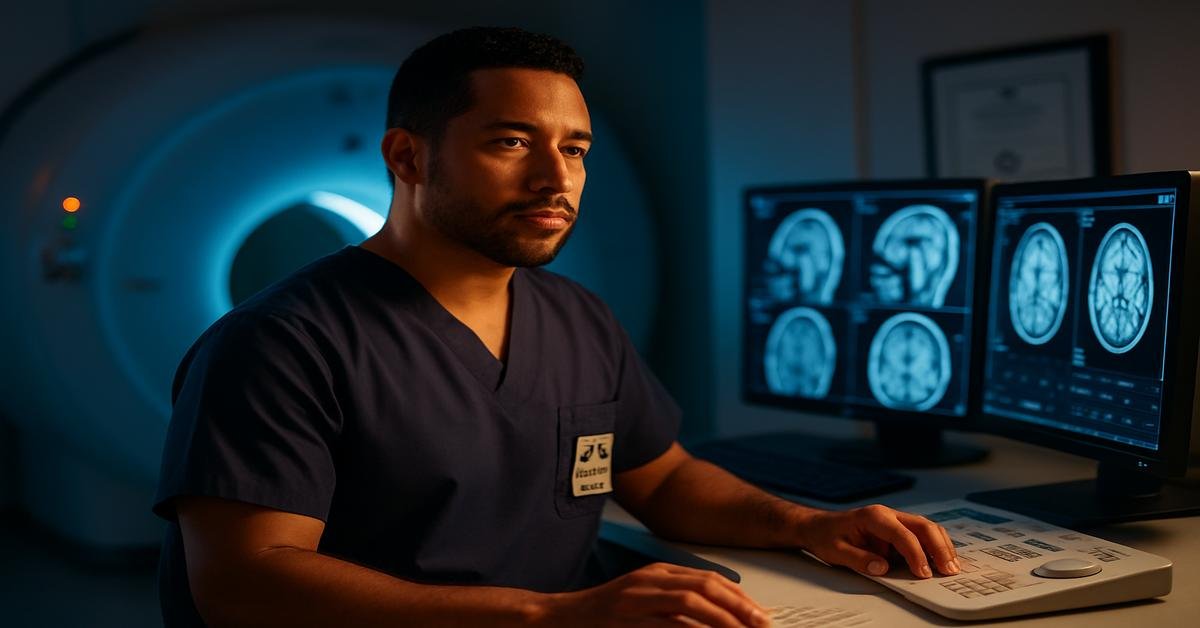
MRI is one of the most specialized roles in medical imaging, and that specialization often shows up in pay, job demand, and long-term career stability. For technologists who already work in radiologic technology or for students choosing an imaging path, the ARRT (MRI) credential stands out because it sits at the intersection of skill, responsibility, and clinical value. MRI exams are complex. The equipment is expensive. Safety rules are strict. And the images often guide major treatment decisions. All of that makes trained MRI technologists hard to replace and, in many markets, well paid. But “profitable” does not just mean a higher hourly rate. It also means stronger career mobility, better leverage in the job market, and more ways to grow without leaving patient care behind.
What ARRT (MRI) means in real career terms
ARRT (MRI) refers to certification and registration in magnetic resonance imaging through the American Registry of Radiologic Technologists. In simple terms, it is a formal way to prove that a technologist has met education, ethics, and examination standards in MRI.
That matters because MRI is not a basic imaging role. It requires technical judgment. A technologist must understand anatomy, pathology, pulse sequences, image quality, patient positioning, contrast use, and screening for implants or other risks. Employers want proof that the person operating the scanner can handle those demands safely and consistently.
In hiring, credentials reduce uncertainty. A hospital or imaging center does not want to guess whether an applicant can manage a claustrophobic patient, recognize an unsafe implant issue, adjust a protocol for a larger patient, or respond if a patient deteriorates during a scan. ARRT certification gives employers confidence that the technologist has passed a recognized standard.
That confidence often translates into better job options. It can open doors to:
Higher-paying MRI-specific roles
Hospital positions with stronger benefits
Travel assignments
Cross-training and lead tech opportunities
Greater bargaining power during hiring
Without a recognized MRI credential, a technologist may still find limited roles in some settings, but the ceiling is often lower. The credential helps move MRI from “something you can assist with” to “a specialty you are trusted to own.”
Why MRI tends to pay more than many other imaging roles
MRI often pays more because the work is harder to staff well. That is the core reason. Healthcare employers usually pay more when a role combines technical complexity, safety risk, expensive equipment, and high clinical importance.
MRI checks all four boxes.
Technical complexity: MRI is not a push-button modality. Technologists make choices that affect scan time, image quality, artifact reduction, and diagnostic usefulness. Small changes in parameters can improve or ruin a study. That level of control requires deeper training than many people realize.
Safety demands: MRI safety is a major issue because the magnet is always on. Ferromagnetic objects can become dangerous projectiles. Some implants are unsafe. Others are conditional and require careful review. Contrast screening also matters. Employers need technologists who treat safety as a constant process, not a checklist done once.
Cost of the equipment: MRI scanners are major investments. Downtime is expensive. Repeat scans waste schedule space and reduce revenue. A skilled technologist protects that investment by working efficiently, reducing repeats, and keeping the patient flow moving.
Clinical value: MRI is heavily used in neurology, orthopedics, oncology, spine imaging, abdominal imaging, cardiac applications, and more. Many diagnoses depend on high-quality MRI. If image quality is poor or the wrong protocol is used, the entire exam may lose value.
When a role has this much responsibility, compensation usually rises. Not everywhere, and not equally, but the pattern is clear in many labor markets.
The profit in MRI is not only salary
When people talk about a “profitable” career, they often focus only on annual pay. That is too narrow. MRI can be profitable in several ways that matter over a full career.
First, there is base pay. MRI technologists often earn more than general radiography staff because fewer people are qualified and the role is harder to fill.
Second, there is shift and setting leverage. Hospitals may pay more for evenings, nights, weekends, on-call work, trauma coverage, or specialized patient populations. Outpatient centers may offer more predictable schedules. The MRI credential gives flexibility to compare both.
Third, there is mobility. MRI-certified technologists can often move more easily between states, employers, and practice settings, especially when employers already understand and value the ARRT credential.
Fourth, there is resilience. Specialized credentials can offer some protection when the job market gets tighter. When budgets are strained, employers usually want staff who can cover high-value services well.
Fifth, there is expansion potential. MRI can lead to senior technologist roles, quality positions, clinical education, applications training, management, and vendor work.
So when MRI is called profitable, the more accurate idea is this: it offers a stronger return on training than many imaging paths because it combines earnings, demand, portability, and growth.
Why employers value MRI technologists so highly
It helps to look at MRI from the employer’s point of view. A strong MRI technologist does much more than complete scans.
They keep patients safe in a high-risk environment.
They reduce repeat imaging by getting the study right the first time.
They help radiologists by producing clean, diagnostic images.
They manage anxious, confused, pediatric, elderly, or painful patients.
They keep a tight schedule without sacrificing quality.
They understand protocols but can also adapt when the case requires it.
That mix is rare. A technologist can be technically smart but weak with patients. Or good with patients but slow with workflow. MRI employers need both. They need someone who can explain an exam calmly to a nervous patient, screen implants carefully, choose or adjust the right sequence, troubleshoot artifacts, and still keep the scanner productive.
Productivity matters because MRI departments are expensive to run. Every delayed scan, no-show slot, repeat exam, or protocol mistake affects revenue and operations. A technologist who keeps things running well adds measurable value, even if that value is not always obvious on the surface.
The role is demanding, which is exactly why it pays well
Higher pay usually comes with higher demands. MRI is a good example. The work is rewarding, but it is not easy money.
Patients may arrive in severe pain, unable to hold still, or frightened by the exam. Some patients need sedation support, special positioning, or extra screening. Inpatients may come with lines, pumps, or uncertain histories. Emergency cases may need quick decisions. Outpatient volume can be relentless. A long shift in MRI can involve constant focus with very little room for careless mistakes.
The mental load is real. The technologist has to think about:
Safety screening
Implant compatibility
Anatomy and pathology
Sequence selection
Motion management
Contrast workflow
Patient communication
Time management
This is one reason MRI can be a profitable specialty. The role creates value because it is difficult to do well. If it were easy to train and easy to replace, compensation would be lower.
How ARRT (MRI) can increase career options over time
One of the strongest arguments for MRI is that it does not trap a technologist in one narrow lane. It is a specialty, but it can branch in several directions.
A technologist might start in outpatient MRI, then move to a hospital for broader case variety. Later, they may become a lead technologist, preceptor, department educator, or MRI safety resource person. Some move into PACS, workflow optimization, quality improvement, or operations. Others go to equipment vendors as clinical applications specialists, where they train users and support implementation.
These paths are possible because MRI develops transferable skills:
Advanced imaging knowledge
Protocol judgment
Patient care under pressure
Strong safety habits
Communication with radiologists, nurses, and referring teams
Experience with expensive, high-stakes technology
That makes MRI more than a single job title. It can be the center of a long, adaptable career.
What makes MRI different from general radiography and some other modalities
General radiography is essential, but in many regions it is also more common and easier to staff than MRI. That affects pay. A larger labor pool usually means less salary pressure. MRI tends to have a smaller qualified workforce, and that pushes value upward.
Compared with CT, MRI often involves longer exams, more protocol variation, and stricter safety review. CT is also highly skilled, but MRI often requires more patient coaching and more technical adjustment during the exam itself. Ultrasound can also be lucrative and highly specialized, especially in certain settings, but it is physically demanding in different ways and often has its own training route.
The point is not that MRI is always “better” than every other modality. It is that MRI combines several favorable factors at once: credential value, technical depth, employer demand, and career portability. That combination is what makes it stand out.
Who is most likely to do well in MRI
The best MRI technologists are usually not just machine-focused. They are careful, calm, and curious. They like both patient care and technical problem-solving.
Someone tends to do well in MRI if they:
Pay close attention to detail
Stay calm under pressure
Communicate clearly with anxious patients
Like anatomy, pathology, and image quality
Respect safety rules without cutting corners
Can work efficiently without rushing
For example, imagine two technologists with similar experience. One moves patients through quickly but misses screening details and produces inconsistent images. The other works at a steady pace, catches implant issues, explains the exam well, and adapts sequences when motion becomes a problem. The second technologist is much more valuable, even if both are technically “doing MRI.” In this field, quality and judgment drive career success.
The training investment is real, but so is the return
Becoming MRI-certified takes time and effort. There are education requirements, clinical experience requirements, and exam preparation. For working technologists, that may mean balancing shifts, study time, and supervised competency work.
That effort is exactly why the credential has labor-market value. Credentials only improve earnings when they represent meaningful skill. If anyone could get MRI-qualified with minimal effort, the pay advantage would shrink.
The return on that investment can show up in several ways:
Faster access to higher-paying roles
Stronger job security
More freedom to change employers
Eligibility for specialty or travel positions
A better foundation for leadership or advanced roles
For many technologists, the most practical way to view MRI is not as a quick pay jump, but as a multi-year upgrade in earning power and career control.
What to consider before choosing MRI for the money alone
MRI can be profitable, but it is not the right fit for everyone. If someone dislikes patient interaction, gets bored by repetitive protocol work, or struggles with strict safety processes, the pay may not be enough to make the job satisfying.
It is also important to think about the local market. Not every city pays the same. A large academic hospital, suburban outpatient center, rural facility, and travel contract can all offer very different compensation. Benefits matter too. A job with a lower hourly rate but strong retirement contributions, tuition support, and stable scheduling may be more profitable in the long run than a slightly higher-paying position with weak benefits and burnout-level staffing.
Work environment matters as much as pay. Some MRI departments are well run, with reasonable schedules and clear protocols. Others are understaffed and constantly behind. A profitable career is one that you can sustain, not just one that pays well for six exhausting months.
Why ARRT (MRI) remains one of the strongest specialty moves in medical imaging
ARRT (MRI) remains one of the most profitable specialties in medical imaging because it signals a high-value skill set that employers need and patients depend on. The role blends advanced technical work, serious safety responsibility, and direct impact on diagnosis. That creates strong demand for competent technologists. Demand, in turn, supports better pay and broader opportunity.
Just as important, MRI offers more than a short-term salary advantage. It can improve career mobility, deepen professional credibility, and create multiple paths for growth. For radiologic technologists looking to specialize, MRI is often a smart move because the credential has clear practical value in the real job market.
In the end, the profitability of MRI comes from one simple fact: good MRI technologists are not easy to find, and the work they do matters. In healthcare, that combination usually gets rewarded.

