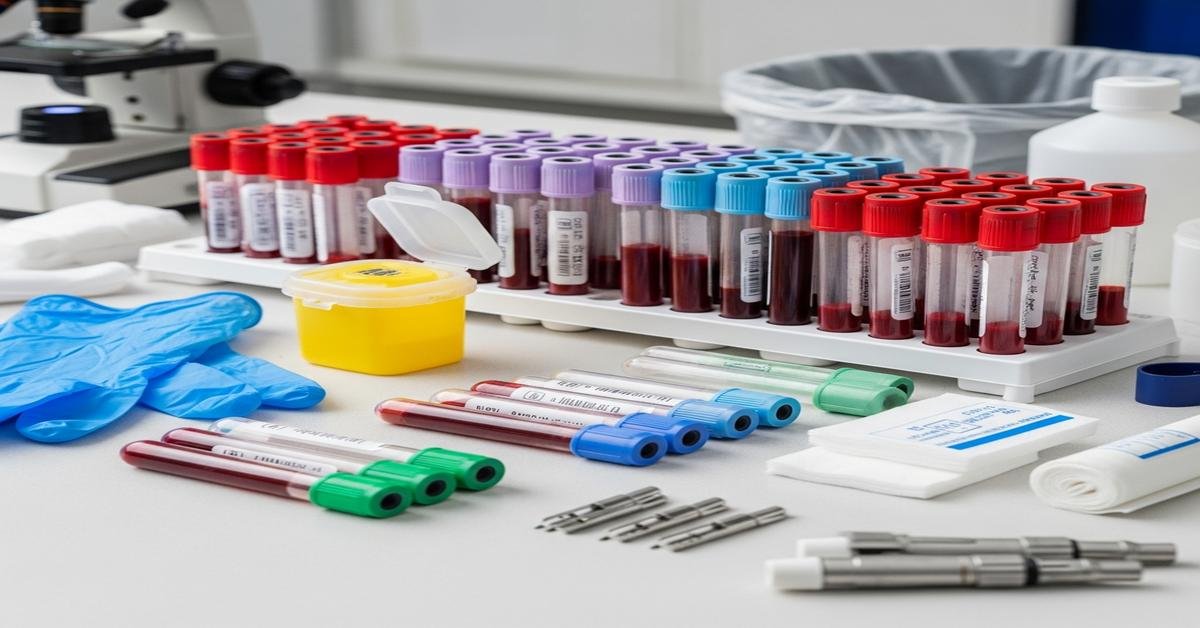
This guide focuses on the highest-yield topics in specimen collection and laboratory safety for the ASCP Phlebotomy Technician (PBT) exam. It explains not just what to do, but why it matters. When you understand the reason behind each step, you catch errors early and protect patients and yourself. Use this as a study map and a practical checklist.
What the PBT Exam Emphasizes in Collection and Safety
The PBT exam stresses preanalytical quality and safety. Most lab errors happen before analysis, so ASCP looks for solid habits: correct patient ID, proper tube selection and order of draw, timing, handling, and PPE use. Expect scenario questions that test judgment, not memorization. They often ask what to do next when something goes wrong.
Patient Identification and Consent
Always identify the patient with two unique identifiers. Use the armband and have the patient state their full name and date of birth. For outpatients, a photo ID plus verbal confirmation works. Matching the requisition to the armband prevents wrong-patient errors, which can cause misdiagnosis and harm.
- Label at the bedside, after collection, in the patient’s presence. Include full name, unique ID, DOB, date/time of draw, and your initials. Blood bank samples often require a special form and strict ID checks because a mismatch can cause a fatal transfusion reaction.
- Confirm consent and explain the procedure. This reduces anxiety and syncope risk and meets legal and ethical standards.
- For minors or impaired patients, obtain consent from a legal guardian or follow facility policy.
Infection Control: PPE, Hand Hygiene, and Asepsis
Hand hygiene is the single most effective safety step. Wash or sanitize before and after every patient contact. Gloves protect both you and your patient.
- Use 70% isopropyl alcohol for routine venipuncture. It kills skin flora that can contaminate the specimen.
- Use chlorhexidine or iodine for blood cultures. These reduce skin bacteria more effectively, lowering false positives.
- Let antiseptics dry fully. Wet alcohol stings, can hemolyze cells, and reduces disinfection effectiveness.
- Never palpate the site after cleansing, unless wearing sterile gloves. Touching reintroduces bacteria.
Site Selection and Venipuncture Basics
Preferred order of veins: median cubital (best anchor and lowest risk), cephalic, then basilic (closest to artery and nerve—last choice). This order lowers the chance of injury and nerve pain.
- Tourniquet time: under 1 minute. Longer times cause hemoconcentration. This falsely elevates proteins, calcium, and potassium.
- Angle: 15–30 degrees. A shallow angle avoids piercing through the vein; too steep risks going through or causing pain.
- Needle gauge: 21 for most adults; 22 for smaller veins; 23 butterfly for fragile veins. Very small needles can hemolyze blood because of high shear.
- Avoid these sites: edematous arms (diluted sample), arms with a fistula or on the side of a mastectomy (infection/lymphostasis risk), and areas with burns or scarring (poor healing and inaccurate results).
- IV lines: draw from the opposite arm. If unavoidable, stop the IV for at least 2 minutes, draw below the IV site, and note it. IV fluids can dilute results.
Order of Draw and Tube Additives
Why order matters: Additives can carry over on the needle. For example, EDTA carryover falsely lowers calcium; clot activator carryover clots anticoagulated tubes. The correct order prevents this.
Standard order of draw (evacuated system):
- 1. Blood cultures (yellow SPS or culture bottles)
- 2. Light blue (sodium citrate, 3.2%)
- 3. Red (no additive) or SST/Tiger (clot activator/gel)
- 4. Green (heparin) and light green (PST gel)
- 5. Lavender/Purple (EDTA), Pink (EDTA for blood bank)
- 6. Gray (sodium fluoride/potassium oxalate)
Key additive facts:
- Light blue must be filled to 90–100% for a 9:1 blood-to-citrate ratio. Underfilling falsely prolongs clotting times.
- When using a winged set for a blue-top tube, draw a discard tube first to fill the tubing. This keeps the 9:1 ratio accurate.
- EDTA preserves cell morphology; that’s why CBCs use lavender tops.
- Gray tubes stop glycolysis. They are used for lactate and some glucose tests to prevent falsely low readings.
Mixing inversions (gentle, 180-degree turns): Light blue 3–4; serum (red/SST) 5; heparin 8; EDTA 8; gray 8–10. Gentle mixing prevents clots without hemolysis.
Special Collections You Must Know
Blood cultures: Clean with chlorhexidine/iodine and let dry. For a butterfly set, fill the aerobic bottle first (air in tubing benefits the aerobic bottle). For straight needles, order doesn’t matter. Adult sets usually need 8–10 mL per bottle. Collect from two different sites to improve detection and reduce contamination.
Coagulation testing: Light blue must be filled properly. High hematocrit reduces plasma volume and can make citrate too strong, prolonging times. Some labs adjust citrate for Hct >55%—know the concept.
Therapeutic drug monitoring (TDM): Draw troughs right before the next dose; peaks at defined times after dosing. Timing matters because levels change quickly. Wrong timing makes results useless.
Cold and warm specimens:
- On ice: ammonia, lactic acid, many blood gases. Cold slows metabolism, preserving analytes.
- Warm (37°C): cold agglutinins, cryoglobulins. Warming prevents false clumping or precipitation.
- Protect from light: bilirubin, folate, porphyrins. Light degrades these analytes and skews results.
Capillary Collections and Infant Heel Sticks
When to use capillary: fragile veins, frequent testing, infants. Do not use for large volumes or coagulation studies (unless a specialized device is used); tissue fluid contamination affects results.
Capillary order of draw: blood gases, slides, EDTA, other additive tubes, then serum. EDTA is early to minimize clumping and preserve cells for CBCs.
Heel sticks: Use the lateral or medial plantar surface; never the arch or back of heel. Depth limit is typically 2.0 mm for infants to avoid bone injury. Warm the heel, clean with alcohol, and wipe away the first drop. The first drop is contaminated with tissue fluid and alcohol.
Pediatric volumes: Estimate total blood volume as ~80–100 mL/kg (infant) or ~70 mL/kg (child). As a safe rule of thumb, draw no more than ~1% of total blood volume at once, and no more than ~5% in 24 hours. Example: a 4-kg newborn has ~320–400 mL total blood; 1% is 3.2–4 mL. Exceeding limits risks anemia and instability.
Preventing and Managing Complications
- Hematoma: If swelling starts, release the tourniquet, withdraw the needle, and apply firm pressure for at least 2 minutes. Hematomas can hemolyze specimens and injure tissue.
- Syncope: Remove the needle immediately, support the patient, and lower their head or have them lie down. Fainting with a needle in place risks injury.
- Petechiae or prolonged bleeding: May indicate a coagulation problem or tight tourniquet. Apply longer pressure, especially if the patient is on anticoagulants.
- Rolling or collapsed veins: Anchor well, use a smaller gauge, or switch to a butterfly. Too much vacuum can collapse small veins; a syringe or butterfly gives more control.
- Pain or numbness: Possible nerve involvement. Stop and try another site to prevent injury.
Preanalytical Variables and Specimen Integrity
Why preanalytical control matters: The lab can run a perfect assay on a bad specimen and still get a wrong answer. Control what you can at the bedside.
- Fasting and posture: Lipids and glucose need a basal state (often 8–12 hours). Standing increases protein and calcium due to fluid shift. Record posture and fasting status if required.
- Time of day: Cortisol and iron vary by diurnal rhythm. Incorrect timing leads to misinterpretation.
- Fist pumping and prolonged tourniquet use raise potassium and lactate. Ask the patient to only gently make a fist.
- Hemolysis: Caused by small needles, forceful syringing, shaking tubes, wet alcohol, or rough transport. It falsely raises potassium, LDH, and magnesium.
- Lipemia: Fatty specimens interfere with spectrophotometry. Fasting reduces this.
- Clots in anticoagulated tubes: Usually from poor mixing. Even tiny clots make a CBC invalid.
Transport and processing: Deliver within required stability times. Separate serum/plasma from cells promptly to prevent glycolysis and leakage of intracellular contents (e.g., potassium). Never chill tests that require body temperature; never expose light-sensitive samples.
Specimen Rejection and Documentation
Reject if: the tube is unlabeled or mislabeled; wrong tube type; underfilled blue-top; hemolyzed (when analyte is affected); clotted EDTA specimen; leaked or contaminated; QNS (quantity not sufficient); late or wrong timing. These errors change patient care decisions.
Correcting labeling errors: Do not guess. Return to the bedside and relabel only with the patient present, or redraw. For blood bank, a full redraw is often required. Documentation protects the patient and the phlebotomist.
Point-of-Care Testing and Quality Control
Follow the device instructions exactly. POC devices are convenient but sensitive to temperature, humidity, and lot variations.
- Daily QC and lot-to-lot checks verify accuracy. Skipping QC risks false results at the bedside.
- Record lot numbers, expiration dates, and QC outcomes. Without records, you cannot defend the validity of a result.
- Clean meters and follow infection control to prevent cross-contamination.
Urine, Stool, and Other Non-Blood Specimens
Urine: Random (most common), first-morning (concentrated), clean-catch midstream (reduces contamination), timed 24-hour (measures analytes that vary over time). For 24-hour urine, discard the first void, then collect all urine for 24 hours including the final void at end time; keep chilled or with preservative as specified. Incorrect timing invalidates the test.
Stool: Some tests require no urine contamination and specific preservatives. Incorrect container or temperature ruins the sample.
Swabs and sputum: Use correct swab type and collection site. For sputum, collect a deep cough specimen in the morning; saliva is not acceptable. Good technique prevents repeat collections and delays.
Blood Bank Collections: Extra Caution
Pain points: strict ID, pink-top EDTA tubes, and no labeling errors. Often a second independently collected sample is required to confirm ABO/Rh. A wrong label can cause a hemolytic transfusion reaction, so facilities use extra identifiers and special forms. Follow them exactly.
Chain of Custody and Forensic Collections
Maintain an unbroken paper trail. Document who collected, when, how sealed, and every handoff. Use tamper-evident seals and have the donor and collector sign. A broken chain can invalidate results in court or compliance settings.
Sharps, Biohazard, and Exposure Response
- Activate needle safety immediately and dispose into a sharps container at the point of use. Do not recap. Overfilled containers increase needlestick risk; replace when two-thirds full.
- Spill cleanup: Wear PPE. Use fresh 10% bleach (or facility-approved disinfectant) with the proper contact time, usually about 10 minutes. This contact time kills pathogens.
- Exposure incidents: Wash needlesticks with soap and water. Flush eyes and mucous membranes with water for 15 minutes. Do not squeeze the wound. Report immediately for evaluation and possible prophylaxis. Early treatment reduces infection risk.
Fire, Chemical, and Electrical Safety
Know RACE and PASS:
- RACE: Rescue, Alarm, Contain, Extinguish/Evacuate.
- PASS: Pull, Aim, Squeeze, Sweep.
Fire classes: A (ordinary combustibles), B (flammable liquids), C (electrical), D (metals), K (cooking oils). Use the correct extinguisher. Using water on an electrical or oil fire spreads danger.
Chemicals: Read labels and Safety Data Sheets. The NFPA diamond signals health, flammability, reactivity, and special hazards. Proper storage prevents reactions and fumes.
Electrical: Inspect cords, keep hands dry, and don’t use equipment with damaged insulation. This prevents shocks and fires.
Centrifuges: Balance tubes, secure caps, and wait for a full stop before opening. Aerosols from broken tubes can carry infectious agents.
Frequently Tested “Why” Concepts
- Why 1-minute tourniquet time? Longer times cause hemoconcentration, which elevates proteins, potassium, and hematocrit.
- Why discard before a blue-top with a butterfly? The tubing holds air. Without a discard, the blue tube is underfilled, changing the 9:1 ratio.
- Why mix tubes gently? Prevents clots but avoids hemolysis. Vigorous shaking ruptures cells.
- Why avoid draws from a mastectomy side? Lymphatic disruption increases infection and swelling risks; results may be unreliable.
- Why label in the patient’s presence? It eliminates mix-ups and strengthens the legal chain of identity.
- Why keep some specimens warm or cold? Temperature preserves analyte stability or physical state (e.g., cold agglutinins).
Practice Scenarios You Should Master
- A blue-top tube is 75% full. Reject and redraw. Underfilling changes citrate concentration and prolongs clotting times.
- Patient starts to faint. Remove the needle, protect the patient, and call for help if needed. Document and try again only when safe.
- A specimen arrives hemolyzed for potassium. Redraw with a larger needle, minimize tourniquet time, let alcohol dry, and avoid vigorous mixing.
- Only an arm with an IV is available. Pause the infusion for 2 minutes, draw below the IV site, discard a portion if policy requires, and document.
- Blood culture order with a butterfly set. Clean properly, collect aerobic first, then anaerobic, reaching target volumes.
- Glucose tolerance test timing. Note the exact time of the glucose load, then draw at strict intervals. Late or early draws invalidate curves.
High-Yield Memory Aids
- Order of draw phrase: “Boys Love Ravishing Girls Like Dieters Love Greek” (Blood cultures, Light blue, Red, Gold, Light green, Dark green, Lavender, Gray).
- Blue-top rule: 9:1 ratio, 90–100% fill, discard tube first with butterflies.
- Tourniquet rule: On under 1 minute; off once blood flows.
- Warm/Cold/Light: Warm—cold agglutinins; Cold—lactate/ammonia; Light—bilirubin/folate.
- Capillary order: Gases → Slides → EDTA → Others → Serum.
- Fire steps: RACE then PASS.
Exam-Day Strategy
- Prioritize patient safety. If a choice prevents harm (stop the draw, remove the needle, re-identify), it is usually correct.
- Think preanalytical quality. Ask: Will this step change the result? If yes, fix it before proceeding.
- Watch for hidden variables. Fasting, posture, tourniquet time, line draws, and timing often explain odd values.
- Be strict about labeling. Unlabeled or mismatched = reject and redraw. No exceptions for blood bank.
Quick Checklist Before You Leave the Room
- Two identifiers matched to the order.
- Correct tubes in correct order, filled properly.
- Gentle inversions done as required.
- Specimen labeled at bedside with date/time and initials.
- Site checked; bleeding controlled; patient comfortable.
- Transport needs met (ice, warmth, light protection, timing).
- Documentation complete.
Master these core practices and their “why,” and you will be ready for both the ASCP PBT exam and real-world work. Good phlebotomy is not just about getting blood. It is about getting the right specimen, safely, every time.

