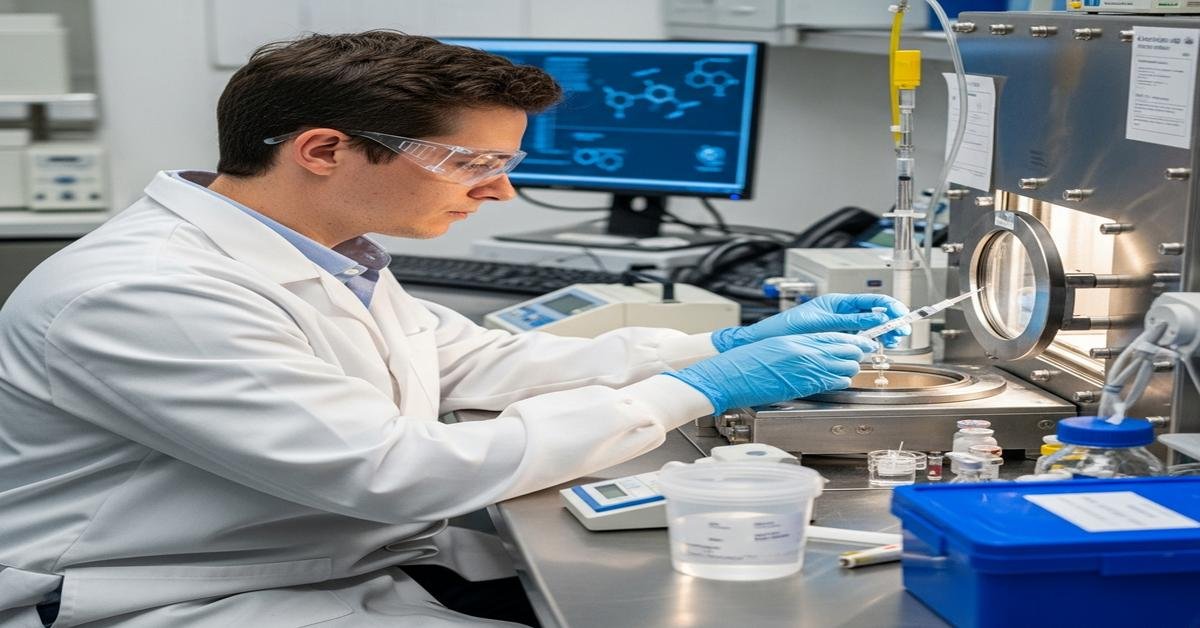
Nuclear pharmacy sits at the crossroads of pharmacy, physics, and patient care. It is a niche that pays six figures, demands precision, and keeps hospitals running before sunrise. If you have a PharmD, enjoy sterile compounding and calculations, and do not mind early mornings, radiopharmacy can be a rewarding, stable career. Here’s what radiopharmacists actually do, why the pay is high, and exactly how to become one in the United States.
What is a radiopharmacist?
A radiopharmacist, often called a nuclear pharmacist or an Authorized Nuclear Pharmacist (ANP), prepares and dispenses radioactive drugs used for imaging and therapy. These radiopharmaceuticals let clinicians see organ function in real time (diagnostics like PET/CT or SPECT) or deliver targeted radiation to treat cancer (theranostics such as lutetium-177 or iodine-131).
The role exists because radiopharmaceuticals are different from typical medications. They decay quickly, require sterile compounding under special shielding, and must meet both pharmacy and radiation regulations. That complexity is why nuclear pharmacists need specific training beyond a pharmacy license.
What do nuclear pharmacists do day to day?
Expect a mix of sterile compounding, radiation safety, quality control, and logistics. A typical morning in a central radiopharmacy looks like this:
- 2:00–4:00 a.m.: Elute a molybdenum-99/technetium-99m generator to obtain technetium for SPECT doses. Perform identity and purity checks to ensure the right radionuclide and minimal impurities.
- Prep and QC: Reconstitute cold kits (for example, MDP for bone scans, MIBI for cardiac scans) with Tc-99m, then run sterility surrogates and radiochemical purity tests. Use a dose calibrator to verify activity.
- Dispense: Draw patient-specific doses into shielded syringes, apply compliant labels, and package them in lead “pigs.” Doses are time-stamped because activity decays to half over predictable intervals.
- PET production (varies by site): Coordinate with cyclotron or synthesis units for FDG and emerging tracers. Verify radionuclidic and chemical purity before release.
- Therapy support: Prepare or verify therapeutic doses (I-131 capsules, Lu-177) under stricter controls and documentation.
- Radiation safety: Wear dosimeters, survey the lab for contamination, perform wipe tests, segregate waste for decay-in-storage, and document everything to meet federal and state rules.
- Logistics and communication: Schedule deliveries to hospitals and outpatient imaging centers. Consult with nuclear medicine technologists and physicians on dose selection, shortages, and substitutions.
Why the early start? Imaging schedules begin at dawn, and some tracers become unusable within hours. Compounding must be finished before patients arrive.
Where do radiopharmacists work and when?
Most work at central radiopharmacies that supply hospitals in a region. Others practice in hospital-based nuclear medicine departments, PET centers, or manufacturing/industry settings.
Hours skew early: many shifts run from 1:00–9:00 a.m., with rotating weekends or on-call. Hospital-based roles may have more daytime work, especially with therapy services. The schedule is consistent but not nine-to-five.
Pay and job market
Base pay commonly ranges from $120,000–$160,000 for staff pharmacists, with differentials, overtime, and on-call pushing total compensation higher. Supervisors and managers often earn $150,000–$190,000+, especially in high-volume PET operations or expensive markets.
Why the premium? The role is specialized, the labor pool is smaller, and operations run at odd hours under strict regulation. Errors have both pharmacologic and radiation implications, so employers pay for competence and reliability.
The job market is steady but niche. Large national providers (and a few regional players) dominate distribution, which means jobs cluster around major metros. Demand is rising for theranostics and PET tracers, but openings may require willingness to relocate.
How to become a radiopharmacist (USA)
You must first be a licensed pharmacist, then complete radiation-specific training and get listed as an Authorized Nuclear Pharmacist on a facility’s radioactive materials license.
- 1) Earn a PharmD. Most students complete 2–4 years of pre-pharmacy coursework followed by a 4-year PharmD program. A legacy B.S. in Pharmacy can qualify if you hold a pharmacist license, but new entrants typically have a PharmD.
- 2) Get licensed. Pass NAPLEX and applicable state law exams (often MPJE), then obtain your state pharmacist license.
- 3) Complete nuclear pharmacy didactic training. Federal rules require at least 200 hours of classroom instruction covering radiation physics, radiation biology, instrumentation, radiochemistry, math and dosimetry, and regulatory compliance. Many colleges of pharmacy and industry programs offer this certificate.
- 4) Complete supervised practice. You need at least 500 hours of precepted, hands-on experience in a nuclear pharmacy. This includes compounding, quality control, radiation surveys, waste handling, and dispensing. Employers often sponsor this training.
- 5) Become an Authorized Nuclear Pharmacist (ANP). A preceptor attests to your training and competence. Your facility’s Radiation Safety Committee and licensee submit your credentials to list you by name on the radioactive materials license. Once approved, you can independently prepare and dispense radiopharmaceuticals at that site.
- 6) Consider board certification. The Board of Pharmacy Specialties grants the Board Certified Nuclear Pharmacist (BCNP) credential. It typically requires practice hours (often 4,000, including training) and passing an exam. BCNP is not legally required but strengthens your resume for leadership, academic, or industry roles.
- 7) Maintain competence. Complete continuing education, follow USP <825> and sterile compounding standards, and keep radiation safety training current. Recertify BCNP as required if you hold it.
Note: State rules may vary, but most follow federal standards through the NRC or Agreement States. Practically, employers will guide you through site-specific approvals.
Key skills employers look for
- Sterile compounding: Mastery of aseptic technique under shielding. This matters because contamination risks are compounded by radioactivity.
- Math and decay calculations: Comfort with half-lives, activity corrections, and time-based dosing. Under- or over-estimation affects image quality and patient safety.
- Quality control: Hands-on with dose calibrators, TLC for radiochemical purity, pH and visual checks. QC catches labeling failures before they reach patients.
- Regulatory discipline: Accurate logs, lot traceability, and chain-of-custody documentation. Audits are routine.
- Radiation safety: ALARA habits, shielding, distance, time management, and contamination control. Protects you, coworkers, and the public.
- Operational reliability: Early arrival, consistent output, and coordination with routes and schedules.
- Communication: Clear consults with nuclear medicine technologists, physicists, and clinicians, especially during shortages or therapy cases.
Safety and exposure: what to expect
Radiation exposure is monitored with whole-body and extremity dosimeters. With proper shielding and technique, annual doses for nuclear pharmacists are typically low and well below regulatory limits. Expect training on ALARA principles, routine surveys, and bioassays for certain isotopes like I-131.
Work is hands-on and can be physical: you will move lead containers, restock generators, and stand for extended periods. Pregnant workers can declare pregnancy to enable additional protective measures and adjusted duties.
Pros and cons
- Pros: Strong pay, stable demand, a science-heavy role, limited direct patient conflict, and a clear daily routine. Your work directly enables life-saving diagnostics and targeted therapies.
- Cons: Very early hours, repetitive workflows, occasional on-call, and a narrow niche that can make switching geographies or specialties harder. Strict regulation raises the paperwork burden.
Career paths beyond staff pharmacist
- Pharmacy manager or site director: Lead operations, people, and compliance for a facility.
- Regional operations: Oversee multiple sites, route optimization, and performance metrics.
- Industry roles: Medical affairs, clinical education, applications specialist for imaging agents or therapy, sales with technical depth, or quality and regulatory positions in manufacturing.
- Theranostics specialist: Support cancer centers with therapy workflow design, dosimetry coordination, and regulatory setup.
How to break in if you have no nuclear experience
- Target electives and rotations: Choose nuclear medicine or sterile compounding APPEs if still in school.
- Earn the 200-hour didactic certificate: It signals commitment and shortens employer training time.
- Leverage sterile compounding: Hospital IV room, USP <797> experience, and cleanroom metrics transfer directly.
- Show your math comfort: Be ready to discuss half-life problems and activity corrections during interviews.
- Flex on location and shift: Openness to relocate or work early mornings often clinches first roles.
- Ask about sponsorship: Many employers will fund the 500-hour supervised training and ANP listing if you are a strong fit.
What interviewers will ask (and why)
- “Walk me through aseptic technique behind shielding.” They want to know you can stay sterile while working around L-blocks and lead glass.
- “How do you adjust a 20 mCi order for a 9:00 a.m. injection if the dose is prepared at 6:30 a.m.?” Tests decay corrections and timing discipline.
- “Describe a time you caught a QC failure.” QC vigilance prevents patient harm and regulatory citations.
- “Are you comfortable with 2:00 a.m. starts and repetitive tasks?” They need consistency as much as brilliance.
The future: PET and theranostics
Growth is strongest in PET tracers and targeted radiotherapies. Sites expanding into lutetium-177 therapies, PSMA and somatostatin receptor imaging, and new oncology tracers need pharmacists who can navigate strict handling, recordkeeping, and patient-specific dosing. The trend favors pharmacists with PET experience, strong QC habits, and a willingness to standardize new workflows.
Is nuclear pharmacy right for you?
- You like precision work, math, and sterile compounding.
- You can thrive on early shifts and routine.
- You value regulatory structure over ambiguity.
- You’re comfortable with radiation when risks are controlled and monitored.
- You want a clear, six-figure clinical-operations role with room to grow into management or industry.
Bottom line: Radiopharmacy is a specialized, well-paid path for pharmacists who value consistency, technical skill, and measurable impact. If the early hours and regulatory rigor fit your style, becoming an Authorized Nuclear Pharmacist can offer a stable career with growing opportunities in imaging and cancer therapy.

