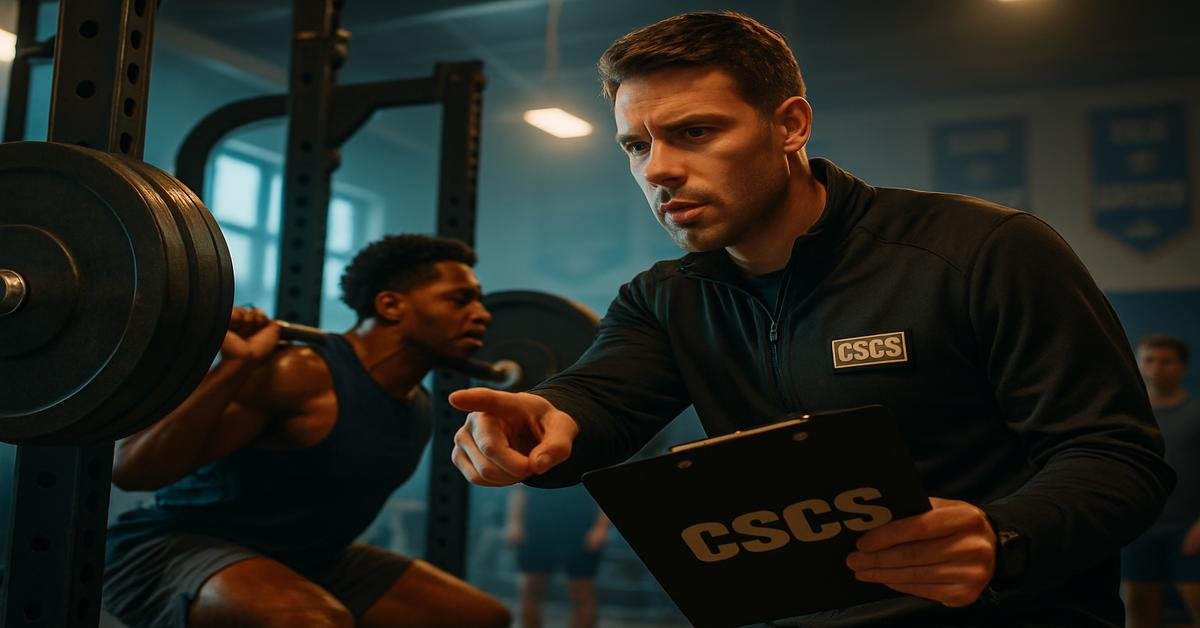
If you want to build a career as a strength coach, one credential comes up again and again: the Certified Strength and Conditioning Specialist, or CSCS. In pro sports and college athletics, it is often treated as the baseline standard, not a bonus line on a résumé. That is not because employers love collecting acronyms. It is because they need coaches who can teach, program, reduce avoidable risk, and work inside high-performance systems. The CSCS has become the credential most closely tied to those demands. For anyone aiming to coach football, basketball, baseball, soccer, Olympic sports, or tactical athletes at a serious level, understanding why the CSCS carries so much weight is essential.
What the CSCS actually is
The CSCS is a professional certification designed for people who work with athletes to improve performance. It focuses on two big areas: exercise science and practical coaching. That combination matters. A strength coach does not just hand out workouts. The job requires understanding biomechanics, physiology, testing, periodization, recovery, exercise technique, and communication.
In a college or pro setting, a coach may work with an 18-year-old freshman who has never lifted correctly, a veteran athlete returning from injury, and a staff that wants measurable progress during a short offseason. That means decisions have consequences. A poorly designed program can waste time. A badly taught movement can raise injury risk. A coach who does not understand adaptation may push the wrong training stress at the wrong time.
The CSCS is respected because it was built around those realities. It is not a general fitness certification aimed at casual gym instruction. It is specific to athletic performance.
Why pro and college employers trust it
Hiring in sports is messy. Jobs are competitive, networking matters, and many applicants have strong playing backgrounds or coaching experience. In that environment, employers use the CSCS as a filter because it gives them a clearer signal.
First, it shows a recognized level of technical knowledge. A coach with a CSCS has been tested on core subjects that matter in sport performance settings. That does not guarantee elite coaching ability, but it reduces uncertainty. Employers know the person has at least studied the foundations of training athletes.
Second, it reflects role-specific preparation. Many certifications cover personal training, group fitness, or general wellness. Those can be useful, but they are not aimed at the same job. A Division I athletic department or pro performance staff needs coaches who understand speed, power, testing, annual planning, and sport demands. The CSCS aligns more closely with those tasks.
Third, it has strong industry recognition. In competitive fields, reputation matters. Athletic departments, private performance facilities, and professional organizations have seen the CSCS on résumés for years. Hiring managers know what it is. They do not have to guess whether the certification is rigorous or relevant.
Fourth, it supports risk management. Sports organizations think constantly about liability and athlete safety. They want staff who can demonstrate competence in screening, exercise instruction, spotting, facility policies, and emergency awareness. A recognized credential helps employers show that they are hiring people with a validated knowledge base.
Why “gold standard” is not just marketing language
People use the phrase gold standard too easily, but in this case it has practical meaning. The CSCS has earned that status because it sits at the intersection of credibility, relevance, and expectation.
Think about how athletic departments write job descriptions. Many list the CSCS as required or preferred. That wording tells you a lot. When a credential appears over and over in job postings, it becomes part of the labor market itself. It is no longer just a nice extra. It becomes a gatekeeper.
That happens for a reason. Strength coaches in serious settings are expected to do more than supervise weight room sessions. They often help with:
Performance testing and data collection
Seasonal training plans
Movement teaching and exercise progressions
Return-to-play coordination with sports medicine staff
Recovery and workload monitoring
Communication with sport coaches and administrators
A credential earns “gold standard” status when it consistently signals readiness for that environment. The CSCS does that better than most alternatives because it is not built around commercial fitness trends. It is built around athletes and performance.
How the CSCS matches the real job of a strength coach
One reason the CSCS stands out is that it maps well to what strength coaches actually do each day. The profession is more complex than many people realize.
A good strength coach must be part scientist, part teacher, and part manager. Science matters because training adaptation is not random. If you want to improve speed, power, strength, or work capacity, you need to know how the body responds to stress and recovery. Teaching matters because athletes do not improve from theory alone. They improve when someone can coach technique, correct errors, and create buy-in. Management matters because teams run on schedules, staffing, and coordination.
The CSCS reflects that mix. It covers foundational science, but it also emphasizes program design, exercise technique, and organization. That matters in hiring because employers are not just looking for people who can explain muscle physiology. They want people who can take knowledge and apply it in a loud, fast-moving, real-world setting.
For example, imagine a college basketball team during the preseason. The athletes have practice demands, academic stress, travel, and varying training histories. A useful strength coach must know how to adjust volume, prioritize explosive work, and avoid piling fatigue on top of already heavy sport practice. The CSCS does not magically teach perfect decision-making, but it creates a foundation for making those calls.
Why athletes and sport coaches respect it
In elite environments, trust is everything. Athletes can tell quickly when a coach is just repeating buzzwords. Sport coaches can tell when someone does not understand the demands of competition. The CSCS helps because it gives strength coaches a shared professional language and a stronger base of evidence-informed practice.
That does not mean athletes care about the letters themselves. Most care about whether you can help them perform. But the credential supports that outcome in two ways.
It improves coach credibility at the start. When athletes or administrators see CSCS after a coach’s name, they know the person has met a recognized standard. That buys an initial level of trust.
It supports better coaching decisions over time. The more a coach understands assessment, adaptation, technique, and planning, the more likely they are to build sessions that make sense. Athletes respect coaches who are clear, consistent, and effective. Knowledge alone is not enough, but it helps produce those qualities.
In many settings, the CSCS also signals that a coach takes the profession seriously. Strength coaching has moved far beyond the old stereotype of someone who just yells in the weight room. Today, the job often involves collaboration with athletic trainers, dietitians, sport scientists, and head coaches. Credentials matter more in that environment because the role is more professionalized.
How it affects hiring and career progression
For many coaching jobs, the CSCS is important at two stages: getting in the door and moving up.
At the entry level, it helps you pass the first screen. Graduate assistant positions, internships, assistant roles, and private performance jobs often attract large applicant pools. Employers need fast ways to narrow the list. If a posting says the CSCS is required, lacking it can remove you from consideration before anyone looks at your experience.
At the advancement stage, it supports professional legitimacy. Once you have experience, results, and references, the CSCS is not the only thing that matters. But in serious organizations, it still helps. It shows you meet accepted professional standards and are not relying only on personality, connections, or a playing résumé.
That point matters more than many people realize. Former athletes often assume their sport background will carry them into coaching. It can help, especially with athlete communication and understanding team culture. But playing experience is not the same as coaching competence. A former player who cannot assess movement, plan training loads, or teach proper lifting mechanics will struggle. The CSCS helps close that gap.
What the CSCS does not do for you
It is important to be honest about limits. The CSCS is highly valued, but it is not a magic pass into pro or college sports.
It does not automatically make you a great coach. Some coaches have excellent knowledge and poor communication. Others know the textbook but cannot run a room. Some can design a program on paper but cannot adjust when real athletes in real seasons need flexibility.
It also does not replace experience. Most strong candidates for top jobs have spent years interning, assisting, learning from mentors, and coaching live sessions. Employers want proof that you can handle athletes, build relationships, and operate in demanding environments.
And it does not replace results. Over time, organizations care about whether athletes improve, whether the training environment runs smoothly, and whether the coach works well with the broader staff.
So the right way to view the CSCS is this: it is a critical foundation, not the entire house.
Why other certifications usually do not carry the same weight
There are many certifications in fitness and performance. Some are useful. Some are well made. But most do not hold the same value in pro and collegiate strength coaching for one simple reason: they are not as tightly aligned with the demands of those jobs.
A general personal training certification may prepare someone to help clients lose weight, build muscle, and exercise safely. That is valuable work. But a strength coach for a volleyball team or minor league baseball organization needs additional skills. They must understand force development, speed mechanics, testing, training age, season planning, and the interaction between lifting and sport practice.
Employers know that difference. They are not judging one path as morally better than another. They are matching credentials to job demands. The CSCS keeps showing up because it fits the role more closely.
In many cases, a coach may hold multiple certifications. That can be helpful. But if the goal is college athletics or pro sports, the CSCS is usually the credential that carries the most direct weight.
Who should pursue it
The CSCS makes the most sense for people who want to coach athletes in structured performance settings. That includes:
Students studying exercise science, kinesiology, or related fields
Interns in college athletic departments
Private sector coaches who want to work with serious athletes
Former athletes moving into performance coaching
Coaches aiming for tactical or team sport performance roles
It is especially valuable if your career goal includes NCAA athletics, professional teams, or high-level performance centers. In those settings, not having the CSCS can create friction even if you are talented.
If your goal is general personal training, adult fitness, or wellness coaching, another certification may fit better. That does not reduce the value of the CSCS. It just means the best credential depends on the job you actually want.
How to use the CSCS the right way in your career
The smartest coaches do not treat the CSCS as a finish line. They use it as a launch point.
Here is what that looks like in practice:
Pair it with live coaching experience. Study matters, but coaching real people matters more. Learn how to cue, correct, motivate, and adapt.
Build strong mentorships. Good mentors help you see the gap between textbook answers and real-world decisions.
Keep learning beyond the exam. Sport science, recovery methods, data use, and communication strategies keep evolving.
Develop professionalism. Reliability, communication, organization, and humility often separate coaches who stay in the field from those who wash out.
Learn the sport context. A good football strength coach and a good soccer strength coach may use shared principles, but their planning demands are not identical.
This is where careers are really built. The CSCS opens doors, but your habits, coaching skill, and judgment determine what happens after the door opens.
The bottom line for aspiring strength coaches
The CSCS is considered the gold standard for pro sports and collegiate strength coaching jobs because it fits the profession better than most other credentials. It is respected, widely recognized, and closely tied to the actual demands of coaching athletes for performance. Employers trust it because it signals a serious level of preparation in both science and application. It helps with hiring because it reduces uncertainty. It helps with credibility because the field already accepts it as a meaningful benchmark.
But its real value is not just that it looks good on a résumé. Its value is that it pushes coaches toward the knowledge base required to do the job well. In a field where poor decisions can hurt performance, waste training time, or increase risk, that matters.
If you want a long-term future in college athletics or pro sports, the CSCS is not the only thing you need. You still need experience, strong coaching presence, and the ability to work with athletes and staff. But as a foundation, it remains the credential most likely to strengthen your path. That is why it holds its place at the top.

