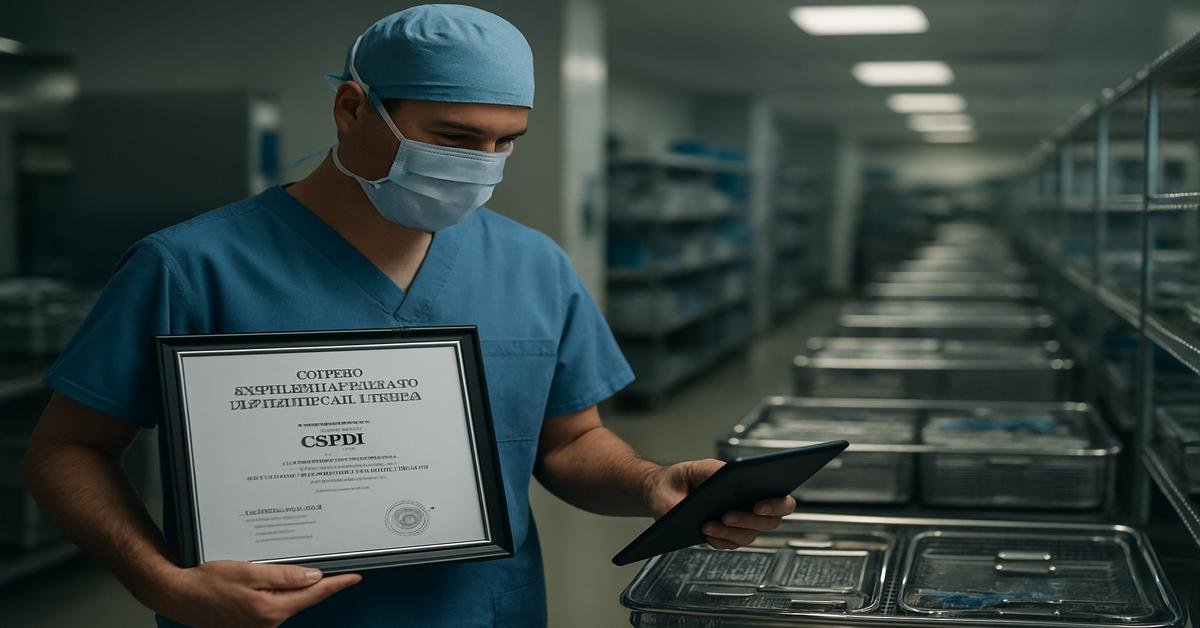
Hospitals run on clean, ready-to-use instruments. That sounds simple, but it depends on a complex chain of work behind the scenes. Surgical trays, endoscopes, implant sets, and basic care tools all move through a tightly controlled process before they reach a patient. This is where sterile logistics becomes essential. It sits at the point where supply chain management, infection prevention, and clinical operations meet. In this setting, CSPDT certification matters because it proves that a worker understands how sterile processing affects safety, timing, inventory, and compliance. For anyone building a career in hospital supply chain work, this certification is not just a technical badge. It is a practical sign that they can protect patients while supporting the flow of care.
What sterile logistics means in a hospital
Sterile logistics is the management of medical devices and supplies that must be cleaned, disinfected, sterilized, stored, tracked, and delivered in a controlled way. In many hospitals, this work is closely tied to the sterile processing department, the operating room, purchasing teams, and central supply.
It is not the same as general warehouse work. A hospital can tolerate a late box of office paper. It cannot tolerate a missing sterile instrument set minutes before surgery. The reason is obvious: patient care depends on exact timing, exact quantities, and exact condition. One broken step in the chain can delay a case, increase infection risk, waste money, or create compliance problems.
For example, consider an orthopedic tray used in joint replacement surgery. That tray may contain dozens of instruments. After the procedure, it must be transported safely, decontaminated, inspected, assembled, packaged, sterilized, stored under proper conditions, and delivered back to the operating room with full documentation. If one instrument is damaged, missing, or improperly processed, the whole tray may be unusable. That affects scheduling, staff time, and patient outcomes.
This is why sterile logistics is a true supply chain role, but one with clinical consequences. The work is operational, technical, and safety-critical at the same time.
Why hospitals need supply chain professionals who understand sterile processing
Many hospital leaders now see that supply chain is not only about cost control. It is also about resilience, quality, and patient safety. Sterile logistics shows this clearly.
A supply chain worker in a hospital may manage inventory levels, equipment flow, vendor deliveries, case cart accuracy, and storage conditions. But if that person does not understand sterile processing rules, they can make decisions that look efficient on paper and fail in practice.
Here are a few examples:
- Overstocking sterile items can create waste, crowd storage areas, and increase the chance of event-related contamination.
- Understocking instrument sets can force rushed reprocessing cycles or surgical delays.
- Poor tray rotation can lead to excessive wear on some sets while others sit unused.
- Improper transport planning can mix contaminated and clean workflows, which raises infection control concerns.
- Weak tracking practices make it harder to trace instruments when there is a recall, repair issue, or infection investigation.
People who understand both logistics and sterile processing help prevent these problems. They can make smarter decisions because they know what happens on the floor, not just in reports. They understand why turnaround time matters, why loaner instruments need strict controls, and why a missing biological monitoring record is not a minor paperwork issue.
What CSPDT certification is and what it shows
CSPDT certification is commonly known as a credential for sterile processing and distribution professionals. In career terms, it tells employers that a person has validated knowledge of the core principles needed to handle sterile medical devices and workflow safely.
That matters because hospitals work in a highly regulated environment. Training that is informal or learned only by observation is not enough. Certification shows a structured understanding of topics that directly affect patient care and operational performance.
While exact exam content can vary by certifying body and update cycle, CSPDT-related knowledge usually includes areas such as:
- Infection prevention basics
- Decontamination procedures
- Inspection and assembly of instruments
- Sterilization methods and parameters
- Storage and handling of sterile goods
- Distribution workflow
- Quality assurance and documentation
- Regulatory and safety standards
In plain terms, certified professionals know not only what to do, but why each step matters. That is vital in a hospital because people face pressure every day. Cases run late. Trays come back incomplete. A vendor delivers loaner sets with little notice. In those moments, staff need judgment, not guesswork.
Why CSPDT certification is vital for sterile logistics careers
Certification matters in many jobs, but in sterile logistics it has unusual weight because the work touches patient safety so directly. A mistake in this area can move quickly from operational problem to clinical problem.
There are several reasons CSPDT certification is especially valuable.
It connects logistics decisions to patient safety. A certified worker understands how packaging integrity, sterilization status, and storage conditions affect real patients. This changes how they handle inventory, transportation, and availability. They are less likely to treat sterile items as standard stock.
It improves communication across departments. Hospitals are full of specialized teams. Operating room staff, infection preventionists, sterile processing technicians, materials managers, and surgeons often speak from different priorities. Certified professionals can bridge those groups because they understand the technical language and the workflow reality behind it.
It supports compliance. Hospitals must meet strict standards for documentation, traceability, and safe processing. Certified staff are more likely to understand why records, lot control, load monitoring, and handling procedures must be exact. This reduces risk during audits and investigations.
It helps prevent expensive disruptions. Delayed surgeries, wet packs, missing instruments, failed sterilization loads, and emergency loaner processing all cost money. They also drain staff time. Certification does not eliminate every problem, but it lowers avoidable errors by building stronger knowledge.
It builds professional credibility. In hospital supply chain settings, credibility matters. Managers want people they can trust with high-risk workflows. Certification gives hiring teams and department leaders more confidence that a candidate can step into a regulated environment with less hand-holding.
How certification strengthens supply chain performance in real hospital settings
The strongest argument for CSPDT certification is not theoretical. It shows up in daily work.
Take operating room case support. A certified sterile logistics professional is more likely to understand tray composition, turnover needs, peel pack usage, and the difference between routine stock and procedure-specific items. That means better case cart accuracy and fewer last-minute searches.
Or consider instrument tracking. In many hospitals, data from tracking systems helps teams see which sets are overused, which repairs happen often, and where delays occur. A certified worker can interpret that information with process knowledge. They know that repeated assembly errors may point to poor count sheets, worn instruments, rushed turnover, or weak training. Without that understanding, the data remains just numbers.
Another example is par levels for sterile supplies. Setting the right par is not just a math exercise. It depends on procedure volume, processing turnaround, backup stock, transport schedules, and the risk of stockouts. A person with CSPDT knowledge can make smarter inventory decisions because they understand sterile workflow constraints.
In short, certification helps supply chain staff move from basic stock handling to informed operational control.
The link between CSPDT knowledge and infection prevention
Hospital-acquired infections are a serious concern for every healthcare facility. Sterile processing is only one part of infection prevention, but it is a foundational one. If instruments are not processed, handled, or distributed correctly, patient risk goes up.
This is why certification has value beyond the sterile processing department itself. It creates a workforce that understands contamination risk throughout the chain.
For example, a certified professional should understand why:
- Clean and dirty workflows must stay separate to prevent cross-contamination.
- Damaged packaging matters because sterility is related to package integrity and handling conditions, not just the sterilizer cycle.
- Transport containers and carts must be managed carefully since movement itself can affect contamination risk.
- Environmental conditions in storage areas matter because sterile goods can be compromised by poor handling, overcrowding, dust, or moisture.
- Device instructions for use must be followed because not all instruments can be cleaned or sterilized the same way.
That understanding improves routine decisions. It also helps during unusual events, such as a recalled device, a failed load, or a suspected breach in storage conditions. Certified staff are more likely to respond in a controlled, informed way.
Career advantages for professionals who earn CSPDT certification
For workers, the value of certification is practical. It can improve job access, job stability, and growth options.
Many hospitals now prefer or require certification for sterile processing roles. Even when it is not mandatory at hiring, employers often expect workers to earn it within a set period. For someone interested in sterile logistics, earning the credential early can make them more competitive.
It can also open doors to broader roles. A person may start in decontamination, assembly, or distribution and later move into:
- Sterile processing leadership
- Case cart coordination
- Operating room supply support
- Instrument tracking and quality roles
- Central supply supervision
- Clinical supply chain coordination
- Vendor and loaner instrumentation management
The reason is simple. Certification signals that the worker can handle more than repetitive tasks. It suggests discipline, technical knowledge, and a commitment to standards. Those traits matter when hospitals decide who should take on greater responsibility.
Why hospitals benefit when more staff are certified
Hospitals often focus on certification at the individual level, but the bigger benefit is organizational. When more staff in sterile logistics and related supply chain roles are certified, the whole system tends to become more reliable.
Training becomes more consistent. Teams use the same basic language. Errors are easier to identify because standards are clearer. New hires integrate faster when peers understand best practice. Managers can delegate with more confidence. Cross-department meetings become more productive because participants share a stronger base of knowledge.
There is also a culture effect. Certification reinforces the idea that sterile logistics is skilled professional work, not back-room labor. That matters. Departments that feel overlooked often struggle with turnover and burnout. Recognizing the technical importance of this work can improve engagement and accountability.
What employers should look for beyond the credential
CSPDT certification is important, but it is not the whole picture. Hospitals still need people who can apply knowledge under pressure.
The strongest sterile logistics professionals usually combine certification with a few key traits:
- Attention to detail because small mistakes can have serious effects.
- Calm decision-making because urgent requests are common in hospital settings.
- Good communication because the work connects many departments.
- Respect for process because shortcuts in sterile workflow are dangerous.
- Problem-solving ability because missing instruments, repair issues, and scheduling changes happen every day.
Certification gives the technical base. Experience and judgment turn that base into strong performance.
The future of sterile logistics as a career path
Sterile logistics is becoming more visible as hospitals push for better efficiency, stronger infection prevention, and tighter cost control. Instrument systems are more complex than they used to be. Surgeries rely on specialized sets. Tracking technology is more common. Documentation demands keep growing. All of this increases the need for workers who understand both sterile processing and supply chain flow.
That makes this field a solid career path for people who want meaningful operational work in healthcare. It suits professionals who like structure, responsibility, and process improvement. It also offers room to specialize, especially for those who continue learning after certification.
As hospitals face staffing pressure and rising case complexity, certified workers will likely remain in demand. The reason is not trend-driven. It is built into how healthcare works: safe treatment depends on reliable systems, and sterile logistics is one of those systems.
Final thought
CSPDT certification is vital for sterile logistics in hospitals because it brings together safety, technical knowledge, and operational control. In a setting where an instrument tray can affect an entire surgical schedule and a packaging error can create patient risk, that knowledge is not optional. It is essential.
For professionals, the credential strengthens credibility and expands career options. For hospitals, it supports compliance, efficiency, and safer care. Most importantly, it helps ensure that the right instruments reach the right place, in the right condition, at the right time. In hospital supply chain management, few things matter more than that.

