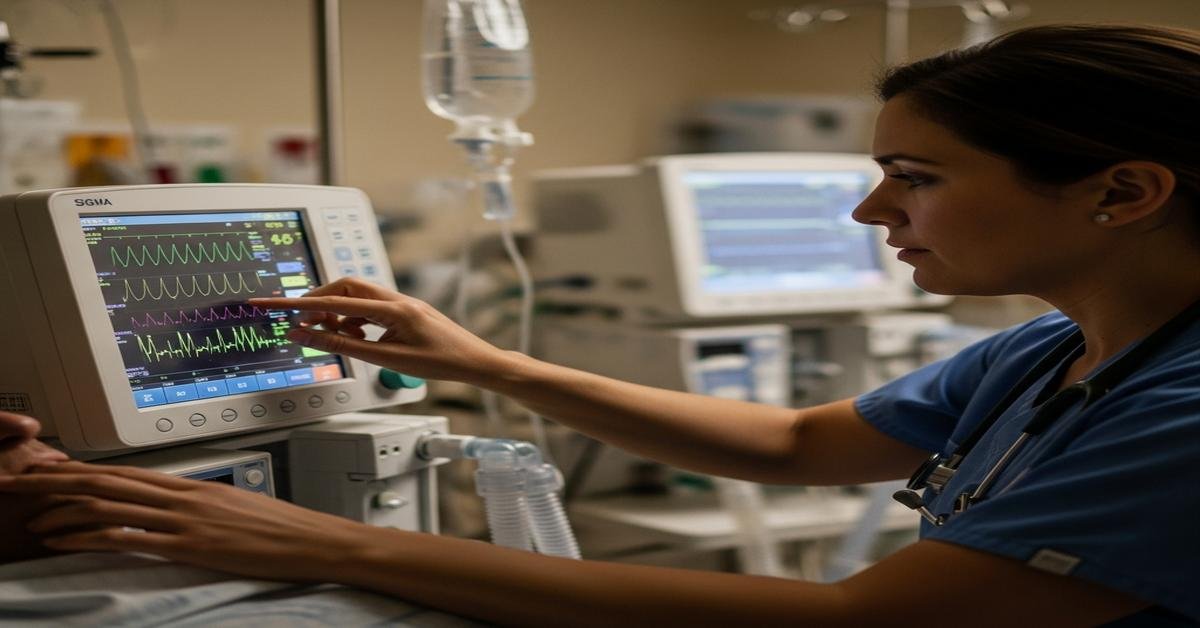
Becoming a Registered Respiratory Therapist (RRT) is a serious step up in responsibility, clinical judgment, and pay. It signals to employers and physicians that you can handle complex cases and make safe, effective decisions under pressure. The Clinical Simulation Exam (CSE) is where you prove it. This guide explains why the RRT is the gold standard and shows you, step by step, how to think, study, and perform to pass the CSE with confidence.
What Makes the RRT the Gold Standard
RRT means advanced practice. It’s the credential that shows you can assess unstable patients, choose correct tests and therapies, manage ventilators, and anticipate risk. Many hospitals prefer or require it for ICU roles and charge positions.
Why it matters:
- Stronger clinical judgment. The CSE tests whether you can move from problem to plan without guessing. That is exactly what patients need during rapid changes.
- Better outcomes. Knowing when to escalate, when to hold back, and when to reassess leads to safer care. The RRT standard trains and verifies that thinking.
- Career mobility. RRT opens doors to critical care, transport, leadership, education, and specialized roles.
How the RRT Pathway Works
First: Graduate from an accredited respiratory care program. Take the TMC exam. A higher cut score on the TMC makes you eligible for the CSE.
Then: Pass the Clinical Simulation Exam. This is where your bedside judgment is tested in branching patient scenarios.
Why this sequence: The TMC confirms knowledge. The CSE confirms application. Employers need both.
Inside the Clinical Simulation Exam
Format: You will face multiple patient management cases with branching paths. Each case includes two parts:
- Information Gathering (IG): You choose assessments and tests. Each choice can be helpful, neutral, or harmful.
- Decision Making (DM): You select the next intervention. Choices vary in effectiveness and risk.
Branching logic: Good choices unlock useful data and safer paths. Harmful or unnecessary choices can cost points and sometimes end a branch early. You usually cannot “go back,” so each click matters.
Scoring principles (big picture):
- Helpful and focused choices add value.
- Neutral choices add little or nothing.
- Harmful or risky choices subtract points and can stop progress.
Timing: The exam lasts several hours. Budget your time across all cases. Do not spend too long on one scenario. Keep moving.
Core Clinical Thinking You Must Show
In every scenario, apply the same disciplined approach:
- Stabilize first. Think airway, breathing, circulation. Treat hypoxemia promptly. Safety beats elegance.
- Least invasive, most effective. Choose options with high yield and low risk before jumping to invasive steps.
- Order tests that change management. Do not “shotgun.” If a test will not affect your next move, skip it.
- Reassess after every intervention. Look for response, side effects, and the need to escalate or de-escalate.
- Work within scope. Recommend appropriately; avoid ordering outside a therapist’s typical role (e.g., surgery, sedation dosing). You can recommend when indicated.
High-Yield Content You Will Be Tested On
- ABGs and acid-base: Read pH first, then PaCO₂ and HCO₃⁻. Decide if primary problem is ventilatory or metabolic. Use your answer to drive therapy (e.g., increase minute ventilation for respiratory acidosis).
- Oxygenation basics: If hypoxemic, raise FiO₂ quickly. If that’s not enough, add PEEP/CPAP. Why: oxygen treats symptoms fast; PEEP treats physiology (alveolar collapse). Avoid extreme FiO₂ for long periods.
- Mechanical ventilation:
- High PaCO₂: increase minute ventilation (rate or VT), but protect lungs.
- Low PaCO₂: reduce minute ventilation.
- ARDS: low VT strategy, higher PEEP, permissive hypercapnia if needed. Why: prevents ventilator-induced lung injury.
- COPD: reduce rate, increase expiratory time, tolerate moderate CO₂ if pH ok. Why: prevents air-trapping and barotrauma.
- NIV (BiPAP/CPAP): Start early in COPD exacerbation or cardiogenic pulmonary edema when mental status and airway are intact. Escalate to intubation if failure signs persist. Why: NIV reduces work of breathing and intubation risk.
- Weaning and extubation: Look for readiness (stable hemodynamics, improving oxygenation on low settings). Use an SBT. Favor extubation when RSBI is low, cuff leak is adequate, and secretions are manageable.
- Airway/secretion management: Suction when indicated. Use bronchodilators for bronchospasm, steroids for inflammation, hypertonic saline or mucolytics selectively. Avoid routine bronchoscopy without a clear reason.
- Diagnostics: Start with bedside data: vitals, pulse ox, lung sounds, capnography, ABG, basic imaging. Order CT, echo, or complex tests only when they clearly change next steps.
- Hemodynamics and edema: Distinguish ARDS (non-cardiogenic) from cardiogenic pulmonary edema. Think PEEP for oxygenation in both; diuretics in cardiogenic cases when indicated.
- Infection control: Pick proper isolation for suspected TB, C. difficile, or droplet-borne pathogens. Why: protects patients and staff.
- Neonatal/pediatric: Gentle oxygen, CPAP for RDS, avoid excessive ventilation. Use age-appropriate devices (oxyhood, blender, T-piece). Why: small airways and developing lungs are vulnerable.
How to Approach Information-Gathering Items
Goal: Gather only what you need to decide the next step. Each click has value.
Good pattern: Bedside first → essential labs → targeted imaging if it will change care.
Example (COPD exacerbation):
- Choose: Vitals, pulse oximetry, focused history (onset, triggers, baseline O₂ use), lung sounds, work of breathing, ABG if moderate/severe distress, chest X-ray if pneumonia suspected.
- Avoid: CT scan without red flags, broad viral panels, echo without signs of heart failure, redundant duplicate labs.
Why this works: These choices reveal severity, immediate safety risks, and cause. They directly guide oxygen strategy, bronchodilator dosing, and whether to escalate to NIV or intubation.
How to Approach Decision-Making Items
Goal: Pick the single best next step that is effective, timely, and low risk.
Method:
- Fix life threats first (severe hypoxemia, impending failure).
- Pick the least invasive option that will likely work.
- Reassess before escalating or adding new treatments.
Example logic (moderate asthma exacerbation):
- Start oxygen to target safe SpO₂.
- Nebulized albuterol plus ipratropium; add systemic steroids early.
- Reassess in minutes. If worsening, consider magnesium sulfate or NIV if rising CO₂ with increased work of breathing and intact mentation.
- Intubate if exhaustion, altered mental status, or refractory hypoxemia/hypercapnia despite NIV.
Why this works: It sequences rapid relief (bronchodilator), anti-inflammatory therapy (steroids), and escalation only if needed. It avoids premature intubation and unnecessary tests.
Putting It Together: Two Mini-Scenarios
Scenario 1: Adult with severe shortness of breath, wheezing, tachypnea.
- Information Gathering: Choose vitals, pulse ox, focused history (asthma/COPD, triggers), lung sounds, peak flow if possible, ABG if distress is moderate-severe, chest X-ray if infection suspected.
- Decision Making (initial): Oxygen to target SpO₂ ≥ 92% (or 88–92% if chronic CO₂ retainer with stable mentation), albuterol plus ipratropium, systemic steroids.
- Reassess: If RR and wheeze improve, continue therapy and monitor. If fatigue grows and PaCO₂ rises with acidosis, start NIV if appropriate. If mental status declines or NIV fails, prepare for intubation, then ventilate with low VT, longer expiratory time to prevent air-trapping.
- Why: Treat hypoxemia quickly, relieve bronchospasm, reduce inflammation, then escalate if signs of failure appear.
Scenario 2: Intubated ICU patient with rising FiO₂ needs and poor oxygenation.
- Information Gathering: Check ventilator settings and graphics, vitals, SpO₂, ABG, lung exam, recent chest X-ray. If sudden change, use a quick “DOPES” scan (Displacement, Obstruction, Pneumothorax, Equipment, Stacked breaths).
- Decision Making (initial hypoxemia on ventilator): Increase FiO₂ promptly, then add or increase PEEP. Reassess compliance and hemodynamics. If ARDS pattern, move to low VT strategy and higher PEEP ladder.
- If hypercapnia: Increase minute ventilation carefully (rate first), avoid overdistension, and accept permissive hypercapnia if pH remains acceptable.
- Why: Oxygen buys time; PEEP supports alveolar recruitment. Lung-protective strategies lower mortality risk in ARDS.
Common Traps That Cost Points
- Shotgunning tests. Ordering everything delays care and adds risk. Ask: will this change my next step?
- Skipping reassessment. Start a therapy, then check response. The exam expects it.
- Overusing high FiO₂ without PEEP. Fixes numbers, not physiology. Add PEEP/CPAP if oxygen needs keep rising.
- Wrong NIV candidates. Do not use NIV in apnea, inability to protect airway, severe hemodynamic instability, or copious secretions.
- Premature intubation or too-late intubation. Use clinical signs to time it: fatigue, altered mental status, or refractory gas exchange issues.
- Performing beyond scope. Recommend sedation, central lines, or bronchoscopy when indicated, but do not “order” them as if you’re the prescriber.
- Ignoring contraindications. Example: aggressive chest physiotherapy in unstable spine injury; high PEEP in untreated pneumothorax.
- Not tailoring oxygen targets. Treat hypoxemia, but in chronic CO₂ retainers aim for safe, reasonable saturations while monitoring CO₂ and mental status.
- Missing a simple fix. Kinked tubing, water in the circuit, or dislodged ET tube can explain sudden deterioration.
A Practical Study Plan That Works
Weeks 1–2: Build your clinical framework.
- Review the exam blueprint and list your weak areas (ventilator modes, ABGs, NIV, neonatal oxygen devices, infection control).
- Create checklists for common problems: hypoxemia, high PaCO₂, bronchospasm, secretions, weaning readiness.
- Summarize go-to interventions with the “why” beside each item.
Weeks 3–4: Deliberate practice with simulations.
- Do timed practice cases several days per week. After each case, write down every unnecessary test you clicked and why it was unnecessary.
- Re-write your decision trees. Example: “If PaO₂ low on high FiO₂, then increase PEEP; reassess BP; repeat ABG in 20–30 min.”
- Drill vent adjustments: for each ABG, list two acceptable ventilator changes and pick the safer one.
Weeks 5–6: Refine speed and accuracy.
- Simulate full-length sessions. Practice time budgeting per case.
- Focus on neonatal/peds one day, adult ICU the next, chronic disease/home care the next. Rotate.
- Keep a “Top 20 moves” one-page sheet you can recall under stress (e.g., NIV indications, ARDS settings, COPD vent adjustments, weaning criteria).
Daily micro-drills (10 minutes):
- ABG flash: read 5 ABGs and state the exact next ventilator change or therapy.
- Device match: pick the right oxygen device and flow for 3 patient vignettes.
- Safety snap: list two contraindications for a therapy you use often.
Test-Day Game Plan
- Start steady. Read the case stem and highlight the immediate risk (hypoxemia? airway? hemodynamics?).
- Front-load high-yield IG items. Vitals, pulse ox, focused exam, relevant bedside tests. Skip low-yield items.
- Decide, then verify. Choose the best next step, then reassess. If improved, continue. If worse, escalate logically.
- Manage time. If a case bogs down, choose the safest reasonable option and move on. Do not let one scenario drain your clock.
- Use the scratch pad. Jot ABGs, settings, and changes. It prevents mistakes under stress.
- Choose safety over style. When unsure, stabilize oxygenation and ventilation first, then refine.
Fast Clinical Pearls You Can Rely On
- Hypoxemia on vent: Increase FiO₂, then PEEP. Reassess blood pressure and compliance.
- High PaCO₂: Increase minute ventilation (rate first), unless air-trapping risk; then prioritize longer expiratory time.
- Severe asthma: Oxygen, SABA + anticholinergic, steroids early, reassess. NIV if tiring but cooperative; intubate if failing.
- Cardiogenic pulmonary edema: Oxygen/CPAP or BiPAP, diuretic recommendation if indicated, afterload reduction as appropriate (recommendation), monitor closely.
- PE suspicion: Support oxygenation, do not delay needed stabilization for advanced imaging. Order advanced tests if they will change the plan and patient is stable.
- Suspected pneumonia: Oxygen as needed, chest X-ray, sputum culture if productive; recommend antibiotics only with infection evidence.
- Extubation readiness: Low ventilator support, successful SBT, manageable secretions, adequate mental status, cuff leak if risk of edema.
- Neonate: Avoid high FiO₂; use blended oxygen and CPAP for RDS; reassess frequently.
Why These Strategies Help You Pass
- They mirror real practice. The exam rewards the same thinking that keeps patients safe: stabilize, choose wisely, reassess.
- They avoid penalties. Fewer unnecessary tests and fewer risky choices mean fewer point deductions.
- They improve speed. A clear mental flowchart reduces hesitation and second-guessing.
Final Thoughts
The RRT credential is earned by showing consistent, safe clinical judgment. On the CSE, you do not need flashy answers. You need focused assessments, the right first move, and a habit of reassessment. Practice that rhythm until it feels automatic. Keep your choices least invasive, most effective, and within scope. If you stabilize early, order only what matters, and escalate logically, you will think like an RRT—and you will pass.

