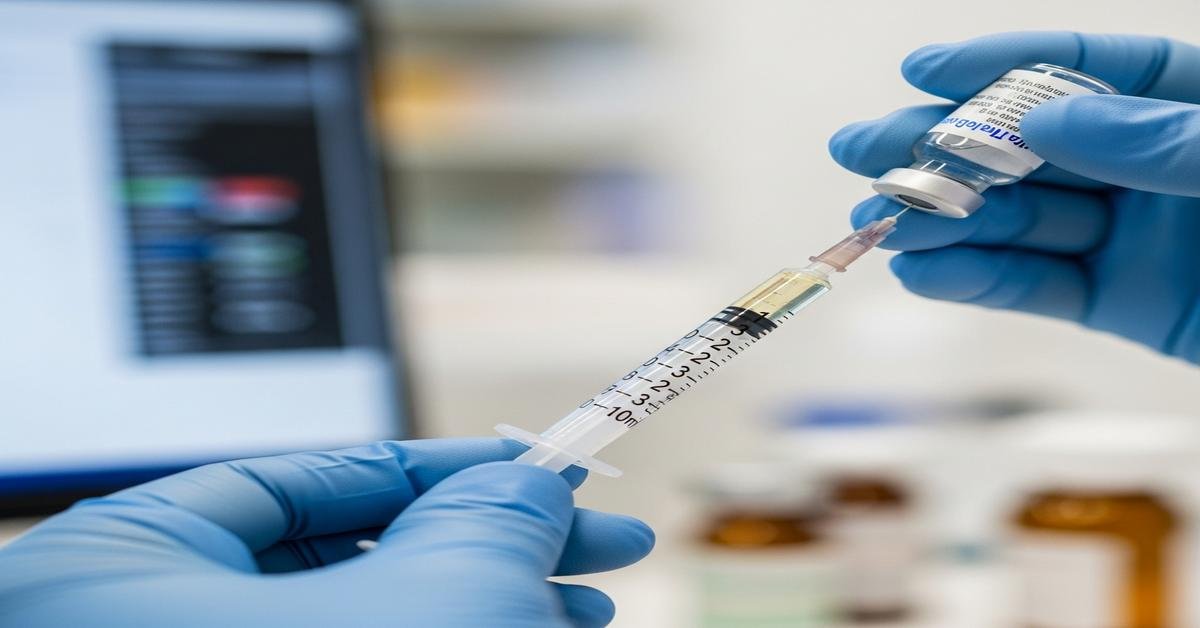
Neonates are not “small adults.” A decimal point in the wrong place can turn a life-saving dose into a toxic one. Pediatric dosing calculations are feared for good reasons: tiny body weights, rapidly changing physiology, and concentrated products that demand exact math. This guide shows the exact steps, checks, and habits that prevent the most common and deadly errors—especially the tenfold mistake.
Why pediatric dosing is high risk
Small numbers leave no room for error. Neonatal doses are often in micrograms. A misplaced zero can change 0.02 mg to 0.2 mg (a 10-fold error). A common cause is poor decimal practice or mixing up mg and mL.
Physiology is different. Neonates have immature kidneys and liver. They clear drugs slower. They have higher total body water. A “standard” adult dose can be lethal. Dose ranges are narrow and age-dependent.
Products are concentrated. Many injectable products come at strengths made for adults. Without dilution, the volume drawn can be 0.01–0.05 mL—below what most syringes measure reliably.
Weights change daily. A preterm infant can gain or lose 5–10% of body weight in a week. Using last week’s weight creates systematic overdosing or underdosing.
The four-step method for safe neonatal dose calculation
Step 1: Clarify the order. Confirm the drug, the salt vs base if relevant (caffeine citrate vs caffeine base), the dose units (mg/kg vs mcg/kg), route, frequency, and the desired concentration or standard NICU concentration.
Step 2: Confirm current weight and context. Use today’s weight in kilograms. Note gestational age/postmenstrual age, renal/hepatic status, fluid limits, and maximum daily dose in mg/kg/day if relevant.
Step 3: Calculate the dose from first principles.
- Weight-based dose: Dose (mg) = Weight (kg) × Ordered dose (mg/kg). If in mcg/kg, convert to mg by dividing by 1000.
- Check against a trusted range. Independently verify that the result falls within the usual neonatal range for that age. If it does not, stop and resolve the discrepancy.
Step 4: Translate mg to a measurable volume and administration rate.
- Volume (mL) = Dose (mg) ÷ Concentration (mg/mL). If the volume is under 0.1 mL, plan a dilution to a standard, measurable concentration.
- Choose a measurable syringe size. A 1 mL syringe can reliably measure to 0.01 mL; larger syringes cannot.
- Set the infusion time and rate if applicable. Document mg, mL, concentration, and rate on the label.
Decimal point danger zones—and how to eliminate them
- Always use a leading zero. Write 0.1 mg, never .1 mg. Without the zero, the decimal can be missed.
- Never use a trailing zero for mg or mL. Write 1 mg, not 1.0 mg. A trailing zero can be misread as 10.
- Use “mcg,” not “µg.” The micro symbol can be misread as “mg.”
- Differentiate mg from mL. mg is dose; mL depends on concentration. Always calculate mg first, then mL.
- Confirm the concentration in mg/mL, not just % or ratios. Convert 1% to 10 mg/mL; 1:1000 to 1 mg/mL; 1:10,000 to 0.1 mg/mL.
- Salt vs base matters. Some orders specify the salt (e.g., caffeine citrate). Others specify base. Know which unit your product label uses to avoid twofold errors.
Worked examples
Example 1: Caffeine citrate loading dose
- Order: Caffeine citrate load 20 mg/kg IV once.
- Infant weight: 1.2 kg (today).
- Product: Caffeine citrate 20 mg/mL (label expresses citrate, not base).
- Calculation: Dose (mg citrate) = 1.2 kg × 20 mg/kg = 24 mg.
- Volume = 24 mg ÷ 20 mg/mL = 1.2 mL.
- Salt/base check: 20 mg/kg citrate ≈ 10 mg/kg base. For 1.2 kg, base ≈ 12 mg. Sanity check passed.
- Administration: Draw 1.2 mL in a 3 mL syringe if allowed; consider dilution if administration volume limits require.
Why this is risky: If someone misreads and gives 20 mg/kg of base using a citrate-labeled vial, the infant receives double the intended load. Always match the order unit (citrate vs base) to the vial labeling.
Example 2: Gentamicin intermittent IV
- Order: Gentamicin 4 mg/kg IV q36h.
- Infant weight: 1.6 kg.
- Product: 10 mg/mL vial.
- Calculation: Dose (mg) = 1.6 × 4 = 6.4 mg.
- Volume = 6.4 mg ÷ 10 mg/mL = 0.64 mL.
- Round: 0.64 mL is measurable on a 1 mL syringe (0.01 mL gradations).
- Label: “Gentamicin 6.4 mg = 0.64 mL (10 mg/mL), give IV over 30 minutes.”
Why this is risky: Writing “0.6 mL” or “6 mL” by mistake is easy. Recording both mg and mL on the label gives a second way to spot an error.
Example 3: Morphine small dose with dilution
- Order: Morphine 0.05 mg/kg IV q4h PRN.
- Infant weight: 0.7 kg.
- Available: Morphine 2 mg/mL.
- Calculation: Dose (mg) = 0.7 × 0.05 = 0.035 mg.
- Volume at 2 mg/mL = 0.035 ÷ 2 = 0.0175 mL (not measurable).
- Plan a dilution: Make 0.2 mg/mL by mixing 1 mL of 2 mg/mL with 9 mL diluent → 10 mL at 0.2 mg/mL.
- New volume = 0.035 ÷ 0.2 = 0.175 mL (measurable with 1 mL syringe).
- Label: “Morphine 0.035 mg = 0.175 mL (0.2 mg/mL from 2 mg/mL: 1 mL + 9 mL).”
Why this is risky: Without dilution, the drawn volume is unreliable. Standardized dilutions reduce error and improve accuracy.
Unit literacy and conversions you must know cold
- 1 kg = 1000 g; 1 g = 1000 mg; 1 mg = 1000 mcg.
- Do not mix weight units in the same step. Convert to kg first.
- % solutions: 1% = 1 g/100 mL = 10 mg/mL.
- Ratio strengths: 1:1000 = 1 mg/mL; 1:10,000 = 0.1 mg/mL.
- mEq are not mg. For electrolytes, confirm valence and molecular weight before converting.
Rounding rules that protect neonates
- Round the volume to what you can measure accurately. With a 1 mL syringe, round to the nearest 0.01 mL. With a 3 mL syringe, do not rely on 0.01 mL graduations.
- Do not round the mg dose early. Calculate the exact mg, convert to mL, then round the mL appropriately. Document the resulting mg based on the rounded volume.
- Avoid cumulative rounding. If dosing multiple times daily, keep the dose consistent to prevent day-long drift.
Checklist before releasing a neonatal medication
- Two patient identifiers; allergies noted.
- Today’s weight in kg; date/time of weight documented.
- Ordered dose, route, frequency, and indication confirmed; salt vs base clarified.
- Dose calculated in mg (or mcg) and independently checked against neonatal ranges.
- Concentration confirmed in mg/mL; percent or ratio converted and verified.
- Final volume measurable with available syringe; dilution performed if needed using a standard recipe.
- Label includes drug, mg, mL, final concentration, route, rate, and preparer/checker initials.
- Leading zero used for sub-milligram doses; no trailing zeros.
- Maximum daily dose (mg/kg/day) checked if relevant.
- Second person or system double-check completed for high-alert meds.
How to build a “second brain” for dosing
- Standardize concentrations. Keep a NICU list of default dilutions for high-risk drugs. This removes on-the-fly arithmetic.
- Use pre-calculated per-kg tables. For common meds, make a quick-reference grid (weight vs dose vs volume) validated by pharmacy leadership.
- Design calculation templates. Write a fixed sequence: “Weight (kg) → mg/kg → mg → mg/mL → mL → syringe size → label.”
- Document scratch work. Keep the math with the order so a second checker can follow your steps line by line.
- Cross-check with a calculator and your brain. Run the numbers twice. Then sanity check: Does this dose look typical for this drug and weight?
Rapid troubleshooting: when a number looks wrong
- Is the decimal in the right place? Compare to the expected per-kg dose. If you calculated 2 mg/kg when the usual is 0.2 mg/kg, you likely have a tenfold error.
- Are units consistent? mcg vs mg; mg vs mL; citrate vs base.
- Is the volume realistic? Volumes under 0.05–0.1 mL usually require dilution.
- Was weight converted to kg? 1200 g is 1.2 kg, not 12 kg.
- Is the concentration correct? Double-check the vial strength and any prior dilution.
Common traps unique to neonates
- Weight drift. Using an old weight slowly overdoses as the infant loses fluid post-birth or underdoses during catch-up growth. Update weights and re-check doses at least daily.
- Salt/base mismatches. Caffeine citrate vs base; levothyroxine sodium vs base strengths; penicillin units vs mg.
- Ratio and percent strengths on crash meds. Epinephrine 1:1000 is 1 mg/mL; 1:10,000 is 0.1 mg/mL. Convert to mg/mL in your head before drawing up.
- Fluids and GIR (glucose infusion rate). Dextrose dosing is in mg/kg/min, not mL/hr. You must convert.
GIR calculation made simple
Formula: GIR (mg/kg/min) = [Dextrose % × mL/hr × 0.167] ÷ Weight (kg).
Example: D10W at 4 mL/hr in a 1.2 kg infant.
- GIR = (10 × 4 × 0.167) ÷ 1.2 = 6.68 ÷ 1.2 ≈ 5.6 mg/kg/min.
Why this matters: If the GIR is too high, hyperglycemia and osmotic diuresis can occur; too low risks hypoglycemia. The formula translates pump settings to a physiologic dose.
Practice your zero habits
- Write 0.02 mg, not .02 mg.
- Write 2 mg, not 2.0 mg.
- Write 20 mcg, not 0.02 mg unless the order is in mg. Match the order’s unit to reduce conversions.
Bottom line
Neonatal dosing is unforgiving, but it does not have to be terrifying. Use a fixed process: confirm the order, verify the weight, calculate mg before mL, convert concentrations carefully, and label with both mg and mL. Build standard concentrations and double-check systems so you do not rely on memory under pressure. If a number feels off, stop. A 30-second pause to re-check a decimal can save a life.

I am a Registered Pharmacist under the Pharmacy Act, 1948, and the founder of PharmacyFreak.com. I hold a Bachelor of Pharmacy degree from Rungta College of Pharmaceutical Science and Research. With a strong academic foundation and practical knowledge, I am committed to providing accurate, easy-to-understand content to support pharmacy students and professionals. My aim is to make complex pharmaceutical concepts accessible and useful for real-world application.
Mail- Sachin@pharmacyfreak.com