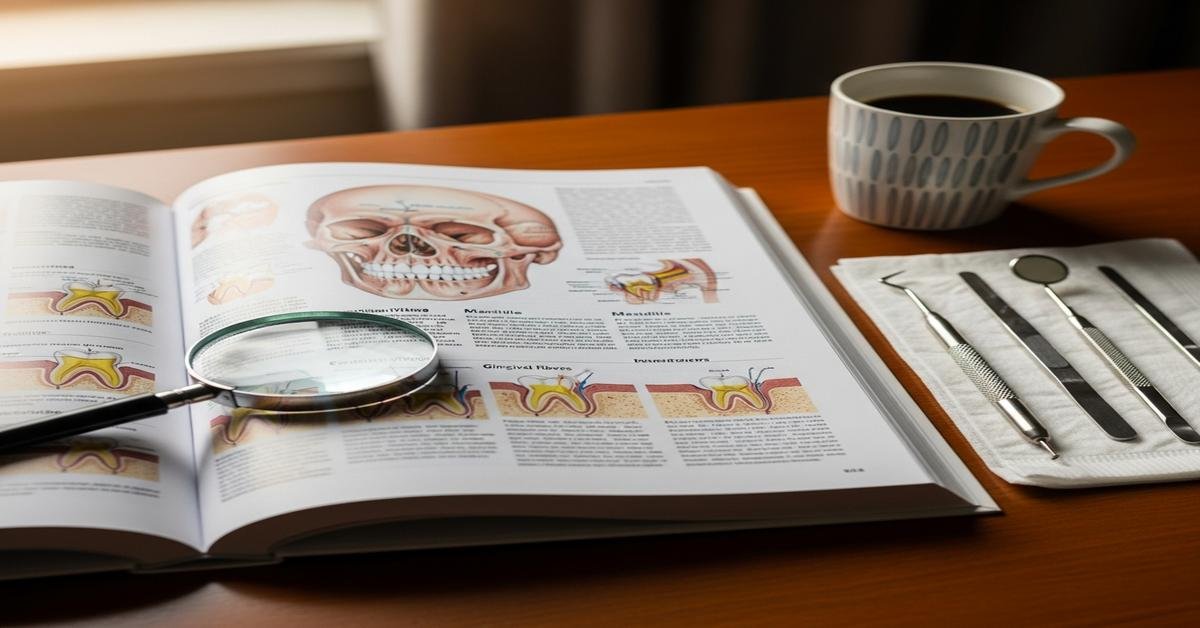
The NBDHE rewards concrete anatomy and periodontology knowledge tied to clinical thinking. This guide focuses on the topics that appear often, trigger easy mistakes, and power diagnosis and treatment decisions. For every point, you’ll see why it matters and how to use it on exam day.
Head and neck anatomy essentials
Cranial nerves that guide oral sensation and movement. The trigeminal nerve (CN V) supplies facial and dental sensation because it splits into three branches that blanket the face. V2 (maxillary) carries maxillary tooth sensation. V3 (mandibular) carries mandibular tooth sensation and motor to muscles of mastication. The facial nerve (CN VII) controls facial expression and brings taste from the anterior two-thirds of the tongue via the chorda tympani, which also carries parasympathetics to submandibular and sublingual glands. CN IX (glossopharyngeal) carries taste and general sensation from the posterior third of the tongue and parasympathetics to the parotid (through the otic ganglion, hitchhiking on the auriculotemporal nerve). CN XII (hypoglossal) moves the tongue. These routes explain symptoms. For example, a lesion near the stylomastoid foramen affects facial expression but not taste, because taste fibers branched earlier.
Salivary glands and ducts. Parotid (serous) drains via Stensen’s duct, piercing the buccinator opposite the maxillary second molar. Submandibular (mixed; mostly serous) drains via Wharton’s duct at the sublingual caruncle. Sublingual (mostly mucous) drains via multiple ducts, with Bartholin’s joining Wharton’s. This matters because stones favor the submandibular duct (uphill, mucous-rich), and swelling increases at mealtime.
Muscles of mastication vs facial expression. Masseter, temporalis, medial pterygoid elevate the mandible; lateral pterygoid protrudes and depresses. They are innervated by V3. Facial expression uses CN VII. A patient with jaw deviation toward one side implicates the lateral pterygoid on that side. This “why” ties nerve to function and localizes lesions.
TMJ basics. The articular disc is fibrocartilage (resists shear). The superior joint space handles gliding (translation), the inferior handles rotation. That’s why early opening clicks suggest disc displacement with reduction: the condyle must hop over the displaced disc to translate.
Arterial supply. The external carotid branches feed oral structures. The maxillary artery supplies deep face, teeth, and the infratemporal fossa. This is why posterior superior alveolar nerve blocks can risk pterygoid plexus hematoma—thin-walled veins sit near injection sites.
Venous and cavernous sinus risk. Facial, angular, and ophthalmic veins connect to the cavernous sinus without valves. Infections of the upper lip and maxillary anterior teeth can spread retrograde, leading to cavernous sinus thrombosis. This explains why “facial triangle” infections are serious.
Lymphatic drainage. Submental nodes drain mandibular incisors and the tip of the tongue. Submandibular nodes drain most teeth and anterior oral floor. Maxillary third molars often drain to deep cervical nodes. Tender submental nodes point you to anterior mandibular infections.
Maxillary sinus. Roots of maxillary molars can lie close to the sinus floor. Oroantral communication risk is higher when extracting maxillary first molars and premolars. The sinus ostium sits high on the medial wall; this explains why sinus infections can persist—drainage is uphill.
Oral histology and tooth anatomy that drive clinical questions
Keratinization patterns. Masticatory mucosa (gingiva and hard palate) is keratinized to resist friction. Lining mucosa (buccal, labial, floor of mouth, soft palate) is non-keratinized for flexibility. This distinction guides where lesions ulcerate vs stretch and where grafts take best.
Junctional epithelium (JE) and attachment. JE is non-keratinized and permeable, which allows leukocytes to pass into the sulcus. This permeability is a double-edged sword: it’s essential for defense but also lets bacterial products enter, starting inflammation.
Primary vs permanent teeth. Primary teeth have thinner enamel and dentin, larger pulp chambers, and marked cervical constriction. This is why caries spreads faster and why pulp horns are easily exposed when prepping primary teeth. Enamel rods at the cervical area in primary teeth slope occlusally (opposite of permanent), which changes beveling for restorations.
Eruption sequences you can use. First permanent molars erupt around age six, often before incisors. In general, mandibular teeth erupt before maxillary counterparts, with mandibular centrals the first anterior teeth to erupt. Third molars are last and variable. This order explains mixed dentition patterns you see in radiographs and case vignettes.
Cementum types. Acellular cementum covers the cervical two-thirds for attachment; cellular cementum appears apically and in furcations for adaptation. Understanding this helps predict where regeneration is biologically plausible.
Periodontal biology you must know
Gingival tissues and fiber system. The free gingiva forms the sulcus; attached gingiva binds to bone. Collagen fiber groups stabilize the margin: dentogingival attach gingiva to tooth, circular encircle the tooth, and transseptal connect adjacent teeth. Transseptal fibers explain orthodontic relapse after space closure—they tend to reform and pull teeth back together.
PDL principal fibers and why they matter. Alveolar crest fibers resist extrusion and lateral movement. Horizontal resist lateral pressure. Oblique (most numerous) absorb occlusal forces by converting them to tension on bone. Apical and interradicular stabilize roots. This is the mechanical basis for function and trauma responses.
Alveolar bone dynamics. Inflammation drives osteoclast activity via cytokines (IL‑1β, TNF‑α, PGE2). That’s why uncontrolled diabetes or smoking, which increase inflammatory burden or impair repair, accelerates bone loss.
From biofilm to breakdown: the disease process
Biofilm formation timeline. Pellicle forms within minutes. Early colonizers (Streptococci, Actinomyces) attach within hours. Maturation brings anaerobes by 24–48 hours. In 7–14 days, inflammation peaks if plaque persists. This timeline explains why daily disruption reverses gingivitis.
Key pathogens. The “red complex” (Porphyromonas gingivalis, Tannerella forsythia, Treponema denticola) associates with deep pockets and bleeding. Aggregatibacter actinomycetemcomitans links to rapid tissue loss in younger patients. Knowing the cast helps you pick likely culprits when you see pattern and speed of breakdown.
Host response is the driver. Bacteria initiate disease, but the body’s response does the damage. Cytokines and prostaglandins activate osteoclasts and break down collagen. That’s why two patients with similar plaque can have different outcomes—host factors tip the scale.
Major risk factors and why they change findings.
- Smoking: More severe disease, less bleeding due to vasoconstriction, worse healing. Expect deeper pockets with deceptively little BOP.
- Diabetes (poor control): Advanced glycation end-products amplify inflammation; neutrophil function is impaired. Look for increased periodontal destruction and candidiasis risk.
- Genetic predisposition: Family history and early-onset cases suggest higher risk regardless of plaque levels.
- Local factors: Overhangs and calculus shelter biofilm. Even perfect brushing can’t offset a plaque trap.
Measuring and diagnosing: get the numbers right
Probing depth (PD) and clinical attachment level (CAL). PD alone misleads if the gingival margin moved. CAL is the gold standard because it anchors to the CEJ.
- Recession present: CAL = PD + recession. Example: PD 4 mm, recession 2 mm → CAL 6 mm.
- Gingival enlargement (margin coronal to CEJ): CAL = PD − enlargement. Example: PD 6 mm, margin 2 mm coronal to CEJ → CAL 4 mm.
Why it matters: Treatment decisions, staging, and prognosis all depend on true attachment loss, not just pocket depth.
Bleeding on probing (BOP). BOP signals active inflammation and future risk. No BOP means lower short-term risk, but not zero—especially in smokers.
Mobility and furcations. Mobility indicates attachment loss or occlusal trauma. Furcation involvement worsens prognosis because access is difficult and root anatomy is complex.
- Furcation classes (Glickman): I (incipient), II (cul-de-sac), III (through-and-through), IV (visible clinically).
- High-yield distances to furcations: Mandibular molar: buccal ~3 mm, lingual ~4 mm. Maxillary molar: mesial ~3 mm, buccal ~4 mm, distal ~5 mm. These numbers explain why furcations are “hidden” on certain aspects.
Radiographs guide, they don’t measure attachment. Horizontal bone loss follows CEJs; vertical (angular) defects suggest intrabony pockets. Look for crestal fuzziness and widened PDL spaces for early change. You cannot see soft tissue or JE position on radiographs; confirm with probing.
Common indices on the exam.
- Plaque Index (Silness‑Löe): Measures plaque thickness at the gingival margin. Explains gingival inflammation risk.
- Gingival Index (Löe‑Silness): Color, edema, BOP. Helps track response to therapy.
- PSR: Screening tool using sextant codes to flag calculus, defective margins, and furcations.
2017 periodontitis staging and grading
Staging (I–IV) = severity and complexity. Based on CAL, radiographic bone loss, tooth loss from periodontitis, and complexity (deep pockets, furcations, ridge defects). Stage I is early (1–2 mm CAL). Stage II moderate (3–4 mm CAL). Stage III/IV severe (≥5 mm CAL) with added complexity and function concerns.
Grading (A–C) = rate of progression and risk. Consider radiographic bone loss vs age, risk factors (smoking, diabetes), and case features. Grade A is slow, grade B moderate, grade C rapid. Why this matters: It shapes maintenance intervals and the need for risk modification.
Treatment principles and maintenance
Non-surgical periodontal therapy (NSPT) first. Scaling and root planing (SRP) reduces bacterial load and smooths root surfaces. Re-evaluate in 4–6 weeks to allow for tissue maturation and a new probing baseline. This timing reflects connective tissue repair cycles.
Mechanical debridement choices.
- Ultrasonics: Cavitation and acoustic microstreaming disrupt biofilm beyond the tip. Thin inserts improve subgingival and furcation access.
- Hand instruments: Use 70–80° face-to-tooth angulation for calculus removal. Gracey curettes are area-specific (e.g., 11/12 mesials, 13/14 distals); universal curettes adapt to many areas but require careful angulation.
Why mix both: Ultrasonics excel at deplaquing and gross calculus. Hand instruments refine and reach where power tips cannot.
Chemotherapeutic support.
- Chlorhexidine 0.12% rinse: Reduces gingivitis via substantivity. Short-term use due to staining and taste changes.
- Local antimicrobials: Minocycline microspheres or doxycycline gels target residual deep sites; they supplement, not replace, SRP.
- Host modulation: Subantimicrobial-dose doxycycline (20 mg twice daily) inhibits matrix metalloproteinases, reducing collagen breakdown in severe cases.
- Systemic antibiotics: Reserve for specific scenarios (e.g., acute infections, certain rapid-progressing cases, or systemic involvement). Overuse breeds resistance and offers little benefit without mechanical therapy.
Occlusal trauma. Primary trauma is excessive force on a healthy periodontium; secondary trauma is normal force on a reduced periodontium. Trauma alone does not cause attachment loss, but it worsens mobility and comfort and may impair healing. Adjust occlusion only when signs match symptoms.
Regeneration vs resection (big picture). Regenerative approaches (GTR, enamel matrix derivatives) work best in 2–3 walled intrabony defects and mandibular class II furcations because bone walls supply blood and stability. Resective approaches suit shallow, non-contained defects. Anatomy guides outcomes.
Maintenance is treatment. Most patients need 3–4 month intervals post-therapy, especially with risk factors. Biofilm returns quickly, and susceptible hosts relapse earlier. Maintenance visits reassess PD, BOP, plaque control, and risk factors and debride as needed.
Implant health basics.
- Mucositis vs peri-implantitis: Mucositis = inflammation without bone loss beyond initial remodeling; peri-implantitis = progressive bone loss. Probe gently; expect slightly deeper sulci than natural teeth.
- Instrumentation and products: Use implant-safe tips and brushes; avoid abrasive pastes. Acidulated fluoride can etch titanium; neutral formulations are preferred.
- Risk factors: History of periodontitis and smoking increase peri-implantitis risk. Maintenance mirrors periodontal care, with emphasis on home biofilm control.
High-yield numbers and quick hooks
- Normal probing depth: 1–3 mm; bleeding is the red flag, not just the number.
- Re-evaluation after SRP: 4–6 weeks for tissue maturation.
- Maintenance interval: Often 3–4 months; shorter with high risk.
- Furcation entrances (approx.): Mand molars buccal 3 mm, lingual 4 mm; Max molars mesial 3 mm, buccal 4 mm, distal 5 mm.
- Subantimicrobial doxycycline: 20 mg twice daily.
- Chlorhexidine rinse: 0.12%, short term due to staining/taste issues.
- Primary eruption (months): Centrals 6–10, laterals 10–16, 1st molars 14–18, canines 17–23, 2nd molars 23–31.
- Permanent eruption (years, typical): 1st molars 6–7, mand centrals 6–7, other incisors 7–9, premolars/canines 10–12, 2nd molars 11–13, 3rd molars 17–21.
- Gracey curettes: 1/2 anteriors, 11/12 mesials posteriors, 13/14 distals posteriors.
Common traps and how to avoid them
- Confusing PD with disease severity: Deep PD with gingival enlargement can have minimal attachment loss. Calculate CAL.
- Assuming no BOP means health in smokers: Smoking reduces bleeding; rely on multiple signs, not BOP alone.
- Missing endo-perio lesions: Nonvital pulp with deep isolated pocket points to endodontic origin. Vital pulp with generalized pockets supports periodontal origin.
- Overlooking local plaque traps: Overhangs, open contacts, and ill-fitting margins maintain inflammation even with good brushing.
- Using antibiotics without debridement: Medication can’t reach protected biofilm; mechanical disruption is primary therapy.
Rapid practice: exam-style reasoning
- Q: A 26-year-old nonsmoker with rapid attachment loss on first molars and incisors; minimal plaque. What organisms and grade? A: Think Aggregatibacter actinomycetemcomitans and Grade C (rapid). Low plaque with high loss points to host susceptibility and specific pathogens.
- Q: PD 6 mm on a maxillary molar buccal with minimal radiographic change; explorer catches on the CEJ. Next step? A: Calculate CAL and check for a buccal furcation (about 4 mm apical to CEJ). Access with thin ultrasonic tips and specialized curettes.
- Q: After SRP, when do you re-probe to assess new baseline? A: 4–6 weeks. Collagen repair and epithelial adaptation need this time to stabilize readings.
- Q: Swelling of the upper lip after a maxillary canine infection. What is the systemic risk? A: Cavernous sinus thrombosis. Facial and angular veins drain to the cavernous sinus without valves, allowing retrograde spread.
- Q: Gingival overgrowth from a calcium channel blocker. PD 7 mm, margin 3 mm coronal to CEJ. CAL? A: 4 mm (7 − 3). Attachment loss is moderate; management targets inflammation and drug consultation.
Study strategy that sticks
- Pair structure with function: For every nerve or tissue, write one sentence: “It does X, so lesion causes Y.” This cements cause and effect.
- Work from measurements to decisions: Practice CAL, furcation, and staging on sample charts. The exam tests your math and your judgment.
- Use timelines: Biofilm maturation (hours to days) and re-eval (weeks) are easy points if you memorize the “why.”
- Drill high-yield numbers daily: Furcation distances, eruption order, re-eval and maintenance intervals.
- Do mixed cases: Combine risk factors (smoking, diabetes) with probing charts and radiographs. The NBDHE loves integrated reasoning.
Master these anatomy routes and periodontal principles, and you’ll recognize patterns fast. That speed lets you calculate, stage, and plan without second-guessing. The exam questions get simpler when you can explain the “why” to yourself in one clear sentence.

