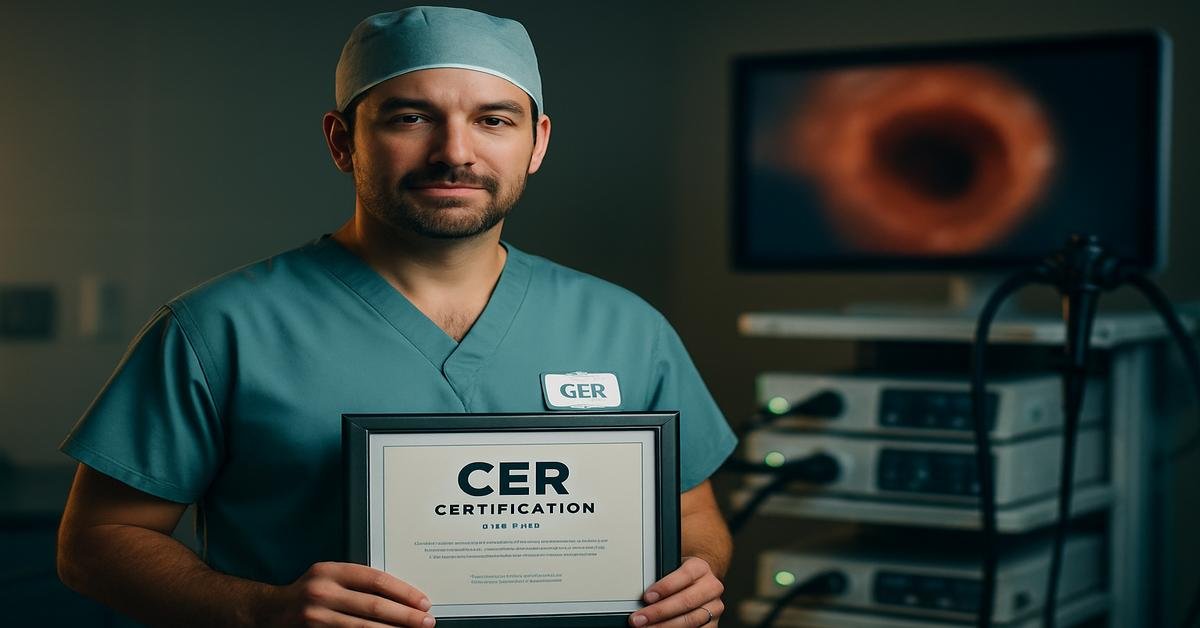
Endoscopy technicians play a hands-on role in patient care, procedure flow, and equipment safety. They support GI labs, surgical units, and outpatient centers by preparing scopes, turning over procedure rooms, handling sterile processing steps, and helping the team stay on schedule. Because the job combines technical skill, infection control, and direct support during procedures, pay can vary a lot from one employer to another. One factor that can raise your value is certification. In particular, CER certification can help show that you understand endoscope reprocessing at a high level. That matters because reprocessing mistakes create patient risk, delay cases, and expose facilities to serious compliance problems. When you can prove expertise in this area, you become more useful to employers and often more competitive for better-paying roles.
What an endoscopy tech salary really depends on
There is no single salary number that fits every endoscopy tech job. Pay is shaped by a mix of practical factors, and each one affects how much revenue and risk an employer connects to your role.
The biggest factors usually include:
- Location – Urban hospitals and high-cost regions often pay more. That is not always because the work is harder. It is often because the labor market is tighter and living costs are higher.
- Type of facility – Large hospitals, specialty GI centers, ambulatory surgery centers, and teaching institutions may all pay differently. A hospital with emergency coverage or complex procedures may offer more than a smaller outpatient unit.
- Experience – A new technician often starts lower because training takes time. A tech who can work independently, train others, and solve workflow issues usually earns more.
- Scope of duties – Some endoscopy techs mainly turn over rooms and stock supplies. Others also assist with sedation workflow, specimen handling, leak testing, high-level disinfection, and documentation. Broader responsibility tends to support higher pay.
- Shift and call requirements – Evening shifts, weekend work, holiday coverage, and call can add differential pay.
- Certifications – Credentials can signal lower training burden and lower operational risk for the employer. That is where CER certification can matter.
In simple terms, employers do not just pay for time. They pay for reliability, safety, speed, and reduced risk. If you can protect expensive equipment, prevent reprocessing errors, and keep cases moving, you are easier to justify at a higher rate.
Why certification affects salary in the first place
Certification does not magically increase pay on its own. Its value comes from what it proves. In endoscopy and surgical settings, leaders care about three things: patient safety, regulatory compliance, and operational efficiency.
A certified technician may be seen as stronger in all three areas.
For example, consider two candidates with similar years of experience. One has no formal credential. The other has CER certification and can explain correct cleaning steps, channel flushing, drying, storage practices, transport protocols, and the reasons behind each step. The second candidate gives the employer more confidence. That confidence can affect starting pay, promotion decisions, and internal raises.
Why? Because reprocessing is not a minor side task. Flexible endoscopes are complex devices with channels, valves, and surfaces that can trap bioburden. If a scope is not handled correctly from bedside pre-cleaning through final storage, patient harm can follow. A facility that hires people who understand this deeply is reducing a major source of clinical and legal risk.
What CER certification signals to employers
CER certification generally points to specialized knowledge in endoscope reprocessing. That knowledge has direct value in GI labs and surgical units because scope care is one of the most sensitive parts of the workflow.
To an employer, CER certification can signal that you understand:
- Point-of-use treatment – Why immediate bedside steps matter before soil dries and becomes harder to remove.
- Manual cleaning principles – Why brushing, flushing, and contact time are not optional details.
- Leak testing – How this protects the scope from internal damage and prevents avoidable repair costs.
- High-level disinfection or sterilization pathways – Which method fits which device and why following manufacturer instructions matters.
- Drying and storage – Why a scope that looks clean may still be unsafe if moisture remains.
- Documentation and traceability – Why logs, cycle records, and scope tracking are necessary for audits and patient follow-up.
- Standards and policy compliance – How consistent process protects both patients and the facility.
This matters because managers do not just need staff who can “do the steps.” They need staff who understand why the steps cannot be skipped or changed under pressure. In a busy unit, shortcuts can be tempting. A certified technician is often more likely to recognize when speed is creating a safety problem.
How CER certification can increase your value in GI units
GI units depend on smooth turnover and safe scope availability. If there is a bottleneck in reprocessing, the whole schedule can back up. Patients wait longer. Physicians become frustrated. The unit may lose revenue. In this environment, a technician with CER certification can bring value beyond basic support.
Here is how that often shows up in practice:
- Fewer reprocessing errors – Stronger knowledge can reduce mistakes that lead to repeat work, delays, or reportable events.
- Better room flow – When scope handling is organized and predictable, cases move with fewer interruptions.
- Improved readiness for inspections – GI units face scrutiny around infection prevention. Staff with formal reprocessing knowledge help support compliance.
- Less equipment damage – Proper leak testing, handling, and cleaning reduce avoidable repair costs. Endoscopes are expensive, so this matters financially.
- Stronger cross-training capacity – A certified tech may help teach newer staff and standardize practice across shifts.
For example, imagine a GI lab where turnover is frequently delayed because scopes are coming back from reprocessing late, documentation is incomplete, and staff disagree about drying time. A CER-certified tech who understands both process and policy can help tighten that system. That may not show up as a line item on a paycheck immediately, but it creates measurable value. Managers notice the employee who solves recurring problems instead of adding to them.
How CER certification can increase your value in surgical units
Surgical units use scopes in a different rhythm than GI labs. Cases may be less repetitive, more specialized, and tied closely to OR schedules. Delays can be costly because operating room time is expensive. If an endoscopic device is not ready, an entire case can be affected.
In surgical settings, CER certification can raise your value because it supports:
- Dependability under time pressure – Surgical teams need staff who follow process even when schedules are tight.
- Device-specific handling awareness – Different scopes and accessories may have different instructions. Mistakes can damage equipment or compromise patient safety.
- Stronger coordination with sterile processing and OR staff – A certified tech may better understand how reprocessing fits into the larger perioperative workflow.
- Reduced case disruption – When reprocessing is done correctly the first time, the chance of last-minute problems goes down.
In many surgical units, managers value people who can bridge departments. If you understand endoscope reprocessing and can communicate clearly with nurses, sterile processing staff, and procedure teams, you become harder to replace. That often improves your bargaining position during hiring or performance review discussions.
Does CER certification guarantee a higher salary?
No. It improves your value, but it does not force an employer to pay more. Some facilities have rigid pay bands based on job title and years of experience. In those settings, certification may matter more for hiring preference, internal reputation, or promotion potential than for immediate hourly pay.
Still, it can affect income in several real ways:
- Higher starting offer – A hiring manager may bring you in above the minimum because you need less training.
- More competitive candidacy – Certification can help you stand out when several applicants have similar work history.
- Promotion opportunities – You may be considered sooner for lead tech, educator, or reprocessing-focused roles.
- Merit raise support – Certification gives supervisors a concrete reason to argue for a stronger review outcome.
- Access to better employers – Some higher-performing facilities prefer or reward specialized credentials.
So the better question is not “Will this certification automatically raise my salary?” It is “Will this certification make me more attractive for better-paying jobs and stronger long-term growth?” In many cases, the answer is yes.
Where certification has the most salary impact
The value of CER certification is usually strongest in places where endoscope safety is treated as a core operational issue. That includes:
- High-volume GI centers – Volume increases the cost of mistakes and the value of efficient turnover.
- Hospitals with strict compliance programs – These employers often place more weight on documented competence.
- Facilities with advanced or specialized procedures – More complex equipment creates more need for skilled handling.
- Organizations building internal quality systems – Leaders often want certified staff who can help standardize training and process.
In a small center with a basic structure and little room for differentiated pay, the salary bump may be small or delayed. In a large system where reprocessing quality is closely tracked, the same certification may carry more weight. Context matters.
How to use CER certification to negotiate better pay
Certification helps most when you can connect it to business value. Do not simply say, “I have CER, so I should earn more.” Explain what the credential allows you to do for the unit.
Useful points to bring into a salary discussion include:
- You reduce training time – A manager may need fewer orientation hours to get you working independently.
- You support compliance readiness – Your knowledge lowers the risk of failed audits or unsafe process variation.
- You help protect equipment – Correct handling reduces expensive repair events.
- You improve workflow stability – Fewer reprocessing errors mean fewer delays and less disruption to case schedules.
- You can help train others – That adds value beyond your own shift assignment.
A strong example sounds like this: I hold CER certification and have used that knowledge to maintain consistent reprocessing steps, support documentation accuracy, and reduce avoidable delays in scope availability. I would like compensation that reflects the lower training burden and added safety value I bring to the team.
This works better than vague language because it ties your credential to cost, risk, and workflow.
How to increase salary beyond certification alone
CER certification is useful, but it works best as part of a broader professional profile. Employers pay more when they see a person who can solve several kinds of problems.
To strengthen your earning power, build these areas too:
- Documented experience – Keep track of the types of procedures, scope volumes, and reprocessing systems you have worked with.
- Cross-training – Learn room setup, specimen handling, supply coordination, and workflow support across the unit.
- Quality involvement – Participate in policy review, competency checks, or process improvement projects when possible.
- Communication skills – Calm, clear communication matters in busy procedure areas. It builds trust fast.
- Consistency – Managers value people who follow standards every day, not just during inspections.
For example, a tech with CER certification plus proven ability to train new hires and troubleshoot reprocessing delays will usually have more leverage than a tech with certification alone. The credential opens the door. Your daily performance is what moves pay over time.
What employers are really paying for
At a deeper level, employers are paying for confidence. They want confidence that the right scope will be available, processed correctly, documented properly, and ready when needed. They want confidence that a technician understands the chain of steps that protects patients. They want confidence that expensive equipment will not be damaged by rushed handling or poor technique.
CER certification helps build that confidence because it gives outside proof of specialized knowledge. In GI and surgical units, that knowledge has direct operational value. It supports safer care, better compliance, and smoother throughput. Those outcomes matter to patients, clinicians, and administrators alike.
That is why certification can influence salary. Not because letters after your name are impressive on their own, but because they point to lower risk and higher usefulness. In healthcare operations, that combination is valuable.
Final thoughts
If you work as an endoscopy tech or want to move into a stronger role, CER certification can be a smart investment in your earning potential. It is especially useful in GI labs and surgical units where endoscope reprocessing quality directly affects patient safety and daily workflow. The biggest salary gains usually come when certification is paired with experience, reliability, and the ability to improve how a unit runs.
Think of CER certification as a value multiplier. It may not guarantee an instant raise in every workplace, but it can make you more competitive, more credible, and more prepared for better opportunities. In a field where technical accuracy and infection prevention matter so much, that added credibility can carry real weight.

