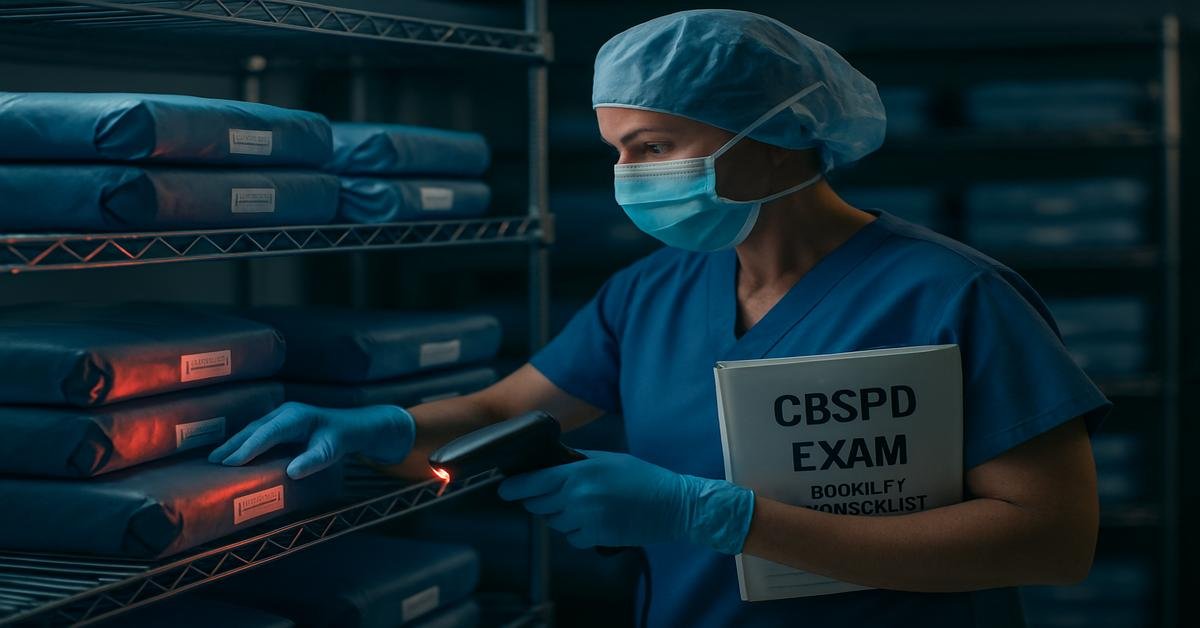
Sterile distribution is one of the least visible parts of healthcare, but it affects almost every patient. If an operating room is missing a tray, if a sterile package is damaged, or if a contaminated item is put back into use, the result can be delays, waste, or real harm. That is why the Certified Board for Sterile Processing and Distribution, or CBSPD, matters. For people pursuing the CSPDT credential, the goal is not just to pass a test. It is to prove that you understand how sterile supplies move safely through a facility, from decontamination to storage to point of use. This article explains what sterile distribution involves, why the work matters, and how to prepare for the CBSPD exam in a practical way.
What CSPDT sterile distribution really means
The Certified Sterile Processing and Distribution Technician (CSPDT) credential covers the full workflow of sterile processing. Distribution is a key part of that workflow. It is the system that makes sure the right item gets to the right place, in the right condition, at the right time.
That sounds simple, but in a hospital or surgical center it involves many moving parts:
Receiving used instruments and devices safely
Cleaning and decontaminating them correctly
Inspecting, assembling, and packaging them
Sterilizing them with the correct method
Storing sterile items in a way that protects package integrity
Distributing supplies based on demand, urgency, and priority
Tracking inventory, lot numbers, and sterilization records
The word distribution is easy to underestimate. In practice, it means understanding logistics, workflow, communication, infection prevention, and documentation. A tray is not “ready” just because it has been sterilized. It must also be labeled correctly, stored properly, protected from moisture and damage, rotated as needed, and delivered without breaking the chain of sterility.
Why sterile distribution is a patient safety issue
People sometimes think sterile processing is mostly technical work in the background. It is technical, but it is also directly tied to patient outcomes. Every decision in sterile distribution affects safety.
For example, if a peel pack is compressed into an overcrowded shelf, the seal may weaken. If event-related sterility is ignored, a package that looks fine may have been compromised by rough handling. If a case cart is missing one instrument, a surgery may be delayed while staff scramble to find a replacement. If a contaminated item is mistakenly mixed into clean inventory, the consequences are much more serious.
This is why the CBSPD exam asks more than simple definitions. It tests whether you understand why procedures exist. You are expected to know that a sterile item stays sterile only if packaging integrity is maintained. You are expected to know why traffic flow matters, why documentation matters, and why shortcuts create risk.
In other words, sterile distribution is not just about moving supplies. It is about controlling risk at every step.
What the CBSPD exam is designed to measure
The CBSPD exam for CSPDT candidates is built to assess job-ready knowledge. It does not only check memory. It checks whether you can apply principles in real work situations.
You will usually see questions that touch on areas such as:
Microbiology basics
Infection prevention and control
Decontamination procedures
Preparation and packaging
Sterilization methods and monitoring
Storage and distribution practices
Quality assurance and documentation
Safety rules, including personal protective equipment
The exam matters because sterile processing technicians make decisions that require judgment. A test question may ask which packaging material fits a device, which sterilization method is appropriate, or what action to take when an indicator result is incorrect. To answer well, you need both facts and context.
The core logistics you need to master
If you want to do well on the CBSPD exam, focus on the logic behind the workflow. Sterile processing is a system. Each step affects the next one.
1. Workflow and area separation
Clean and dirty areas must stay separate. This reduces cross-contamination. The typical flow is from decontamination to preparation and packaging to sterilization to sterile storage and distribution. Questions often test whether you understand this progression and why backtracking creates risk.
2. Item identification and tray assembly
Every set must be complete, functional, and assembled according to count sheets or instrument lists. If one clamp is missing or one instrument is damaged, the tray is not ready. In real work, this prevents delays and case errors. On the exam, it shows up in questions about inspection, assembly, and quality checks.
3. Packaging integrity
Sterile supplies must be packaged in materials that match the sterilization process. They must also be sealed, labeled, and handled properly. If the package is torn, wet, punctured, crushed, or opened, sterility is considered compromised. This is a common exam theme because it is central to patient safety.
4. Sterilization choice
Not every item can go through the same sterilizer cycle. Heat-stable metal instruments may tolerate steam sterilization well. Heat- or moisture-sensitive devices may require low-temperature methods. You need to know the basic principles, not just the names of the methods. The exam may ask you to match device type to process type.
5. Monitoring and release
Sterilization is not assumed. It is verified using mechanical, chemical, and biological monitoring. Each type serves a different purpose. Mechanical monitors confirm cycle parameters such as time, temperature, and pressure. Chemical indicators react to process conditions. Biological indicators test whether resistant microorganisms were killed. The exam often checks whether you know when each monitor is used and what to do with abnormal results.
6. Storage and stock rotation
Sterile storage is not just a room with shelves. Conditions matter. Supplies need protection from dust, moisture, excess handling, and physical damage. Stock rotation matters because older inventory should generally be used first when appropriate. The key principle is not an arbitrary expiration date alone, but maintaining package integrity and following facility policy.
7. Distribution accuracy
Case carts, emergency requests, routine restocking, and procedure-specific supplies all require accuracy. A missing implant or wrong tray can disrupt care. This is why item tracking and communication with operating room staff are so important. Expect exam questions that test priorities, handling, and proper response to urgent requests.
How to study for the CBSPD exam without wasting time
Many candidates make the same mistake: they read a manual from start to finish and hope repetition will be enough. That helps a little, but it is not the most efficient method. The better approach is to study in layers.
Start with the exam blueprint
First, identify the subject areas covered by the exam. This tells you where to spend your time. If storage and distribution are tested, do not focus only on decontamination. If sterilization monitoring is a major area, make sure you can explain the differences between monitor types in your own words.
Build understanding before memorization
Memorizing facts works poorly when questions are scenario-based. For example, it is easy to memorize that a wet pack is a problem. It is more useful to understand why: moisture can act as a pathway for microorganisms, so package sterility may be lost. When you know the reason, you can answer different versions of the same question.
Use active recall
Do not just reread notes. Close the book and explain a topic out loud. For example:
What is the difference between cleaning, disinfection, and sterilization?
Why must clean and dirty workflows remain separate?
What should you do if a package is torn in storage?
What does a biological indicator tell you that a chemical indicator does not?
If you cannot explain the answer clearly, that is the area you need to review.
Practice with real scenarios
The best study questions are practical. For example:
A tray returns from the OR with visible soil. What steps come next, and in what order?
A sterilized package is found wet on the cooling rack. Can it be distributed?
A low-temperature device is accidentally prepared for steam sterilization. What is the risk?
A shelf in sterile storage is overpacked. What problems can this cause?
These are the kinds of situations technicians face every day, and the exam often mirrors that logic.
Study a little every day
Short, regular review is better than cramming. Thirty to forty-five minutes a day is enough if you stay focused. One day can cover microbiology. Another can cover packaging. Another can cover sterilization monitoring. This makes the material easier to retain.
Common weak spots on the exam
Even strong candidates usually have a few trouble areas. Knowing them in advance helps.
Microbiology terms
Some people rush past microbiology because it feels abstract. That is a mistake. Terms like spores, bioburden, and cross-contamination matter because they explain why cleaning and sterilization steps are structured the way they are.
Monitoring types
Candidates often mix up mechanical, chemical, and biological monitoring. Learn the role of each one and do not treat them as interchangeable.
Packaging rules
Questions about torn wrappers, wet packs, punctures, incorrect labeling, and overloaded trays are common. These topics matter because package condition is central to maintaining sterility.
Storage practices
Storage sounds basic, but exam questions often test details: shelf placement, environmental protection, handling limits, and event-related sterility principles.
Safety and PPE
Technicians work around sharps, chemicals, contaminated instruments, and mechanical equipment. PPE is not a side topic. It is part of safe workflow. Questions may ask what should be worn in decontamination versus clean assembly areas, and why.
How to think during the exam
Passing the CBSPD exam is not only about what you studied. It is also about how you read and answer questions.
Look for the safest answer
If two answers seem possible, choose the one that best protects the patient, maintains sterility, and follows standard procedure. Sterile processing questions often reward safety-first thinking.
Watch for qualifiers
Words like first, best, most appropriate, and immediate change the meaning of a question. Read carefully. The right action eventually may not be the first action.
Do not answer from habit alone
Some candidates answer based on what their facility happens to do, even if the question is testing general best practice. If your workplace has a local shortcut or unusual routine, set that aside and answer based on standard principles.
Use process of elimination
If you are unsure, rule out clearly unsafe or illogical options first. This improves your odds and often makes the best answer easier to see.
A simple study plan for the last few weeks before the test
If your exam is coming up soon, keep your plan simple and structured.
Week 1: Review decontamination, microbiology, and infection prevention basics.
Week 2: Review preparation, inspection, tray assembly, and packaging rules.
Week 3: Review sterilization methods, cycle monitoring, and load release.
Week 4: Review sterile storage, stock rotation, distribution workflow, and documentation.
Final days: Take practice questions, review weak spots, and avoid cramming new material.
As you review, write down the topics you miss more than once. Those are your high-yield weak areas. Focus there instead of endlessly reviewing what you already know well.
What passing the CSPDT exam means for your career
Earning the CSPDT credential can help in practical ways. It can make you a stronger job candidate, support advancement, and show employers that you take the profession seriously. But the bigger value is competence. A certified technician is expected to understand not just tasks, but the reasoning behind them.
That matters in real departments. Sterile processing teams are under pressure. They support busy operating rooms, handle urgent turnovers, manage complex instrument sets, and document every critical step. A technician who understands sterile distribution can spot problems early, prevent avoidable delays, and protect both staff and patients.
Certification is not proof that you know everything. It is proof that you have mastered the core standards and can work from a solid foundation.
Final thought
To master sterile distribution, think like a logistics professional and a patient safety advocate at the same time. Every tray, wrapper, record, and delivery matters because each one affects care. That is the mindset the CBSPD exam is trying to measure. If you study the workflow as a connected system, learn the reasons behind each standard, and practice with real-world scenarios, you will be in a strong position not only to pass the CSPDT exam, but also to do the job well once you are on the floor.

