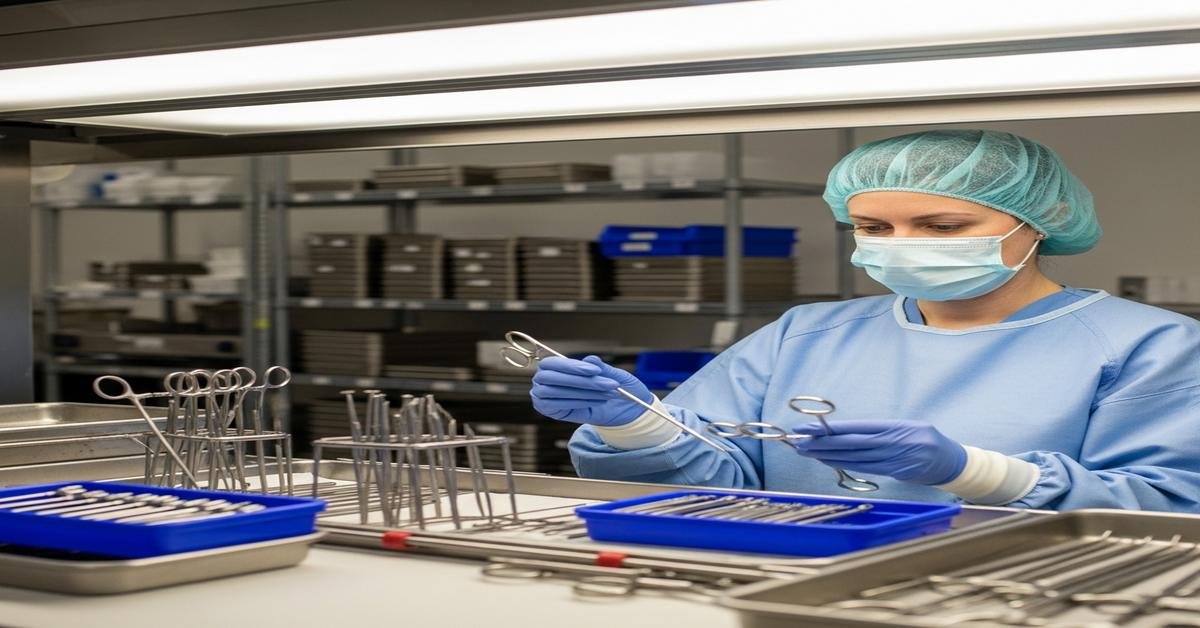
The CRCST credential proves you can keep patients safe by cleaning and sterilizing instruments the right way, every time. Passing the HSPA exam takes more than memorizing terms. You need to understand why each step in the decontamination process exists and how choices in the sink or washer affect outcomes in the OR. This guide shows you how to pass the exam in 2026 and how to master decontamination with practical, real-world details.
What the CRCST Credential Signals and Why It Matters
CRCST shows you know how to remove bioburden, break biofilm, and prepare devices for sterilization or high-level disinfection. It matters because surgical site infections and scope-related outbreaks often trace back to missed steps or poor choices in cleaning chemistry or technique. The exam checks whether you can apply standards and IFUs under pressure. On the job, your decisions protect patients, surgeons, and your team.
How the HSPA CRCST Exam Works in 2026
The exam is multiple-choice and scenario-heavy. Expect questions that ask what to do when a step fails, a reading is out of range, or an IFU conflicts with a common practice. The blueprint emphasizes:
- Cleaning, decontamination, and disinfection (point-of-use through washer-disinfector and manual methods)
- Preparation and packaging (assembly, inspection, packaging materials, load configuration)
- Sterilization process (steam, low-temp methods, load release, monitoring)
- Sterile storage and distribution (stock rotation, environmental controls, transport)
- Quality assurance and safety (process monitoring, documentation, PPE, incident reporting)
- Device knowledge (instruments, power equipment, endoscopes, lumened devices)
- Inventory and patient care equipment (tracking, turnaround, loaners)
HSPA also requires hands-on experience to be fully certified. You can test first and complete the required hours afterward within HSPA’s time window (often referred to as “Provisional” status). Confirm exact requirements and timelines with HSPA before registering, since policies can change.
A Six-Week Study Plan That Targets the Blueprint
Week 1: Foundation and vocabulary. Learn Spaulding classification, bioburden, biofilm, IFU, high-level disinfection vs. sterilization, and workflow terms (dirty-to-clean, negative pressure, one-way flow). Why: these words anchor every question.
Week 2: Decontamination science. Enzymatic vs. alkaline detergents, water quality, temperature effects, manual cleaning steps, ultrasonic cavitation, washer-disinfector stages. Why: the exam tests root causes when cleaning fails.
Week 3: Prep & Pack plus inspection. Instrument identification, joint mechanics, magnification, lubrication, packaging materials, weight and density concepts. Why: assembly errors undermine sterilization.
Week 4: Sterilization and monitoring. Steam and low-temp cycles, load configuration, chemical and biological indicators, release decisions, sterilizer quality tests. Why: these are high-risk, high-stakes decisions.
Week 5: Endoscopes and HLD. Bedside pre-cleaning, leak testing, manual cleaning, channel drying, storage. Why: scope questions are common and require precise sequencing.
Week 6: Quality systems and practice tests. Documentation, audits, competency, rewash rates, recalls. Why: process control is how sterile processing proves safety.
- Daily: 30–45 minutes of practice questions; keep a “why” notebook of missed items.
- Weekly: Teach one topic to a colleague; if you can teach it, you truly understand it.
High-Yield Concepts You Must Know
- Spaulding classification: Critical (sterile), semi-critical (high-level disinfection or sterilization), non-critical (low-level disinfection). Why: it drives your reprocessing method.
- Biofilm basics: Forms quickly, protects microbes, and resists disinfectants. Why: only thorough cleaning disrupts it; disinfection alone cannot fix bad cleaning.
- IFU supremacy: Manufacturer instructions outrank habits. Why: design-specific steps (brush sizes, flow rates, cycle choice) are part of the device’s validated safety.
- Workflow: One-way flow from dirty to clean; no backtracking. Why: prevents cross-contamination and maintains environmental controls.
- Detergent choice: Use the chemistry the IFU calls for (enzymatic, neutral, or alkaline). Why: wrong pH or concentration can fix soils to metal or damage surfaces.
- Water: Quality matters; hard water leaves mineral film and traps soil. Why: residues block disinfectant contact and can corrode instruments.
- Inspection: Magnification, light, and function checks. Why: hidden cracks and insulation failures cause patient harm.
Test-Taking Strategies for CRCST
- IFU beats policy: If a question sets up a conflict, pick the IFU-driven answer.
- Watch qualifiers: Words like “first,” “best,” “most effective,” change the correct choice.
- Eliminate safely: Remove answers that mix clean/dirty zones, ignore PPE, or skip required rinses.
- Assume standard conditions: Unless stated, don’t add missing facts (e.g., don’t assume a device is single-use).
- Do the math: Dwell times, dilutions, and sequence orders show up; write quick notes on your scratch sheet.
Mastering Decontamination: Step-by-Step and Why
1) Point-of-use treatment. Wipe gross soil, keep instruments moist (with approved gel or damp cloth), and remove sharps safely. Why: dried soil protects microbes and is hard to remove.
2) Transport in closed, labeled containers. Separate from clean areas; prevent leaks. Why: reduces exposure and maintains one-way flow.
3) Receiving in decon. Wear full PPE (fluid-resistant gown, face/eye protection, mask, hair covering, and heavy-duty gloves). Why: splashes and aerosols are common when opening sets.
4) Sorting and disassembly. Separate by device type, complexity, and cleaning method; fully disassemble per IFU. Why: trapped soil sits in joints and lumens; assembled parts block contact.
5) Pre-rinse with cool or lukewarm water. Avoid hot pre-rinse that coagulates protein. Why: heat “cooks” blood onto surfaces.
6) Detergent selection and mixing. Use the IFU-required chemistry at the right dilution and temperature. Why: too strong damages devices; too weak leaves soil and biofilm.
7) Manual cleaning technique.
- Brush from clean to dirty; keep tips submerged to limit aerosols.
- Use the correct brush size for lumens; push soil out, not deeper in.
- Actuate joints while brushing; keep edges away from gloves.
- Flush cannulas and channels with the specified volume and frequency.
Why: Mechanical action breaks soil and biofilm. Submersion and correct brush fit expose all surfaces to detergent.
8) Ultrasonic cleaning when required. Load instruments fully submerged, open, and separated; do not stack. Degas the tank after changes. Why: cavitation bubbles collapse and “scrub” crevices; trapped air or stacking blocks the effect.
9) Rinse thoroughly with quality water. Follow IFU for rinse type (treated, deionized, or sterile). Why: leftover detergent or minerals interfere with disinfection and sterilization.
10) Inspect and verify soil removal. Use light, magnification, and lumen inspection tools; use protein or residual tests as required. Why: “clean” must be verified, not assumed.
11) Mechanical washing/thermal disinfection. Load per IFU with spray arms unobstructed; no nesting; secure lumens to injection ports if required. Why: contact, time, temperature, and action must all meet targets.
12) Drying. Use lint-free wipes and forced air for lumens if required. Why: moisture dilutes disinfectants, rusts metals, and damages packaging later.
Instrument Care Details That Prevent Damage and Bioburden
- Hinged tools: Clean open and actuated; lubricate with water-soluble, steam-penetrable lubricant if IFU permits. Why: dried soil and friction lead to seizing and poor sterilant penetration.
- Sharp edges: Use tip protectors only after drying; do not use for storage if it traps moisture. Why: moisture equals corrosion and microbial growth.
- Power tools and cords: Many are not fully immersible; follow IFU for battery removal and connector protection. Why: fluid in connectors causes malfunctions and infection risk.
- Insulated laparoscopic tools: Inspect insulation with appropriate testers. Why: micro-cracks cause patient burns.
- Lumened devices: Select brush diameter that matches lumen; verify clear water exit; use purge and dry steps. Why: lumens hide soil and liquid.
- Ophthalmic instruments: Use neutral pH solutions and thorough rinsing as IFU directs. Avoid lint. Why: residues and lint increase the risk of toxic anterior segment syndrome.
Endoscope Reprocessing Essentials
Flexible endoscopes demand precise steps and documentation because channels trap soil and moisture:
- Bedside pre-cleaning. Wipe, flush, and keep channels moist per IFU. Why: biofilm starts in minutes; early action prevents it.
- Transport closed and labeled. Why: contain fluids and protect staff.
- Leak testing. Why: detects damage; fluid inside damages components and harbors microbes.
- Manual cleaning under the surface. Brush and flush each channel with the right tools and volumes; verify soil removal. Why: no disinfectant fixes poor cleaning.
- HLD or sterilization. Use an automated endoscope reprocessor or sterilizer approved for the scope. Follow contact time, temperature, and compatibility. Why: efficacy depends on validated cycles.
- Rinsing with treated water, alcohol flush, and forced-air drying. Why: water left in channels dilutes disinfectant and supports microbial growth; alcohol promotes drying.
- Storage in a clean, ventilated cabinet with channels open. Why: airflow finishes drying; closed channels trap moisture.
Quality Assurance in Decontamination
- Process monitoring: Use cleaning indicators for washers and ultrasonics; document results and corrective actions. Why: proves cleaning performance and catches drift early.
- Equipment readiness: Daily checks, screen and spray arm inspection, and filter cleaning per IFU. Why: a clogged screen equals a dirty load.
- Traceability: Track devices through cleaning to sterilization and use. Why: enables recalls and trend analysis.
- Competency and audits: Observe technique, review documentation, and coach to standard work. Why: people and process drift without feedback.
- Metrics: Rewash rate, incomplete set rate, washer failure rate, and turnaround time. Why: numbers show where to improve.
Common Pitfalls and How to Avoid Them
- Hot pre-rinse before cleaning. Avoid; it sets proteins. Use cool or lukewarm first.
- Mixing chemicals. Do not combine detergents or add “a little extra.” Follow label and IFU.
- Skipping disassembly. Always disassemble per IFU; hidden soil remains otherwise.
- Overloading washers. Follow rack capacity and orientation; blocked spray equals dirty instruments.
- Incomplete drying. Moisture causes corrosion and packaging failures.
- Ignoring IFUs for new or loaner sets. Treat “familiar” devices like new until you confirm instructions.
On-the-Job Habits That Help You Pass
- Turn steps into checklists. Post them at sinks and AERs. Why: fewer misses when you standardize.
- Run a daily “decon huddle.” Review unusual sets or IFU updates before processing. Why: surprises create errors.
- Use a 60-second instrument check. Hinges, tips, lumens, insulation, cleanliness test as needed. Why: fast, focused quality.
- Keep an IFU quick-reference binder or digital bookmarks. Why: real work mirrors exam scenarios.
Exam Day Checklist
- Arrive early with required IDs; breathe and plan your pace.
- Skim each question, underline key words (first, best, most likely).
- Answer what you know, mark time-intensive ones to review later.
- When torn, pick the answer that protects patients, follows IFU, and maintains one-way flow.
- Don’t leave blanks; an educated guess beats no answer.
Putting It All Together
The CRCST exam rewards practical understanding. Know why cool water prevents protein coagulation, why you can’t shortcut drying, why the IFU wins, and why one-way flow matters. Study with a weekly plan, practice explaining your choices, and make your daily work look like the test—standardized, documented, and verified. Do that, and you will not only pass in 2026. You will also master the decontamination process and protect every patient your instruments touch.

I am a Registered Pharmacist under the Pharmacy Act, 1948, and the founder of PharmacyFreak.com. I hold a Bachelor of Pharmacy degree from Rungta College of Pharmaceutical Science and Research. With a strong academic foundation and practical knowledge, I am committed to providing accurate, easy-to-understand content to support pharmacy students and professionals. My aim is to make complex pharmaceutical concepts accessible and useful for real-world application.
Mail- Sachin@pharmacyfreak.com