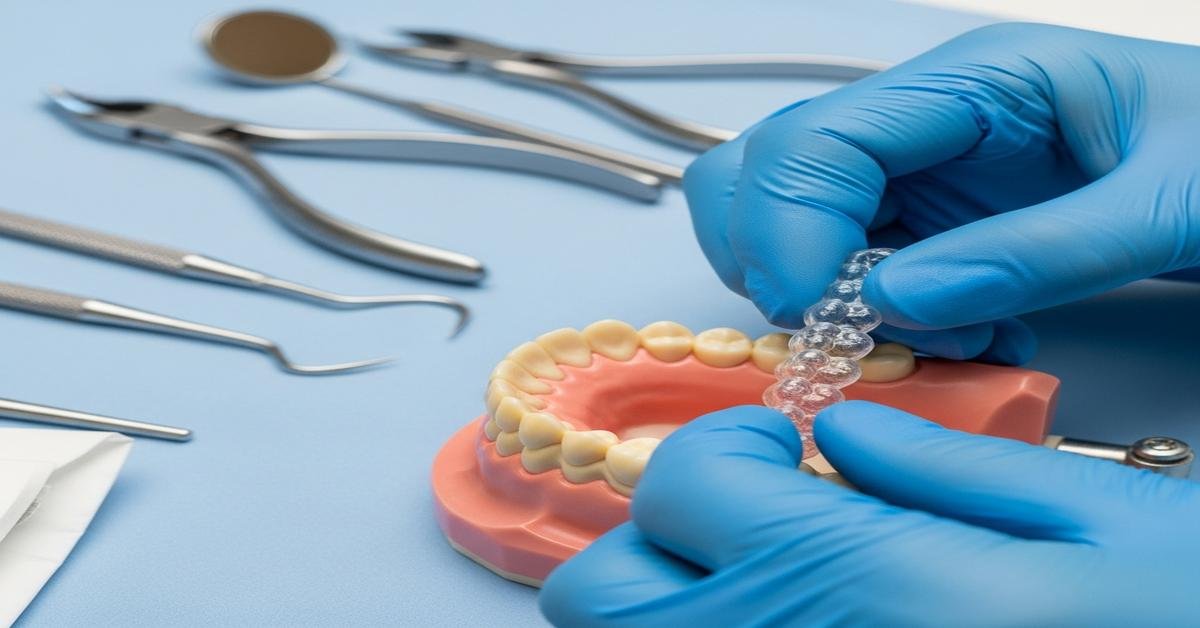
Preparing for a specialty board exam in orthodontics demands more than memorizing facts. You must show sound judgment, clean execution of core procedures, and the ability to prevent and solve problems. This study guide focuses on high-yield skills examiners probe most—how you diagnose, plan, and finish cases safely and predictably. Every section explains the why, with practical steps and examples you can use in clinic tomorrow.
What The Board Actually Evaluates
Boards reward thinking and outcomes, not brand names or trendy tools. You pass by showing you can see the problem clearly, choose the simplest effective plan, control side effects, and finish well. That’s true whether you use brackets, aligners, or TADs.
- Diagnosis first: Clear records, accurate measurements, and a prioritized problem list. Why: a sharp diagnosis prevents over-treatment and rework.
- Risk management: Show how you protect roots, periodontium, and enamel. Why: safe care is the minimum standard.
- Biomechanics: Pick forces you can control. Explain anchorage. Why: you earn points by predicting and preventing side effects.
- Finishing: Functional, stable occlusion with esthetics to match. Why: the end shows if the plan and mechanics worked.
- Communication and consent: Patients understand risks, limits, and alternatives. Why: ethics and documentation matter as much as alignment.
High‑Yield Records: Quality In, Quality Out
Your records must let an examiner reach the same diagnosis you did. That means sharp photos, level head posture, accurate scans/models, and calibrated cephalometrics.
- Standard photos: 3 extraoral (frontal rest/smile, profile) + 5 intraoral (frontal occlusion, right/left buccal, maxillary occlusal, mandibular occlusal). Why: consistent views let others verify symmetry, smile arc, gingival display, and occlusion.
- Models/scans: Confirm arch length discrepancy, Bolton ratios, curve of Spee, midlines, and contacts. Why: casts reveal what photos miss.
- Ceph and pano: Use consistent landmarks and trace twice if needed. Why: small errors change the plan (e.g., extraction vs non-extraction).
- Complexity score (e.g., DI): Quantify overjet, overbite/open bite, crowding, crossbites, impacted teeth, missing teeth, AP discrepancy, and occlusal cants. Why: boards expect you to justify time and mechanics based on problem size.
Core Diagnostic Numbers You Must Own
Know normal ranges so you can explain deviations and the plan to fix them.
- Skeletal AP: SNA ~82°, SNB ~80°, ANB ~2°, Wits ~0 mm (men -1 mm). Why: tells you if the sagittal problem is maxillary, mandibular, or both.
- Vertical: SN-MP ~32°, FMA ~25°. Why: guides bite-opening vs bite-deepening mechanics and surgery choices.
- Incisors: U1–SN ~102°, IMPA ~90°, interincisal ~131°. Why: incisor positions determine profile, lip support, and extraction need.
- Bolton ratio: Overall ~91.3%, anterior ~77.2%. Why: explains residual overjet/overbite after alignment and when IPR or buildups are needed.
- Smile analysis: Smile arc consonant, 1–2 mm gingival display youthful, midlines coincident with face (or justified). Why: esthetic goals anchor your case objectives.
Bracket Placement and Bonding: Accuracy First
Bracket height and angulation errors cost months later. Place at the FA point, following tooth-specific heights (e.g., U1 ~4.5 mm, U2 ~4.0 mm, U3 ~5.0 mm from incisal edge; adjust for wear and gingival margin levels). Dry field, selective etch or universal adhesive as indicated.
- Why this matters: A low central bracket increases torque and reduces crown display; a high canine bracket leaves a step in marginal ridges. Fix early, not at finishing.
- Steps that prevent rebonds: Clean enamel, isolate, etch/prime per IFU, light-cure from multiple angles, verify slot parallel to occlusal plane. Check with a bracket height gauge.
- When to band: Short crowns, large restorations, or heavy occlusion on molars. Why: prevents debonds and contamination.
Wire Sequence and Force Systems That Work
Use the least force that gets the job done. Gentle, well-sequenced wires reduce pain, PDL hyalinization, and root resorption.
- Example 0.022 slot sequence: 0.014 NiTi → 0.018 CuNiTi → 0.017×0.025 NiTi → 0.019×0.025 SS (working) → 0.019×0.025 TMA (finishing). Why: progressive control of tip/torque with minimal binding.
- Segmental mechanics: Use cantilevers for intrusion or uprighting when you need pure moments. Why: sectional wires localize forces and spare anchorage teeth.
- Force targets: Canine retraction ~150 g, en‑masse retraction ~200–250 g/side, incisor intrusion 10–20 g/tooth, molar uprighting 50–75 g. Why: staying in biologic range shortens treatment.
Anchorage Control and TADs
Anchorage is the currency of orthodontics. Spend it only when you must.
- Conventional anchorage: Transpalatal arch, Nance, lingual arch, lacebacks, differential moments. Why: low-cost control with familiar tools.
- TAD indications: En‑masse retraction without anchorage loss, molar intrusion for open bite, posterior distalization, transverse anchorage for crossbite, asymmetric corrections. Why: skeletal anchorage decouples force from unwanted tooth movement.
- TAD pearls: Interradicular sites between U5–6 or L5–6, 30–45° to occlusal plane, 8–10 mm length, 1.6–2.0 mm diameter, always in attached gingiva. Chlorhexidine pre-op, saline rinse post-op. Why: reduces root proximity and soft-tissue overgrowth.
- Complications: Mobility, soft-tissue irritation, sinus or root proximity. Manage by relocating, using longer screws, or adding soft-tissue punch. Why: fast recognition prevents failure.
Playbooks for Common Malocclusions
Arrive with a simple, defensible plan for each pattern.
- Class II (crowding, protrusion):
- Growth: Herbst/Forsus or Class II elastics; distalization with TADs; expand if transverse deficiency is real. Why: growth redirection and skeletal anchorage can avoid extractions.
- Non-growth: Extract U4s or biprotrusive 4s; en‑masse retraction with TADs; watch lower incisor torque. Why: profile control and anchorage are the priorities.
- Side effects to prevent: Bite opening with Class II elastics; add lower tip-back or posterior vertical control.
- Class III:
- Growing: Face mask with RPE or skeletal Class III elastics to TADs. Why: early maxillary protraction reduces later surgery.
- Non-growing: Camouflage (extract L4s, procline uppers) vs orthognathic (Le Fort I advancement, BSSO set-back/advancement). Why: incisor limits and soft tissue decide.
- Deep bite:
- Incisor intrusion with utility arches or reverse curve in lower; posterior extrusion if vertical dimension allows; bite turbos to avoid bracket failures. Why: directs vertical change to the safest segment.
- Open bite:
- Posterior intrusion with TADs; vertical elastics to settle once overlap achieved; avoid anterior extrusion if gummy smile. Why: molar intrusion closes bite without lengthening the face.
- Crossbite:
- Dental: Cross-elastics with bite turbos, or archwire expansion. Skeletal: RPE in growing, MARPE/SMARPE in late teen/adult. Why: match tool to suture status.
- Impacted canine:
- CBCT to locate and assess lateral root risk; open vs closed exposure based on position; light traction (30–50 g) to the center of alveolus, avoid transalveolar anchorage loss. Why: prevents resorption and gingival defects.
- Space management:
- IPR for Bolton excess; sequential distalization with TADs; extraction patterns based on crowding, profile, and incisor torque limits. Why: space sources must match esthetic needs.
Space Closure and Finishing to Meet Board Standards
Finish with intention. Most failures are small, predictable oversights.
- ABO-style finishing targets:
- Alignment/rotations: no visible rotations, arch form symmetric. Why: prevents premature contacts and relapse.
- Marginal ridges level: check with explorer and pano. Why: equal marginal ridges correlate with proper axial inclinations.
- Buccolingual inclination: correct torque on posterior segments. Why: stable intercuspation needs proper transverse root position.
- Occlusal relationship/contacts: Class I canines, solid posterior contacts; overjet 1–2 mm; overbite 2–3 mm. Why: function and stability.
- Midlines: coincide with face or documented reason why not. Why: esthetics and symmetry.
- Root angulation: upright roots on pano/PA. Why: reduces relapse and periodontal stress.
- Interarch elastics: Use short Class II/III elastics late to settle, not to move entire arches. Counteract side effects with torque and tip controls. Why: targeted use prevents vertical collapse or flaring.
- Detailing: Third-order bends to fine-tune torque; step-up/step-down for marginal ridges; toe-in/out to correct rotations. Why: wire expresses what brackets can’t.
Clear Aligners: What Examiners Expect
Show you understand aligner limits and how to engineer around them.
- Good indications: Mild–moderate crowding/spacing, mild AP corrections with elastics, bite leveling with intrusion attachments. Why: predictable with staged movements.
- Less predictable: Large rotations (>20° round teeth), major extrusions, significant transverse skeletal change. Use optimized attachments, overcorrections, or adjunct TADs. Why: plastic delivers force through surface friction; some vectors are weak.
- IPR and attachments: Plan IPR where Bolton indicates; place optimized attachments early; use bite ramps for deep bite. Why: aligners need purchase and clearance.
- Staging rules of thumb: Rotation ≤2–3°/aligner, translation ≤0.25 mm/aligner, intrusion ≤0.1–0.2 mm/tooth/aligner. Why: exceeding biology increases refinements.
- Refinements: Expect at least one. Take midcourse scans when tracking lags. Why: adjusting plan beats forcing trays.
Interdisciplinary and Surgical Cases
Lead the team and define the sequence.
- Pre-restorative ortho: Open space for implants with parallel roots and 1.5–2.0 mm bone on each side; or canine substitution with torque and gingival contouring. Why: restorative success depends on root positioning.
- Perio-ortho interface: Control plaque, avoid moving teeth through inflamed tissues, use light forces in reduced periodontium. Why: inflammation plus force accelerates attachment loss.
- Ortho-surgery: Decompensate incisors pre-op; coordinate arches; plan splint; finish with settling elastics and precise torque. Why: stable surgical movements need accurate dental positions.
Risk Management, Consent, and Emergencies
Boards expect you to prevent harm first, and handle problems fast when they occur.
- Root resorption: Risk factors include trauma history, asthma/allergies, long treatment, heavy forces. Take baseline PAs and recheck 6–9 months if risk. Reduce force and pause if resorption appears. Why: roots do not grow back.
- White spot lesions: Caries risk assessment, fluoride varnish, high-fluoride toothpaste, bonded hooks instead of elastomerics for high-risk patients. Why: prevention beats restoration.
- TMJ and airway: Document symptoms, avoid over-advancing mandibles to “treat” TMD or OSA without medical co-management. Why: protect patients and yourself from overclaims.
- Emergencies: Poking wire (clip, tuck, wax), broken bracket (remove/secure until rebond), lost separator (replace), lost aligner (advance/retreat per tracking), swallowed appliance (assess airway, refer for imaging if suspected ingestion). Why: calm, standardized responses reduce risk.
- Allergies: Nickel or latex sensitivity—use nickel-free brackets/wires and non-latex products. Why: prevent dermatitis and mucosal reactions.
Infection Control and Chairside Efficiency
Safe, clean, and predictable setups save time and prevent failures.
- Chain of sterility: Pre-clean → ultrasonic/washer → sterilize → packaged storage. Open chairside. Why: breaks in the chain increase cross-contamination risk.
- Bonding field control: Use cheek retractors, saliva ejector, NOLA/Isolite when needed. Have a dry-field checklist. Why: moisture is the main cause of bond failure.
- Procedure kits: Pre-assembled trays for bonding, wire changes, debond. Why: reduces turnover time and errors.
Radiographic Judgment and Safety
Use imaging only when it changes management.
- ALARA: Choose PAs over pano for localized root monitoring; reserve CBCT for impacted teeth, TAD planning near roots/sinus, airway or pathology suspicion, and surgical planning. Why: lower dose with equal diagnostic yield for many tasks.
- Technique: Natural head position for cephs, thyroid collar for intraoral films. Why: reproducibility and safety.
Documentation That Wins Oral Exams
Tell a clear story: problem list → objectives → plan → progress → outcome → retention.
- SOAP notes: Subjective (patient goals), Objective (measurements), Assessment (diagnosis with skeletal/dental/soft tissue), Plan (mechanics with anchorage). Why: shows logic.
- Track changes with numbers: Overjet/overbite, midlines, AP molar/canine, crowding/spacing, torque angles, ceph changes. Why: quantifies success.
- Own complications: Note breakages, compliance issues, or tissue changes and your response. Why: management counts more than perfection.
Retention: Plan Before You Debond
Relapse follows patterns. Retention should too.
- Fixed 3–3: Use for rotations, spacing, and lower incisor instability. Why: canine–canine retains the most relapse-prone segment.
- Essix vs Hawley: Essix preserves tooth position and posterior torque; Hawley allows settling and is repairable. Choose based on occlusion and wear risk. Why: form follows function.
- Open bite: Retainers with vertical elastics or anterior bite ramps for months. Why: tongue and habits drive relapse.
- Post-surgery: More frequent checks initially; protect occlusion while soft tissues stabilize. Why: early relapse risk is highest.
- Third molars: Discuss monitoring or removal if they threaten alignment or hygiene. Why: informed decisions prevent surprises.
Chairside Procedures You Must Execute Cleanly
- IPR: Measure with gauges; protect contacts with mylar; polish and fluoride after. Why: preserves enamel and contact quality.
- Elastomeric/steel ligation: Steel ties on rotational teeth; power chain from stable anchors; avoid trapping tissue. Why: consistent force delivery and hygiene.
- Coil springs: Open coil for space gain on rectangular base wires; measure compressed length 1–2 mm longer than space. Why: prevents under- or over-activation.
- Debonding: Carbide burs for composite removal; check enamel with air-dry; polish and fluoride. Why: limit iatrogenic enamel loss.
Day‑Before‑Exam Rapid Review
- Numbers to know: SNA 82°, SNB 80°, ANB 2°, Wits 0 mm, SN‑MP 32°, FMA 25°, U1–SN 102°, IMPA 90°, interincisal 131°, Bolton overall 91.3%, anterior 77.2%.
- Forces: Canine retract 150 g, en‑masse 200–250 g/side, intrusion 10–20 g/tooth, molar up-right 50–75 g.
- Finishing checklist: Level marginal ridges, solid posterior contacts, correct torque, midlines on face, 1–2 mm overjet, 2–3 mm overbite, no rotations, roots upright.
- Aligner rules: Rotation ≤3°/tray, translation ≤0.25 mm/tray, intrusion ≤0.1–0.2 mm/tooth/tray; attachments early; plan refinements.
- TAD basics: 30–45° angulation, attached gingiva, between 5–6, length 8–10 mm. Keep forces light and check soft tissue.
- Consent topics: Resorption, decalcification, perio risks, TMD symptoms, limitations of treatment, retention duties.
Final thought: The board wants to see safe, efficient, and thoughtful orthodontics. Keep your plans simple, your forces light, your anchorage secure, and your finishes clean. Explain your why at every step. If your records and reasoning are strong, the treatment almost explains itself.

