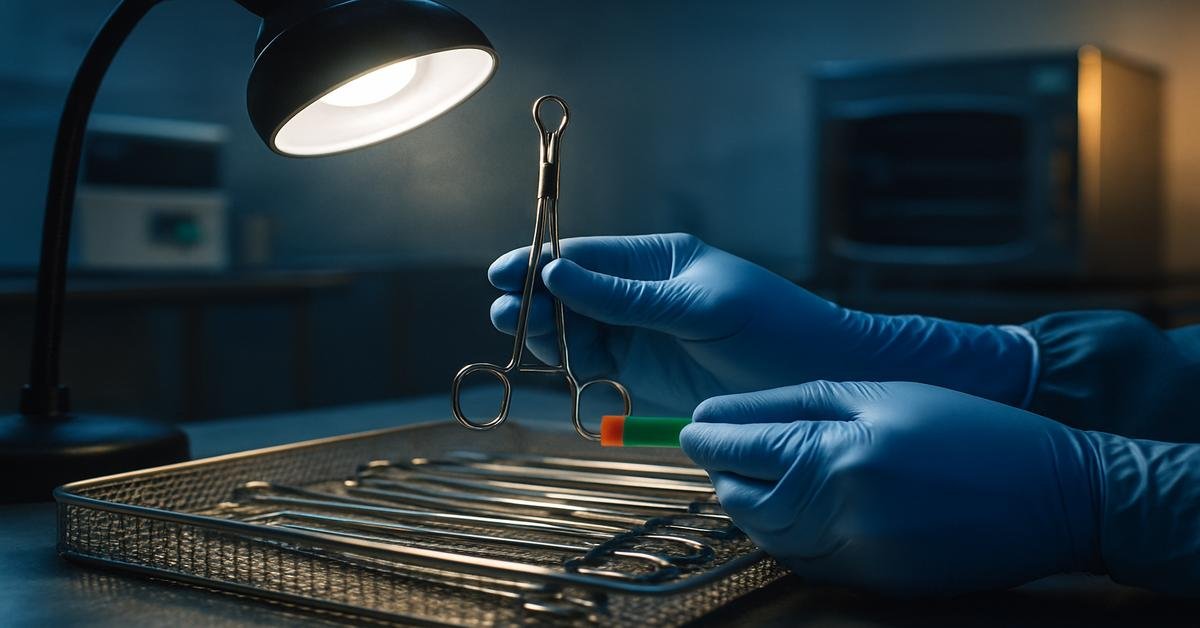
The Certified Instrument Specialist (CIS) exam expects more than simple memorization. It tests whether you understand how surgical instruments are built, how they fail, how they should be identified, and how proper maintenance protects both the instrument and the patient. That matters in sterile processing because instrument problems are not just workflow issues. A dull scissor, a cracked box lock, or a misidentified clamp can delay surgery, damage tissue, or create costly repairs. This guide focuses on high-yield topics in instrument maintenance and identification, with practical explanations that help the information stick.
Why instrument knowledge matters on the CIS exam
Instrument questions are common on the CIS exam because they sit at the center of sterile processing work. A technician must know what an instrument is, how it is used, how it should look when it is functioning correctly, and what to do when it is not.
This knowledge affects daily decisions such as:
Whether an instrument is safe to send to the OR
Whether damage is cosmetic or functional
Which testing method is appropriate
How to separate instruments for repair or replacement
How to assemble trays accurately and consistently
On the exam, many wrong answer choices are designed to look familiar. You may recognize the instrument family but miss the exact instrument, the specific part being tested, or the maintenance rule that applies. That is why a strong study plan should connect identification and care rather than treating them as separate topics.
Know the major instrument categories first
A good way to study identification is to begin with the major instrument groups. Once you know the function of each group, it becomes easier to narrow down what an unfamiliar instrument likely does.
Cutting and dissecting instruments: scissors, osteotomes, curettes, chisels, knives. These cut, shave, trim, or separate tissue.
Grasping and holding instruments: forceps, towel clamps, Allis, Babcock, Kocher/Ochsner. These hold tissue or items during a procedure.
Clamping and occluding instruments: hemostats, vascular clamps, intestinal clamps. These compress vessels or tissue.
Retracting and exposing instruments: hand-held retractors and self-retaining retractors. These improve visibility and access.
Probing and dilating instruments: probes, sounds, dilators. These explore openings or enlarge passages.
Suturing and stapling instruments: needle holders, ligature carriers, stapling devices. These assist with wound closure.
Suctioning instruments: Yankauer, Frazier, Poole. These remove blood or fluid.
When you study, ask two questions for each instrument: What is its function? and What design feature supports that function? For example, a Babcock has a rounded, fenestrated jaw because it is designed to hold delicate tissue with less trauma. A Kocher has teeth because it is meant for firmer gripping. That difference in jaw design often appears in CIS questions.
Focus on instrument parts and what they tell you
Many identification and maintenance questions depend on instrument anatomy. If you know the parts, you can often identify use, detect damage, and choose the right test.
Common instrument parts include:
Tips: the working ends. These may cut, grasp, clamp, retract, or probe.
Jaws: the inner working surfaces of ring-handled instruments.
Shanks: the length between the box lock and rings or handles.
Box lock: the hinge joint that allows opening and closing.
Ratchet: the locking mechanism that holds jaws closed at different pressures.
Finger rings: where the user grips ring-handled instruments.
Spring handle: found on some forceps and microsurgical instruments.
Screw joint: common in scissors and some specialty tools.
Lumen: an internal channel, such as in suction tips or cannulated devices.
This matters because damage is often tied to a specific part. A cracked box lock affects alignment and movement. A worn ratchet may not hold. A bent tip changes performance. A rough jaw surface may trap soil or damage tissue. The CIS exam often expects you to connect the damaged part to the resulting problem.
Master common instrument pairs that are easy to confuse
A high-yield study strategy is to compare look-alike instruments side by side. The exam may test subtle design differences.
Kelly vs. Crile: both are hemostats, but a Kelly usually has serrations on only part of the jaw, while a Crile has serrations the full length. That difference helps identify them.
Mayo scissors vs. Metzenbaum scissors: Mayo scissors are heavier and used for tougher tissue or suture; Metzenbaum scissors are lighter, with longer shanks and more delicate tips for finer tissue.
Allis vs. Babcock: Allis has teeth and is more traumatic; Babcock has a smooth, fenestrated jaw for delicate tissue.
Kocher/Ochsner vs. Rochester-Pean: Kocher has teeth at the tip; Rochester-Pean is a larger hemostatic clamp without toothed tips.
Needle holder vs. hemostat: a needle holder has short, sturdy jaws and inserts designed to grip needles securely; a hemostat is built to clamp tissue or vessels, not drive a needle.
Adson forceps vs. dressing forceps: Adson forceps are shorter and often have fine tips for tissue handling; dressing forceps are usually longer and used for handling dressings or general items.
Do not study these as isolated names. Study the reason for the design. If you understand why one instrument has teeth, tungsten carbide inserts, fenestrations, or long shanks, you are less likely to confuse it with something similar.
Understand how materials affect care and maintenance
Instrument materials are a frequent CIS topic because they affect cleaning, inspection, lubrication, and repair decisions.
Most surgical instruments are made from stainless steel, but that does not mean they cannot corrode. Stainless steel resists staining and rust because of a protective chromium oxide layer on the surface. That layer can be damaged by harsh chemicals, poor water quality, dried soil, and contact with dissimilar metals.
Important material-related points to know:
Stainless steel: durable and corrosion-resistant, but vulnerable to pitting and staining if not processed correctly.
Tungsten carbide: often used as inserts in needle holders, scissors, and some cutters. It increases hardness and durability. Gold-colored handles often identify tungsten carbide inserts, but color alone should not be your only clue.
Titanium: lightweight, strong, and often used in microsurgical or specialty instruments. It requires proper identification because it may react differently in repair and processing.
Plastics, insulation, and coatings: found on laparoscopic, insulated, or specialty instruments. These must be checked for cracks, peeling, or damage that could affect safety.
Questions may also involve galvanic action, which can occur when dissimilar metals contact each other in the presence of an electrolyte, such as moisture. This can lead to corrosion. The practical lesson is simple: instruments should be processed, stored, and maintained in ways that reduce unnecessary metal-to-metal damage and moisture exposure.
Inspection is not a quick glance
Inspection is one of the most tested maintenance topics because it determines whether an instrument is functional, clean, and safe. A rushed visual check is not enough.
A proper inspection includes:
Cleanliness: no visible soil, stains, tape residue, water spots, or debris in serrations, hinges, or lumens.
Alignment: jaws and tips meet correctly. Misalignment can reduce performance and cause tissue trauma.
Integrity: no cracks, chips, bent parts, corrosion, loose screws, or broken inserts.
Function: moving parts open and close smoothly. Ratchets engage properly. Springs recoil correctly.
Surface condition: no pitting, peeling, rough spots, or excessive wear.
Inspection should use good lighting and magnification when needed. This is especially important for fine tips, microsurgical instruments, and laparoscopic devices. Damage in these instruments may be too small to spot with the naked eye, but still serious enough to affect use.
For exam prep, remember that bioburden can hide in joints, serrations, lumens, and around insulation defects. These areas deserve extra attention because retained soil can interfere with sterilization and instrument performance.
Know the key functional tests
The CIS exam often asks how to verify that an instrument works as intended. Functional testing depends on the instrument type.
Scissors: test sharpness and cutting performance with the approved test material for that scissor type. The goal is not just whether it cuts once, but whether it cuts smoothly along the blade length without snagging or folding the material.
Hemostats and clamps: check jaw alignment, ratchet function, and whether the instrument closes evenly. The ratchet should hold securely but not feel forced.
Needle holders: inspect jaw surfaces and inserts. They should hold a needle firmly without wobble or slippage.
Rongeurs, cutters, and punches: check cutting edges, action, and return spring if present. Look for chips and uneven closure.
Suction instruments: inspect lumen patency and condition of tips and stylets if applicable.
Insulated instruments: inspect insulation carefully and test as required by facility policy and device instructions.
The reason these tests matter is straightforward. An instrument can look clean and still fail during use. A scissor that appears fine but folds test material will likely frustrate the surgeon and may damage tissue. A needle holder with worn inserts may rotate the needle at the worst moment.
Lubrication and maintenance basics you must know
Lubrication is another high-yield CIS topic because people often misunderstand its purpose. Instrument lubricant is used to protect moving parts and reduce friction-related wear. It is not meant to hide poor cleaning or compensate for damage.
Key points to remember:
Use only lubricants intended for surgical instruments and compatible with sterilization.
Apply according to instructions, usually after cleaning and before sterilization if specified.
Focus on hinged and moving parts such as box locks and joints.
Do not overuse lubricant. Excess product can create residue or interfere with processing.
Routine maintenance also includes sorting instruments that need repair. Instruments should be removed from service when they are damaged, malfunctioning, or questionable. Sending a flawed instrument forward because it “might still work” creates risk for the patient and the surgical team.
Corrosion, staining, and pitting: know the difference
These terms are easy to mix up, but the CIS exam may expect you to separate them.
Staining: discoloration on the surface. It may result from minerals, chemicals, or processing conditions. It does not always mean structural damage, but it should be evaluated.
Rust: oxidation that indicates surface breakdown. This is not acceptable on surgical instruments.
Pitting: small holes or cavities in the metal surface caused by corrosion. This is more serious because pits can harbor soil and weaken the instrument.
High-chloride exposure, poor rinsing, wet storage, harsh chemicals, and blood left to dry can all contribute to corrosion problems. The exam may frame this as a root-cause question. For example, if identical spots appear on several instruments from the same load, think about water quality or detergent issues rather than isolated handling damage.
Special attention areas: lumens, insulation, and delicate instruments
Some instruments carry higher maintenance risk because their design makes cleaning and inspection harder.
Lumened instruments can trap soil, detergent, and moisture inside narrow channels. These devices need the correct flushing, brushing, and drying steps. A lumen that is not visibly dirty may still contain retained debris.
Insulated instruments, common in minimally invasive surgery, must be checked for cracks, peeling, or breaks in the coating. Even small defects can create safety hazards during use.
Delicate and microsurgical instruments require careful handling, tip protection when appropriate, and close inspection under magnification. Fine tips bend easily. A tiny bend may completely change performance.
These categories are often tested because they require more than standard processing habits. The exam wants to know whether you recognize higher-risk instruments and adjust your inspection and maintenance approach.
Study tray assembly through instrument function
Tray assembly is also tied to identification. One of the best ways to study is to learn instruments in procedural groups instead of random lists. For example, in a basic general surgery tray, you might expect tissue forceps, hemostats, needle holders, Mayo scissors, Metzenbaum scissors, retractors, and sponge forceps. In an orthopedic tray, you would expect heavier cutting and bone-related instruments such as rongeurs, curettes, osteotomes, and mallets.
This approach helps because the exam may ask you to identify an instrument based on where it belongs or how it is used. If you know that a Babcock is common when delicate tubular tissue must be held, or that a Frazier suction is used when precise suction control is needed, identification becomes more practical and less dependent on pure memorization.
Best ways to study for instrument identification and maintenance
The most effective CIS study methods are visual and hands-on.
Study instruments by family, not just alphabetically. Compare similar tools side by side.
Use part-based flashcards. Put the instrument image on one side and function, key features, common damage points, and testing method on the other.
Practice verbal identification. Say what you see: “ring-handled, ratcheted, transverse serrations, curved jaw, partial serrations.” This trains your eye.
Handle real instruments when possible. Weight, jaw texture, and overall shape are easier to remember in person.
Connect damage to action. Do not just memorize “pitting is bad.” Know why it matters: it can retain soil and weaken metal.
Review repair triggers. Learn what should be removed from service immediately, such as cracked insulation, loose box locks, misaligned jaws, or chipped inserts.
A simple but strong study habit is to build a chart with four columns: instrument name, use, key identifying feature, and maintenance concern. For example, for Metzenbaum scissors, you might write: delicate tissue dissection; long shanks with light blades; check for sharpness, tip alignment, and blade damage. That format mirrors the way CIS questions often think.
Final takeaway
For the CIS exam, instrument maintenance and identification are not separate skills. They support each other. If you can recognize an instrument’s design, you can better understand its use, how it should function, what damage matters most, and when it should be removed from service. Study the major categories, learn the instrument parts, compare commonly confused instruments, and connect each tool to its inspection and maintenance needs. That deeper understanding will help you on the exam and in real sterile processing work, where instrument quality directly affects patient care.

