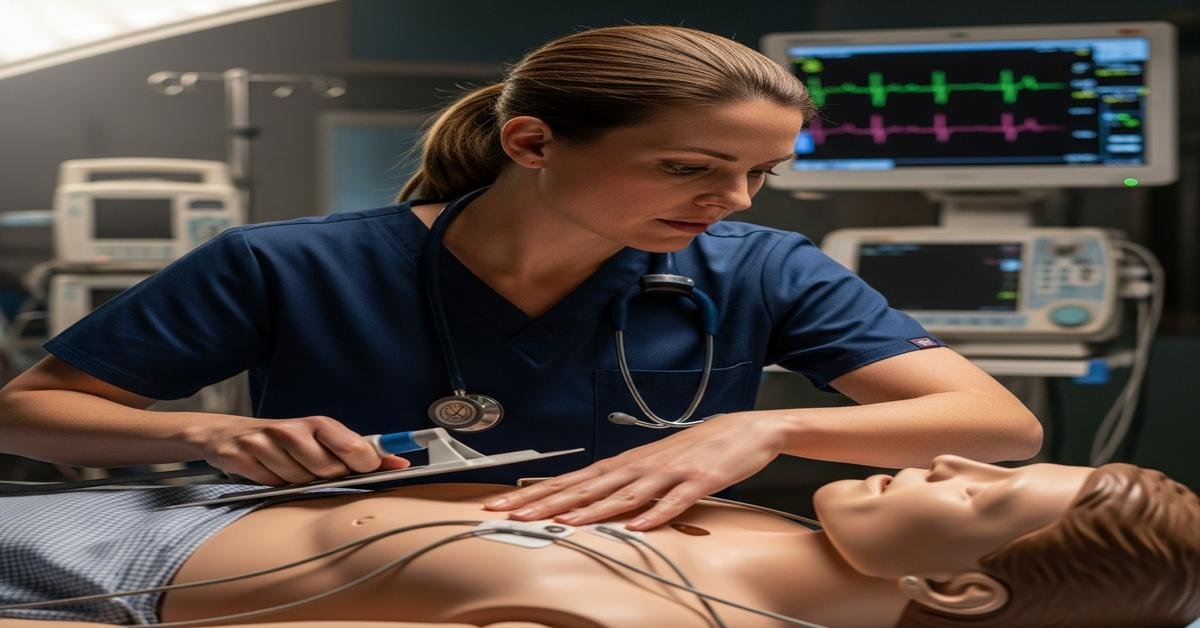
Cardiac arrest and emergency triage appear across CEN exams because they test how you think under pressure. The exam wants to see if you can sort out the sick from the stable, act in the right order, and explain your decisions. This guide focuses on high-yield arrest and triage scenarios, the decisions that matter most, and the “why” behind each move. Use it to sharpen your pattern recognition and reduce hesitation during the test—and in the department.
Cardiac Arrest: What the CEN Expects You to Do First
In arrest, your first steps set the tone. The exam looks for solid basics.
- Confirm unresponsiveness and no normal breathing. This prevents false codes and wasted time. Agonal gasps do not count as breathing.
- Call for help and a defibrillator. Early defibrillation is the single most effective treatment for shockable rhythms. Delay kills myocardium.
- Start high-quality compressions immediately. Push 2–2.4 inches, 100–120/min, allow full recoil. Good compressions keep coronary perfusion pressure up, which raises the chance of defibrillation success.
- Minimize pauses. Rhythm checks every 2 minutes for under 10 seconds. Long stops drop coronary perfusion pressure and lower ROSC odds.
- Use a simple airway early. Bag-valve-mask with O2 is fast and effective. It avoids delays from intubation attempts that interrupt compressions.
Shockable vs. Nonshockable: Reading the Monitor Under Stress
This decision drives your next actions. The “why” is simple: defibrillation only works on chaotic electrical activity.
- Shockable: VF/pulseless VT. Defibrillate as soon as pads are on. Use the device’s biphasic recommended energy (often 120–200 J). Defibrillation resets disordered depolarization, which compressions and drugs cannot do.
- Nonshockable: Asystole/PEA. Do not shock. There is no disordered circuit to reset. Focus on high-quality compressions, epinephrine, and fixing reversible causes.
Key rhythm tip: If you see organized QRS without a pulse, it is PEA. Treat the cause. If it’s flatline, confirm asystole in two leads and check leads/gain to avoid missing VF.
High-Yield Arrest Scenarios
- Refractory VF after first shock. Continue compressions immediately. Give epinephrine 1 mg IV/IO every 3–5 minutes. After the next rhythm check, shock again and consider amiodarone 300 mg IV (or lidocaine if amio unavailable). Why: Epi raises coronary/cerebral perfusion pressure; amiodarone stabilizes myocytes and increases defibrillation success.
- Torsades de pointes (polymorphic VT) with no pulse. Defibrillate. Give magnesium sulfate 1–2 g IV. Why: Torsades is often due to prolonged QT and magnesium corrects the repolarization problem.
- Asthma arrest with high airway pressures. Suspect dynamic hyperinflation causing PEA. Disconnect the bag, compress the chest gently to vent air, then resume slow-rate ventilation with long exhalation. Consider epinephrine and bronchodilators once ROSC. Why: Trapped air raises intrathoracic pressure, collapsing venous return. Fixing mechanics restores preload.
- Dialysis patient found pulseless, wide QRS “sine wave.” Think hyperkalemia. Give IV calcium (e.g., 1 g calcium chloride), insulin 10 units IV with 25 g dextrose, and consider sodium bicarbonate. Why: Calcium stabilizes the membrane; insulin drives K+ into cells; bicarb helps with acidosis and shifts K+.
- Pregnant patient, fundus above umbilicus, pulseless. Start compressions, perform manual left uterine displacement to offload the aorta/IVC, and prepare for resuscitative hysterotomy if no ROSC by about 4 minutes. Why: Uterine compression reduces venous return and cardiac output; relieving it improves CPR physics and maternal perfusion. Early delivery improves maternal chances.
- Hypothermia after exposure, core 28°C, pulseless. Start CPR, attempt defibrillation if indicated, prioritize active rewarming. Drug metabolism is impaired; medications and shocks often fail until warmer. Why: Cold myocardium is less responsive; “not dead until warm.”
- Drowning. Focus on oxygenation and ventilation first. Suction water/debris, give BVM with PEEP if available. Hypothermia is common—rewarm. Why: Cause of arrest is hypoxia, so fixing oxygenation matters most.
- Blunt trauma arrest. Treat reversible causes immediately: airway, bilateral chest decompression for tension pneumothorax, hemorrhage control, pelvic binder, rapid blood. CPR alone is low-yield if bleeding or pressure problems persist. Why: This is a plumbing problem more than an electrical one.
PEA: Don’t Guess—Use Patterns
PEA is a diagnosis of cause. The pattern on the monitor can guide you.
- Narrow-complex PEA suggests a mechanical block: tamponade, tension pneumothorax, massive PE. Why: The conduction system is intact; the pump is blocked.
- Wide-complex PEA suggests metabolic or toxic causes: hyperkalemia, sodium-channel blockers, severe acidosis. Why: The myocardium is depolarizing slowly or abnormally.
Use Hs and Ts with intention:
- Hypoxia: oxygenate and ventilate; check airway and chest rise.
- Hypovolemia: look for bleeding; give blood, not just saline, if hemorrhagic.
- Hydrogen ions (acidosis): improve ventilation; consider bicarbonate if severe or in TCA arrest.
- Hyper-/hypokalemia: treat as above; check recent labs or dialysis history.
- Hypothermia: rewarm.
- Tension pneumothorax: needle or finger thoracostomy; do not wait for x-ray.
- Tamponade: if POCUS shows effusion with collapse and no output, prepare for pericardiocentesis if within scope and resources; alert the team.
- Toxins: consider antidotes (e.g., sodium bicarbonate for TCA), especially with QRS widening.
- Thrombosis (PE/MI): thrombolytics may be considered in suspected massive PE during arrest; for MI, activate cath post-ROSC.
POCUS (if available) saves time. Tamponade, RV strain, severe hypovolemia, and absence of cardiac activity help target therapy. The “why”: you stop guessing and fix the cause faster.
Airway and Meds That Change Outcomes
- Airway: BVM with O2 first. Avoid hyperventilation. Target ETCO2 10–20 during CPR (reflects perfusion quality). Use supraglottic airway if BVM is inadequate. Intubate when it will not interrupt compressions. Why: Over-ventilation raises intrathoracic pressure and lowers venous return.
- Epinephrine: 1 mg IV/IO every 3–5 minutes for all pulseless rhythms. Why: It boosts coronary and cerebral perfusion during low-flow states.
- Amiodarone: 300 mg IV push for refractory VF/pVT, then 150 mg. Lidocaine is a reasonable alternative. Why: Antiarrhythmics increase shock success if VF/pVT persists.
- Magnesium: 1–2 g IV for torsades. Why: Corrects repolarization instability.
- Calcium: For hyperkalemia or calcium-channel blocker overdose. Why: Stabilizes the cardiac membrane.
- Sodium bicarbonate: For severe acidosis, TCA overdose, or hyperkalemia. Avoid routine use. Why: It can worsen intracellular acidosis if used indiscriminately.
Post-ROSC Priorities You’ll Be Tested On
- Oxygenation: Avoid hyperoxia. Target SpO2 94–99%. Why: Excess oxygen promotes oxidative injury.
- Ventilation: ETCO2 35–45 post-ROSC. Why: Avoid hypocapnia which reduces cerebral blood flow.
- Hemodynamics: Aim MAP ≥ 65 mmHg. Give fluids if hypovolemic; start vasopressors if persistent hypotension. Why: Cerebral perfusion depends on pressure.
- 12-lead ECG: Look for STEMI; consider cath lab activation. Why: Coronary occlusion is a common cause of arrest.
- Temperature and sedation: Prevent fever; follow institutional targeted temperature management protocols. Why: Fever worsens neurologic injury.
- Seizure and glucose control: Treat seizures. Keep glucose in a normal range to avoid secondary injury.
Pitfalls the CEN Loves to Ask
- Over-checking pulses. Keep pulse checks under 10 seconds. Why: Every pause lowers perfusion.
- Intubation that stops compressions. Airway should not cost circulation. Why: Compressions matter more early on.
- Forgetting to switch compressors. Change every 2 minutes. Why: Fatigue lowers depth and rate.
- Missing reversible causes. Epi alone will not fix tamponade or tension pneumo. Why: The pump is blocked, not empty of catecholamine.
- Misreading artifact as rhythm. Pacemakers and movement can fool you. Correlate with pulses and ETCO2.
- Ignoring advance directives. Verify code status quickly. Why: Ethical, legal, and compassionate care depends on it.
Triage on the CEN: How to Think in ESI
The Emergency Severity Index (ESI) is about risk and resources. You classify patients by what they need now and how many resources they will use.
- ESI 1: Needs immediate life-saving intervention. Examples: apnea, shock, severe respiratory distress, unresponsive.
- ESI 2: High risk, confused/lethargic/disoriented, severe pain/distress, or signs of time-sensitive condition (e.g., stroke, ACS) but not needing an immediate airway or shock.
- ESI 3: Stable but likely needs two or more resources. Example: abdominal pain needing labs and CT.
- ESI 4: One resource. Example: simple x-ray or a laceration repair.
- ESI 5: No resources. Example: medication refill, minor rash.
What counts as a resource?
- Resources: Labs, ECG, imaging, IV fluids, IV/IM meds, nebulizers, complex procedures (laceration repair, splinting), specialty consult.
- Not resources: History and exam, point-of-care urine test, PO meds, vaccines, wound re-check, simple dressing, phone call with PCP.
Rapid-Fire Triage Scenarios and Why They Rank That Way
- 54-year-old with crushing chest pain, diaphoresis, normal vitals. ESI 2. High risk for ACS. Why: Time-sensitive condition even if vitals look fine.
- 22-year-old with severe SOB, RR 36, SpO2 82% on room air, tripodting. ESI 1. Needs immediate life-saving oxygenation/ventilation. Why: Impending failure.
- 71-year-old febrile, BP 82/50, altered. ESI 1. Shock and altered mentation. Needs immediate fluids/pressors. Why: Life-saving intervention now.
- 2-month-old with fever 38.5°C, well-appearing. ESI 2. High risk due to age and sepsis potential. Why: Infants can decompensate fast.
- Asthma with mild wheeze, speaking full sentences, needs neb and steroid. ESI 3. Likely needs two resources (neb + meds, possibly CXR). Why: Multiple interventions but not critical.
- Isolated ankle sprain, ambulatory, needs x-ray. ESI 4. One resource. Why: Imaging only.
- Scalp laceration 3 cm, controlled bleeding, needs sutures. ESI 4. One resource (laceration repair). Why: Procedure but stable.
- Dental pain, needs analgesia only. ESI 5. No ED resources beyond evaluation and PO meds. Why: Treat and discharge.
- Suicidal ideation with plan, calm in triage. ESI 2. High risk for self-harm. Why: Safety and time-sensitive psych evaluation.
- Acute stroke symptoms 1 hour from onset, stable vitals. ESI 2. Time-sensitive thrombolysis or thrombectomy pathway. Why: Door-to-needle goals.
- Vaginal bleeding at 10 weeks, lightheaded but BP stable. ESI 3. Needs labs and ultrasound (two resources). Why: Workup without immediate life-saving need.
- GI bleed with melena, HR 120, BP 94/60, pale and sweaty. ESI 1. Likely shock; needs immediate IV access, fluids/blood. Why: Life-saving intervention now.
Vital Signs and “Danger Zone” Triggers
In ESI 3 patients, “danger zone” vitals can bump them to ESI 2.
- Adults: Marked tachycardia, hypotension, tachypnea, or SpO2 under about 92% should prompt up-triage. Why: These signal higher risk of deterioration.
- Children: Use age-based norms. A 2-year-old with RR 60 or HR 190 is not stable. Up-triage. Why: Kids compensate until they suddenly cannot.
Examples:
- 22-year-old with abdominal pain, HR 130, pale and sweaty. Up-triage to ESI 2. Why: Possible hemorrhage, sepsis, or surgical abdomen at risk.
- Asthma teen with RR 34, SpO2 90%, speaking in phrases. ESI 2. Why: Oxygenation risk, needs rapid treatment space.
Integrating Cardiac Arrest and Triage Under Pressure
If a patient collapses in the waiting room, triage ends and resuscitation begins. Call a code, start compressions, and bring the defibrillator. Move to a resus bay if it does not delay interventions. Assign roles fast: compressor, airway, meds, recorder. Why: Role clarity prevents missed steps and duplicated effort. Document times and doses. Why: It guides decisions (e.g., next epi) and supports care continuity.
Quick Drills: Exam-Style Mini-Cases With Answers
- Case 1: Pulseless patient in VF. After first shock, still in VF. What next?
Answer: Resume compressions immediately, give epinephrine, prepare for second shock, then amiodarone if refractory. Why: Compressions maintain perfusion; epi raises coronary perfusion; defib needs a perfused myocardium to succeed. - Case 2: PEA with narrow QRS; distended neck veins; muffled heart sounds on monitor area is noisy. Next step?
Answer: Suspect tamponade. Get POCUS if immediately available; prepare for pericardiocentesis and continue CPR. Why: Mechanical outflow obstruction needs decompression. - Case 3: Triage: 34-year-old with flank pain, HR 110, afebrile, normal BP, likely needs CT and IV meds.
Answer: ESI 3. Two or more resources (IV meds + CT). Why: Stable but resource-heavy. - Case 4: 68-year-old with confusion and mild SOB, vitals: BP 98/62, RR 28, SpO2 91% RA. No distress.
Answer: ESI 2. High risk due to altered mental status and hypoxemia. Why: Risk of rapid decline; needs rapid evaluation space. - Case 5: Post-ROSC patient with SpO2 100% on nonrebreather. What oxygen target now?
Answer: Titrate to SpO2 94–99%. Why: Avoid hyperoxia and oxidative stress. - Case 6: Asystole in a profoundly hypothermic patient. Team asks about epi timing.
Answer: Begin standard CPR, attempt defib if indicated, prioritize active rewarming; medications may be spaced and less effective until warmer per protocol. Why: Drug metabolism is impaired in severe hypothermia; rewarming is definitive.
Final Study Tips You Can Use This Week
- Drill the first two minutes of arrest. Out loud: check, call, compress, shock, epi, analyze. Muscle memory lowers errors.
- Practice Hs and Ts by clusters. Mechanical (tamponade, tension pneumo, PE) vs metabolic (hyperK, acidosis, toxins). It speeds your mental search.
- Memorize a few must-know doses. Epi 1 mg; amiodarone 300/150; magnesium 1–2 g; calcium 1 g; insulin 10 units + dextrose 25 g for hyperK. These change outcomes.
- For triage, decide in 10–20 seconds. Ask yourself: life-saving now? high risk? how many resources? Check danger-zone vitals before you finalize.
- Use pattern phrases. “Chest pain = ESI 2 unless crashing.” “Infant with fever = ESI 2.” “SpO2 under 92% = up-triage.” They reduce decision fatigue.
- Review POCUS signs if available in your setting. Knowing when to call tamponade or RV strain can tip the case.
The CEN rewards clear, ordered thinking that prioritizes perfusion and risk. Master the patterns here, and you will move faster, feel calmer, and make better calls when it counts.

