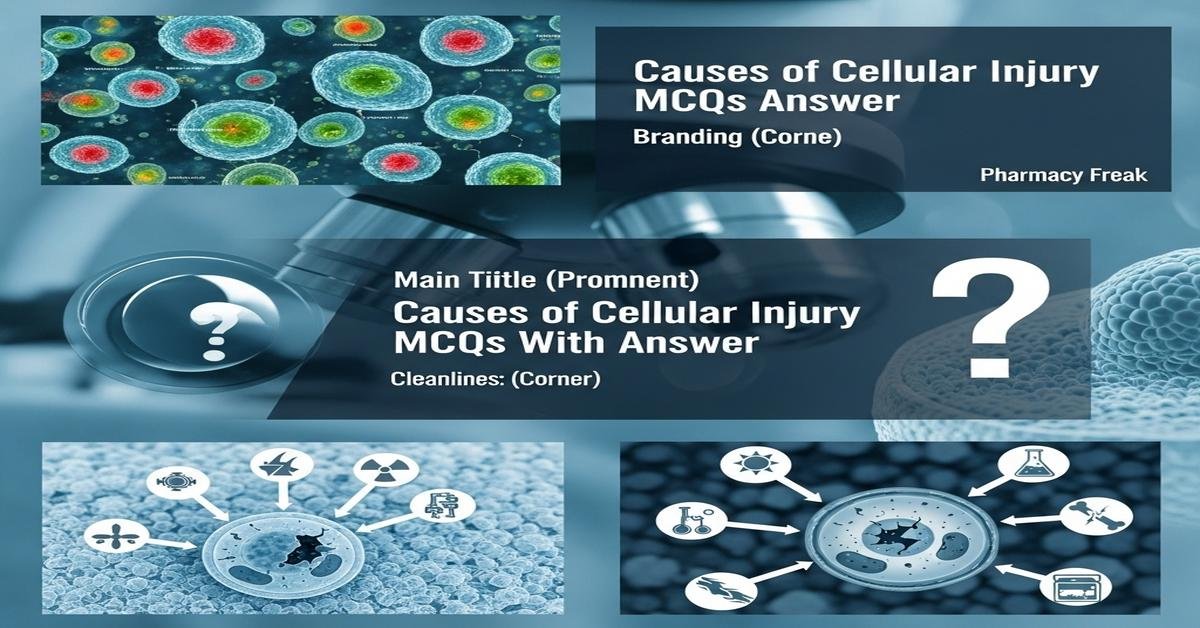
Understanding the causes of cellular injury is essential for B. Pharm students preparing for pharmacology and pathology exams. This concise, Student-friendly post covers key mechanisms such as hypoxia, oxidative stress, chemical toxins, infections, immune reactions, and genetic or nutritional imbalances that lead to cell damage. It highlights important drug-related examples like acetaminophen toxicity, P450-mediated free radical formation, and reperfusion injury, and emphasizes cellular processes—ATP depletion, calcium influx, mitochondrial dysfunction, and membrane damage—central to pathogenesis. These causes of cellular injury MCQs with answer are tailored to bolster clinical reasoning and exam readiness. Now let’s test your knowledge with 50 MCQs on this topic.
Q1. Which of the following is the primary biochemical event in hypoxic cellular injury?
- Increased reactive oxygen species generation
- ATP depletion
- Protein misfolding
- Excessive autophagy
Correct Answer: ATP depletion
Q2. Reperfusion injury following ischemia is mainly due to which mechanism?
- Decreased intracellular calcium
- Sudden loss of ATP synthesis
- Massive generation of reactive oxygen species
- Activation of DNA repair enzymes
Correct Answer: Massive generation of reactive oxygen species
Q3. Which enzyme system is most important in detoxifying superoxide radicals in cells?
- Catalase
- Glutathione peroxidase
- Superoxide dismutase
- Cytochrome P450
Correct Answer: Superoxide dismutase
Q4. Which cellular ion overload is a key mediator of irreversible cell injury?
- Sodium
- Potassium
- Magnesium
- Calcium
Correct Answer: Calcium
Q5. Acetaminophen hepatotoxicity is primarily due to:
- Direct inhibition of mitochondrial DNA synthesis
- Formation of a reactive metabolite NAPQI that depletes glutathione
- Immune-mediated hepatitis via autoantibodies
- Cholestatic obstruction of bile flow
Correct Answer: Formation of a reactive metabolite NAPQI that depletes glutathione
Q6. Which type of necrosis is most characteristic of ischemic infarction in solid organs (e.g., kidney, heart)?
- Liquefactive necrosis
- Coagulative necrosis
- Caseous necrosis
- Fat necrosis
Correct Answer: Coagulative necrosis
Q7. Free radical generation by cytochrome P450 often occurs during metabolism of:
- Water-soluble drugs only
- Endogenous hormones exclusively
- Pro-carcinogens and certain xenobiotics
- Non-metabolized inert compounds
Correct Answer: Pro-carcinogens and certain xenobiotics
Q8. The mitochondrial permeability transition pore opening leads to which consequence?
- Enhanced ATP synthesis
- Loss of membrane potential and cell death
- Decreased ROS production
- Activation of DNA replication
Correct Answer: Loss of membrane potential and cell death
Q9. Which of the following is a hallmark of irreversible cell injury?
- Cellular swelling with pallor
- Reversible chromatin clumping
- Rupture of lysosomal and plasma membranes
- Glycogen depletion only
Correct Answer: Rupture of lysosomal and plasma membranes
Q10. Oxidative stress contributes to cellular injury by:
- Stabilizing mitochondrial membranes
- Causing lipid peroxidation, protein oxidation, and DNA damage
- Increasing cellular glutathione levels
- Enhancing protein folding capacity
Correct Answer: Causing lipid peroxidation, protein oxidation, and DNA damage
Q11. Which nutrient deficiency is classically linked to cellular injury due to impaired oxidative phosphorylation?
- Vitamin C deficiency
- Iron deficiency affecting cytochromes
- Folate deficiency only
- Vitamin B12 excess
Correct Answer: Iron deficiency affecting cytochromes
Q12. Cyanide causes cellular injury primarily by:
- Blocking sodium channels
- Inhibiting cytochrome c oxidase and halting oxidative phosphorylation
- Activating proteases that digest mitochondria
- Stimulating excessive ATP production
Correct Answer: Inhibiting cytochrome c oxidase and halting oxidative phosphorylation
Q13. Endoplasmic reticulum stress in cells often leads to injury through:
- Excessive DNA repair
- Unfolded protein response and potential apoptosis if unresolved
- Reduced protein synthesis only without consequences
- Hyperactivation of glycolysis
Correct Answer: Unfolded protein response and potential apoptosis if unresolved
Q14. Which of the following is an example of a physical cause of cellular injury?
- Ethanol intoxication
- Ionizing radiation
- Bacterial exotoxins
- Autoantibodies
Correct Answer: Ionizing radiation
Q15. Fat necrosis typically results from injury to which tissue type?
- Neural tissue
- Adipose tissue due to pancreatic lipase or trauma
- Hematopoietic tissue
- Cardiac muscle exclusively
Correct Answer: Adipose tissue due to pancreatic lipase or trauma
Q16. Which cellular defense mechanism specifically detoxifies hydrogen peroxide?
- Catalase
- Superoxide dismutase
- NADPH oxidase
- Monoamine oxidase
Correct Answer: Catalase
Q17. Which of the following best describes apoptosis in contrast to necrosis?
- Apoptosis causes cell swelling and inflammation
- Apoptosis is an energy-independent accidental death
- Apoptosis is programmed cell death with membrane integrity preserved and minimal inflammation
- Apoptosis always leads to calcification
Correct Answer: Apoptosis is programmed cell death with membrane integrity preserved and minimal inflammation
Q18. Metallic poisoning by lead primarily causes cellular injury by interfering with:
- Lipid bilayer fluidity only
- Enzymes involved in heme synthesis and calcium signaling
- Sodium-potassium ATPase exclusively
- Vesicular transport in hepatocytes only
Correct Answer: Enzymes involved in heme synthesis and calcium signaling
Q19. Which of these is a mechanism by which ethanol damages hepatocytes?
- Direct DNA crosslinking like alkylating agents
- Generation of acetaldehyde leading to protein adducts and oxidative stress
- Inhibition of lipase causing fat accumulation only
- Exclusive activation of anti-apoptotic pathways
Correct Answer: Generation of acetaldehyde leading to protein adducts and oxidative stress
Q20. Which laboratory marker is most sensitive for recent myocardial cell necrosis?
- Alkaline phosphatase
- Troponin I
- Alanine transaminase
- Total bilirubin
Correct Answer: Troponin I
Q21. Chronic oxidative stress in cells often results in accumulation of which pigment?
- Melanin exclusively
- Lipofuscin, a wear-and-tear pigment
- Hemosiderin only
- Biliverdin accumulation
Correct Answer: Lipofuscin, a wear-and-tear pigment
Q22. Which process describes cell adaptation to persistent sublethal stress by increasing cell size?
- Atrophy
- Metaplasia
- Hypertrophy
- Dysplasia
Correct Answer: Hypertrophy
Q23. Which of the following drugs can cause centrilobular hepatic necrosis in overdose?
- Amoxicillin
- Acetaminophen (paracetamol)
- Insulin
- Metformin
Correct Answer: Acetaminophen (paracetamol)
Q24. Membrane lipid peroxidation primarily damages cells by:
- Enhancing glycogen storage
- Producing aldehyde products that disrupt membrane integrity
- Increasing cholesterol synthesis to stabilize membranes
- Stimulating DNA methylation only
Correct Answer: Producing aldehyde products that disrupt membrane integrity
Q25. Which intracellular organelle is central to initiation of apoptosis via cytochrome c release?
- Lysosome
- Mitochondrion
- Golgi apparatus
- Peroxisome
Correct Answer: Mitochondrion
Q26. Which of the following is a common outcome of severe ATP depletion in cells?
- Increased protein synthesis
- Failure of Na+/K+ ATPase and cellular swelling
- Enhanced oxidative phosphorylation
- Stabilization of cytoskeletal elements
Correct Answer: Failure of Na+/K+ ATPase and cellular swelling
Q27. Chronic exposure to asbestos fibers primarily injures cells by:
- Inducing free radical formation and chronic inflammation leading to fibrosis
- Blocking glycolysis
- Directly crosslinking DNA like alkylators
- Inhibiting all protein synthesis
Correct Answer: Inducing free radical formation and chronic inflammation leading to fibrosis
Q28. Which of the following best describes caseous necrosis?
- Coagulative pattern with ghost outlines of cells
- Cheesy, granular debris typical of tuberculosis
- Enzymatic fat saponification only
- Complete preservation of tissue architecture
Correct Answer: Cheesy, granular debris typical of tuberculosis
Q29. Lipid peroxidation in membranes is most likely to be initiated by which radical?
- Hydrogen peroxide (H2O2) directly
- Hydroxyl radical (•OH)
- Water molecule (H2O)
- Oxygen molecule in ground state (O2)
Correct Answer: Hydroxyl radical (•OH)
Q30. Which antioxidant is a critical intracellular thiol that detoxifies reactive intermediates and is depleted in acetaminophen toxicity?
- Vitamin C
- Glutathione (GSH)
- Vitamin E
- Uric acid
Correct Answer: Glutathione (GSH)
Q31. Which mechanism best explains cell injury from bacterial exotoxins like diphtheria toxin?
- Formation of free radicals in mitochondria
- Inhibition of protein synthesis via ADP-ribosylation of elongation factor
- Physical disruption of membrane lipid bilayers only
- Activation of glutathione synthesis leading to cell death
Correct Answer: Inhibition of protein synthesis via ADP-ribosylation of elongation factor
Q32. Which is the primary mechanism of cell death in acute ischemic stroke brain tissue?
- Coagulative necrosis similar to heart
- Liquefactive necrosis due to enzymatic digestion
- Fat necrosis of neurons
- Caseous necrosis from infection
Correct Answer: Liquefactive necrosis due to enzymatic digestion
Q33. Which cellular change is typically reversible if the injurious stimulus is removed early?
- Nuclear pyknosis and karyolysis
- Cellular swelling (hydropic change)
- Complete rupture of plasma membrane
- Massive mitochondrial rupture
Correct Answer: Cellular swelling (hydropic change)
Q34. Which enzyme family generates reactive oxygen species as part of host defense and can contribute to tissue injury in inflammation?
- Caspases
- NADPH oxidase in phagocytes
- Proteasomes
- DNA polymerases
Correct Answer: NADPH oxidase in phagocytes
Q35. Which genetic defect leads to accumulation of misfolded proteins in the ER and can cause cellular injury?
- Alpha-1 antitrypsin Z allele causing misfolded protein in hepatocytes
- Sickle cell mutation preventing any protein misfolding
- CFTR gain-of-function mutation reducing ER stress
- Huntingtin normal allele promoting correct folding
Correct Answer: Alpha-1 antitrypsin Z allele causing misfolded protein in hepatocytes
Q36. Which laboratory test increases earliest after muscle necrosis due to trauma?
- Serum creatine kinase (CK)
- Alkaline phosphatase
- Serum amylase
- Serum albumin
Correct Answer: Serum creatine kinase (CK)
Q37. In oxidative stress, what role does glutathione peroxidase primarily play?
- Converting superoxide to hydrogen peroxide
- Reducing hydrogen peroxide to water using glutathione
- Generating hydroxyl radicals from H2O2
- Directly repairing oxidized DNA bases
Correct Answer: Reducing hydrogen peroxide to water using glutathione
Q38. Which of the following drugs can cause free radical-mediated lipid peroxidation in the liver through P450 activation?
- Acetaminophen in overdose
- Insulin
- Penicillin V
- Metformin
Correct Answer: Acetaminophen in overdose
Q39. Which phenomenon describes replacement of one differentiated cell type by another better suited to chronic stress?
- Atrophy
- Hypertrophy
- Metaplasia
- Oncosis
Correct Answer: Metaplasia
Q40. Which of the following is characteristic of fibrinoid necrosis?
- Deposition of fibrin-like protein in vessel walls often due to immune-mediated damage
- Common in brain infarcts only
- Occurs exclusively in fat tissue after trauma
- Is a form of apoptosis
Correct Answer: Deposition of fibrin-like protein in vessel walls often due to immune-mediated damage
Q41. Which intracellular pathway is activated by DNA damage and can lead to apoptosis via p53?
- MAP kinase pathway only for growth signals
- p53-mediated transcriptional activation of pro-apoptotic genes
- Glycolytic pathway increase
- Na+/K+ ATPase activation
Correct Answer: p53-mediated transcriptional activation of pro-apoptotic genes
Q42. Which of the following is a common cause of cellular hypoxia without reduced blood flow?
- Carbon monoxide poisoning impairing oxygen delivery by hemoglobin
- Dehydration only
- Excess oxygen in tissues
- Hyperbaric oxygen therapy
Correct Answer: Carbon monoxide poisoning impairing oxygen delivery by hemoglobin
Q43. Which cellular organelle mediates autophagy as a survival attempt during nutrient deprivation?
- Golgi apparatus
- Autophagosome formation and lysosomes
- Ribosomes only
- Endoplasmic reticulum exclusively
Correct Answer: Autophagosome formation and lysosomes
Q44. Which drug class commonly causes oxidative hemolysis in G6PD-deficient patients leading to cellular injury of red cells?
- Beta-blockers
- Sulfonamides and certain antimalarials
- ACE inhibitors
- Statins
Correct Answer: Sulfonamides and certain antimalarials
Q45. Which of the following is NOT a typical mechanism of toxin-mediated cellular injury?
- Inhibition of protein synthesis
- Direct DNA alkylation causing mutations
- Enhancement of adaptive regenerative pathways without harm
- Disruption of membrane integrity
Correct Answer: Enhancement of adaptive regenerative pathways without harm
Q46. Which process contributes to cell death in ischemic injury by activating phospholipases, proteases, and endonucleases?
- Intracellular potassium depletion
- Calcium overload activating degradative enzymes
- Reduced NADPH oxidase activity
- Decreased intracellular sodium only
Correct Answer: Calcium overload activating degradative enzymes
Q47. Which marker is most useful to detect pancreatic acinar cell injury?
- Serum lipase
- Serum troponin
- Serum creatinine
- Serum alkaline phosphatase
Correct Answer: Serum lipase
Q48. Which of the following is an adaptive change that decreases cell size and metabolic demand?
- Hypertrophy
- Hyperplasia
- Atrophy
- Neoplasia
Correct Answer: Atrophy
Q49. Which reactive oxygen species is produced by superoxide dismutase activity converting superoxide?
- Hydroxyl radical
- Hydrogen peroxide (H2O2)
- Nitric oxide
- Peroxynitrite only
Correct Answer: Hydrogen peroxide (H2O2)
Q50. In toxicology, bioactivation refers to:
- Detoxification of xenobiotics to harmless metabolites
- Conversion of an inert substance into a reactive, often harmful metabolite by metabolic enzymes
- Excretion of parent drug unchanged
- Inhibition of cytochrome P450 to prevent metabolism
Correct Answer: Conversion of an inert substance into a reactive, often harmful metabolite by metabolic enzymes

