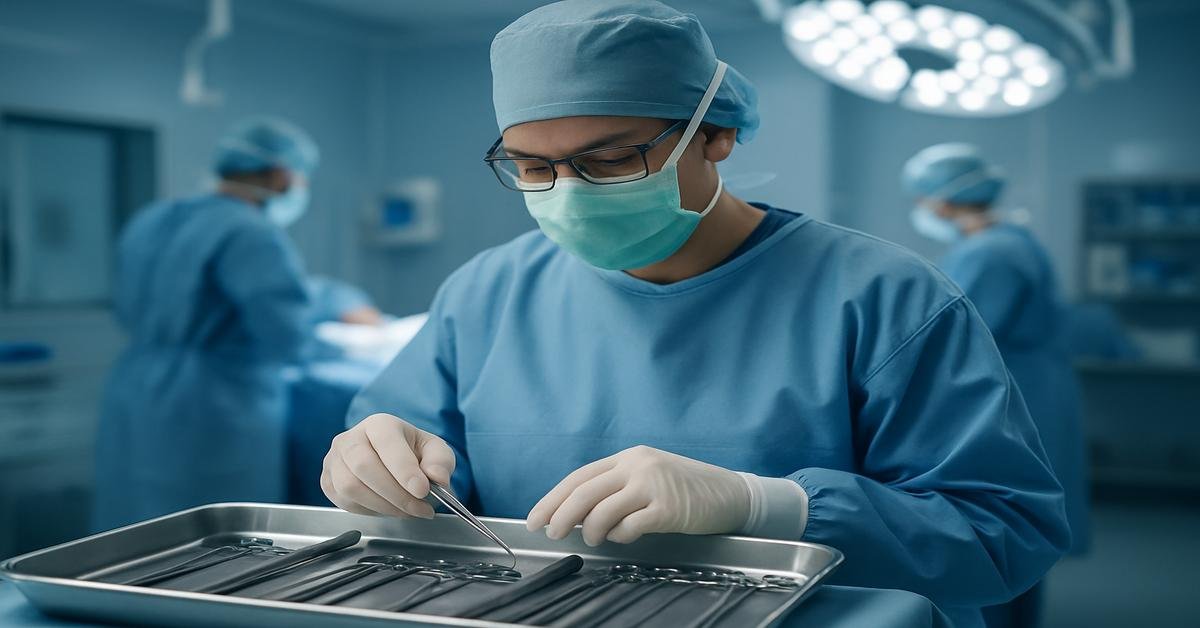
In every operating room, patient safety depends on thousands of small details going right. One of the most important is also one of the least visible: the condition, handling, and readiness of surgical instruments. That is where a Certified Instrument Specialist, often called a CIS specialist, plays a critical role. These professionals help make sure instruments are clean, functional, correctly assembled, and available when the surgical team needs them. Their work affects infection prevention, surgical efficiency, and the ability of surgeons to perform safely. That is why the conversation about CIS specialist salary is not just about pay. It is about the value of a highly skilled role that protects patients and supports the entire operating room.
What a CIS specialist actually does
A Certified Instrument Specialist is a sterile processing professional with advanced knowledge of surgical instruments. The certification shows that the person understands how to identify, inspect, test, assemble, and manage a wide range of instruments used in surgery.
This job is much more technical than many people realize. A CIS specialist does not simply wash tools and send them back to the operating room. They must understand:
- How different instruments are designed and what each one is used for
- How to inspect instruments for wear, cracks, corrosion, pitting, or misalignment
- How to test instrument function before a case
- How to assemble trays accurately for specific procedures
- How cleaning and sterilization methods affect different materials
- How instrument quality can affect surgical outcomes
For example, a clamp that does not close correctly can fail during surgery. A dull scissor can damage tissue instead of cutting cleanly. A missing instrument can delay a case while the patient is already under anesthesia. These are not minor inconveniences. They are real patient safety risks. The CIS specialist helps prevent them before the case begins.
Why certification matters in the operating room
Not every sterile processing technician is a Certified Instrument Specialist. The CIS credential shows deeper expertise in instrument-based work. That matters because modern surgical instruments are increasingly specialized, delicate, and expensive. Many are designed for very specific procedures such as orthopedic, cardiovascular, robotic, laparoscopic, or neurosurgical cases.
Certification matters for a simple reason: the margin for error is small. A trained specialist is more likely to catch problems that others may miss.
Consider a few examples:
- A laparoscopic instrument may look intact but have insulation damage that creates a burn risk for the patient.
- A powered orthopedic device may be assembled incorrectly, which can slow down or interrupt surgery.
- A delicate microsurgical instrument may be processed using the wrong method, shortening its usable life or affecting performance.
In each case, the CIS specialist adds value by understanding both the instrument and the clinical consequences of getting it wrong. This is why many hospitals view certification as more than a résumé detail. It is a quality and safety measure.
How a CIS specialist supports patient safety
The strongest case for this role is patient safety. The operating room is a high-risk environment. Patients are vulnerable. They are often under anesthesia, exposed to invasive procedures, and dependent on the surgical team to work without delays or preventable problems.
A CIS specialist supports safety in several direct ways.
Instrument integrity
Every instrument must function as intended. If a retractor slips, a forceps tip is bent, or a punch is dull, the surgeon may not be able to work precisely. Precision matters because even small problems can affect tissue handling, bleeding control, and procedure time.
Sterility assurance
Instruments must be clean before they can be sterile. Complex devices with hinges, channels, or detachable parts need special attention. If debris remains, sterilization may be compromised. The CIS specialist understands how design affects cleaning and why proper inspection is essential.
Correct tray assembly
The right instruments must be in the room, in working order, and arranged correctly. Missing or incorrect items can lead to delays, rushed substitutions, and unnecessary stress for the surgical team.
Reduced surgical delays
Time matters in the OR. A delayed case can increase anesthesia time, disrupt scheduling, and create pressure that raises the chance of mistakes. Reliable instrument processing helps cases start and proceed as planned.
Lower risk of preventable harm
Many instrument-related problems are preventable. A skilled specialist acts as an early checkpoint. They find defects before the patient is on the table.
This work often happens behind the scenes, but its impact is direct. Safe surgery depends on safe instruments.
Why CIS specialist salary reflects more than technical labor
When people discuss CIS specialist salary, they sometimes underestimate the role because it takes place outside the spotlight of the operating room. That is a mistake. Salary reflects the level of skill, responsibility, and risk tied to the position.
A CIS specialist is responsible for instruments that may cost thousands of dollars each and that are used in high-stakes procedures. The role combines technical knowledge, attention to detail, process discipline, and clinical awareness. It also requires consistency. One excellent day is not enough. The standard has to be met every day, tray after tray, case after case.
That is one reason employers often pay more for certified specialists than for general sterile processing roles. Certification signals specialized competence. It can reduce errors, improve workflow, protect instrument inventory, and support surgical quality. Those outcomes have financial value for hospitals and surgery centers.
In practical terms, salary may be influenced by:
- Certification status and additional credentials
- Years of experience with surgical instruments
- Knowledge of specialty service lines such as orthopedics or robotics
- Hospital size and case complexity
- Geographic location and local labor market demand
- Shift differentials, overtime, and on-call expectations
A specialist who can manage complex instrument sets for trauma, spine, or robotic surgery usually brings more value than someone with only basic exposure. That added value often shows up in compensation.
Typical salary drivers for CIS specialists
There is no single salary number that applies everywhere. Pay varies widely by region, employer, and skill level. Still, the main salary drivers are fairly consistent.
Experience
Experience improves judgment. An experienced CIS specialist is faster at identifying defects, more accurate with tray assembly, and better at handling unusual instruments. They also tend to need less supervision.
Specialty knowledge
Some service lines are more demanding. Instruments used in cardiovascular, neurosurgical, and robotic procedures often require deeper knowledge and more careful handling. Specialists who can support these areas are often more valuable to employers.
Certification and continuing education
Healthcare changes constantly. New devices, updated manufacturer instructions, and evolving standards all affect instrument processing. Professionals who stay current are better equipped to reduce errors and support compliance.
Work setting
A large hospital trauma center does not operate like a small outpatient surgery center. Higher-acuity settings usually involve more instrument volume, more complex sets, and greater time pressure. Those demands can influence pay.
Leadership responsibilities
Some CIS specialists train staff, manage quality checks, or help with inventory decisions. When the role includes leadership or problem-solving beyond routine processing, compensation may increase.
The hidden cost of not having a certified instrument specialist
One of the clearest ways to understand the value of this role is to look at what happens when the expertise is missing.
Without a strong instrument specialist, facilities may see:
- More damaged instruments reaching the OR
- More case delays caused by incomplete or incorrect trays
- Higher repair and replacement costs
- Inconsistent inspection practices
- Greater risk of sterilization failures linked to poor cleaning or assembly
- Frustration among surgeons and OR staff
These problems are expensive. A delayed surgery affects staffing, room scheduling, surgeon time, and patient flow. A damaged instrument can interrupt a case or require emergency replacement. Replacing specialty instruments can cost far more than investing in qualified staff who protect them properly.
More importantly, poor instrument management can put patients at risk. That is the cost no facility should accept.
How the role improves operating room efficiency
Patient safety is the top reason every operating room needs a CIS specialist, but efficiency is a close second. Safe care and efficient care are often linked. When instruments are correct, functional, and ready to use, the whole OR runs better.
A CIS specialist improves efficiency by:
- Standardizing tray assembly so teams know what to expect
- Reducing last-minute instrument searches
- Catching damaged items before they disrupt a case
- Helping maintain accurate count sheets and set configurations
- Supporting better communication between sterile processing and the OR
This matters because the operating room is one of the most expensive environments in a hospital. Even small delays have ripple effects. If a specialist prevents repeated five- or ten-minute delays across multiple cases, that savings adds up quickly. Salary should be viewed in that larger operational context.
Why surgeons and OR teams rely on this expertise
Surgeons need confidence in their instruments. During surgery, they should be focused on the patient, not wondering whether a scissors will cut properly or whether a drill attachment was assembled the right way.
OR nurses and surgical technologists also rely on accurate, functional sets. If the tray is incomplete or unfamiliar, they must troubleshoot under pressure. That increases stress and distracts from patient care.
A skilled CIS specialist gives the entire team a stronger foundation. Their work builds trust. When the OR team knows that trays are prepared by someone with advanced instrument knowledge, they can work more smoothly and with fewer interruptions.
This trust is earned through consistent performance. That is another reason salary should match the role’s importance. The specialist is not only processing instruments. They are supporting clinical confidence.
Career value and long-term demand
The demand for professionals with strong sterile processing and instrument expertise is likely to remain steady. Surgical procedures continue to grow in complexity. Instruments continue to become more specialized. Hospitals also face constant pressure to improve quality, reduce infection risk, and avoid preventable delays.
That environment favors people with verified skill. For workers in sterile processing, earning the CIS credential can strengthen career prospects because it shows commitment to a difficult and important area of practice.
It can also open the door to broader opportunities, such as:
- Lead instrument specialist roles
- Quality assurance responsibilities
- Education and staff training positions
- Specialty service line support
- Supervisory or management advancement
So while salary matters in the short term, certification can also increase long-term career stability and growth.
What employers should understand about CIS specialist salary
Employers sometimes struggle with staffing in sterile processing because the work is underestimated. If they treat the role as basic support work, they may offer pay that does not reflect the skill required. That can lead to turnover, understaffing, and avoidable quality issues.
A better approach is to see salary as part of a risk management and quality strategy. Paying competitively for certified specialists can help facilities:
- Attract stronger candidates
- Retain experienced staff
- Reduce instrument-related errors
- Protect expensive surgical inventory
- Support smoother OR operations
- Strengthen patient safety systems
In other words, fair compensation is not just a staffing expense. It is an operational safeguard.
Final thought
The discussion around CIS specialist salary should start with one simple fact: surgical instruments are critical to safe patient care, and managing them well requires real expertise. A Certified Instrument Specialist helps ensure that instruments are clean, functional, complete, and ready for use in the moments that matter most. That work reduces risk, supports surgeons, improves OR efficiency, and protects patients from preventable harm.
Every operating room needs that level of skill. Not because it sounds impressive, but because safe surgery depends on it. When hospitals recognize the true value of the role, salary becomes easier to understand. They are not just paying for a task. They are investing in precision, reliability, and patient safety.

