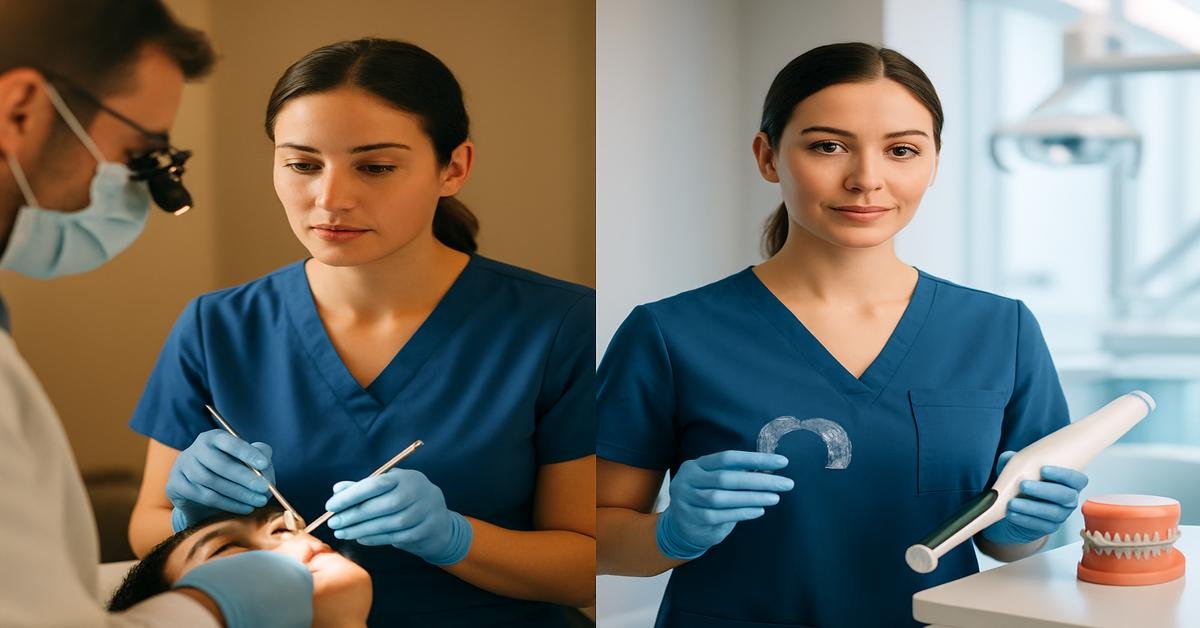
Many dental assistants start in general dentistry because that is where most openings are. It is a solid place to learn chairside flow, patient communication, infection control, and the pace of a busy practice. But for many people, it is not the final stop. Orthodontics offers a clearer specialty track, more technical skill-building, and often better pay. If you are a Certified Orthodontic Assistant, or working toward that path, the move from general assisting to orthodontics can be one of the smartest career steps you make. The key is to treat it like a roadmap, not a lucky break. You need the right clinical habits, the right timing, and a clear understanding of what orthodontic practices actually value.
Why orthodontics is a strong next step for general dental assistants
Orthodontics is different from general dentistry in both workflow and business model. In a general office, the day may include fillings, crowns, hygiene checks, emergencies, and insurance questions all mixed together. In an orthodontic office, the work is more specialized and more repeatable. That matters because repeatable systems create room for assistants to become highly efficient and highly skilled.
That efficiency can translate into better pay. A specialist practice often depends heavily on assistants to keep patients moving, maintain treatment schedules, prepare materials, and support the orthodontist across many short appointments. When an assistant can handle bracket placement support, wire changes, patient education, records, and tray workflow smoothly, that person becomes very valuable to the practice.
Orthodontics also tends to reward precision and consistency. Small mistakes can affect treatment progress. A loose bracket, poor patient instruction, or incomplete chart note can create delays that ripple through weeks of care. Practices are willing to pay more for assistants who reduce those problems.
Another reason orthodontics appeals to many assistants is predictability. The schedule is often more structured than a general office. You may still have busy days, but the procedures are usually more standardized. For some people, that means less chaos and more confidence.
What “high-paying” really means in this career path
A high-paying orthodontic assisting role does not come from the job title alone. It comes from a mix of factors:
- Specialized skills: The more tasks you can do well and legally within your state’s rules, the more useful you are.
- Speed with accuracy: Practices need assistants who can keep up without cutting corners.
- Patient experience: Orthodontic patients come back many times. If you build trust and explain things clearly, retention improves.
- Reliability: A specialty office runs on timing. Showing up prepared, documenting properly, and staying organized matters.
- Credentials: Certification does not replace skill, but it strengthens your resume and can justify higher compensation.
- Leadership value: Training newer assistants, managing inventory, handling lab cases, or overseeing records can push you into a better pay band.
Pay also depends on location, state regulations, and the type of practice. A busy private orthodontic office, a multi-location specialty group, and a pediatric-orthodontic combo practice may all pay differently. In many cases, the best-paid assistants are not just “good clinically.” They improve the whole system around them.
Start by building the right base in general dentistry
If you are still in general assisting, do not think of that time as unrelated experience. It is your base layer. But you should be intentional about what you learn there.
Focus first on the skills that transfer well into orthodontics:
- Strong infection control habits: Orthodontic offices move quickly. Sterilization mistakes become bigger in a high-volume setting.
- Clear charting: Treatment progress depends on accurate records.
- Impressions, scans, and records: Many orthodontic cases rely on high-quality models, photos, and digital scans.
- Patient communication: You must explain home care, appliance care, and what to expect after adjustments.
- Tray setup and room turnover: Fast, organized setup is a core skill in specialty practice.
- Calm chairside support: Many orthodontic patients are children and teens. A calm assistant helps the whole appointment go better.
It also helps to understand occlusion, tooth numbering, common dental terminology, and how treatment plans are communicated. Even if orthodontics uses different tools and goals, a solid dental foundation makes advanced training easier.
Learn what changes when you move into orthodontics
The jump into orthodontics is not just a new office with new instruments. It is a different way of thinking about treatment.
In general dentistry, the goal is often to fix an immediate problem: decay, fracture, pain, or missing structure. In orthodontics, treatment is progressive. Every visit is part of a longer plan. You are not just helping with today’s task. You are helping move teeth safely and predictably over time.
That means you need to become comfortable with areas such as:
- Orthodontic records: Photos, radiographs, scans, and models must be complete and consistent because they guide treatment decisions.
- Appliances: Fixed braces, clear aligners, expanders, retainers, elastics, separators, and other devices each come with specific care instructions.
- Bracket and wire systems: You do not need to be an orthodontist, but you do need to understand what you are handling and why.
- Treatment staging: Appointments build on each other. If something is missed, the next stage may not work as planned.
- Compliance coaching: Patients who do not wear elastics or aligners as instructed can lose progress. Assistants often do the most day-to-day coaching.
This is one reason orthodontic assistants can earn more. They are not just setting up instruments. They are helping maintain the treatment engine of the practice.
Use certification and formal training strategically
If you want to move into a better-paying specialty role, formal training matters. Certification helps show that you are serious, prepared, and committed to the field. It can also help when you are competing against assistants who already have orthodontic experience.
But certification works best when you use it strategically. Do not treat it as a magic ticket. Treat it as proof that supports real skill.
A smart approach looks like this:
- Check your state requirements: Orthodontic assisting duties vary by state. Know what you can do legally and what credentials are recognized.
- Choose training that includes hands-on components: Employers care about practical ability, not just classroom time.
- Keep records of competencies: If you learn digital scanning, model trimming, patient photography, retainer delivery support, or bracket-related tasks, document it.
- Maintain continuing education: The field changes. Digital workflows, aligners, and practice systems evolve quickly.
When you interview, certification is stronger if you can tie it to examples. For instance, instead of saying, “I completed orthodontic training,” say, “My training included patient records, appliance support, and digital scan workflow, and I have already used those skills in a fast-paced office setting.”
Get orthodontic exposure before you fully switch
One of the best ways to move into orthodontics is to get some exposure before applying for full-time specialty roles. This lowers the risk for both you and the employer.
You can do that in practical ways:
- Cross-train in a multi-specialty practice: If your office includes orthodontics, ask to observe or assist with records and simple workflows.
- Take temporary or part-time shifts: Even limited experience in an orthodontic office helps your resume.
- Shadow with purpose: Do not just watch. Pay attention to appointment timing, room setup, charting style, and patient instructions.
- Volunteer for tasks that overlap: Digital imaging, sterilization systems, inventory control, and patient scheduling all matter in orthodontics.
The goal is to be able to say, honestly, that you understand the environment. Employers prefer assistants who know that orthodontics is repetitive in some ways, fast-moving in others, and heavily dependent on patient cooperation.
Develop the skills orthodontic employers actually pay for
Not every skill increases your value equally. If you want a higher-paying orthodontic role, focus on the abilities that directly improve production, patient flow, and treatment quality.
These usually include:
- Digital workflow confidence: Intraoral scanning, patient photos, chart input, and software accuracy save time and reduce errors.
- Excellent patient education: If patients understand elastic wear, aligner use, hygiene, and breakage prevention, treatment stays on track.
- Fast, clean operatory turnover: Small delays repeated all day hurt the schedule.
- Observation skills: You should notice loose brackets, poor hygiene, tissue irritation, broken appliances, or signs that a patient is not following instructions.
- Professional communication: Orthodontic assistants often repeat key instructions many times each day. You need patience without sounding robotic.
- Team coordination: Front desk, clinical team, lab processes, and provider notes all need to connect smoothly.
For example, imagine two assistants. One is friendly and dependable. The other is friendly and dependable, but also takes excellent scans, catches appliance issues early, gives clear hygiene coaching, and keeps the schedule moving on time. The second assistant usually has more leverage when discussing pay.
Make yourself stand out in the hiring process
When you apply for orthodontic jobs, your resume should show more than generic assisting duties. Specialty offices want signs that you can adapt to their exact workflow.
Good resume points include things like:
- Experience with digital impressions or intraoral scanning
- Patient records, photography, and chart accuracy
- High-volume appointment flow
- Pediatric and teen patient communication
- Sterilization compliance and efficient room turnover
- Training new staff or helping standardize procedures
In interviews, be ready to explain why you want orthodontics specifically. A weak answer is, “I just want something different.” A stronger answer is, “I like structured treatment, patient follow-up over time, and the technical side of specialty care. I also enjoy educating patients, which matters a lot in orthodontics because results depend on daily habits.”
That answer shows you understand the field, not just the paycheck.
Negotiate pay based on value, not hope
Many assistants undersell themselves because they ask for more money without showing the reason. In orthodontics, a better approach is to connect your pay request to measurable value.
You might point to:
- Specialty certification or orthodontic training
- Experience in fast-paced clinical settings
- Skill with digital systems that reduce remakes or delays
- Strong patient retention support through education and communication
- Low error rates and strong reliability
- Ability to train others or take on lead assistant duties
Be practical. Ask what duties are included in the role. A job that includes inventory management, lab coordination, training, or expanded clinical responsibilities should be paid differently than a basic assisting role. Also ask about benefits, bonus structures, continuing education support, and review timelines. Sometimes the best total package is not the highest hourly number on day one.
Think beyond the first orthodontic job
Your first orthodontic position may not be your highest-paying one. It may simply be the role that gives you the specialty experience needed to move up. That is normal.
The smart move is to build a two-stage plan:
- Stage one: Enter orthodontics, learn the systems, strengthen your technical skills, and prove reliability.
- Stage two: Use that experience to move into a stronger-paying office, a lead role, or a larger specialty group with more responsibility.
This keeps you from getting discouraged if your first offer is only a modest increase over general dentistry. Specialty experience has compounding value. After a year or two of solid orthodontic work, you become much more competitive.
You can also grow sideways, not just upward. Some orthodontic assistants expand into treatment coordination, clinical leadership, training, records management, or specialty office operations. Those roles can raise earnings because they combine clinical knowledge with organizational skill.
Common mistakes that slow down the transition
There are a few patterns that often hold assistants back:
- Assuming general experience automatically translates: It helps, but you still need specialty-specific knowledge.
- Focusing only on certification: Employers hire for performance, not paperwork alone.
- Ignoring state scope-of-practice rules: This can create legal and hiring problems.
- Undervaluing communication skills: In orthodontics, patient compliance affects results. Communication is part of treatment success.
- Expecting immediate top pay: High pay usually follows proven specialty value, not just interest in the field.
If you avoid these mistakes, your path becomes much clearer.
A practical roadmap you can follow
If you want a simple sequence, here it is:
- Build strong fundamentals in general assisting. Focus on charting, records, patient communication, and efficiency.
- Learn your state’s orthodontic assisting rules. Know what training or credentials matter.
- Pursue orthodontic education or certification. Choose practical, recognized training.
- Get some real exposure. Cross-train, shadow, or take limited orthodontic shifts if possible.
- Strengthen high-value skills. Digital workflow, patient coaching, speed, and organization matter most.
- Apply strategically. Target offices where you can learn quickly and contribute right away.
- Track your impact. Keep note of responsibilities, new skills, and ways you support efficiency.
- Negotiate from evidence. Ask for compensation that matches the value you bring.
- Keep advancing. Look for lead duties, specialty systems knowledge, and long-term growth.
Moving from general assisting to orthodontics is not just a title change. It is a shift into a specialty where precision, consistency, and patient guidance carry real weight. For the right assistant, that creates a strong path to higher pay and more defined career growth. If you approach the transition with a plan, build the right technical habits, and learn how orthodontic practices operate, you can move from being broadly useful to being truly specialized. And in dental careers, specialization is often where the best opportunities begin.

