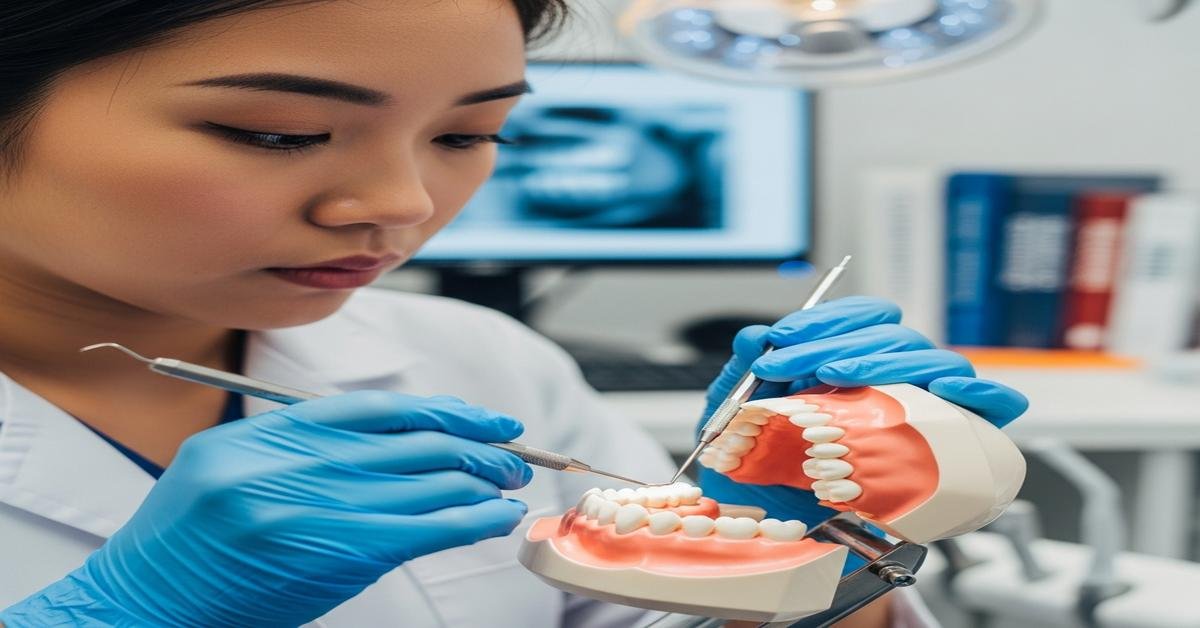
The path from dental school to a license and residency is clearer in 2026 than it used to be—but it still has moving parts. You’ll face the INBDE, a clinical licensure exam (or a PGY-1 residency in some states), state-specific requirements, and, if you want advanced training, the residency application cycle. This guide explains each step, why it matters, and how to make decisions that fit your goals and timeline.
What the INBDE Is and Why It Matters in 2026
The Integrated National Board Dental Examination (INBDE) is the national knowledge exam for dentists in the United States. It replaced NBDE Part I and II. Most state boards require a passing INBDE result for initial licensure because it demonstrates you can apply biomedical, behavioral, and clinical science to patient care.
Unlike the old two-exam model, the INBDE is integrated by design. Questions blend the “why” (pathophysiology, pharmacology, ethics) with the “what” (diagnosis, procedures, patient management). This matters because it tests real-world reasoning—how you decide what to do next for a specific patient and why.
Bottom line: passing the INBDE is usually step one on your licensing checklist, and many residency programs also expect it before you matriculate.
Who Is Eligible and When to Take It
You can sit for the INBDE if you’re:
- A D3/D4 student or a graduate of a CODA-accredited U.S. or Canadian dental school.
- An international dentist applying to a U.S. advanced standing (DDS/DMD) program if that program requires INBDE for admission or progression.
Most U.S. students take the INBDE late D3 or early-to-mid D4. Here’s why:
- Clinical context improves recall. The exam leans on patient-based scenarios. The more chairside time you’ve had, the better your instincts.
- Residency timing. Applying to GPR/AEGD or specialties is smoother if you already passed the INBDE. Programs look for candidates who can start without testing risk.
- Cushion for retakes. Taking it earlier gives you a buffer if you need another attempt.
Format and Content: What You’ll Actually Face
The INBDE is a two-day, computer-based exam delivered at Pearson VUE centers. Expect a long, structured testing experience split across multiple timed sections each day with scheduled breaks. Total testing time is roughly a full workday on Day 1 and a partial-to-full day on Day 2. Across both days you’ll answer several hundred items, a mix of:
- Standalone items that test focused knowledge and judgment.
- Case-based testlets that present patient histories, images, and evolving scenarios.
Content is organized by the JCNDE competency framework. High-yield areas include:
- Diagnosis and treatment planning: caries risk, periodontal staging, endodontic decision-making, oral pathology, interpretation of radiographs and CBCT slices.
- Medical management: pharmacology (especially analgesics, antibiotics, anticoagulants), systemic disease interactions, emergencies, and medically complex patients.
- Restorative and prosthodontics: materials, isolation, prep design rationale, occlusion, provisionalization, and maintenance.
- Surgery and pain control: extractions, postoperative complications, local anesthesia, sedation principles, and infection control.
- Orthodontics and pediatrics: space management, growth, behavior guidance, and trauma.
- Ethics, jurisprudence, and professionalism: informed consent, HIPAA, record-keeping, scope of practice, and referral criteria.
Why this mix? The exam is designed to reflect the decisions a general dentist faces daily, not isolated trivia. It rewards pattern recognition, safe clinical judgment, and an understanding of risks and benefits—not rote memorization.
Registration, Fees, and Scheduling
You apply through the ADA’s JCNDE portal and test at Pearson VUE. Expect to pay several hundred dollars in exam fees. You’ll need your dental school to verify your eligibility if you’re still a student. Seats book out during popular windows (summer, early fall), so schedule early if you’re aligning with residency timelines.
If you need accommodations, request them during application with documentation. Approvals take time; apply early so you can test on your ideal dates.
Bring government-issued ID that matches your application name exactly, and budget arrival and break times. Late arrivals can forfeit seats.
Scoring, Retakes, and What a “Pass” Means
The INBDE is reported as pass/fail. You will not get a numeric score. That’s by design, because licensure isn’t about ranking—it’s about meeting a minimum standard of competence. If you pass, you’ve demonstrated enough knowledge and judgment to move forward.
If you fail, you’ll receive a performance profile across major domains to guide your remediation. Retake rules are strict to protect exam integrity. Policies can change; at the time of writing, typical rules include:
- Mandatory wait period between attempts.
- Limits on total attempts across your testing history.
- Longer cooldown after multiple failures.
Why the limits? The exam is equated across administrations, and repeated exposures can bias results. The rules keep the process fair and the credential meaningful. First-time pass rates are high among CODA-accredited students; they’re lower for candidates far removed from school or without U.S.-style training. That’s not about ability; it reflects how the test emphasizes clinical integration and practice standards common in U.S. programs.
A Practical 8–12 Week Prep Plan
You don’t need a perfect memory to pass. You need reliable clinical thinking and targeted review. Here’s a framework that works because it mirrors how the exam thinks.
- Weeks 1–2: Map the terrain.
- Skim the official INBDE Guide and competencies to understand what’s fair game.
- Do a small diagnostic set of questions to find weak zones (pharmacology and oral pathology are common blind spots).
- Set a weekly schedule with specific hours and goals. Protect them like clinic time.
- Weeks 3–6: Systems plus scenarios.
- Alternate days: one day biomedical integration (micro, path, pharm), next day clinical (diagnosis, restorative, perio, endo, OS).
- Use a case-heavy Qbank for daily reps. Always read explanations—even when you’re right—to learn patterns.
- Build active recall: create or refine Anki decks for drugs, lesions, and guidelines you keep missing.
- Weeks 7–9: Synthesis and speed.
- Simulate timed blocks to build stamina and pacing. The exam is long; fatigue causes unforced errors.
- Focus on ethics and patient management questions; they’re frequent and points are often “safe” with a clear framework (consent, safety first, standard of care, when to refer).
- Shore up medical complexities: anticoagulants, diabetes, steroid use, and bisphosphonates appear often because they change management.
- Weeks 10–12: Sharpen and taper.
- Target your lowest two domains with short, daily bursts.
- Do one or two full practice days to rehearse break strategy, nutrition, and mindset.
- Lighten the final 48 hours. Review errors and one-pagers; don’t cram new content.
Useful resources include INBDE-focused question banks, updated Dental Decks for INBDE, concise review texts, and your own clinic notes. Choose depth over breadth. If a source isn’t linked to cases, it won’t train the judgment the exam wants.
After the INBDE: Your Clinical Licensure Exam Options
Most states still require a clinical competency assessment. The landscape in 2026 favors non–live-patient pathways for fairness and ethics. Common options include:
- ADEX (CDCA-WREB-CITA) manikin-based exams. Typodont preparations and performance-based stations for restorative, endodontics, and periodontics. Many states accept ADEX.
- CRDTS and SRTA manikin-based exams. Similar content with regional coverage; state acceptance varies.
- DLOSCE (Dental Licensure Objective Structured Clinical Examination). A computer-based OSCE built by the JCNDE that tests clinical judgment using rich media and 3D models—no live procedures. Adoption has grown; an increasing number of boards accept it as a stand-alone or in combination with skills validation.
How to choose? Start with your target state(s). If they accept DLOSCE alone, many candidates prefer it because it aligns with the INBDE’s scenario style and avoids live procedures. If your state requires a manikin exam, ADEX offers broad portability. Pick the route that meets the widest set of boards you might apply to; portability saves time and money if plans change.
State Licensure Checklist in 2026
Requirements vary, but most states will ask for some or all of the following:
- Education: DDS/DMD from a CODA-accredited program (or an accredited advanced standing program for international dentists).
- Exams: INBDE pass, a board-accepted clinical exam (ADEX/CRDTS/SRTA and/or DLOSCE), and a state jurisprudence (law) exam.
- Good standing: Background check, fingerprints, and disclosure of any disciplinary or legal issues.
- Life support: Current BLS/CPR certification.
- Infection control: OSHA/BBP training; some boards require specific infection control courses.
- PGY-1 pathways: Some states accept or require a one-year GPR/AEGD in lieu of a clinical exam. For example, New York and Delaware require a CODA-accredited PGY-1 for initial licensure. Other states offer PGY-1 as an alternative. Verify details with the board before you commit.
After you’re licensed, you’ll apply for your NPI, state-controlled substance registration (if applicable), and DEA registration. Sedation and anesthesia permits require separate training, case logs, and inspections—plan well ahead if you want those privileges.
Pathways for Internationally Trained Dentists
If you earned your dental degree outside the U.S. or Canada and want a U.S. license, the most common route is:
- Advanced Standing (International Dentist Program): Enter a CODA-accredited DDS/DMD program in advanced standing (often 2–3 years). Many programs require INBDE or legacy NBDE results, TOEFL, credential evaluations (ECE/WES), and bench test/interview performance.
- Application systems: Most programs use ADEA CAAPID. You’ll submit transcripts, evaluations, test scores, CV, personal statement, and recommendation letters.
- Bench tests: Expect typodont preps, waxing, impressions, and OSCE-style stations. Schools use bench exams because they predict success in a skills-heavy curriculum.
- Finances: Tuition and living costs are significant. Many programs have limited aid for international students. Plan proof of funds early to avoid visa delays.
- Visa planning: Most advanced standing students hold F-1 status. After graduation, many use 12 months of OPT to complete a PGY-1 (GPR/AEGD) or start practice where eligible. Some residencies or employers sponsor H-1B, but this varies widely. J-1 options are uncommon in dentistry. Ask each program early.
Why advanced standing? A CODA-accredited DDS/DMD gives you broad state eligibility and positions you for residency and specialty training on the same footing as U.S. grads.
The Residency Decision: GPR/AEGD vs Specialty
You don’t need a residency to practice in most states, but many graduates choose one because it accelerates growth and expands options.
- GPR (General Practice Residency): Hospital-based, with medicine-heavy exposure (OR time, inpatients, consults, emergencies). Best if you want to treat medically complex patients or pursue hospital privileges.
- AEGD (Advanced Education in General Dentistry): Clinic-based, with emphasis on comprehensive care, advanced restorative, implants, and practice efficiency. Best if you want to deepen bread-and-butter skills and speed.
Specialties require accredited programs and often board certification afterward. Consider:
- OMFS: Requires CBSE (medical knowledge exam) and strong surgical exposure; some tracks include an MD.
- Orthodontics, Endodontics, Periodontics, Prosthodontics: Increasingly value the ADAT; programs weigh grades, INBDE, letters, and hands-on portfolio.
- Pediatric Dentistry: Looks for strong behavior management, community service, and often prefers GPR/AEGD experience.
- Dental Anesthesiology and Dental Public Health: Niche paths with distinct prerequisites and career settings.
Why do a PGY-1 even if not required? You get supervised complexity with a safety net, speed in procedures, mentorship, and sometimes a path to licensure without a separate clinical exam in select states.
Applying to Residency: Timeline and Materials
Most programs use ADEA PASS and the Postdoctoral Dental Matching Program (NMS). Deadlines vary by specialty. A simple cadence:
- Spring (D3–early D4): Decide on programs, update your CV, line up recommenders, and ask how they can highlight specific competencies you want to showcase.
- Late spring–summer: Submit PASS, including personal statement, transcript, INBDE status, class rank (if provided), and letters. Some specialties may require or prefer the ADAT; OMFS requires the CBSE.
- Fall: Interviews (virtual or onsite). Prepare patient-based case discussions and ethical scenarios. Programs prize thoughtful judgment more than flashy cases.
- Late fall–winter: Rank lists and Match. GPR/AEGD often match in November (Phase I) and January (Phase II). Specialty matches typically occur late fall through winter, depending on the discipline.
Core materials that carry weight:
- Letters of evaluation: Ask faculty who supervised complex care or saw you lead through difficulty. Specifics beat superlatives.
- Personal statement: Connect your clinical choices to your values. Programs look for self-awareness and teachability.
- Case portfolio (if requested): Show decision-making, not just outcomes. Include indications, alternatives, complications, and follow-up.
- Standardized exams: INBDE pass is often expected before matriculation; ADAT can help differentiate; CBSE is critical for OMFS.
Common Questions and Pitfalls
- Should I take the INBDE before or after externships/interviews? Before is better if you can manage it. Programs read a pass as “ready to go.”
- Is DLOSCE enough for licensure? In some states, yes. In others, it must be paired with skills validation or a manikin exam. Always check your target board’s current rules.
- What if I fail the INBDE? Use the performance profile to plan a targeted, time-bound remediation block, then retake after the required wait. Don’t rush; another fail delays licensure more than a careful reset.
- Do I need ADAT? It depends. If your transcript is average and you’re applying to competitive specialties, a strong ADAT can help. For GPR/AEGD, it rarely matters.
- Can international graduates do a GPR/AEGD without advanced standing? Most states require a CODA-accredited DDS/DMD for licensure and many GPR/AEGD programs require it for matriculation. Verify program and visa policies early.
A Simple Timeline From D3 to Licensed and in Residency
- D3 (spring–summer): Start light INBDE prep, confirm target state(s), learn which clinical exam(s) or PGY-1 options they accept.
- D4 (early): Take the INBDE. Begin residency applications if desired. Schedule your clinical licensure exam (ADEX/CRDTS/SRTA or DLOSCE) if required.
- D4 (mid-late): Interview and Match for PGY-1 or specialty. Complete jurisprudence exam and background check paperwork for your state.
- Graduation: Submit transcripts, proof of exams, and application for state license. Secure BLS/CPR and any required infection control course certificates.
- Post-grad (summer): Receive license, NPI, and (if applicable) DEA. Start residency or employment. If moving states, choose credentials with the best portability to avoid re-testing.
Final Takeaways
The INBDE validates your clinical judgment. Your clinical licensure exam or PGY-1 shows you can perform safely and consistently. State licensure ties it together with law, ethics, and public trust. If you want residency, the same themes apply: programs select for maturity in decision-making, not just technical speed.
Plan backward from your target state and training path. Choose exams that maximize portability. Give yourself a buffer for retakes and paperwork. And when in doubt, prioritize the habits the INBDE itself rewards: clear reasoning, patient safety, and professionalism. Those are the same habits that make the rest of the path—licensure and residency—much smoother.

