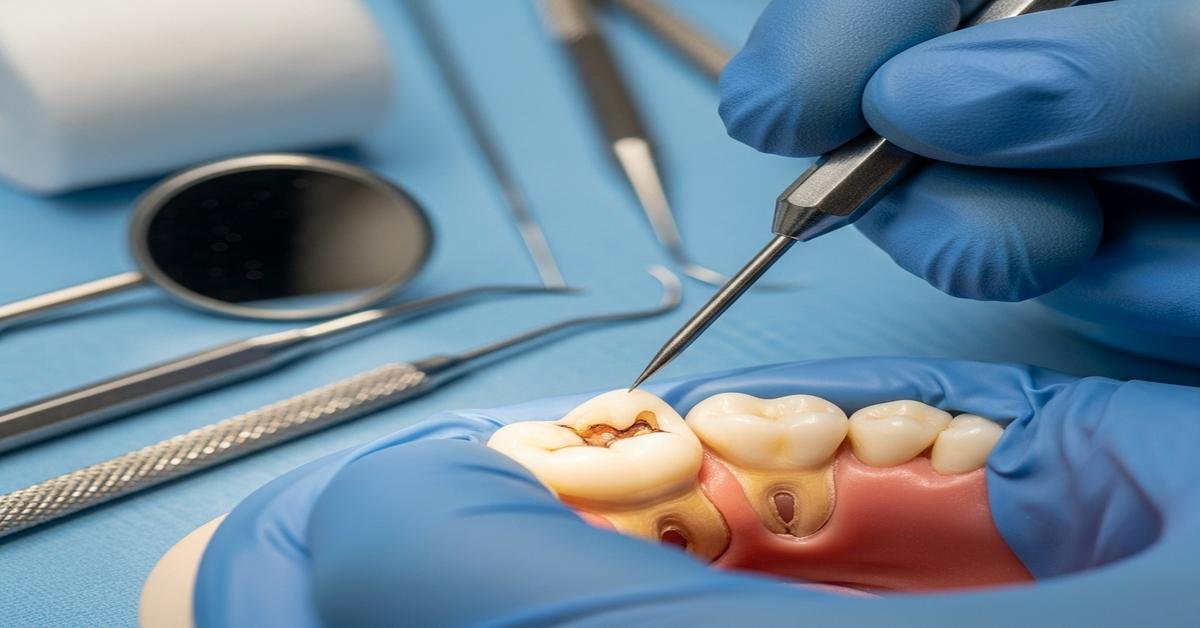
Preparing for the CRFDA means you’ll be tested on the restorative skills you use every day: isolation, matrices, liners and bases, bonding, composites, amalgam, sealants, finishing, and provisionals. This guide shows what to know, why it matters, and how to do it step by step. The goal is simple: predictable results, fewer remakes, and safe care within your state’s scope of practice. Always follow your dentist’s directions and manufacturer instructions, and stay within your state’s regulations.
What the CRFDA Emphasizes (High-Yield Map)
Know these areas cold. They show up often on exams and in chairside work because each one affects the final outcome:
- Isolation: Rubber dam, cotton roll isolation, retraction cord. Why: moisture changes bonding and contaminates materials.
- Matrices and wedges: Tofflemire and sectional systems. Why: contact shape and contour prevent food impaction and overhangs.
- Pulp protection: Liners and bases. Why: protect pulp from chemicals and temperature; choose materials that won’t interfere with bonding.
- Adhesion: Etch, primer, adhesive. Why: bonding fails when dentin is dried out or contaminated.
- Direct restorations: Composite, amalgam, glass ionomer. Why: each has different handling, curing, finishing, and indications.
- Finishing and occlusion: Smooth surfaces and correct contacts reduce plaque retention and post-op pain.
- Provisionals: Crowns and temporary cementation. Why: contours protect gingiva and maintain position between appointments.
- Sealants: Technique-sensitive; contamination is the most common reason for failure.
- Safety and infection control: Material handling, PPE, mercury hygiene, and sharps.
Infection Control and Material Safety
Why it matters: The exam expects you to prevent cross-contamination and handle materials safely. Materials can irritate skin, lungs, and eyes, and some interfere with others.
- PPE: Gloves, masks, eyewear, and gowns when mixing, trituration, bonding, or adjusting.
- Mercury hygiene (amalgam): Use pre-capsulated alloy. Do not touch amalgam with bare hands. Use an amalgamator and high-volume evacuation. Store scrap in a closed, labeled container. Never use household vacuums for spills.
- Etchants and bonding agents: Avoid soft tissue contact. Rinse eyes immediately if splashed. Keep bottles capped to prevent solvent evaporation.
- Dust control: Use water spray and evacuation when polishing or trimming provisionals or composites.
- Sterilization vs. disinfection: Critical items (burs, explorers) are sterilized. Surfaces are cleaned then disinfected with an EPA-registered product.
Isolation: Rubber Dam and Alternatives
Why it matters: Saliva, blood, and breath moisture reduce bond strength and cause postoperative sensitivity. Good isolation also improves visibility and speed.
- Rubber dam basics: Punch holes with 6–6.5 mm spacing. Clamp the anchor tooth first (often one tooth distal). Seat clamp below the height of contour for retention.
- Seal at the gingiva: Invert the dam with air or floss to stop seepage. Use dental tape to invert around tight contacts.
- Comfort: Lubricate patient’s lips. Place frame before clamp if it helps visibility and comfort.
- Alternatives: Cotton rolls, dry angles, retraction cord, liquid dam. Use when a dam is not possible, but expect lower bond reliability.
Matrices and Wedges: Contacts and Contours
Why it matters: Poor contacts trap food and cause patient complaints. Overhangs lead to gingival inflammation. The right system and wedge technique fix both.
- Tofflemire for amalgam: Place the smaller circumference toward the gingiva. Burnish the band at the marginal ridge to create a convex contact. Wedge from the lingual if possible for better access and seal.
- Sectional matrices for composite: Use an anatomic band, wedge, and separating ring. Pre-wedge before prepping if possible; it slightly separates teeth and protects the papilla.
- Wedges do three jobs: Seal gingival margin against overhangs, create slight tooth separation for a tight contact, and contour the band at the cervical area. Choose firm wedges that compress gingiva gently without blanching excessively.
- Check before curing: If the band is flat at the contact, burnish more or change to an anatomic band. If you cure a flat contact, you will likely need to redo the restoration.
Pulp Protection: Liners and Bases
Why it matters: Near the pulp, dentin is thin and sensitive. Materials can irritate or protect it. Wrong choices lead to sensitivity, failed bonds, or recurrent caries.
- Calcium hydroxide liner: Use only for very deep areas or near exposures; thickness ~0.5 mm in the deepest spot. It stimulates reparative dentin but is weak, so cover with a stronger base.
- Glass ionomer (GI)/resin-modified GI (RMGI) base: Good for dentin replacement and fluoride release; thickness up to about 1 mm. Bonds chemically to tooth and supports composite over it.
- Avoid eugenol under resin: Eugenol from ZOE/IRM can inhibit composite polymerization and weaken bonds. Use non-eugenol temporary cements and RMGI bases when planning resin.
Adhesion: Etch, Prime, Bond (Knowing the “Why”)
Why it matters: Bonding fails from contamination, over-drying dentin, or skipping manufacturer-specific steps. The collagen network in dentin needs moisture to accept primer; too dry and it collapses.
- Total-etch (etch-and-rinse): Etch enamel 15–30 seconds; dentin about 10–15 seconds. Rinse well. Leave dentin slightly moist (glistening), not desiccated. Apply primer/adhesive as directed, air-thin to evaporate solvents, then light cure if required.
- Self-etch systems: No rinse. Do not pre-dry dentin aggressively. Scrub adhesive for the full time to allow penetration. Etch enamel selectively with phosphoric acid if the system recommends it for stronger margins.
- Contamination: If saliva or blood touches etched surfaces, rinse, re-etch enamel, and repeat adhesive steps. For dentin, follow the adhesive’s recontamination protocol.
Composite Restorations: Class I and II
Why it matters: Composite is technique-sensitive. Small mistakes in moisture control, layering, or curing cause open margins, sensitivity, and staining.
- Shade selection first: Do it before isolation and dehydration. Teeth look lighter when dry.
- Incremental layering: Place 2 mm or less per increment. This limits shrinkage stress and cures the material thoroughly.
- Adaptation: Use a thin initial “liner” of flowable composite at the gingival margin in Class II. It adapts to irregularities and reduces voids. Do not replace proper bonding steps with flowable.
- Proximal walls: Build the proximal wall against the band first to lock in the contour and contact, then fill the remainder occlusally.
- Light curing: Keep the tip 1–2 mm from the surface, perpendicular to the restoration. Standard cure: about 20 seconds per 2 mm at ~1000 mW/cm², unless your material specifies otherwise. Cure from multiple angles when possible.
- Oxygen-inhibited layer: A slightly tacky surface after curing is normal; it aids bonding to the next increment. Remove inhibition only at the final cure and finish.
Amalgam Restorations: Class I and II
Why it matters: Correct trituration, condensation, and carving create dense restorations with fewer voids and better margins.
- Trituration: Follow capsule time and speed. Under-triturated amalgam looks grainy and sets weak. Over-triturated is hot, sticky, and hard to condense.
- Condensation: Start immediately. Use small condensers with firm pressure, moving from the margins inward. Overfill the prep to remove the mercury-rich layer during carving.
- Contacts and contours: Burnish the matrix band at the marginal ridge and use a wedge to shape the gingival contact. Remove the wedge carefully after initial set if needed and check for overhangs.
- Carving: Recreate grooves and triangular ridges. Keep carver supported on tooth structure to avoid ditching. Smooth with a burnisher lightly if indicated.
- Finishing: Many offices finish at a later visit to prevent smearing. If finishing same day, use water and light pressure to avoid heat and marginal breakdown.
Glass Ionomer (GI) and Resin-Modified GI
Why it matters: GI bonds chemically to tooth and releases fluoride. It’s useful for cervical lesions, pediatric cases, and as a base. It is sensitive to moisture loss and gain while setting.
- Conditioner: Many GI systems use a polyacrylic acid conditioner for 10–20 seconds. It cleans smear layer and improves bond.
- Moisture balance: Protect GI from saliva and from drying during the first minutes. Use a glaze or varnish if recommended to prevent early dehydration.
Finishing, Polishing, and Surface Texture
Why it matters: A smooth, contoured surface resists plaque and looks natural. Sharp margins and overhangs irritate gums.
- Sequence for composite: Shape with fine diamonds or carbide finishing burs. Refine proximals with finishing strips. Polish with cups and discs from coarse to superfine. Keep the anatomy—don’t flatten ridges.
- Check margins visually and with an explorer: No ledges, no catch at the CEJ, no flash beyond the cavosurface.
- Contact check: Use unwaxed floss; it should snap lightly through the contact and not shred.
Occlusion: Quick, Reliable Checks
Why it matters: High occlusion causes post-op pain and sensitivity. Low contacts can shift neighboring teeth over time.
- Articulating paper: Dry the teeth first. Ask the patient to tap and grind gently. High marks are larger and darker. Reduce only the restoration, never sound tooth, unless the dentist directs otherwise.
- Posterior contacts: Keep marginal ridges level with neighbors. A marginal ridge that’s too high will hit first.
- Anterior restorations: Check excursive movements to avoid interferences on fresh composite.
Provisional Restorations and Temporary Cementation
Why it matters: Provisionals protect the pulp, hold tooth position, and shape gingival tissue. Poor contours cause plaque traps and soreness.
- Pre-op matrix: For bis-acryl provisionals, use an alginate or PVS impression before prepping. After prep, fill the matrix with bis-acryl, seat fully, and remove at the gel phase to avoid locking.
- Trimming and polishing: Trim margins with acrylic burs or discs. Smooth embrasures for floss access. Polish to reduce plaque build-up.
- Polycarbonate/aluminum shells: Size selection is key. Trim the cervical edge to the finish line and crimp for adaptation. Line with acrylic or bis-acryl if needed.
- Temporary cements:
- Non-eugenol for cases returning to resin cementation later.
- ZOE for sedative effect when not bonding with resin later.
- RMGI temp cements for stronger retention and fluoride release.
- Cleanup and occlusion: Remove excess cement from margins and interproximals; floss through and out buccally to avoid dislodging. Check occlusion and adjust lightly.
- Post-op instructions: Avoid sticky foods for 24 hours, floss with a slide-through motion, and call if the provisional loosens.
Pit and Fissure Sealants
Why it matters: Most sealant failures come from contamination before curing.
- Prep and clean: Use pumice without oil/flavor. Rinse and isolate completely.
- Etch: 30 seconds on uncut enamel is common; follow your product’s time. Rinse 10–15 seconds and dry. Enamel should look frosty.
- Placement: Flow a thin layer into pits and fissures. Avoid pooling. Wick away bubbles with a microbrush.
- Cure and check: Light cure per product instructions. Probe gently to check set. Floss interproximally and adjust any occlusal high spots.
Cements: Mixing and Indications
Why it matters: The right cement and mix prevent washout and sensitivity.
- Zinc phosphate: Strong, but acidic and exothermic during mix. Cool a glass slab and add powder in small increments to a wide area to control heat and viscosity.
- Polycarboxylate: Bonds to tooth structure, gentle to pulp. Short working time—mix fast.
- Glass ionomer/RMGI: Fluoride release and chemical bond. Avoid desiccation during set.
- Resin cements: High strength and low solubility. Do not use with eugenol temps. Maintain a clean, isolated field. Follow the adhesive protocol exactly.
Light-Curing: Getting a True Cure
Why it matters: Under-cured composite is weak and prone to sensitivity and staining.
- Tip position: Keep within 1–2 mm of the surface, perpendicular to it. Avoid angling that casts a shadow.
- Time and intensity: Many composites need about 20 seconds per 2 mm at ~1000 mW/cm². Dark shades may need longer.
- Barriers: Clear barriers reduce light output slightly. Compensate with time if recommended by the manufacturer.
- Maintenance: Wipe the light tip regularly; resin residue reduces intensity. Test with a radiometer per office protocol.
Quick Procedure Checklists
Class II Composite (Sectional Matrix) – Chairside Flow
- Pre-wedge if possible. Place rubber dam.
- Place anatomic sectional band, wedge, and separating ring. Verify band sits below the gingival margin and is convex at contact.
- Etch, rinse, control dentin moisture; apply adhesive per system. Air-thin; cure if indicated.
- Place a thin flowable at the gingival floor; light cure.
- Build the proximal wall against the band; cure.
- Incrementally fill the rest (≤2 mm). Shape marginal ridge with instruments before curing each layer.
- Remove ring, wedge, and band carefully. Finish and polish. Check floss, margins, and occlusion.
Class II Amalgam (Tofflemire) – Chairside Flow
- Band with smaller circumference gingival. Burnish contact area. Place wedge for seal and slight separation.
- Trituration per capsule. Condense promptly with firm pressure; overfill.
- Carve anatomy; check embrasures. Remove overhangs at the margin. Lightly burnish if directed.
- Check occlusion gently. Provide post-op advice to avoid hard chewing until initial set.
Bis-Acryl Provisional Crown – Chairside Flow
- Pre-op impression matrix ready. After prep, isolate and dry lightly.
- Fill matrix with bis-acryl. Seat fully and hold steady until gel phase.
- Remove, trim margins and embrasures. Smooth and polish.
- Try-in. Adjust occlusion. Cement with non-eugenol temp cement. Remove excess; floss through and out buccally.
Common Errors and How to Fix Them
- Open contact (composite): Likely a flat band or no separation. Solution: switch to an anatomic band, use a separating ring, pre-wedge, and burnish the band.
- Overhang (any restoration): Inadequate wedge or band not sealed at the gingiva. Solution: re-seat wedge (consider larger or curved wedge), burnish gingival area before curing/condensing.
- Post-op sensitivity (composite): Over-dried dentin or contaminated bond. Solution: maintain moist dentin for total-etch; re-etch enamel and repeat bonding steps if contaminated.
- White line at margin (composite): Polymerization stress or finishing too soon with high speed and no water. Solution: smaller increments, soft-start cure if available, finish under water cooling.
- Loose provisional: Occlusion too high or poor prep undercuts. Solution: reduce occlusal contacts, reline the provisional, and use a stronger temporary cement if appropriate.
- Composite won’t set: Incompatible eugenol underlayment or weak light. Solution: avoid eugenol under resin; confirm light intensity and cure times.
Chairside Instrument Setups (Essentials)
Composite setup:
- Mirror, explorer, cotton pliers
- Matrix system: sectional bands, wedges, ring
- Etch syringe, microbrushes, adhesive
- Flowable and packable composite, composite instruments
- Light-curing unit, protective shield
- Finishing burs, discs, polishing cups, finishing strips
- Articulating paper and holder
Amalgam setup:
- Mirror, explorer, cotton pliers
- Tofflemire retainer, band, wedges, burnisher
- Amalgamator and pre-capsulated alloy
- Amalgam well, carriers, condensers
- Burnishers, carvers, HVE
- Articulating paper
State Scope and Delegation
Work within your state’s rules. The dentist directs your tasks and verifies margins, occlusion, and final contours. Some states allow placing and finishing restorations or cementing temporaries; others limit you to assisting steps. Know your state’s list and the level of supervision required.
Test-Day Mindset: How to Think Through Questions
- If adhesion fails, think contamination first. Then check dentin moisture and correct adhesive steps.
- If proximal contact is poor, think matrix anatomy and separation. Burnish, wedge, ring.
- If sensitivity follows a composite, think over-dried dentin or high occlusion.
- If a material interacts badly, look for eugenol or moisture imbalance.
Short Practice Scenarios (Apply the Why)
- Scenario: After placing a Class II composite, floss shreds and catches.
Think: Overhang or rough/bonded flash at the margin.
Action: Re-isolate, use finishing strip gently at the contact, or adjust with a fine bur under magnification. Re-check floss. - Scenario: Sealant surfaces look dull and chalky the next day.
Think: Saliva contamination or incomplete cure.
Action: Clean, re-etch if needed, reapply sealant, cure with proper light position and time. - Scenario: Composite appears discolored at the margin weeks later.
Think: Microleakage from poor isolation or inadequate etch on enamel.
Action: Improve isolation, consider selective enamel etch with fresh adhesive protocol, polish or repair as directed by the dentist.
Final Takeaways You’ll Use Every Day
- Contacts and contours first: The proximal form determines the success of posterior restorations.
- Moisture control drives bonding: Compromise here and everything downstream suffers.
- Layer and cure thoughtfully: Small increments, correct time, and correct light angle prevent sensitivity and staining.
- Protect the pulp: Thin liner for deep spots, RMGI base for support. Skip eugenol under resin.
- Finish smart: Smooth margins and correct occlusion reduce callbacks.
- Provisionals are not placeholders: They maintain health and position. Margins and contours matter.
Your best preparation blends repetition and reasoning. Practice each step until it feels automatic, but always ask why you’re doing it. When you know the cause behind each rule—moisture for bonding, separation for contacts, incremental curing for stress—you can adapt to any case and any exam question with confidence.

