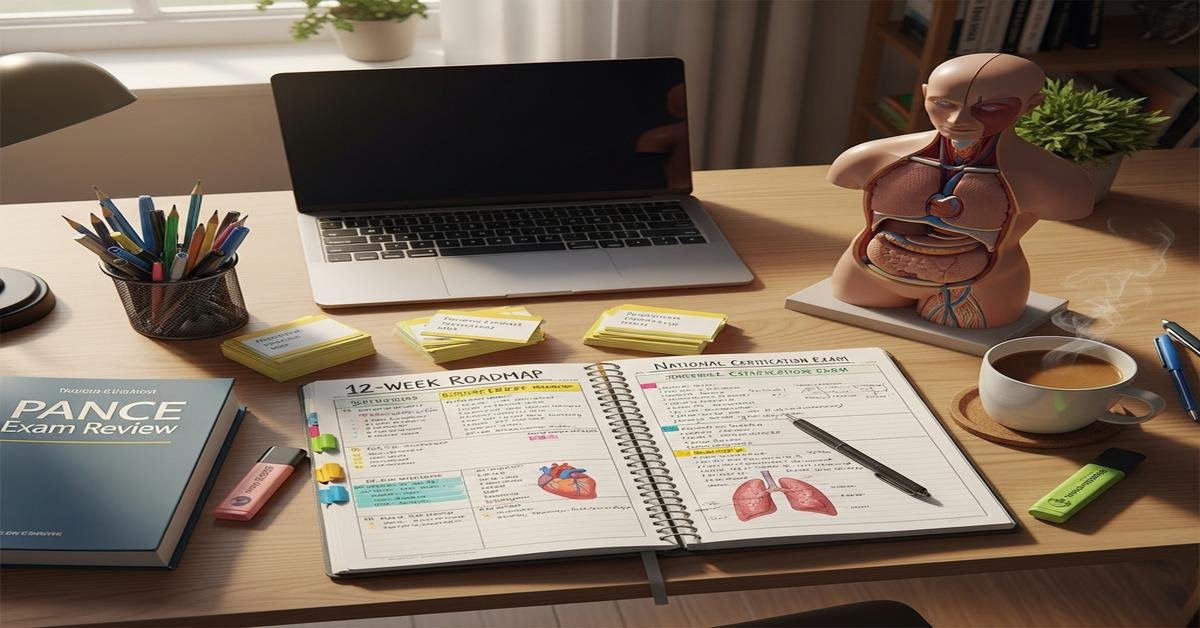
The PANCE isn’t just a content exam. It tests how you think under time pressure, how you triage unstable patients, and whether you pick the next best step when the clock is ticking. This 12‑week plan gives you a clear weekly target for every body system, practice you can measure, and repeatable habits that build long‑term recall. You will focus on what the PANCE blueprint cares about most: recognizing classic presentations, ordering the right test first, and choosing safe, first‑line treatments.
How to Use This 12‑Week Plan
This roadmap balances content, questions, and memory. Each week you will:
- Master one to two body systems. Depth beats breadth. You retain more when you push one domain to fluency.
- Do questions daily. Questions teach patterns and reveal blind spots faster than passive reading.
- Spaced repetition every evening. Flashcards make facts stick and prevent last‑minute cramming.
- Track data. Scores go up when you fix what you miss. A simple log turns errors into points.
Why this works: the PANCE repeats core themes across systems (unstable vs. stable, rule‑out killers first, first‑line therapies). Rehearsing these decisions in different contexts wires your brain to answer faster and safer.
The Tools You Need (One Stack That Works)
- One primary review source. Over‑resourcing wastes time. Pick a concise review book or course and stick to it.
- One question bank. Aim for 2,000–3,000 questions across 12 weeks. Questions teach what lecture notes miss.
- Spaced repetition app or physical cards. Make targeted cards for rules, cutoffs, and treatment ladders.
- Image bank for EKGs and CXRs. The exam loves pattern recognition (PE, pneumothorax, CHF; AFib vs. flutter).
Why this stack: reducing switching costs increases total output. Depth in one ecosystem beats shallow passes in many.
Weekly Structure That Builds Mastery
- Mon–Wed (Content + Qs): 2 hours content, 1–2 hours mixed and system‑focused questions (40–60/day).
- Thu (Integration): Cases, EKGs/CXRs, and procedures relevant to the system (30–40 questions).
- Fri (Assessment): 60–80 timed questions. Review all rationales. Create 10–20 flashcards from misses.
- Sat (Catch‑up + Skills): Light content gaps, images, quick formulas, and flashcards.
- Daily (15–30 min): Spaced repetition. This protects your memory curve.
Adjust volumes up or down based on your baseline. Consistency beats intensity.
Week 1 – Baseline and Foundations
Goal: Know where you stand and set strong clinical “rules” you will reuse all exam.
- Take a diagnostic exam (120–150 questions). Why: it reveals weak systems and task domains (diagnosis vs. treatment).
- Core skills to front‑load:
- EKG basics: AFib vs. flutter, AV blocks, STEMI criteria, pericarditis.
- CXR patterns: CHF, pneumonia, pneumothorax, pleural effusion.
- ABG/acid–base: anion gap, metabolic vs. respiratory patterns.
- Antibiotic hierarchy: beta‑lactams, MRSA options, anaerobe coverage, when to avoid fluoroquinolones.
- Imaging first choices: when to CT vs. US vs. X‑ray. Always ask “unstable?” first.
- Build your error log. Categories: content gap, misread question, rushed, changed answer wrongly. Why: fixes the actual reason you miss.
- Questions: 200–250 mixed to sample every domain.
Week 2 – Cardiovascular
Why now: Cardio is heavily weighted and integrates EKGs, imaging, and life‑saving decisions.
- Must‑know:
- Acute coronary syndrome: next best step based on EKG, troponin, and stability; when to give heparin, nitrates, beta‑blockers; thrombolysis vs. PCI windows.
- Heart failure: HFrEF vs. HFpEF; first‑line meds; diuretic pearls; when to avoid nondihydropyridine CCBs.
- Arrhythmias: AFib rate vs. rhythm control, anticoagulation rules; SVT vagal maneuvers vs. adenosine; unstable = cardioversion.
- Valves and murmurs: classic sounds, maneuvers, endocarditis prophylaxis indications.
- Hypertension: urgency vs. emergency; first‑line in CKD, CAD, pregnancy.
- Questions: 250–300 (50% cardio‑focused, 50% mixed).
- Skills: Read 15–20 EKGs. Practice a timed 60‑question block to simulate PANCE pacing.
Week 3 – Pulmonary
Why now: Pulm pairs with cardio decisions and often shares presentations (chest pain, dyspnea).
- Must‑know:
- Asthma vs. COPD: step‑up therapy, when to add LABA or ICS, when to give steroids, acute exacerbation management.
- Pneumonia: outpatient vs. inpatient regimens; CURB‑65 use; atypicals; aspiration coverage.
- Pulmonary embolism: Wells score, D‑dimer vs. CT angiography, when to anticoagulate first.
- Pneumothorax: tension signs = needle decompression before imaging.
- TB screening vs. disease treatment basics; interpretation of PPD/IGRA.
- Questions: 200–250 with image review (CXR patterns, V/Q vs. CTA indications).
- Skills: ABG interpretation drills; oxygen delivery devices and when to escalate.
Week 4 – Gastrointestinal and Nutrition
Why now: Abdominal pain is a triage problem. The exam tests first imaging, resuscitation, and red flags.
- Must‑know:
- Upper GI bleed vs. lower: resuscitation, PPI, octreotide, antibiotics in variceal bleed.
- Pancreatitis: diagnostic criteria, top causes, fluid management, when to CT.
- Hepatitis serologies: interpret patterns; who gets treatment vs. monitoring.
- PUD/H. pylori testing and eradication regimens.
- IBD vs. IBS: red flags, extra‑intestinal signs, steroid vs. 5‑ASA roles.
- Cholecystitis vs. cholangitis: Murphy sign, ultrasound first, antibiotics, ERCP indications.
- Nutrition: iron, B12, folate deficiencies; refeeding syndrome risk.
- Questions: 200–250; integrate LFT patterns and stool studies.
Week 5 – Musculoskeletal and Rheumatology
Why now: High yield emergencies and pattern recognition in injuries and autoimmune disease.
- Must‑know:
- Back pain red flags: cauda equina, infection, malignancy; when to image.
- Septic arthritis: joint tap first; cell counts; empiric antibiotics.
- Fractures/dislocations: shoulder, hip, scaphoid; when to reduce urgently; neurovascular checks.
- Gout vs. pseudogout: crystals, first‑line acute therapy, chronic urate targets.
- RA vs. OA: morning stiffness pattern, joint distribution, meds requiring monitoring.
- Lupus and spondyloarthropathies basics; ankylosing spondylitis imaging.
- Questions: 200–250 with images (X‑ray interpretations and joint aspirations).
Week 6 – EENT and Dermatology
Why now: Rapid‑fire questions with classic buzz features; many are quick wins if you know the telltales.
- Must‑know:
- Acute otitis media vs. externa; malignant otitis externa red flags (diabetes).
- Conjunctivitis vs. keratitis vs. iritis; acute angle‑closure glaucoma emergency.
- Strep pharyngitis: Centor criteria, when to test and treat; peritonsillar abscess drainage signs.
- Epistaxis: anterior vs. posterior management steps.
- Skin infections: cellulitis vs. erysipelas; impetigo; MRSA coverage.
- Drug eruptions vs. SJS/TEN; psoriasis vs. eczema basics.
- Skin cancer recognition: ABCDE, actinic keratosis vs. SCC.
- Questions: 200–250; include image‑heavy sets.
Week 7 – Endocrine and Hematology
Why now: Labs and algorithms dominate. The exam expects you to pick the right test before the right drug.
- Must‑know endocrine:
- Diabetes: DKA vs. HHS management; insulin regimens; screening for complications.
- Thyroid: hypo vs. hyper, Graves vs. toxic nodular, when to ultrasound, when to treat with beta‑blockers vs. antithyroid meds.
- Adrenal: Addison crisis (give steroids first), Cushing screening tests.
- Calcium disorders: primary hyperparathyroidism vs. malignancy‑related hypercalcemia.
- Must‑know hematology:
- Anemias: iron, B12, folate, anemia of chronic disease—MCV patterns and labs.
- Hemolysis clues: elevated LDH, low haptoglobin, schistocytes.
- Coagulopathies: DIC vs. TTP/HUS patterns; when to give platelets vs. plasma.
- Questions: 250–300; emphasize lab interpretation sets.
Week 8 – Renal and Genitourinary
Why now: Electrolytes, acid–base, and AKI are common and cross‑test with many systems.
- Must‑know:
- AKI: prerenal vs. intrinsic vs. postrenal; FeNa use; fluids vs. diuretics.
- CKD staging; when to start ACEi/ARB; anemia of CKD management.
- Electrolytes: sodium disorders (hyper/hyponatremia), potassium emergencies (stabilize with calcium first), corrected sodium in hyperglycemia.
- UTI/pyelo: pregnancy considerations; inpatient vs. outpatient regimens.
- Nephritic vs. nephrotic syndromes: edema, proteinuria thresholds, hematuria patterns.
- Stones: imaging first choice (noncontrast CT vs. US), size‑based management.
- BPH basics; prostatitis acute vs. chronic (avoid vigorous prostate exam if acute).
- Questions: 200–250; include electrolyte case vignettes.
Week 9 – Reproductive Health
Why now: High‑yield algorithms and emergencies with clear next steps.
- Obstetrics: prenatal screens and labs, ectopic pregnancy (beta‑hCG + TVUS algorithm), preeclampsia vs. eclampsia (magnesium, delivery), postpartum hemorrhage steps.
- Gynecology: PCOS features and treatment, abnormal uterine bleeding workup by age, ovarian torsion (Doppler US, urgent gyn), cervical cancer screening guidelines basics.
- Male reproductive: testicular torsion (don’t wait for imaging if classic), epididymitis age‑based pathogens and treatment.
- STIs: empiric regimens, pelvic inflammatory disease inpatient vs. outpatient criteria.
- Questions: 200–250; practice pregnancy‑safe meds and imaging.
Week 10 – Neurology and Psychiatry
Why now: Time‑critical strokes and clean diagnostic criteria for psych conditions.
- Neurology: stroke types and windows; tPA and thrombectomy criteria; TIA workup; seizure types and first‑line meds; meningitis empiric therapy by age; headache red flags (thunderclap = SAH workup).
- Psychiatry: depression vs. bereavement; bipolar I vs. II; schizophrenia positive vs. negative symptoms; anxiety disorders; PTSD; substance use intoxication/withdrawal patterns; suicide risk stratification and safety planning.
- Questions: 200–250; include NIHSS basics and DSM‑style stems.
Week 11 – Infectious Disease, Pediatrics, and Geriatrics + Full‑Length Exam
Why now: You have the systems; ID ties them together. Pediatrics and geriatrics add age‑specific twists.
- Infectious disease: choose empiric therapy by source (skin, lung, abdomen, urine, CNS); HIV basics (screening, PJP prophylaxis triggers); sepsis bundle steps.
- Pediatrics: fever rules in neonates, croup vs. epiglottitis, bronchiolitis vs. asthma, otitis media indications for antibiotics, vaccine pearls, milestone red flags.
- Geriatrics: delirium vs. dementia, polypharmacy risks (anticholinergics), falls workup, atypical presentations of infection.
- Full‑length mock exam: 300 questions in 5 blocks of 60, timed. Why: builds stamina and pacing. Review over two days. Create 30+ flashcards from misses.
Week 12 – Final Review and Test‑Week Plan
Goal: Consolidate, don’t cram. Raise your floor by shoring up repeat misses and must‑know lists.
- Mon–Tue: Focused review of bottom 3 systems from your data. Re‑do 40–60 questions/day from missed topics only.
- Wed: 120–150 question half‑test, timed. Review same day.
- Thu: Images (EKG, CXR, rashes), guidelines cutoffs, meds with black‑box warnings. Light flashcards.
- Fri: Rest, brief flashcards only. Pack ID, snacks, layers. Confirm route and start time.
Must‑Know Lists the PANCE Loves
- Unstable patient first moves: ABCs, oxygen, IV access, monitors, glucose check. Treat life‑threats before confirmatory tests.
- First‑line diagnostics: appendicitis (CT adults, US peds/pregnancy), RUQ pain (US), suspected PE (Wells → D‑dimer vs. CTA), suspected SAH (noncontrast CT → LP if negative but high suspicion).
- First‑line treatments: anaphylaxis (IM epinephrine), STEMI (PCI, dual antiplatelets, heparin), DKA (fluids → insulin → potassium), COPD exacerbation (duonebs + steroids ± antibiotics), pneumonia age‑based regimens.
- Don’t‑miss red flags: thunderclap headache, torsion, cauda equina, ectopic pregnancy, tension pneumothorax, compartment syndrome, necrotizing fasciitis.
- Classic triads and tells: Beck triad (tamponade), Charcot triad (cholangitis), Virchow triad (thrombosis risk), pulsus paradoxus, target lesions (erythema multiforme), café‑au‑lait + neurofibromas.
Test‑Taking Strategy That Raises Your Score
- One pass, then flag. Answer every question in the first pass. Flag hard ones. Why: unanswered items cost points; first instincts are often right when you’ve trained.
- Read the last line first. Know the task: diagnosis, next test, or treatment. This prevents anchoring on irrelevant details.
- Stable vs. unstable lens. If unstable, treat first (e.g., cardioversion, needle decompression). If stable, diagnose first.
- Choose the simplest sufficient next step. If a cheaper, safer test will answer the question, it usually wins.
- Eliminate aggressively. Cross out unsafe options (e.g., thrombolytics with recent surgery). Safety always trumps cleverness.
- Time goals: ~60 questions/hour. Aim to finish each block in 55 minutes to leave 5 minutes for flags.
- Break plan: Use short breaks between blocks. Small snack, hydrate, reset. Prevent fatigue debt.
Common Pitfalls and How to Avoid Them
- Over‑collecting resources. Fix: commit to one primary text, one Q‑bank, one flashcard system.
- Reading without questions. Fix: minimum 40–60 questions daily. Review rationales more slowly than you answered.
- Not tracking misses. Fix: log topic, why you missed, and the correction. Re‑test that topic within 72 hours.
- Ignoring images. Fix: schedule EKG/CXR/rash review weekly. The exam uses images to separate pass from fail.
- Letting weak areas linger. Fix: “Wednesday rule”—midweek, spend 90 minutes on the lowest‑scoring domain.
- Burnout near the end. Fix: taper in Week 12. Quality recall beats cramming noise.
Putting It All Together: A Measurable Weekly Checklist
- Content: Finish targeted system chapters/lectures by Wednesday.
- Questions: 200–300 per week minimum, with 60–70% timed.
- Images: 15 EKGs, 15 CXRs/radiology, 15 clinical photos weekly.
- Flashcards: 20–30 new cards from misses; review due cards daily.
- Assessment: One 60–80 question mini‑mock each Friday.
- Reflection: Update error log, pick next week’s top three targets.
Follow this plan with steady effort and honest feedback from your data. You will see the same clinical logic repeat across systems: stabilize first, confirm smartly, and treat with first‑line, evidence‑based choices. That is exactly what the PANCE rewards—and how safe clinicians think every day.

