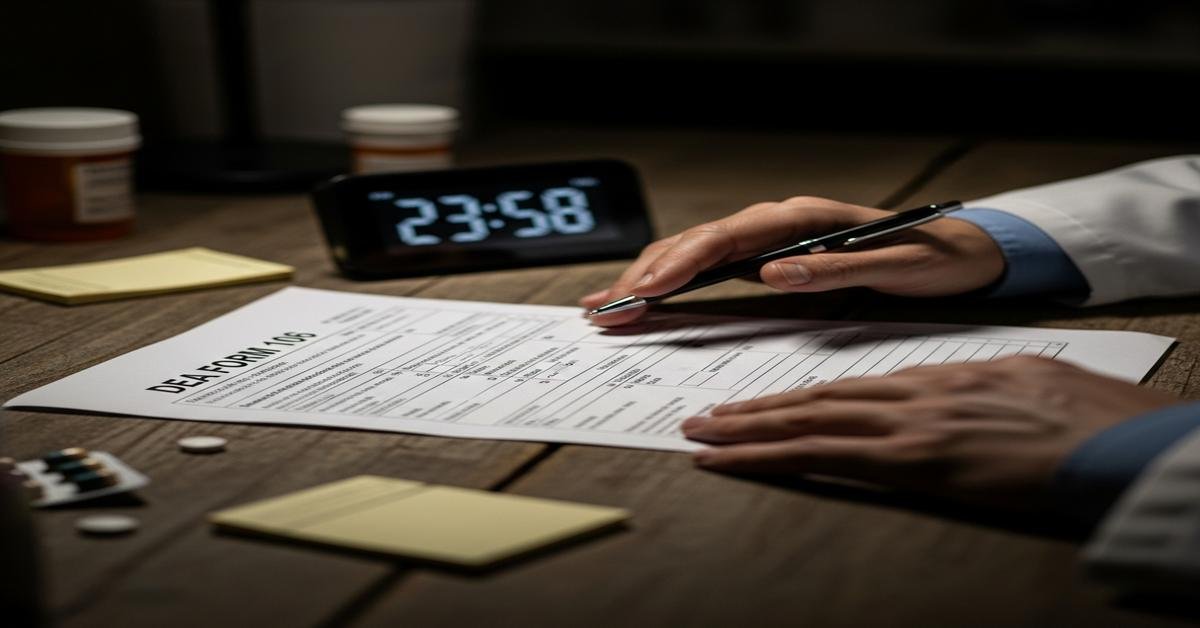
Pharmacies have to tell the DEA fast when controlled substances go missing. The rule says you must notify the DEA within one business day of discovering a theft or a “significant loss,” and then submit DEA Form 106. The hard part is the word “significant.” The DEA doesn’t define it with numbers. That vagueness can trip up even careful pharmacists. This guide explains what the rule actually requires, how to judge “significant,” how to investigate quickly, and how to file a strong, defensible Form 106.
What the rule actually requires
Here’s the core obligation for all DEA registrants, including pharmacies and hospitals:
- Notify the DEA within one business day after you discover a theft or a significant loss of any controlled substance. Many teams treat this as a 24-hour clock to be safe.
- Notify local law enforcement when you believe a theft has occurred. (States may also require notice to the board of pharmacy.)
- Submit DEA Form 106 to report the details. You may do a brief, immediate notice first, then file the full Form 106 after a short, good‑faith investigation. If your investigation shows no loss occurred, you document your findings and do not submit the form.
Why it works this way: The DEA wants fast visibility to prevent diversion, but it also recognizes you need a short window to check counts, audit logs, and camera footage. So, notify quickly; then document the facts.
When does the 24-hour clock start?
It starts when you discover a theft or significant loss—not when you finish investigating. If you only have a vague discrepancy (for example, the count looks off but there are pending returns or a recent delivery still being processed), you can take a short period to determine whether a loss likely occurred.
Practical approach:
- If the discrepancy is clear (e.g., a broken seal and a missing bottle of oxycodone), notify the DEA that same day.
- If the situation is unclear, start an immediate, documented review. If your initial review suggests a likely loss, send the notice within one business day and follow with Form 106.
What counts as a “significant” loss?
The DEA uses a risk-based standard. It lists factors to consider, not a numeric threshold. You are expected to weigh:
- Quantity lost vs. your normal dispensing volume. Ten tablets might be trivial in a high‑volume hospital, but significant in a small community pharmacy.
- Schedule and abuse potential. Any loss of a Schedule II is usually significant. A small amount of a high‑risk opioid or stimulant can be significant.
- Pattern or frequency. Repeated small shortages suggest diversion even if each one is small.
- Specific individuals’ access. Losses tied to the shifts or access of particular staff raise significance.
- Local trends and drug-seeking activity. If your area is seeing diversion for a drug class, a small loss of that drug weighs heavier.
- Unique events. Tampered seals, forced entry, or camera blind spots make a smaller shortage more significant.
Why it’s vague: Pharmacies vary widely. A rigid number would let some real diversion slide and over-report harmless errors. The DEA wants your judgment, backed by documentation.
Practical thresholds you can use today
These are not official rules. They are practical triggers that help teams act consistently and defend decisions:
- Any Schedule II bottle or vial missing (full or partial) is significant. Notify and file.
- Any tampered seal, broken lock, or forced entry involving controlleds is significant, even if quantities are small.
- Three or more unexplained shortages of the same drug/strength in 30 days is significant as a pattern.
- Losses of high-risk CIII–CV (e.g., buprenorphine, codeine combos, certain stimulants) are significant if the amount could supply nonmedical use (for example, ≥30 tablets or any injectable).
- ADC or robot anomalies (e.g., Pyxis, ScriptPro) are significant if logs show access without corresponding transactions or if a user trend points to diversion.
Document your local thresholds in a written policy, and apply them consistently. Consistency matters during inspections.
Edge cases you should treat differently
- Breakage and spillage. If the substance is not recoverable and not available for diversion (e.g., a shattered vial on the floor), this is not a theft or loss for Form 106. Document with witnesses and use disposal records. If the incident suggests theft (tampered storage, missing inventory), report.
- Clerical errors discovered and corrected promptly. If you find a counting or data entry error and reconcile inventory with proof (logs, will-calls, reversal reports), there is no loss to report. Keep the reconciliation trail.
- In‑transit losses. If you never received the shipment (carrier says not delivered), the supplier reports. If you signed for it and later find a shortage, you report. Always contact the supplier either way.
- Returns to stock and reverse distribution. Mislogged returns can mimic losses. Verify credits, manifests, and destruction records before concluding there is a loss.
A fast investigation checklist (first 24 hours)
Your goal: decide if there was a theft or significant loss, preserve evidence, and notify the DEA on time.
- Secure. Limit access to the affected area. Preserve seals, bins, and packaging. Save camera footage immediately.
- Recount with a witness. Perform a blind recount of the drug/strength/lot. Check all storage locations and will-call bins.
- Check recent activity. Review dispensing logs, returns to stock, partial fills, waste documentation, and automation transaction reports.
- Verify deliveries and transfers. Match invoices, receiving records, and transfers to/from other locations.
- Interview discreetly. Ask staff who had access, when, and whether they observed anything unusual. Keep notes factual.
- Assess significance. Apply your policy. If likely significant, send the initial notice to the DEA within one business day; notify law enforcement if theft is suspected.
- Continue the investigation and prepare Form 106. If you later prove no loss occurred, document and close the case file.
Filing DEA Form 106: what to include
File electronically and be precise. Include:
- Dates and times. When you discovered the loss; when it likely occurred; when you notified the DEA and law enforcement.
- Drugs lost. Name, NDC, strength, dosage form, package size, lot if known, and exact quantity.
- Circumstances. Where stored, how discovered, evidence of tampering or forced entry, relevant automation/user logs.
- Suspects or patterns. If access appears linked to certain users or shifts, say so. If unknown, say unknown.
- Police report details. Agency name and case number if theft reported.
- Corrective actions. Policy changes, physical security fixes, staff retraining, access changes, increased cycle counts, or camera coverage.
Why detail matters: The form becomes your official record. Clear facts and corrective actions demonstrate control and reduce compliance risk.
Documentation to keep (and for how long)
- Initial notice to DEA (email/portal confirmation), law enforcement notification, and any state reports.
- All investigative notes. Recounts, audit trails, logs, interviews, camera pull lists.
- The final Form 106 and any updates or corrections.
- Related inventory records. Receiving, dispensing, transfers, returns, destruction/disposal.
Keep at least two years, or longer if your state requires. Organize by incident with a simple index so you can retrieve records during inspections.
Common pitfalls that get pharmacies cited
- Waiting to notify until the investigation is “complete.” The DEA expects notice within one business day of discovery.
- Under‑reporting small but repeated losses. Patterns are significant. Several “minor” shortages can indicate ongoing diversion.
- No written standard for significance. Without a policy, decisions look arbitrary. Inspectors prefer a consistent, documented rubric.
- Poor reconciliation discipline. Weak perpetual inventory practices create preventable “mystery losses.”
- Assuming spillage equals a reportable loss. If not available for diversion and properly documented, it is not a Form 106 event.
Build a simple, defensible significance policy
Write a one‑page policy your staff can follow:
- Immediate actions. Secure, recount with witness, preserve video, and start the checklist.
- Quantitative triggers. For example: any Schedule II discrepancy; ≥30 tablets of high‑risk CIII/CIV; three shortages in 30 days; any tampering.
- Qualitative factors. Access concerns, local trends, forced entry, and ADC anomalies.
- Notification steps and timing. Who contacts the DEA and law enforcement; who files Form 106; required internal approvals.
- Documentation requirements. What to file, where to store, and retention timeframe.
Train the team and test the policy with a tabletop drill. The goal is speed, accuracy, and consistency.
Bottom line
The DEA gives you one business day to report a theft or significant loss—without telling you exactly what “significant” means. Use a risk‑based approach: schedule and abuse potential, quantity relative to your volume, patterns, access, and context. When in doubt with high‑risk drugs, report. Move fast to secure, investigate, notify, and document. A clear policy and strong records turn a vague standard into a manageable, defensible process.

