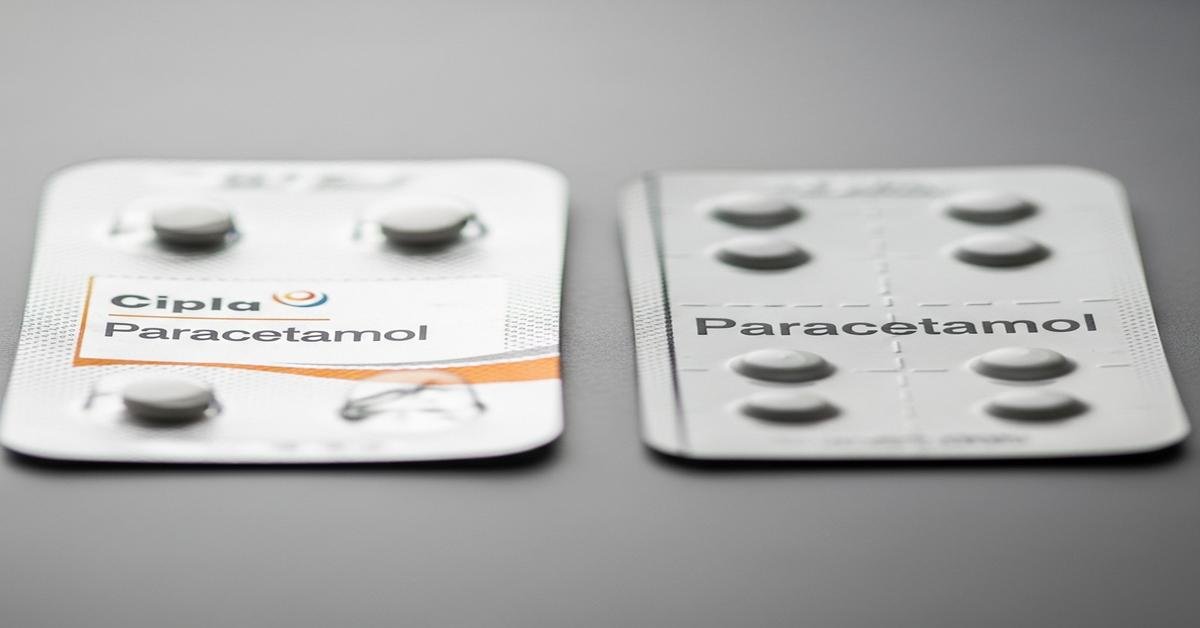
Walk into a pharmacy and you may see two boxes of paracetamol (acetaminophen) sitting side by side. One is a well-known brand, say Cipla’s, and the other is a plain-looking generic. Same dose. Same ingredient. Yet one costs more. Is the brand “better,” or are you simply paying for the name? Here is what actually drives those differences—grounded in how medicines are designed, tested, and brought to market.
What “brand” and “generic” really mean
A brand drug is sold under a company’s trade name. A generic drug uses the active ingredient’s name and is made by another manufacturer once patents expire (or, in markets with branded generics, is sold with its own brand even though it is off-patent).
For the same strength and dosage form (for example, paracetamol 500 mg tablets), regulators require generics to be pharmaceutically equivalent and, in most countries, bioequivalent to the brand. Bioequivalence means the generic delivers the active ingredient into the bloodstream at a similar rate and extent as the reference product. Typically, the exposure metrics (Cmax and AUC) must fall within accepted ranges (commonly 80–125%) when statistical variability is considered. That range does not mean the drug is 45% weaker; it reflects normal human variability and sampling error around a very similar mean.
Bottom line: if it is approved as a generic in your country, it is intended to work like the brand in most people.
The science that must match
Even when the API (active ingredient) is the same, the “recipe” matters. Here is what manufacturers must get right and why it affects performance:
- API sameness: The active molecule and its strength must match. But particle size, crystal form, and impurities can differ. These change how fast the tablet dissolves and how stable it is.
- Excipients: Fillers, binders, disintegrants, and coatings are “inactive,” but they control how quickly a tablet breaks apart and dissolves. For example, super-disintegrants or effervescent agents can make a “fast release” tablet.
- Dissolution and disintegration: Pharmacopeias set limits (for many immediate-release tablets, not less than about 80% dissolved within 30 minutes and disintegration within minutes). Two paracetamol tablets can meet the standard yet differ slightly in how fast they reach peak blood levels. With paracetamol, that usually means a difference of minutes, not hours.
- Quality testing: Every batch is checked for assay (exact dose), content uniformity (each tablet similar), hardness/friability (won’t crumble), dissolution, and contamination (microbial and chemical). Ongoing stability studies under hot and humid conditions ensure the tablet retains potency over its shelf life.
- Bioequivalence (where required): Generics typically run crossover studies in healthy volunteers to show equivalence to a reference product. For simple, immediate-release drugs like paracetamol, in vitro dissolution performance often predicts in vivo behavior well.
Why Cipla’s paracetamol may cost more
Different brands can pass the same quality bar yet carry different prices. Reasons include:
- Formulation choices: A “rapid” tablet may use more expensive excipients or special granulation to break up faster. Effervescent or soluble tablets cost more to make than plain tablets. Combination tablets (e.g., paracetamol + caffeine) are priced higher because they are distinct products with added ingredients.
- Packaging: Alu-alu blister packs protect from heat and humidity better than simple foil–PVC packs. Better protection costs more. Child-resistant caps and printed patient inserts also add cost.
- Manufacturing and compliance: Running validated processes, deeper in-process controls, and more frequent testing raise costs. Companies that supply multiple regulated markets often meet stricter documentation and quality-system demands.
- API sourcing and supply reliability: API prices swing with global supply. Brands that lock in vetted suppliers or tighter impurity limits may pay more.
- Stability for hot climates: To maintain potency at high temperature and humidity, some firms choose higher-spec materials and packaging, increasing costs.
- Scale and service: Reliable nationwide distribution, consistent stock, pharmacovigilance teams, and medical information services all add overhead.
- Brand and trade economics: Brand building, clinician education, and retailer margins influence shelf price. Two boxes with the same API can end up at different price points because the commercial model is different.
- Taxes and logistics: Freight, cold-chain (for some drugs), and local taxes or levies vary by region and affect final price.
These drivers explain why a Cipla-branded paracetamol might cost more than the lowest-priced generic, even though both relieve pain and fever at the same dose.
Does a higher price mean better relief?
Not usually for paracetamol. Here is why:
- Wide therapeutic window: Paracetamol is forgiving on small differences in absorption rate. Most approved tablets reach similar blood levels and provide similar pain and fever relief.
- What can feel different: A “fast dissolve” tablet may shave a few minutes off onset. Effervescent forms are absorbed more quickly but add sodium. Coatings can change taste and swallowability, which matters for adherence, not potency.
- Perceived effect: Taste, branding, and expectations influence how quickly people report relief. That does not mean the brand has stronger pharmacology.
If you have used a brand for years and feel it works best, consistency is reasonable. From a pharmacology standpoint, most people can switch among approved paracetamol tablets without loss of effect.
The details that actually matter for safety
Choosing between brand and generic is less important than using paracetamol correctly. Focus on these points:
- Maximum daily dose: For healthy adults, do not exceed 3,000–4,000 mg per day, depending on local guidance. Many cold/flu products already contain paracetamol—double-counting causes overdose.
- Liver risk: Alcohol use, liver disease, or fasting increase risk. In these situations, keep total daily dose at or below 2,000 mg unless your clinician advises otherwise.
- Dosing interval: Typical adult dose is 500–1,000 mg every 6–8 hours as needed. More frequent dosing does not work better and raises risk.
- Children: Dose by weight using pediatric formulations. Do not split adult tablets for very young children unless advised.
- Form matters: Do not crush modified- or sustained-release tablets. Effervescent tablets contain sodium; avoid if on a low-salt diet.
- Allergies and intolerances: Some tablets contain lactose, dyes, or sweeteners. If you have sensitivities, ask for an option without those excipients.
When a brand might be worth it
There are cases where paying more makes sense:
- Modified-release or special technologies: For drugs where release profile is crucial, stick to one product that works for you. (Paracetamol is usually immediate-release; MR versions exist but are less common.)
- Excipient sensitivities: If you react to a dye or sweetener, a specific brand without that ingredient is worth it.
- Adherence and usability: Better packaging, clearer instructions, or a scored tablet you can split accurately can justify a small premium.
- Narrow therapeutic index medicines: For drugs like some heart or thyroid medicines, brand consistency can matter more. Paracetamol is not in this category, but the principle guides substitution decisions.
How to choose smartly at the pharmacy
- Ask for the molecule by name: “Paracetamol 500 mg” ensures you are comparing the same thing. Check the label for “IP,” “BP,” or “USP” standards.
- Check basics: Manufacturer name, batch number, manufacturing and expiry dates should be clear. Avoid products near expiry if you won’t use them soon.
- Pick the right pack for your climate: In hot, humid regions, blister packs (especially alu–alu) protect better than loose bottles.
- Don’t mix brands in the same day: Keep track of doses. Switching brands mid-course is fine, but avoid taking multiple paracetamol products unknowingly.
- Consider total cost, not just price per strip: If a “fast” tablet helps you take fewer doses, that may be worth a small premium. If not, the lowest-priced approved option is usually good value.
What about quality differences—should I worry?
Reputable manufacturers—large brands and many generics—operate under Good Manufacturing Practices with batch testing and stability programs. Quality lapses can occur anywhere, but they are the exception, not the rule. Practical ways to protect yourself:
- Stick to known manufacturers and licensed pharmacies.
- Inspect the pack: Seals intact, printing clear, no broken or discolored tablets.
- Report problems: Unusual side effects, odd smell, crumbling tablets—tell your pharmacist or clinician so the product can be investigated.
The take-home on Cipla’s paracetamol vs a cheaper generic
A higher price often reflects formulation choices, packaging, supply reliability, and the cost of running robust quality systems and distribution—not a fundamentally “stronger” medicine. With paracetamol, most approved tablets relieve pain and fever equally well when dosed correctly. If a more expensive brand gives you better usability, faster perceived onset, or you trust the maker’s quality, choosing it is reasonable. If you want to save money, a well-made generic from a reputable manufacturer is a sound choice.
Choose based on the molecule, dose, and your needs. Use it safely, watch your total daily intake, and ask your pharmacist for the lowest-cost option that meets recognized quality standards. That is the real science—and the practical answer—behind brand versus generic medicines.

