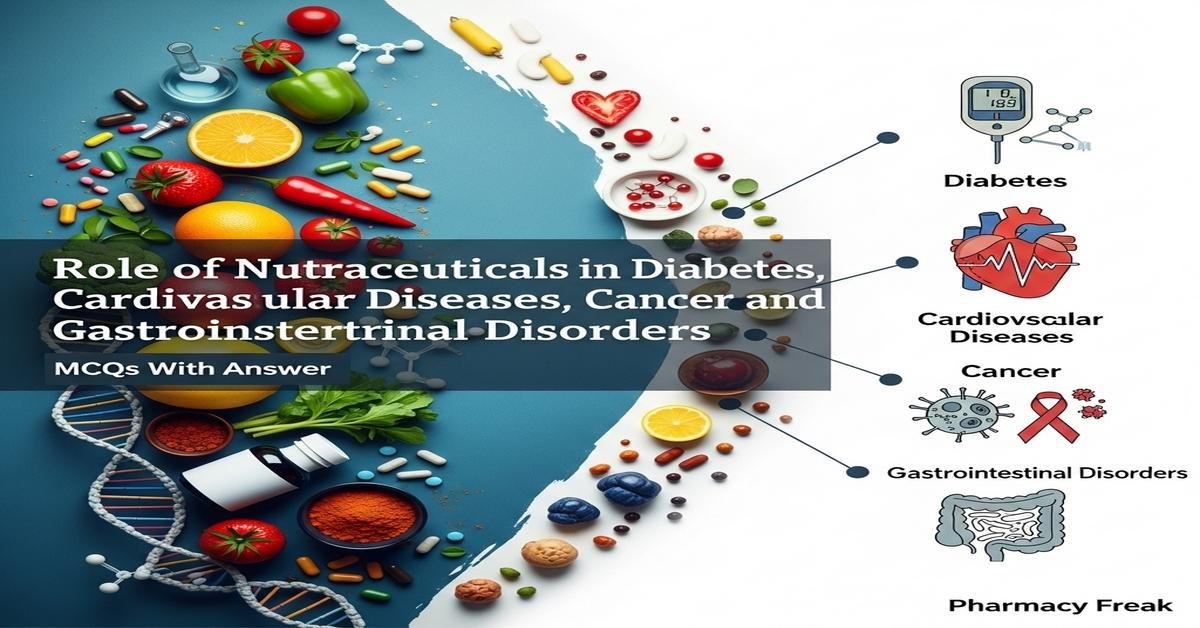
Introduction: Nutraceuticals—bioactive compounds derived from foods and herbs—play an expanding role in prevention and adjunctive management of chronic diseases. For B. Pharm students, understanding mechanisms, evidence, bioavailability, safety, and drug–nutrient interactions is essential. Key areas include diabetes (fiber, berberine, chromium), cardiovascular diseases (omega‑3 fatty acids, phytosterols, coenzyme Q10), cancer chemoprevention (polyphenols, curcumin, selenium) and gastrointestinal disorders (probiotics, prebiotics, glutamine). This topic integrates pharmacology, formulation strategies to enhance absorption, clinical trial data, and regulatory considerations for functional foods and supplements. Mastery helps pharmacists counsel patients and evaluate therapeutic claims. Now let’s test your knowledge with 30 MCQs on this topic.
Q1. Which nutraceutical primarily lowers serum triglyceride levels through modulation of hepatic VLDL synthesis?
- Phytosterols
- Omega‑3 fatty acids (EPA/DHA)
- Curcumin
- Probiotics
Correct Answer: Omega‑3 fatty acids (EPA/DHA)
Q2. What is the main mechanism by which soluble dietary fiber helps control postprandial glucose?
- Stimulates pancreatic beta cell proliferation
- Delays gastric emptying and slows carbohydrate absorption
- Inhibits insulin degradation in the liver
- Enhances renal glucose excretion
Correct Answer: Delays gastric emptying and slows carbohydrate absorption
Q3. Which compound is known for poor oral bioavailability but improved absorption when co‑administered with piperine?
- Resveratrol
- Curcumin
- Berberine
- Quercetin
Correct Answer: Curcumin
Q4. Phytosterols primarily reduce cardiovascular risk by which biochemical action?
- Lowering LDL cholesterol by inhibiting intestinal cholesterol absorption
- Raising HDL cholesterol by stimulating ApoA1 synthesis
- Reducing triglycerides via PPARα activation
- Anticoagulant effect through vitamin K antagonism
Correct Answer: Lowering LDL cholesterol by inhibiting intestinal cholesterol absorption
Q5. Which probiotic effect is most directly beneficial in antibiotic‑associated diarrhea?
- Enhancing bile acid synthesis
- Restoring gut microbiota balance and competitive inhibition of pathogens
- Increasing intestinal iron absorption
- Stimulating systemic antibody production
Correct Answer: Restoring gut microbiota balance and competitive inhibition of pathogens
Q6. Berberine’s glucose‑lowering action is primarily attributed to activation of which pathway?
- AMP‑activated protein kinase (AMPK)
- mTOR signaling
- COX‑2 inhibition
- SGLT2 inhibition in kidneys
Correct Answer: AMP‑activated protein kinase (AMPK)
Q7. Which antioxidant supplement has evidence for reducing statin‑associated myopathy symptoms and improving mitochondrial function?
- Vitamin E
- Coenzyme Q10
- Selenium
- Vitamin C
Correct Answer: Coenzyme Q10
Q8. Resveratrol is thought to exert cardioprotective effects through activation of which protein linked to longevity?
- SIRT1 (sirtuin 1)
- Nrf2
- NF‑κB
- ACE2
Correct Answer: SIRT1 (sirtuin 1)
Q9. Which nutraceutical is recommended to reduce LDL cholesterol when incorporated into the diet at ~2 g/day?
- Soluble fiber (psyllium)
- Omega‑3 fatty acids
- Probiotics
- Glutamine
Correct Answer: Soluble fiber (psyllium)
Q10. In cancer chemoprevention research, which class of nutraceuticals acts mainly by modulating phase II detoxifying enzymes and antioxidant defenses?
- Isoflavones
- Polyphenols (e.g., flavonoids)
- Essential amino acids
- Long‑chain triglycerides
Correct Answer: Polyphenols (e.g., flavonoids)
Q11. Which nutraceutical may interact with warfarin and increase bleeding risk due to antiplatelet or anticoagulant effects?
- Garlic supplements
- Probiotics
- Beta‑glucan fiber
- Curcumin at dietary levels
Correct Answer: Garlic supplements
Q12. Which mechanism best explains how probiotics can influence systemic metabolic health relevant to diabetes?
- Direct stimulation of pancreatic insulin secretion
- Modulation of gut microbiota leading to reduced endotoxemia and inflammation
- Inhibition of hepatic gluconeogenesis via bile acid sequestration
- Increasing renal glucose excretion
Correct Answer: Modulation of gut microbiota leading to reduced endotoxemia and inflammation
Q13. Which mineral supplement has had mixed evidence for cancer prevention, with potential harm at high doses?
- Selenium
- Magnesium
- Iron
- Zinc
Correct Answer: Selenium
Q14. What formulation strategy is commonly used to enhance the oral bioavailability of lipophilic nutraceuticals like curcumin and resveratrol?
- Enteric coating with cellulose
- Nanoparticle or lipid‑based delivery systems (e.g., liposomes, micelles)
- Co‑administration with antibiotics
- Transdermal patches
Correct Answer: Nanoparticle or lipid‑based delivery systems (e.g., liposomes, micelles)
Q15. Which nutraceutical is most directly associated with improvement in insulin sensitivity and lowering fasting glucose in some clinical trials?
- Berberine
- Glucosamine
- Vitamin K
- Calcium carbonate
Correct Answer: Berberine
Q16. In management of irritable bowel syndrome (IBS), which nutraceutical approach has shown symptom improvement through fermentation and gas reduction?
- High‑FODMAP diet
- Low‑FODMAP diet and selective probiotics
- High lactose intake
- Systemic antibiotics only
Correct Answer: Low‑FODMAP diet and selective probiotics
Q17. Which statement about antioxidant supplementation in chronic disease prevention is most accurate?
- High‑dose single antioxidants always reduce cancer and cardiovascular risk
- Evidence is mixed; some high‑dose antioxidants may increase risk in certain populations
- Antioxidants are irrelevant to chronic disease biology
- Antioxidant supplements cure diabetes
Correct Answer: Evidence is mixed; some high‑dose antioxidants may increase risk in certain populations
Q18. Which nutraceutical reduces intestinal cholesterol absorption by competing with cholesterol for micelle incorporation?
- Omega‑3 fatty acids
- Phytosterols
- Vitamin D
- Glutamine
Correct Answer: Phytosterols
Q19. A pharmacist advising a patient on fish oil supplements should warn about which common side effect at high doses?
- Hyperglycemia
- Increased bleeding tendency
- Renal stones
- Severe hypokalemia
Correct Answer: Increased bleeding tendency
Q20. Which nutraceutical is commonly used to support mucosal healing and enterocyte energy in short‑bowel syndrome or chemotherapy‑induced mucositis?
- Glutamine
- Phytosterols
- Resveratrol
- Selenium
Correct Answer: Glutamine
Q21. Which dietary component is most effective at lowering LDL cholesterol when used alongside statin therapy?
- Fermented dairy probiotics
- Dietary phytosterols and soluble fiber
- High sucrose intake
- High saturated fat diet
Correct Answer: Dietary phytosterols and soluble fiber
Q22. Which nutraceutical has the best evidence for reducing colorectal cancer risk when consumed as part of a high‑fiber diet?
- Soluble and insoluble dietary fiber
- Coenzyme Q10
- Glucosamine chondroitin
- Valerian root
Correct Answer: Soluble and insoluble dietary fiber
Q23. Which enzyme inhibition is associated with polyphenols contributing to anti‑inflammatory and anticancer effects?
- Cyclooxygenase (COX) and NF‑κB pathway modulation
- Renin inhibition
- Acetylcholinesterase activation
- Thrombin activation
Correct Answer: Cyclooxygenase (COX) and NF‑κB pathway modulation
Q24. When counseling a diabetic patient, which nutraceutical should be used cautiously due to potential interaction with hypoglycemic medications?
- Chromium picolinate
- Calcium citrate
- Fish collagen
- Vitamin B12 at RDA dose
Correct Answer: Chromium picolinate
Q25. For prevention of necrotizing enterocolitis in preterm infants, which nutraceutical component has supportive evidence?
- Lactobacillus and Bifidobacterium probiotics
- High‑dose vitamin E
- Phytosterol supplements
- Omega‑9 monounsaturated oils
Correct Answer: Lactobacillus and Bifidobacterium probiotics
Q26. Which nutraceutical is known to upregulate endothelial nitric oxide synthase (eNOS) and improve endothelial function?
- Niacin at high doses
- Polyphenols such as cocoa flavanols
- Raw garlic only
- Excessive vitamin A
Correct Answer: Polyphenols such as cocoa flavanols
Q27. In designing a pharmaceutics project for curcumin, which goal is most relevant to improve therapeutic potential?
- Decrease water solubility
- Increase oral bioavailability via nanoformulation
- Eliminate all metabolism
- Increase melting point
Correct Answer: Increase oral bioavailability via nanoformulation
Q28. Which nutraceutical has demonstrated LDL‑lowering effects by inhibiting HMG‑CoA reductase in vitro and via plant sterol competition in vivo?
- Red yeast rice (monacolin K)
- Probiotic yogurt
- Vitamin K2
- Glucosamine
Correct Answer: Red yeast rice (monacolin K)
Q29. Which assessment is essential before recommending a high‑dose vitamin D supplement in cancer or cardiovascular prevention?
- Baseline serum 25(OH)D level and monitoring for hypercalcemia
- Routine liver biopsy
- Fasting insulin only
- 24‑hour urine for protein
Correct Answer: Baseline serum 25(OH)D level and monitoring for hypercalcemia
Q30. What regulatory consideration should pharmacists explain about nutraceuticals and dietary supplements to patients?
- They are regulated identically to prescription drugs with pre‑marketing efficacy proof
- Quality and claims vary; manufacturers need not prove efficacy before marketing, so evidence review is important
- All supplements are guaranteed safe at any dose
- The FDA manufactures nutraceuticals
Correct Answer: Quality and claims vary; manufacturers need not prove efficacy before marketing, so evidence review is important

